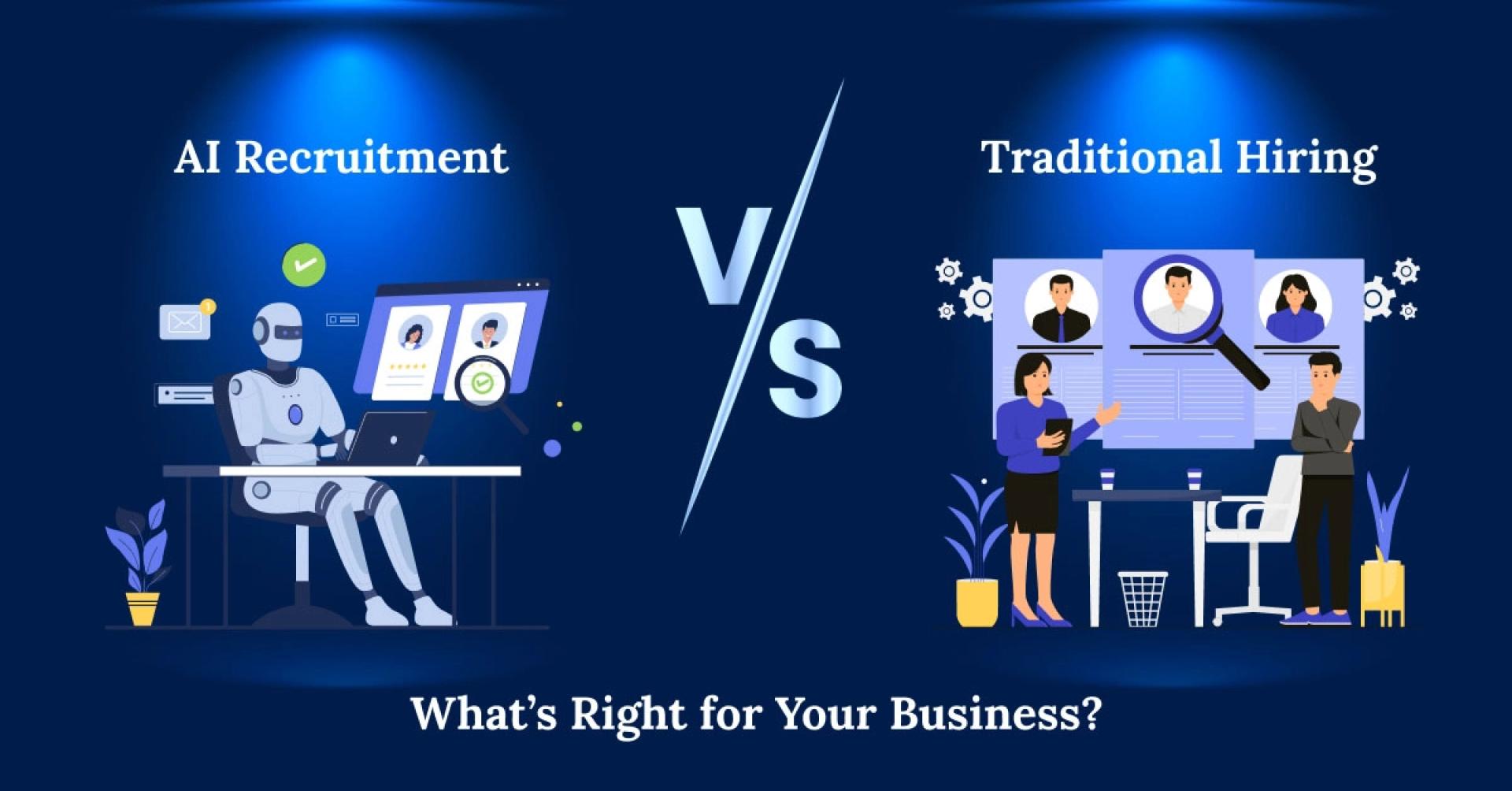

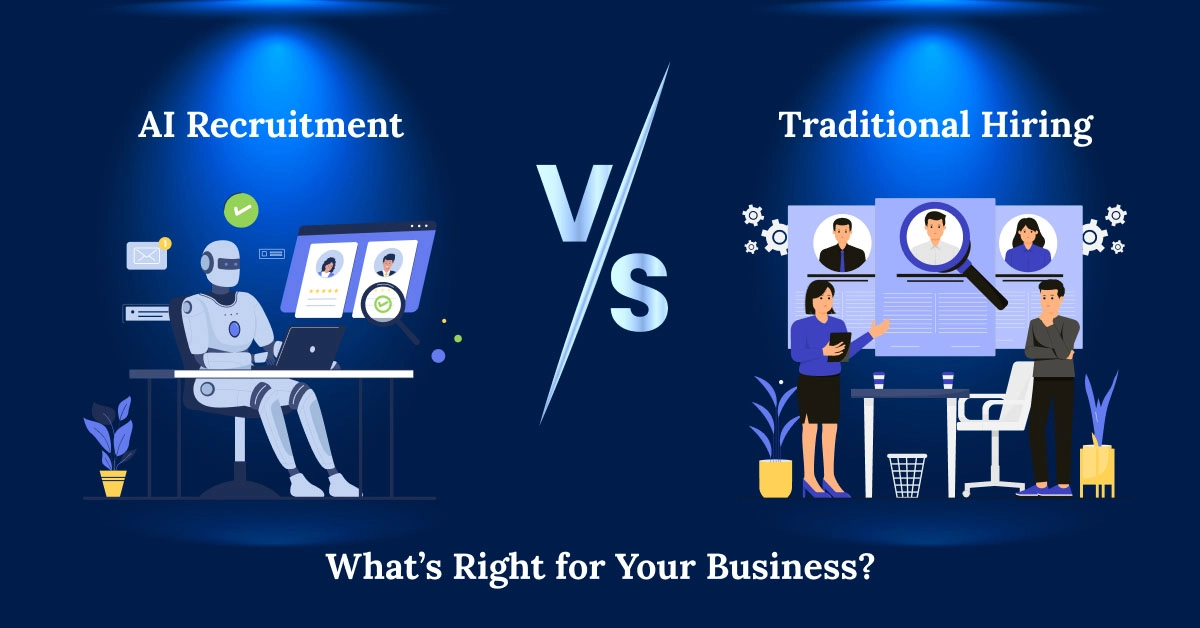
If you’ve been in recruitment for a while, chances are you’ve used a traditional ATS (Applicant Tracking System). It helped you collect resumes, track applicants, and move candidates from one stage to another. For years, that was enough.
But hiring has changed.
Today, recruiters aren’t just managing applications, they’re expected to hire faster, improve candidate quality, reduce bias, and deliver measurable results. That’s where the conversation around AI recruiting software vs traditional ATS really begins.
So what’s the actual difference? And does your HR team need both?
Let’s break it down in simple, practical terms.
What Is a Traditional ATS?
A traditional ATS is essentially a digital filing cabinet for recruitment.
It helps you:
- Post jobs
- Collect resumes
- Store candidate data
- Track applicants through hiring stages
- Manage basic communication
It’s structured, organized, and far better than spreadsheets or inbox-based hiring. But at its core, a traditional ATS is reactive. It stores and tracks information, it doesn’t actively analyze or improve it.
Think of it as a system of record.
What Is AI Recruiting Software?
AI recruiting software goes a step further.
Instead of just storing applications, it uses artificial intelligence to:
- Automatically screen and rank resumes
- Match candidates to job requirements
- Conduct AI-led video interviews
- Analyze skills and assessments
- Provide predictive insights and analytics
Rather than simply tracking candidates, AI recruiting software actively helps you decide who to prioritize and why.
Think of it as a decision-support system.
Key Differences Between AI Recruiting Software and Traditional ATS
1. Resume Screening: Manual vs Intelligent
With a traditional ATS, recruiters usually apply filters or manually review resumes. Even with keyword searches, someone still has to interpret the results.
AI recruiting software automatically scans resumes, understands skill context, and ranks candidates based on job fit. It reduces hours of screening to minutes.
The difference: One organizes resumes. The other evaluates them.
2. Candidate Matching: Basic Filters vs Smart Matching
Traditional ATS platforms rely heavily on keyword matches. If a resume doesn’t include the exact phrase in the job description, it might get overlooked.
AI recruiting software uses contextual understanding. It can identify transferable skills, similar job roles, and relevant experience — even if wording differs.
The difference: ATS matches words. AI matches meaning.
3. Interviews: Manual Scheduling vs Automation
In a traditional ATS, recruiters still coordinate interview schedules manually or through basic calendar integrations.
AI recruiting software can automate scheduling, send reminders, and even conduct AI-powered video interviews that assess communication skills, confidence, and structured responses.
The difference: ATS tracks interviews. AI helps conduct and evaluate them.
4. Data & Insights: Reporting vs Predictive Analytics
Traditional ATS systems provide reports — time-to-hire, pipeline stages, and hiring metrics.
AI recruiting software goes deeper by offering predictive insights, identifying hiring bottlenecks, highlighting high-performing sources, and even forecasting candidate success based on historical data.
The difference: ATS shows what happened. AI suggests what to do next.
5. Recruiter Workload: Administrative vs Strategic
With a traditional ATS, recruiters still spend a large portion of time on manual screening, coordination, and follow-ups.
AI recruiting software automates repetitive tasks like resume filtering, candidate scoring, and follow-up communication. This frees recruiters to focus on strategy, relationship-building, and stakeholder collaboration.
The difference: ATS manages process. AI reduces workload.
Does AI Replace an ATS?
Not necessarily.
In many cases, AI recruiting software works alongside an ATS. Some modern platforms combine both functionalities into one solution. The ATS manages workflows and compliance, while AI enhances decision-making and efficiency.
It’s not about replacing systems, it’s about upgrading them.
Which One Is Right for Your Team?
If your hiring volume is low and your process is simple, a traditional ATS may be enough.
But if your HR team is:
- Handling high application volumes
- Struggling with screening time
- Looking to improve candidate quality
- Under pressure to reduce time-to-hire
- Trying to minimize bias and improve consistency
Then AI recruiting software offers a significant advantage.
The Bigger Picture
Recruitment today is more competitive than ever. Candidates expect faster responses. Leadership expects measurable ROI. And recruiters are expected to do more with less.
A traditional ATS helps you stay organized.
AI recruiting software helps you stay competitive.
The most forward-thinking HR teams aren’t asking whether they need technology, they’re asking how intelligent that technology should be.
In a world where hiring decisions directly impact business growth, having tools that not only track candidates but actively improve hiring outcomes can make all the difference.
Ready to move beyond basic applicant tracking? Upgrade to AI recruiting software and transform the way you hire, screen smarter, shortlist faster, and make data-driven decisions with confidence. Start building a stronger hiring process today.










Sign in to leave a comment.