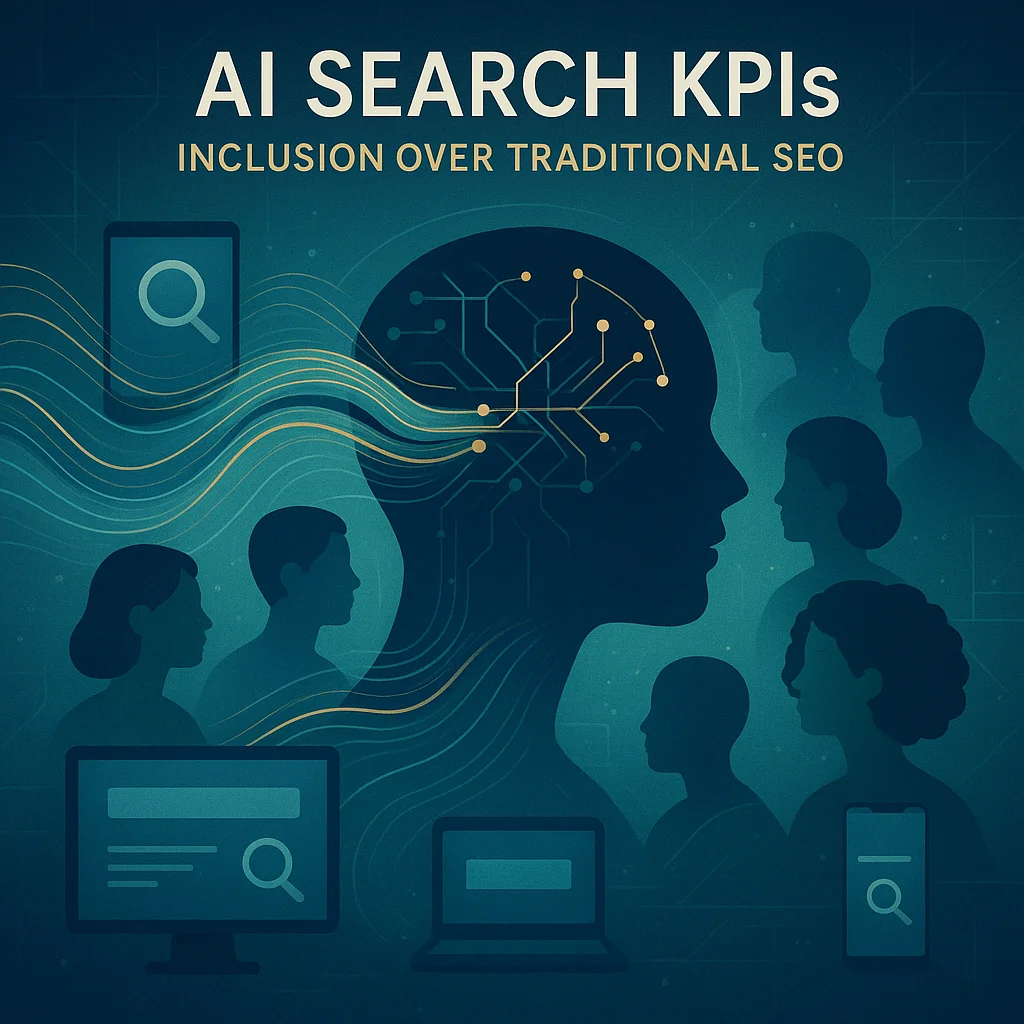

Why Rethink Search KPIs Now? The Rise of AI Demands It 🧠✨
If you’re still obsessing over Google’s exact ranking position as the holy grail of SEO success, it’s time to shift gears. With AI-driven search reshaping how results are curated and presented, traditional rankings are losing their grip. Instead, the focus moves to inclusion: whether your content appears in AI-generated answers, featured snippets, or conversational contexts. This subtle but powerful shift demands fresh KPIs that better capture visibility and user engagement in an AI-first search landscape. 🚀🌐
Understanding the Shift: From Position to Inclusion in AI Search
Google’s AI-powered search transforms the page-one game. Instead of a simple list, results are now mixed with synthesized answers, multi-source snippets, and interactive knowledge panels. That means your site’s ranking number—like #3 or #5—doesn’t tell the whole story anymore. A page ranked #7 might be featured in a prominent AI summary, capturing eyeballs and clicks just as well as a top-three position used to. 🎯📊
According to Search Engine Land’s insightful coverage on this topic, the key performance indicators (KPIs) for AI search success must prioritize inclusion metrics. That means tracking whether your content is selected by AI systems to be part of the answer, rather than obsessing solely over traditional rank position. This is a game-changer for SEOs, marketers, and business owners alike. Search Engine Land explains how AI’s multi-source approach requires a fresh look at visibility measurement.
Why Inclusion Outweighs Position in an AI-Driven SERP
- AI Summaries Amplify Reach: When AI pulls snippets from multiple sources, your website can gain exposure even if it’s not the top organic result. Inclusion in these synthesized answers can drive substantial traffic and brand authority.
- Rankings Become Fluid: AI systems dynamically generate results based on intent and context, making fixed positions less predictive of traffic.
- New User Behaviors: Searchers increasingly consume AI-generated answers directly, reducing clicks but increasing brand impressions and trust.
This evolving landscape means focusing on “Did my content get included in the AI’s narrative?” rather than “Did I rank #1?” is more relevant for measuring success in 2026. ✨📈
What This Means for You: Tactical Steps to Embrace Inclusion KPIs
Okay, now you’re thinking, “Vihaan, how do I actually measure and optimize for inclusion instead of just chasing rank?” Here’s a practical primer that’ll get you started today. 🎒📚
1. Expand Your KPI Toolkit Beyond Traditional Rank Tracking 📊🔍
Use tools that can track AI snippet inclusion, featured snippet appearances, and knowledge panel citations. Platforms like Semrush, Ahrefs, and new AI-focused analytics are developing features to help monitor these signals. For example:
- Track Featured Snippet Impressions: Google Search Console now surfaces data on how often your pages are shown in snippets.
- Monitor AI Answer Boxes: Some SEO tools identify when content is pulled into AI-generated answer cards or “People Also Ask” expansions.
- Engagement Metrics: Keep an eye on bounce rate, dwell time, and scroll depth for pages included in AI results to gauge content relevance.
By broadening your data sources, you’ll gain a clearer picture of how AI search is surfacing your content beyond mere rank position. 🎥👀
2. Optimize Content for AI Inclusion: Focus on Clarity & Structure 📝✨
AI systems prefer well-structured, authoritative content that answers questions succinctly and clearly. Here’s how to get your pages AI-ready:
- Use Clear Headers & Subheaders: Organize content with descriptive, question-based H2s and H3s to help AI identify relevant answers.
- Answer Specific Queries: Create concise, factual paragraphs that directly respond to common user intents.
- Incorporate Semantic Keywords: Sprinkle related terms and synonyms naturally to help AI grasp context.
- Implement Schema Markup: Structured data helps AI understand your content’s purpose and enhances chances for rich results.
Think of your content as a K-pop choreography video 📹—every move (or paragraph) should be tight, purposeful, and memorable so it gets picked for the spotlight (AI snippets). 💃✨
3. Diversify Your Content Formats for AI Channels 🎙️🎥
AI search often pulls from diverse formats beyond text: video transcripts, podcasts, FAQs, and even images can be included in answers. So diversify your content strategy:
- FAQ Sections: Explicit question-answer pairs help AI serve direct responses.
- Video Content: Include well-tagged videos or transcripts that AI can parse.
- Interactive Elements: Chatbots or AI assistants embedded on your site signal relevance and user engagement.
This multimedia approach boosts your chances of inclusion across the emerging AI search formats. 📹🍜 (Yes, just like a mukbang video—engaging and multi-sensory wins!)
4. Monitor Brand Visibility & Authority Signals ⚡🎤
Since AI summarization aggregates multiple sources, your brand’s overall authority and trustworthiness become vital. Strengthen these to increase AI inclusion:
- Earn Quality Backlinks: They remain a strong AI signal for authority.
- Engage on Social & Forums: Active brand mentions and positive sentiment help AI validate your content’s trustworthiness.
- Maintain Consistent NAP Data: For local businesses, accurate Name-Address-Phone info across directories boosts inclusion chances.
Think of your brand reputation as your fanbase—like how K-pop idols need their fandom to trend their MV across platforms. The bigger and more active your fanbase, the more AI will “notice” you. 🎤✨
5. Test & Adapt Regularly: AI Search Evolves Fast 🔄🚀
AI search algorithms are in constant flux. What gets included today might shift tomorrow. Maintain a culture of experimentation:
- Run A/B tests on content formats and structures.
- Adjust based on data from Search Console and AI-focused tools.
- Keep an eye on emerging AI search features—like Google’s expanding multilingual AI assistant (explored in our piece here).
Being nimble helps you ride the AI wave instead of getting wiped out by it. 🌊🛹
Don’t Forget: Inclusion Also Enhances User Experience—and That’s Google’s Ultimate Goal
When your content is included in AI-generated answers, it usually means it’s genuinely helpful and relevant. This aligns your SEO goals with what users want—quick, trustworthy answers. So focusing on inclusion isn’t just about gaming AI; it’s about improving your content’s real value. Win-win! 🥳📚
What’s Next on the Horizon? Keep These on Your Radar 👀🔮
As AI search matures, watch for these trends shaping KPI strategies:
- Conversational Analytics: Metrics tracking AI chat interactions and follow-up questions will become standard.
- Personalized Inclusion Metrics: AI will tailor results to individuals, so understanding segment-specific inclusion will be key.
- Cross-Platform AI Presence: Optimizing for AI search on voice assistants, smart devices, and emerging platforms will broaden inclusion KPIs.
Stay curious and keep exploring fresh angles. You might enjoy our detailed breakdown on how Google’s AI-generated headlines are also reshaping SEO’s creative side. 🎨✨
In Summary: Inclusion > Position in 2026 SEO 🚦🎉
The SEO world is evolving from a rigid ranking number chase to a dynamic inclusion game powered by AI’s intelligence. To thrive, you need to:
- Track AI snippet and answer inclusion, not just rank.
- Craft clear, structured, and authoritative content optimized for AI parsing.
- Diversify content formats to capture AI attention across mediums.
- Build brand authority and trust signals to boost AI visibility.
- Test, adapt, and stay ahead of AI search trends.
Embrace this mindset shift and you’ll be ready to sparkle in the AI search spotlight. Until next time, keep your SEO game strong and your inclusion KPIs stronger! 🌟🤝































Sign in to leave a comment.