

Content creators built their careers on understanding an audience. First it was readers, then it was Google's algorithm, and now it's something different again: AI systems like ChatGPT, Gemini, and Perplexity that read, summarize, and recommend content on a person's behalf. This shift changes what "getting discovered" actually means. Artificial Intelligence Optimization (AIO) is the practice that helps creators adapt to it, and it's quickly becoming as essential as traditional SEO once was.
If you write blog posts, produce videos, host a podcast, or run a newsletter, chances are some of your audience no longer starts their search on Google. They ask an AI assistant instead, and that assistant picks a handful of sources to summarize or cite. Consequently, the question every creator needs to answer is simple: does an AI system trust your content enough to feature it?
What Artificial Intelligence Optimization Actually Means for Creators
Traditional SEO trained creators to think in keywords, backlinks, and page one rankings. AIO asks for something broader. Instead of optimizing purely for a search engine's crawler, you're optimizing for a language model that reads your content, extracts meaning from it, and decides whether it's worth surfacing in a conversational answer.
In practice, this means AI systems favor content that is clear, well-structured, and easy to extract facts from. They tend to skip over vague, keyword-stuffed pages in favor of writing that directly answers a question in plain language. Therefore, a creator who wants AI visibility has to write less like a marketer chasing rankings and more like a subject-matter expert explaining something to a curious reader.
This doesn't mean traditional SEO disappears. Rather, AIO builds on top of it. Solid technical foundations, like fast page load times and clean site structure, still matter. However, the content itself now needs an additional layer of clarity and structure so that an AI model can parse it correctly and confidently attribute it to you.
Why This Matters More Than Ever for Creators in San Diego
San Diego's creator and small-business community is unusually competitive right now. Local bloggers, coaches, boutique agencies, and niche experts are all producing content for the same audience, often around similar topics like wellness, real estate, food, and local services. As more of that audience turns to AI tools for quick answers, creators who haven't adapted their content risk becoming invisible in exactly the channel where their audience is spending more time.
Additionally, AI-driven discovery tends to reward specificity. A creator who publishes clear, locally relevant, well-organized content about their niche has a real advantage over larger, more generic competitors who haven't bothered to structure their content for AI extraction. This is particularly useful for independent creators and small teams that can't outspend national brands but can absolutely out-clarify them.
Core AIO Practices Every Content Creator Should Adopt
Answer questions directly, near the top of the page.
AI systems tend to pull from sections that clearly and immediately answer a specific question. Burying your main point under three paragraphs of introduction makes it harder for a model to extract and cite. Lead with the answer, then explain the reasoning afterward.
Use clear headings that mirror real questions.
Instead of a vague heading like "Our Approach," try something closer to how a person would actually phrase a question, such as "How do I choose the right supplement for my goals?" This small shift helps both readers and AI models understand exactly what each section covers.
Write in a natural, conversational tone.
Overly promotional or keyword-stuffed writing tends to get filtered out. Meanwhile, content that reads like a knowledgeable person explaining a topic tends to perform better, both with human readers and with AI systems evaluating content quality.
Back up claims with specifics.
Vague statements like "many people benefit from this" carry little weight. Specific numbers, examples, and named processes give AI systems something concrete to extract and cite. This is one of the fastest ways to strengthen your content's credibility signal.
Keep information current.
AI systems generally favor recently updated content, especially in fast-moving niches. Revisiting older posts and refreshing outdated statistics or examples can meaningfully improve how often that content gets surfaced.
Structure content for skimmability.
Short paragraphs, bullet points, and clear subheadings make content easier for AI systems to break into extractable chunks. Dense walls of text, by contrast, are harder to parse and less likely to get pulled into a summarized answer.
Building Authority AI Systems Can Recognize
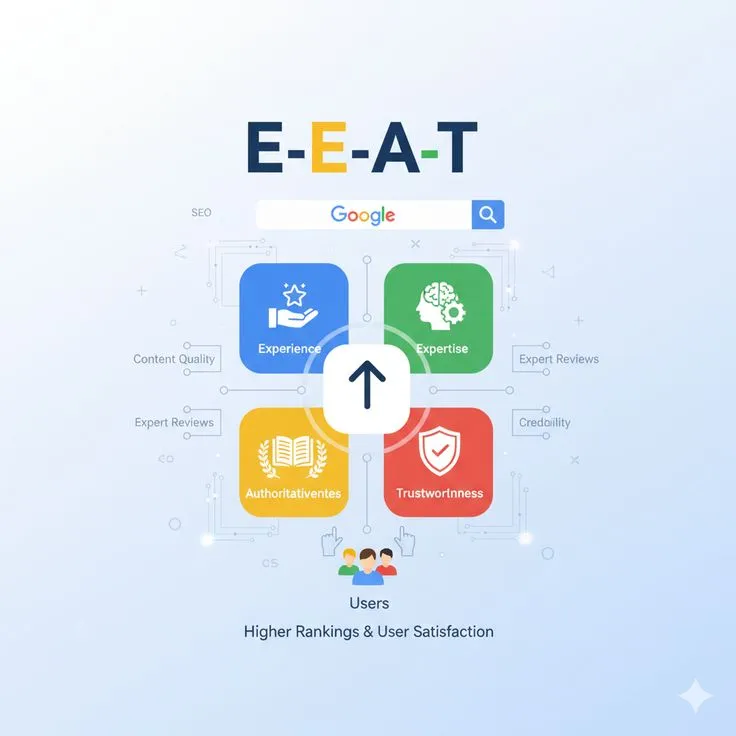
Beyond individual pages, AI systems also weigh overall authority. This means your body of work matters just as much as any single post. Creators who consistently publish accurate, well-organized content on a specific topic build a pattern of expertise that AI models can recognize over time.
A few practices help reinforce this. Interlinking related content on your own site helps establish topical depth, since it signals that you cover a subject comprehensively rather than superficially. Including author information and relevant credentials also helps, since AI systems increasingly weigh credibility signals when deciding which sources to trust. Additionally, getting mentioned or cited by other reputable sites in your niche reinforces that same trust signal from the outside.
For creators exploring ai seo services or working alongside an AI marketing agency, this is usually where professional support adds the most value. A trained eye can audit your existing content library, identify which pieces are strong candidates for AI visibility, and prioritize updates that will move the needle fastest, rather than leaving you guessing.
Common Mistakes That Hurt AI Visibility
Many creators unintentionally sabotage their own AI visibility. Overloading a page with repetitive keyword phrases, once a common SEO tactic, now tends to work against creators, since it reads as unnatural to both readers and AI models. Similarly, thin content that restates common knowledge without adding original insight rarely gets cited, because AI systems prioritize sources that offer genuine depth.
Another frequent issue is inconsistent formatting. If your headings don't clearly map to the content beneath them, or your key points are scattered throughout long paragraphs instead of clearly separated, AI systems struggle to extract a clean answer. Fixing this often requires nothing more than restructuring existing content rather than writing something entirely new.
Getting Started With AIO as a Creator
You don't need to overhaul your entire content library overnight. Start by auditing your five or ten best-performing pieces and testing whether AI tools like ChatGPT or Gemini reference them when you ask a related question. If they don't, look at structure first. Add clear question-based headings, tighten your opening paragraphs so they answer the core question immediately, and update any outdated statistics or examples.
From there, apply the same structure to new content as you create it. Over time, this consistency compounds, and your content becomes progressively more likely to appear in AI-generated answers rather than getting lost among thousands of competing pages.
Turning AI Visibility Into Real Growth
Ultimately, AIO isn't about chasing a trend. It's about meeting your audience where they've already moved. As more people rely on AI assistants for quick, trustworthy answers, creators who structure their content accordingly position themselves to stay visible, relevant, and credible for years to come.
For creators and small businesses in San Diego who want expert guidance putting these practices into place, working with a team that specializes in aio services can shorten the learning curve significantly. High Clarity focuses specifically on helping creators and local businesses build content strategies that perform across both traditional search and emerging AI platforms. If you're ready to see how your content measures up, High Clarity offers a starting point worth exploring.
Frequently Asked Questions
1. How is AIO different from traditional SEO for content creators?
Traditional SEO centers on keywords, backlinks, and search engine rankings. AIO focuses on how AI systems interpret, extract, and cite your content when generating conversational answers. The two overlap, but AIO adds an emphasis on clarity, direct answers, and structure that AI models can parse easily.
2. Do I need to rewrite all my old content to benefit from AIO?
Not necessarily. Start with your highest-performing or most relevant pieces first. Often, restructuring headings, tightening your introductions, and updating outdated information delivers noticeable improvement without a full rewrite.
3. Can small or independent creators realistically compete with bigger publishers for AI visibility?
Yes. AI systems tend to favor clear, specific, well-organized content over generic, broad coverage. A focused creator who writes with genuine depth on a niche topic often has a real advantage over larger sites that publish more generalized content.
4. How long does it take to see results from AIO efforts?
Results vary depending on your niche and how frequently AI models crawl and update their training or retrieval sources. Many creators notice initial shifts within a few weeks of restructuring key content, though building consistent authority typically takes a few months of steady effort.
5. What's the easiest first step for a creator who's never tried AIO?
Ask an AI assistant a question directly related to your content and see whether it references your site. If it doesn't, review your top pages for clear headings, direct answers near the top, and up-to-date information. That single audit usually reveals your highest-impact starting point.























Sign in to leave a comment.