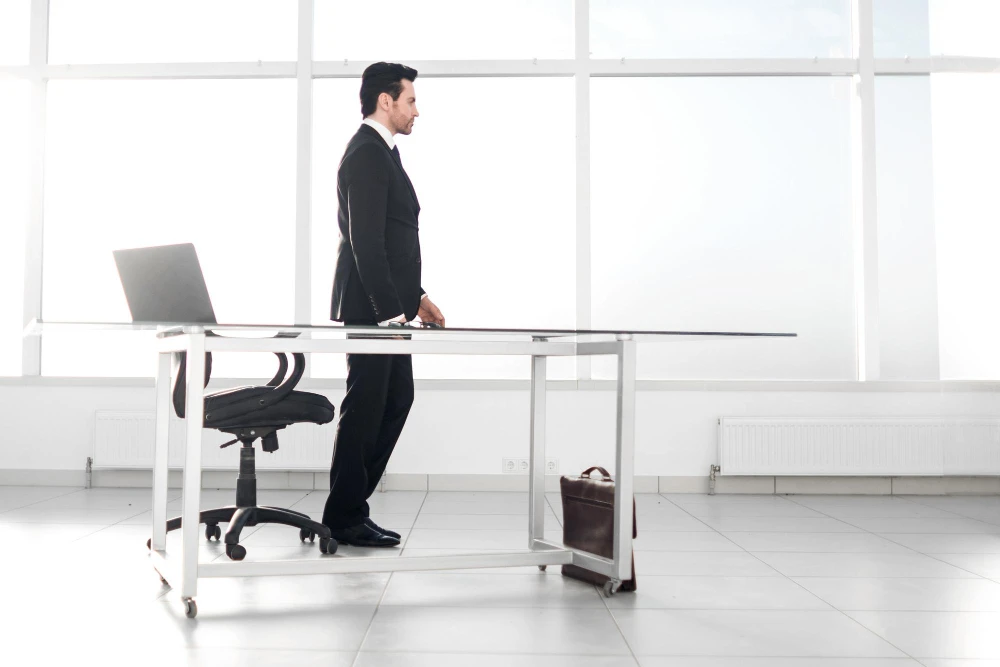

Contemporary work has altered our bodily functioning. Many employees spend most of their working hours sitting in front of a computer screen without even realizing how little they exercise. With increased concern about health in the workplace, standing desks have been advocated as an improved alternative. But are standing desks more preferable to sitting in front of a computer screen when it comes to our health, or is there more to it?
In terms of both ergonomics and functionality, standing desks can promote health, although it depends on how it is implemented.
What Sitting All Day Does to the Body
Long periods of sitting put constant pressure on the lower spine, tighten hip flexors, and restrict blood flow. A good chair can't eliminate all these risks, but sitting for a very long period without breaks tends to lead to slouching and eliminates natural movement. These lead to stiffness over time, reduced mobility, and general discomfort in the back, neck, and shoulders.
Another less-considered outcome of having to sit long is drained energy levels. When the body can't move around much, it feels very slushy, which might affect focus, posture awareness, and overall well-being throughout a workday.
What Standing Desks Actually Change
Standing desks affect posture and muscle use while at work. By standing, one is able to assume a wider hip position, engage core muscles, and effortlessly make slight corrections to posture. Additionally, standing desks involve lesser hold time for a particular body position.
A further point to make here is that modern standing desks are not actually for standing all day. The point of standing desks is to have the option for the body to have another working position.
Health Benefits Often Linked to Standing Desks
Many users have noticed that their lower back stiffness is alleviated when they alternate between sitting and standing. Standing also has benefits when it comes to blood circulation since it is healthier to be standing instead of sitting. This is because standing is known to improve blood circulation, which is beneficial since it is healthier to have increased blood circulation as opposed to sitting. Standing is also known to reduce fatigue since it gives users
There is also greater understanding about posture. When standing, people tend to be more aware about how they place their body, which may aid them in maintaining better posture.
The Downsides of Standing Too Much
However, standing for long without rests can also cause its challenges. Leg tiredness, lower back strain, and joint pains are some of the experiences that come with overdoing or improper standing. Poor desk height or screen positioning and wearable improper standing equipment can quickly result in standing becoming the source of strain.
That is also the reason one shouldn’t rely on substitution from sitting to standing completely. After all, the body requires variability, not extremes.
What Research and Real-World Use Suggest
The overwhelming evidence regarding ergonomics is this: motion is a bigger factor than posture. It is best to avoid sitting and standing for prolonged periods. The optimal work pattern is one that frequently varies posture and offers motion.
This is evident when considering real-world applications, as proficient users of standing desks are usually those who sit, stand, move, and stretch.
How to Use Standing Desks in a Healthier Way
The best way to promote health is through balance. For many people, a good place to start would be to switch between sitting and standing positions every 30 to 60 minutes. Setting the computer display at eye level and placing the keyboard at elbow level can eliminate a lot of unnecessary straining.
As soon as the workspace has room for flexibility, it is much easier for the body to adjust and stay comfortable for a longer period of time.
Who Benefits Most from Standing Desks
Standing desks should be regarded generally as a positive option for people with very sedentary work habits, a mild case of back stiffness, or low energy. It is a great option for people that want to incorporate healthier movement habits into their workday.
People with any existing joint or spine conditions will need to exercise special care in using standing desks. They might need expert guidance.
Standing Desks vs Sitting All Day: A Practical View
While comparing standing desks and sitting all day, it seems that standing desks have a benefit in that one can switch around. By sitting all day, one has limited mobility; on the other hand, standing desks, such as those that are height adjustable, enable one to switch around. In this case, if one is to consider health advantages, then it is best to switch around from both standing and sitting.
Final Verdict: Are Standing Desks Truly Healthier Than Sitting All Day?
Standing desks do not offer a solution to a sick workplace environment, but standing desks are a better option than sitting at your desk all day if implemented properly. This is because standing desks offer a benefit in reducing excessive sitting at work.
The best work arrangement is one in which a person is able to move body positions frequently. The standing desk is a great tool to use in achieving this goal of frequent movement, but it is not just a matter of what you sit in.

Sign in to leave a comment.