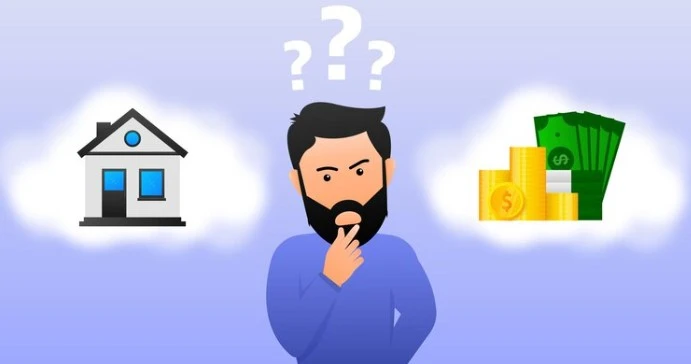

Have you ever imagined how it would feel about investing so much money towards a genuine house? Anything you have an ownership interest in?
Leaving behind the world of rent and landlords in favor of homeownership need not be difficult. Finding out how much a house truly costs and whether you can afford one right now is the first (and simplest) step you can take.
Financial Factors That Affect Your Ability To Buy Home
Money
Your ability to make a monthly mortgage payment is, in essence, determined by the amount of your regular income. This covers not just your regular compensation but also any bonuses or investment returns you may earn. Considering the length of a mortgage (often 15-30 years), you should be certain that your income won't vary for at least a few years before signing on the dotted line.
Savings
What you have saved up may be used for things like a down payment, closing charges, and other associated purchases.
WARNING: Even though you'll probably need most of your money for the down payment, it's crucial that you don't use them all. But most mortgage providers will want evidence that you have sufficient savings to meet purchase prices as well as a cushion for unforeseen expenses like vehicle maintenance or a change in living arrangements.
Debts And Expenses
What are your regular financial responsibilities? Do you need to repay any obligations at the present time?
Before adding a mortgage payment to your monthly budget, you need to determine how much money you are already spending on items like transportation, education, and health care. Lenders often use the 28/36 rule to gauge how your mortgage payment would fare in relation to the rest of your budget.
The Rule of 28/36
Please understand that this is not an ironclad regulation. It's more of a template that banks use to assess how a borrower spends their money every month.
According to the 28/36 rule, your housing costs shouldn't exceed 28% of your gross monthly income. In addition, your total debts and living expenditures should never amount to more than 36% of your before-tax income.
Credit
You might expect a higher or lower interest rate depending on your credit score. Both your total debt and credit score will have an effect on how much money you may borrow for a house and at what interest rate. Lenders often want a minimum qualifying score in the mid-600s on a range from 300 to 850. But your chances of locking in a reduced interest rate drastically improve once your credit score crosses the mid-700s.
If you are unable to afford a house, then you can always renovate your old one. You will need the best construction company to build or renovate a home for you.



























Sign in to leave a comment.