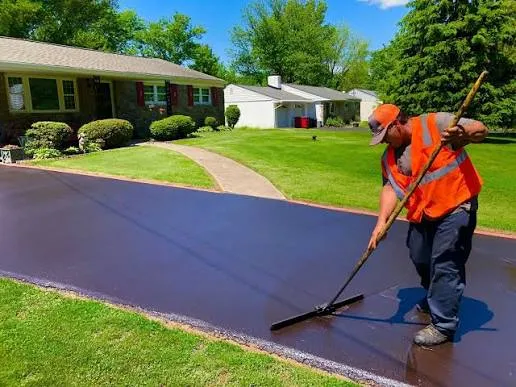

An asphalt driveway faces regular exposure to sunlight, rain, vehicle traffic, and seasonal temperature changes. Over time, these conditions can affect the surface, making it look worn and leaving it more vulnerable to deterioration. For homeowners in Epping, New Hampshire, understanding how asphalt sealcoating works can help them make better decisions about driveway maintenance.
Sealcoating is a protective treatment applied to suitable asphalt surfaces. When the pavement is in good condition and properly prepared, it can help limit surface weathering and maintain a more uniform appearance. However, it is not a substitute for repairing potholes, correcting drainage problems, or rebuilding a failing foundation.
Knowing when sealcoating is appropriate, how the surface should be prepared, and what the treatment can realistically accomplish helps homeowners protect their paving investment without paying for work that does not address the actual problem.
What Asphalt Sealcoating Does for a Driveway
Sealcoating creates a protective layer over the existing asphalt. It helps shield the surface from environmental exposure and can improve the driveway's overall appearance by restoring a more consistent, finished look.
Protection Against Surface Weathering
Sunlight and oxygen gradually contribute to the aging of asphalt binders. As the surface ages, it may become less flexible and more susceptible to cracking and surface deterioration. A suitable sealcoat can help reduce direct exposure to these weathering factors.
However, sealcoating does not stop aging completely. Its effectiveness depends on the condition of the existing pavement, the product used, preparation quality, and ongoing maintenance.
A More Consistent Appearance
Asphalt can become faded and uneven in appearance after years of use. Applying sealcoat to a suitable surface can give the driveway a darker, more uniform finish.
For homeowners who want to maintain their property's curb appeal, this cosmetic improvement can be valuable. Still, sealcoating should be viewed as a maintenance treatment rather than a way to conceal significant structural damage.
Know When Your Driveway May Need Sealcoating
Not every asphalt driveway needs immediate sealcoating. The decision should depend on the surface's condition, its maintenance history, and the amount of wear it has experienced.
Homeowners researching asphalt sealcoating in Epping, NH should first determine whether their driveway is a suitable candidate for protective treatment. A professional assessment can help distinguish normal surface aging from defects that require repairs.
Signs of Surface Aging
A driveway that has gradually faded or developed a dry, weathered appearance may be a candidate for sealcoating if the underlying pavement remains structurally sound. Minor surface wear may also indicate that it is time to review the existing maintenance plan.
By contrast, widespread interconnected cracks, deep potholes, and areas that have sunk or broken apart suggest more serious issues. These defects should be assessed before any protective coating is considered.
Consider the Driveway's Maintenance History
The age of the pavement alone does not determine whether sealcoating is necessary. A driveway exposed to heavy traffic or poor drainage may deteriorate differently from one that receives lighter use and regular care.
Homeowners should consider previous treatments, visible wear, drainage conditions, and any recurring damage. Following a suitable maintenance schedule based on actual pavement conditions is more useful than applying sealcoat automatically every year.
Why Proper Surface Preparation Matters
The quality of a sealcoating application depends heavily on preparation. Applying a protective coating over dirt, loose debris, or unsuitable pavement can prevent proper bonding and reduce the quality of the finished surface.
Before work begins, the driveway should be inspected and cleaned. Leaves, dust, loose aggregate, and other debris need to be removed so the coating can contact the asphalt properly. Existing defects should also be identified rather than covered without assessment.
Repair Cracks and Damaged Areas First
Cracks can allow water to enter the pavement, potentially contributing to further deterioration. Suitable cracks may need a separate repair treatment before sealcoating begins.
Potholes, broken pavement, and areas with significant settlement require more substantial attention. If the underlying base has weakened, applying a coating will not restore its stability.
A contractor should explain which repairs are necessary and whether the driveway is suitable for sealcoating after those repairs are completed.
Allow Suitable Conditions for Application
Weather conditions affect how sealcoat is applied and how it cures. Rain, unsuitable temperatures, and excessive moisture can interfere with the process.
The contractor should select an appropriate application window based on the product's requirements and the forecast. Homeowners should also follow instructions about keeping vehicles and foot traffic off the driveway until the coating is ready for use.
Rushing the process to finish a project quickly may compromise the result. Adequate preparation and curing time help support a more consistent application.
How New Hampshire Weather Affects Asphalt Maintenance
Driveways in Epping experience changing conditions throughout the year. Rain, summer sunlight, falling temperatures, snow, and repeated freeze-thaw cycles all influence the way asphalt ages.
Moisture can enter existing cracks and reach the supporting layers beneath the surface. When temperatures drop, that moisture may freeze and expand, potentially worsening existing defects. Repeated seasonal changes can gradually contribute to cracking and pavement deterioration.
Sealcoating can help protect a suitable asphalt surface against weathering, but it cannot make a driveway waterproof or eliminate freeze-thaw damage. Good drainage and timely repairs remain essential parts of an effective maintenance plan.
Homeowners should pay attention to areas where water regularly collects, especially near garage entrances, pavement edges, and downspouts. Persistent standing water may indicate a grading or drainage problem that should be addressed separately.
Spring is a useful time to inspect a driveway for changes that occurred during winter. Identifying new cracks, loose material, or depressions early can help homeowners determine which repairs should take priority before considering a protective coating.
Choose the Right Time for Sealcoating
Timing can influence the quality of a sealcoating project. Applying the treatment when temperatures or moisture conditions are unsuitable may interfere with curing and affect the finished result.
The ideal timing depends on the product being used, the condition of the pavement, and the weather forecast. Contractors should follow the manufacturer's application requirements rather than relying on a fixed date that may not suit the conditions.
Avoid Applying Sealcoat Over Unsuitable Pavement
A driveway with extensive cracking or structural deterioration may need repairs before a coating can be considered. Covering damaged pavement without correcting the underlying issues can lead to disappointing results.
Likewise, newly installed asphalt may need time to cure before sealcoating is appropriate. Homeowners should ask their contractor when the surface should be evaluated and what maintenance is suitable at that stage.
For property owners comparing asphalt sealcoating services, it is worth discussing the pavement's current condition, the recommended preparation, and the expected curing period before scheduling the work.
Understand the Cost and Long-Term Value
The cost of sealcoating depends on the driveway's size, surface condition, preparation requirements, and the amount of repair work needed before application. Accessibility and the condition of the pavement may also influence the estimate.
A straightforward application on a suitable surface may require less preparation than a driveway with multiple cracks or areas that need patching. Homeowners should make sure estimates clearly distinguish the coating itself from separate repair work.
Comparing quotes solely by price can make it difficult to judge the quality of the proposed service. Ask whether cleaning, minor preparation, crack treatment, and any other necessary work are included. Clarify what would cost extra if additional damage is discovered.
Long-term value comes from choosing maintenance that matches the driveway's actual needs. Sealcoating may help preserve a suitable surface, but repeated applications will not compensate for a weak foundation or unresolved drainage issues.
A contractor who explains both the benefits and limitations of the treatment can help homeowners decide whether sealcoating is a sensible investment or whether another repair method should come first.
Maintain Your Driveway Between Applications
Sealcoating is only one part of asphalt maintenance. Regular inspections and sensible care can help homeowners recognize developing problems before they require more extensive work.
Keep the driveway clear of leaves and debris, and check that water drains away rather than remaining in low spots. Pay attention to cracks and areas that appear to be breaking apart, particularly after periods of heavy rain or winter weather.
Avoid ignoring recurring damage simply because the surface has a fresh appearance. If cracks reopen or depressions return, the underlying cause may need further investigation.
Homeowners should also follow the contractor's recommendations about cleaning, vehicle use, and future maintenance. The appropriate timing for another sealcoating application depends on the condition of the pavement and the treatment previously used, not just the number of years that have passed.
Protect Your Asphalt With the Right Maintenance Plan
Asphalt sealcoating can be a useful way to maintain the appearance and protect the surface of a driveway that remains in good condition. Its effectiveness depends on proper preparation, suitable application conditions, and realistic expectations about what a protective coating can achieve.
For homeowners in Epping, NH, the best approach is to inspect the driveway regularly, address cracks and drainage problems promptly, and seek professional advice when the condition of the pavement is uncertain. By choosing maintenance based on the actual needs of the surface, homeowners can make more informed decisions and help preserve their driveway for years to come.
























Sign in to leave a comment.