
Introduction
Membership-based organizations have become increasingly digital in how they manage members, organize events, communicate with stakeholders, and handle day-to-day operations. As organizations grow, relying on spreadsheets, disconnected applications, or manual administrative processes often leads to inefficiencies, duplicated data, and additional administrative work.
Association Management Software (AMS) is designed to address these challenges by bringing essential operational functions together within a single system. From maintaining member records and processing renewals to managing events and generating reports, an AMS helps organizations streamline routine tasks while supporting better member experiences.
This guide explains what Association Management Software is, how it works, its core features, benefits, common use cases, and the factors organizations should consider when evaluating a solution.
What Is Association Management Software?
Association Management Software (AMS) is a specialised software solution built for membership-based organizations such as professional associations, trade organizations, chambers of commerce, alumni associations, nonprofits, sports associations, and community groups.
Unlike general business software, an AMS focuses on managing the complete membership lifecycle. It serves as a central platform where organizations can:
- Maintain member databases
- Process memberships and renewals
- Manage dues and online payments
- Organize conferences and events
- Send member communications
- Generate operational reports
- Provide member self-service portals
Rather than using separate tools for each activity, an AMS consolidates these functions into one connected system, helping reduce administrative complexity and improve data consistency.
Who Uses Association Management Software?
Association Management Software supports a wide variety of membership-driven organizations, including:
- Professional associations
- Trade associations
- Chambers of commerce
- Alumni organizations
- Nonprofit organizations
- Community organizations
- Volunteer groups
- Sports clubs and federations
- Certification bodies
- Industry councils
Although these organizations may differ in size and purpose, they often share similar operational needs, such as member management, event coordination, communication, and reporting.
Why Organizations Use Association Management Software
As organizations expand, administrative responsibilities become more complex. Managing member records, payments, communications, and events across multiple systems can increase the risk of errors and consume valuable staff time.
Association Management Software helps address these challenges by providing a centralized environment for managing core activities.
Common objectives include:
- Reducing manual administrative work
- Improving data accuracy
- Simplifying membership renewals
- Supporting event registration
- Enhancing member communication
- Improving reporting and decision-making
- Providing members with self-service access
These capabilities allow staff and volunteers to spend less time on routine administrative tasks and more time supporting organizational goals.
Core Features of Association Management Software
While features vary by platform, most modern Association Management Systems include several core capabilities.
Membership Management
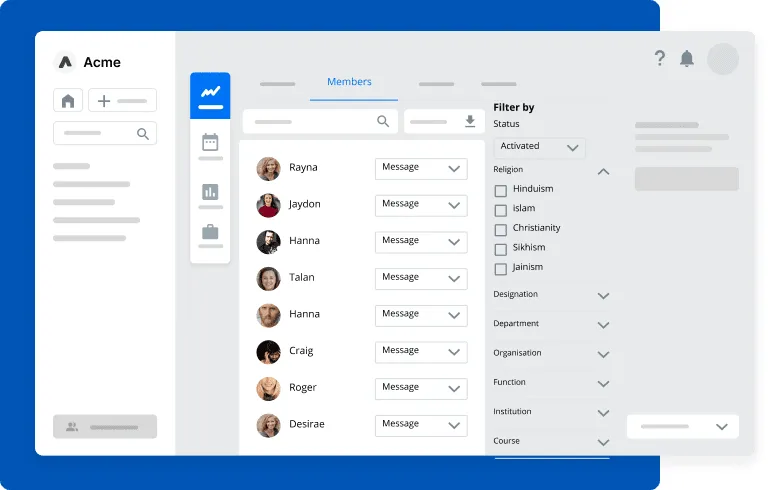
A centralized member database stores contact details, membership status, renewal dates, participation history, and other relevant information.
This helps maintain accurate records while making it easier to manage member relationships over time.
Membership Applications and Renewals
Organizations can manage new applications, approvals, renewals, membership levels, and automated reminders from a single system.
Automation reduces manual processing and helps improve renewal efficiency.
Event Management
Many associations organize conferences, webinars, workshops, networking sessions, and annual meetings.
Association Management Software commonly includes:
- Event creation
- Online registration
- Ticket management
- Attendance tracking
- Payment collection
- Event reporting
These tools simplify planning while providing members with a smoother registration experience.
Communication Tools
Effective communication is essential for member engagement.
AMS platforms often include:
- Email campaigns
- Newsletters
- Announcements
- Member notifications
- Discussion capabilities
- Automated reminders
Centralized communication helps organizations keep members informed throughout the year.
Financial Management
Many associations collect membership dues, event fees, donations, sponsorship payments, or certification charges. An Association Management System often includes financial tools that help track these transactions while integrating with accounting software where needed.
Common financial capabilities include:
- Membership fee collection
- Online payment processing
- Invoice generation
- Recurring billing
- Financial reporting
- Payment history tracking
Having financial information connected with member records can improve visibility into membership status and payment history.
Reporting and Analytics
Data plays an important role in understanding member engagement and organisational performance. Most Association Management Software includes reporting dashboards that allow administrators to monitor key metrics.
Typical reports may include:
- Active membership numbers
- Membership renewals
- Event attendance
- Revenue reports
- Member engagement trends
- Volunteer participation
These insights help organisations evaluate programmes, identify trends, and support informed decision-making.
Member Self-Service Portal
A self-service portal gives members greater control over their interactions with the organisation. Instead of contacting administrators for every update, members can complete many tasks independently.
Common self-service features include:
- Updating profile information
- Renewing memberships
- Registering for events
- Accessing exclusive resources
- Viewing payment history
- Downloading invoices
- Managing communication preferences
Providing self-service functionality can reduce administrative workload while improving the overall member experience.
Benefits of Association Management Software
Implementing an Association Management System offers advantages for organisations of all sizes.
Centralised Member Information
Instead of storing member data across multiple spreadsheets or software tools, organisations can maintain a single, consistent source of information.
This reduces duplicate records and improves data accuracy.
Improved Administrative Efficiency
Automation of routine tasks such as membership renewals, event registrations, payment reminders, and email communications helps reduce manual work and allows staff to focus on higher-value activities.
Better Member Engagement
Modern AMS platforms provide multiple ways to keep members informed and involved through announcements, events, online discussions, newsletters, and resource sharing.
Consistent communication supports stronger member relationships.
Easier Event Management
Managing registrations, attendance, and payments through one system simplifies event administration while creating a smoother experience for attendees.
Data-Driven Decision Making
Reporting and analytics help organisations measure performance, identify trends, and understand member behaviour, supporting more informed planning and resource allocation.
Association Management Software vs CRM
Although Association Management Software and Customer Relationship Management (CRM) systems both manage contact information, they serve different purposes.
| Feature | Association Management Software | CRM |
| Primary Focus | Membership management | Customer and sales management |
| Member Database | Yes | Limited or customisable |
| Membership Renewals | Yes | Usually requires customisation |
| Event Management | Yes | May require third-party tools |
| Committee Management | Yes | Rarely included |
| Member Self-Service | Yes | Limited |
| Dues Management | Yes | Not typically available |
| Sales Pipeline | No | Yes |
For membership-based organisations, an AMS provides specialised tools that address operational needs beyond traditional customer management.
How to Choose the Right Association Management Software
Selecting the right platform requires evaluating both current needs and future growth.
Define Your Organisation's Requirements
Begin by identifying operational priorities, such as:
- Membership management
- Event management
- Communication tools
- Financial management
- Reporting
- Volunteer coordination
Understanding these requirements helps narrow down suitable solutions.
Evaluate Ease of Use
A user-friendly interface can reduce training time and encourage adoption among administrators, volunteers, and members.
Consider Scalability
Choose software that can support organisational growth, increasing membership, additional programmes, and future operational needs.
Assess Integration Capabilities
Many organisations rely on multiple digital tools. An AMS that integrates with accounting software, payment gateways, email platforms, learning management systems, or CRM solutions can reduce duplicate work and improve efficiency.
Review Security and Data Protection
Since membership platforms often store personal and financial information, security features such as role-based access, encryption, and data backup should be carefully evaluated.
Compare Reporting Features
Look for reporting capabilities that align with your organisation's goals, including member engagement, financial performance, event attendance, and renewal tracking.
Common Challenges When Implementing Association Management Software
Introducing new software often requires planning and organisational change. Common implementation challenges include:
- Migrating existing member data
- Training staff and volunteers
- Cleaning duplicate records
- Integrating with existing systems
- Encouraging member adoption
A structured implementation plan and ongoing support can help organisations address these challenges effectively.
Future Trends in Association Management Software
Technology continues to shape how associations manage operations and engage with members. Emerging trends include:
- Artificial intelligence for member support and administrative automation
- Enhanced data analytics and reporting
- Mobile-first member experiences
- Improved automation workflows
- Personalised member communications
- Greater integration with virtual and hybrid event platforms
As member expectations evolve, organisations are increasingly looking for flexible systems that support engagement across multiple digital channels.
Frequently Asked Questions
What is Association Management Software?
Association Management Software is a specialised platform that helps membership-based organisations manage member records, renewals, events, communications, finances, and reporting from a centralised system.
Who should use an Association Management System?
Professional associations, trade associations, nonprofit organisations, alumni groups, chambers of commerce, certification bodies, and other membership-driven organisations commonly use an AMS.
What features should Association Management Software include?
Key features typically include membership management, event management, communication tools, financial management, reporting, self-service portals, and automation.
How is Association Management Software different from CRM software?
An AMS is designed specifically for membership organisations, whereas CRM software primarily focuses on managing customer relationships and sales activities.
Can small associations benefit from Association Management Software?
Yes. Even smaller organisations can benefit by reducing manual administration, improving member communication, and maintaining organised membership records as they grow.
Conclusion
Association Management Software has become an essential tool for organisations that manage memberships, events, communications, and administrative processes. By centralising member information and automating routine tasks, these platforms help improve operational efficiency while supporting stronger member engagement.
Whether managing a professional association, nonprofit organisation, alumni network, or community group, selecting software that aligns with your organisation's goals, integrates with existing systems, and supports future growth is an important step toward more effective association management.





























Sign in to leave a comment.