


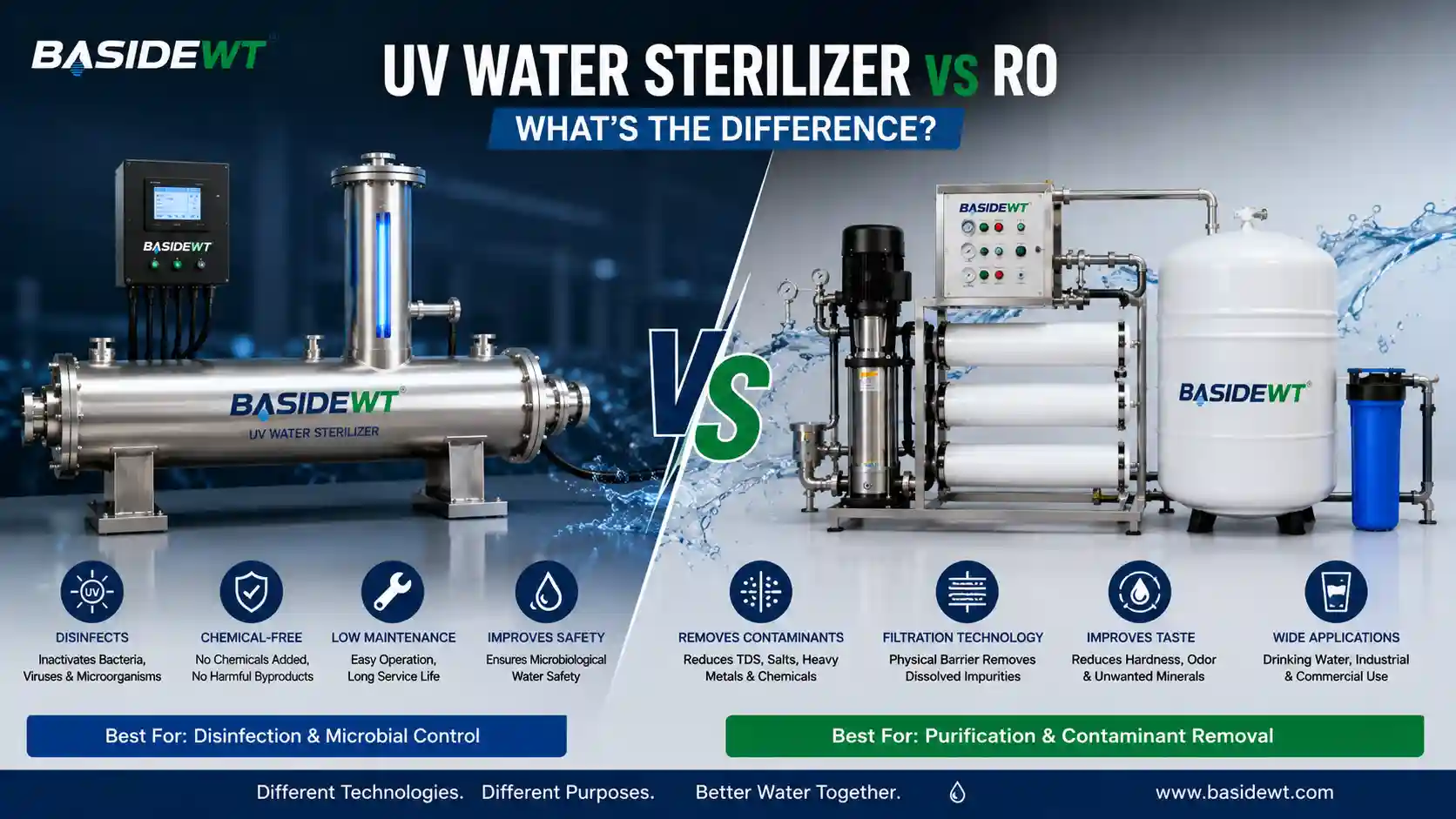
A UV water sterilizer uses ultraviolet light to inactivate bacteria, viruses, and other microorganisms in water. Reverse osmosis (RO) uses a semipermeable membr…
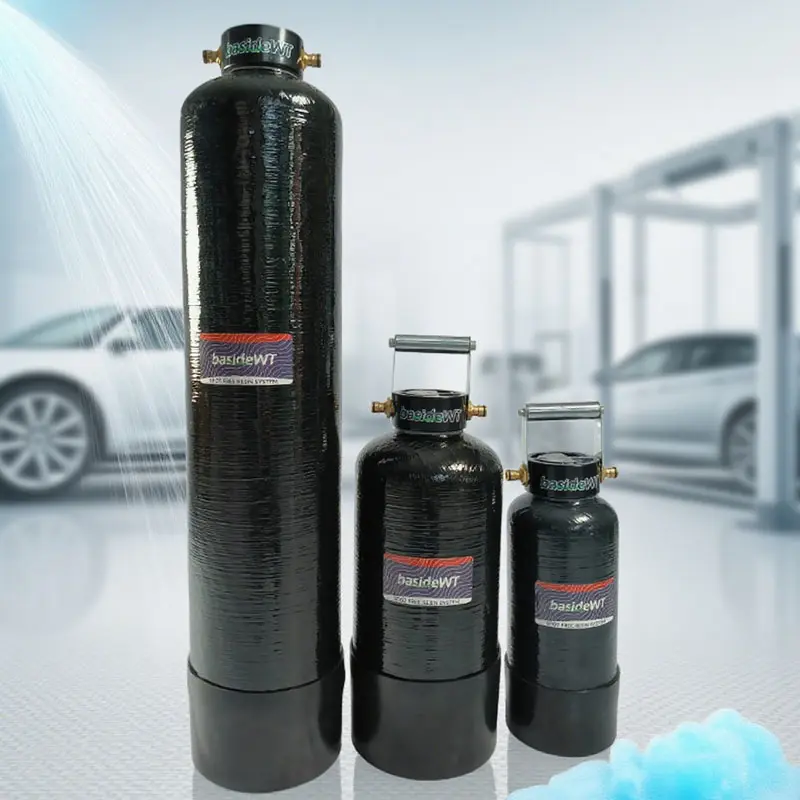
Water spots ruin a perfect car wash every time. They form when tap water evaporates and leaves dissolved minerals on the surface. Calcium, magnesium, and silica…
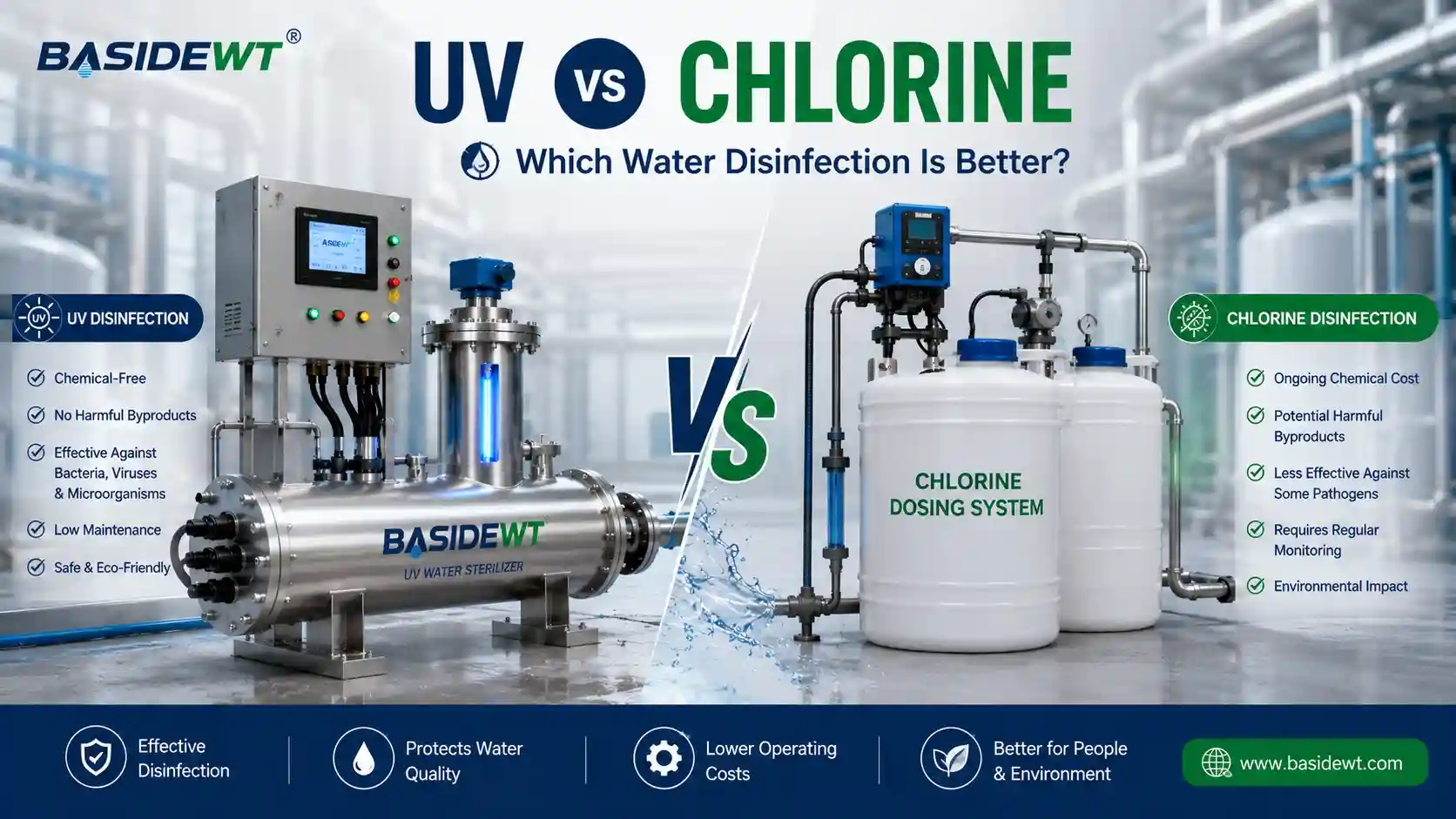
UV vs chlorine water disinfection comes down to one core difference. UV disinfects water using ultraviolet energy, with no chemical added to the water. Chlorine…
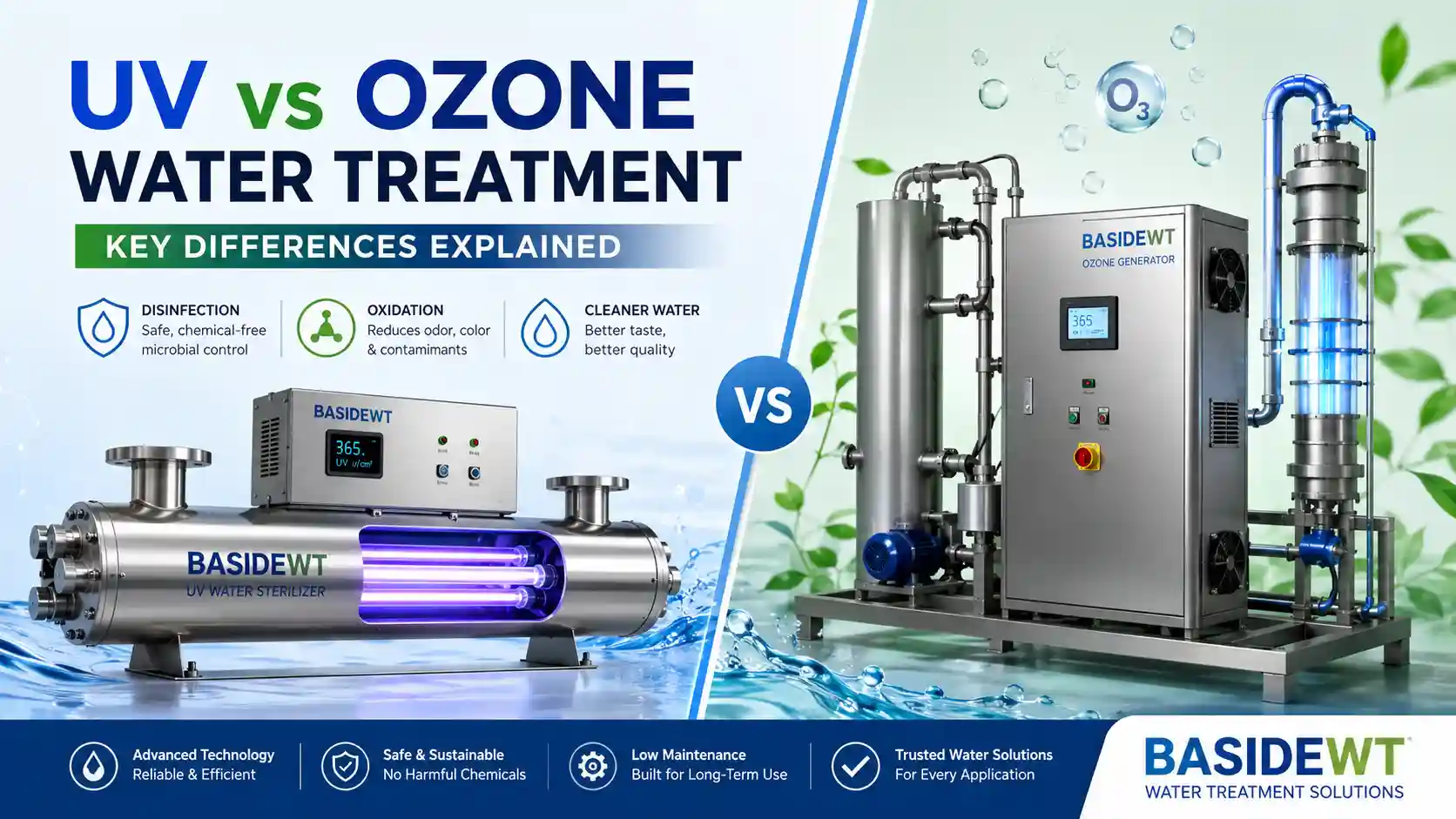
UV vs ozone water treatment comes down to one core distinction: UV disinfects using light, while ozone disinfects and oxidizes using a reactive gas. UV usually …
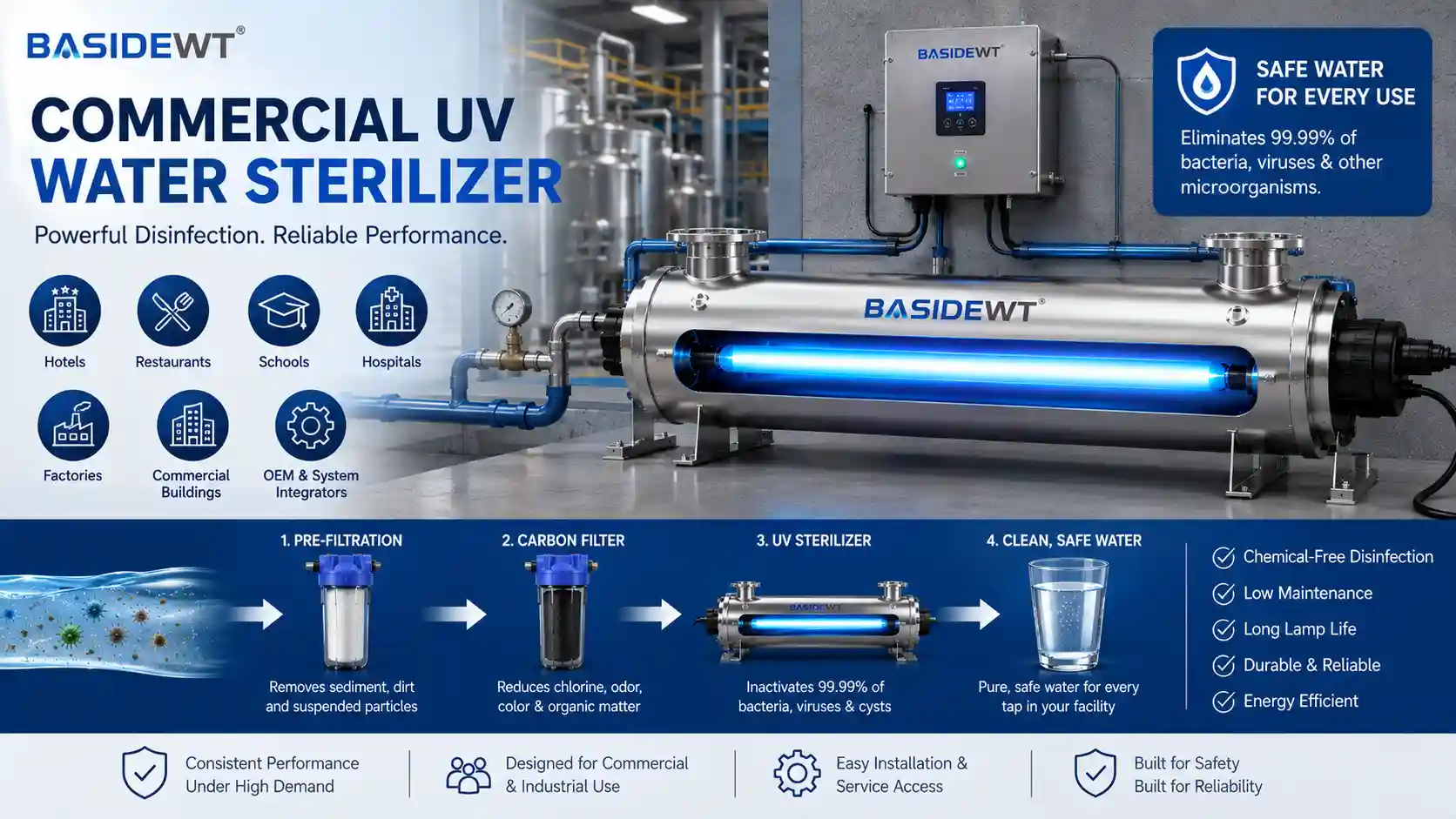
A commercial UV water sterilizer treats a larger or more demanding water flow by exposing it to germicidal UV-C energy. This process helps inactivate bacteria, …
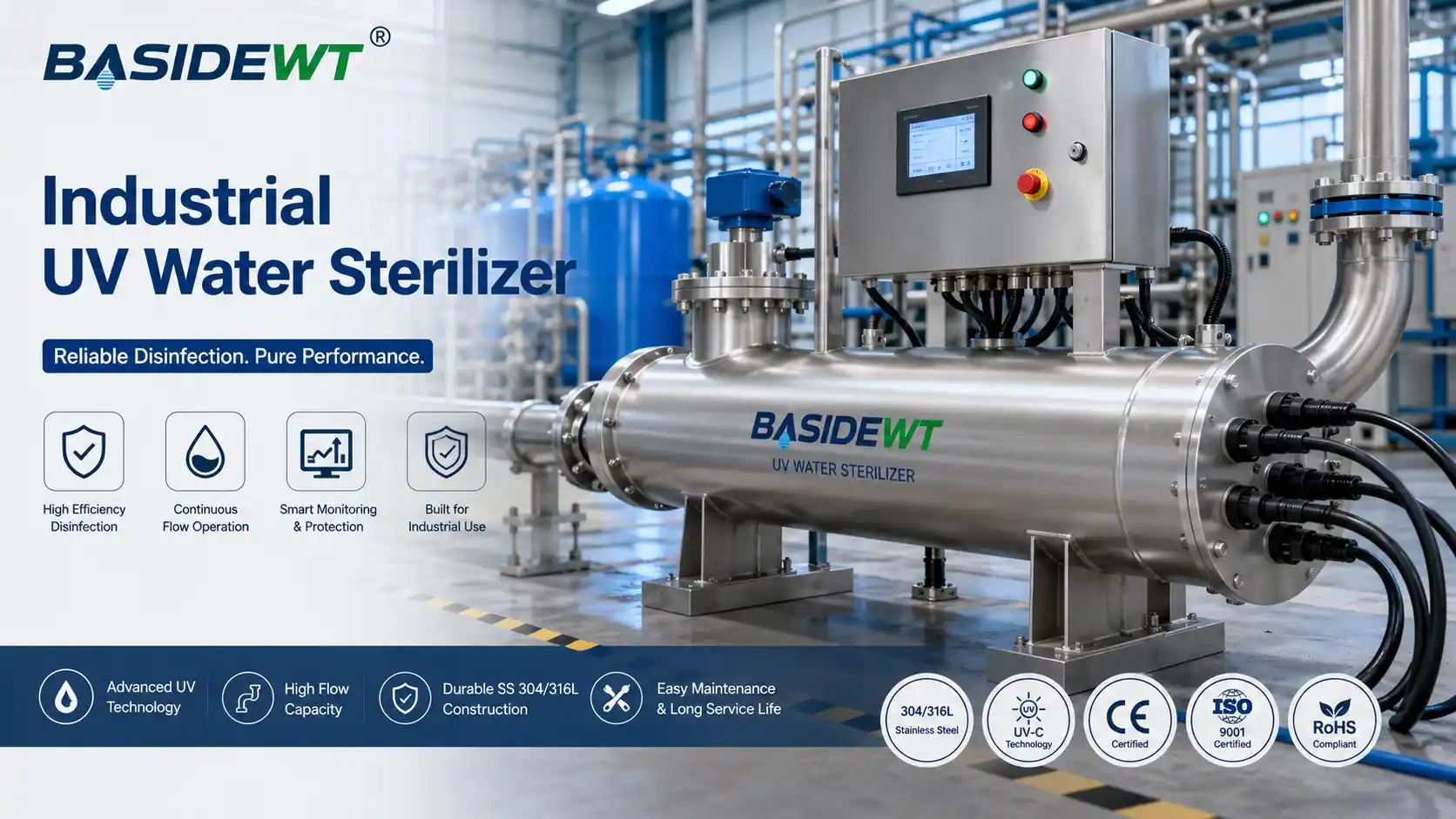
An industrial UV water sterilizer is a high-capacity ultraviolet disinfection system built to treat large, often continuous water flows in factories, process pl…
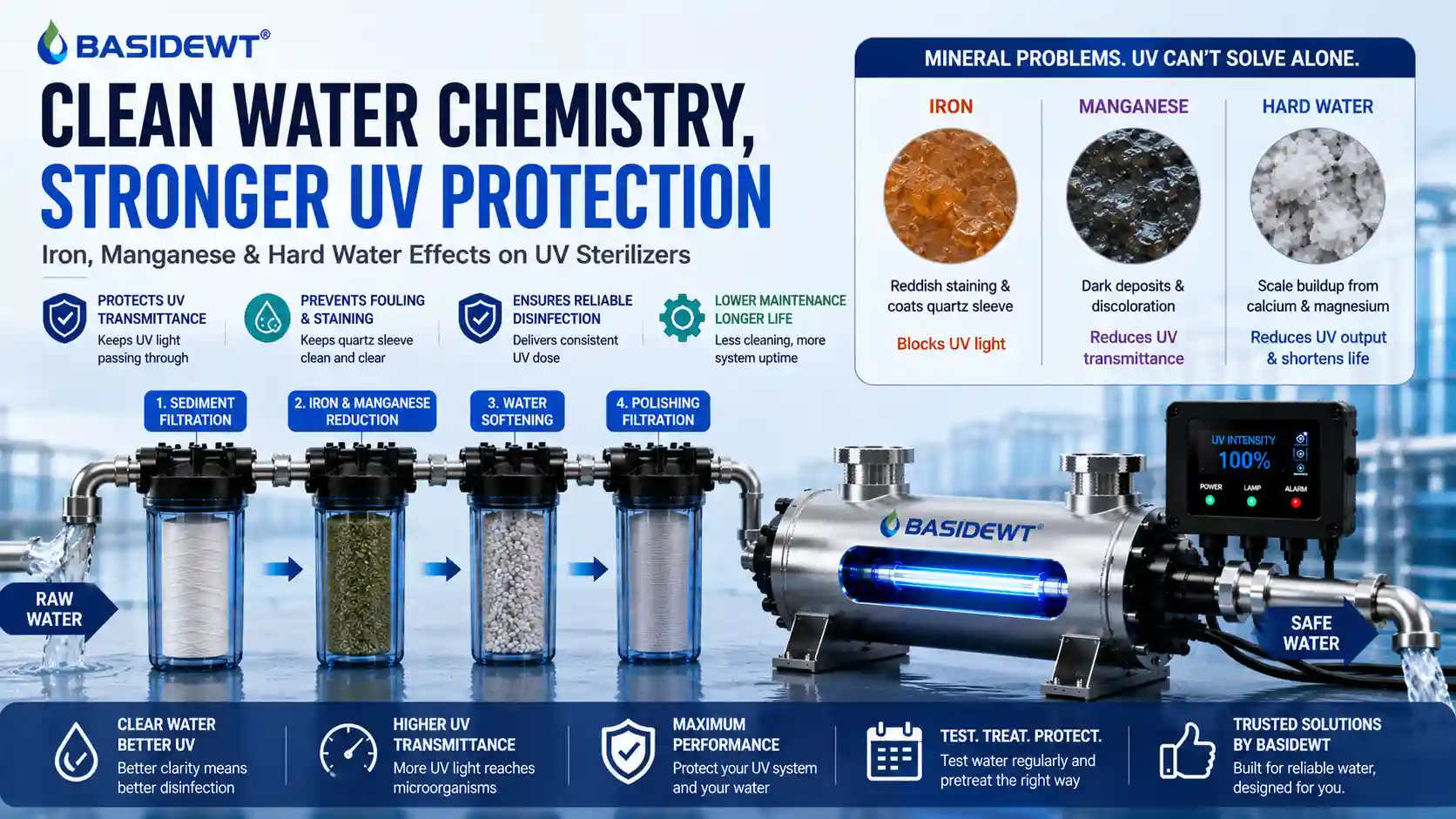
Iron, manganese, and hardness minerals can quietly ruin UV sterilizer performance. They coat the quartz sleeve, block UV light, and stop enough UV energy from r…
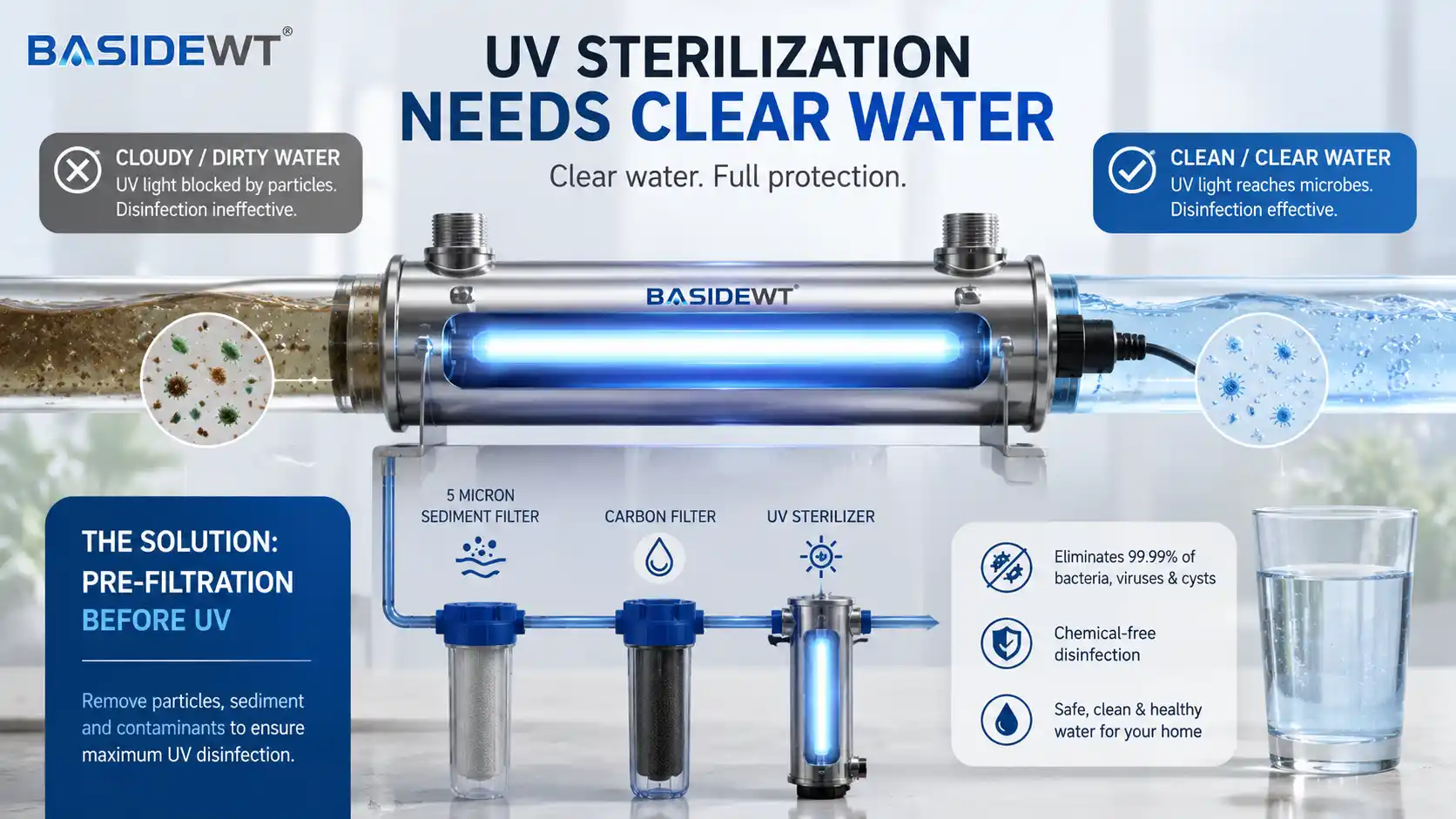
A UV sterilizer for cloudy water cannot reliably disinfect water on its own. UV light needs a clear path to reach microorganisms, and cloudy or dirty water bloc…
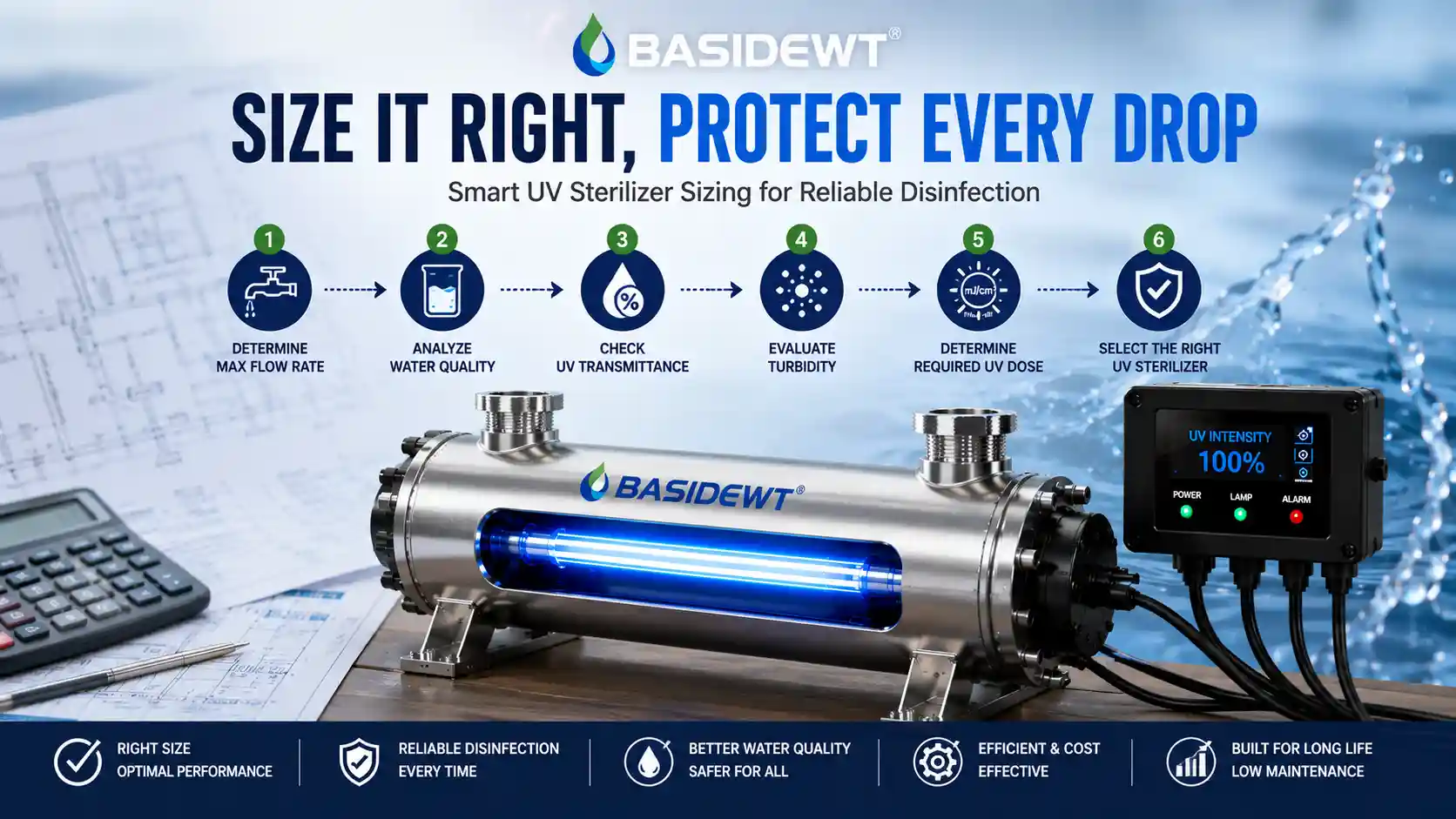
UV water sterilizer sizing comes down to matching your system’s real operating flow rate with a UV dose that stays effective under your actual water conditions.…
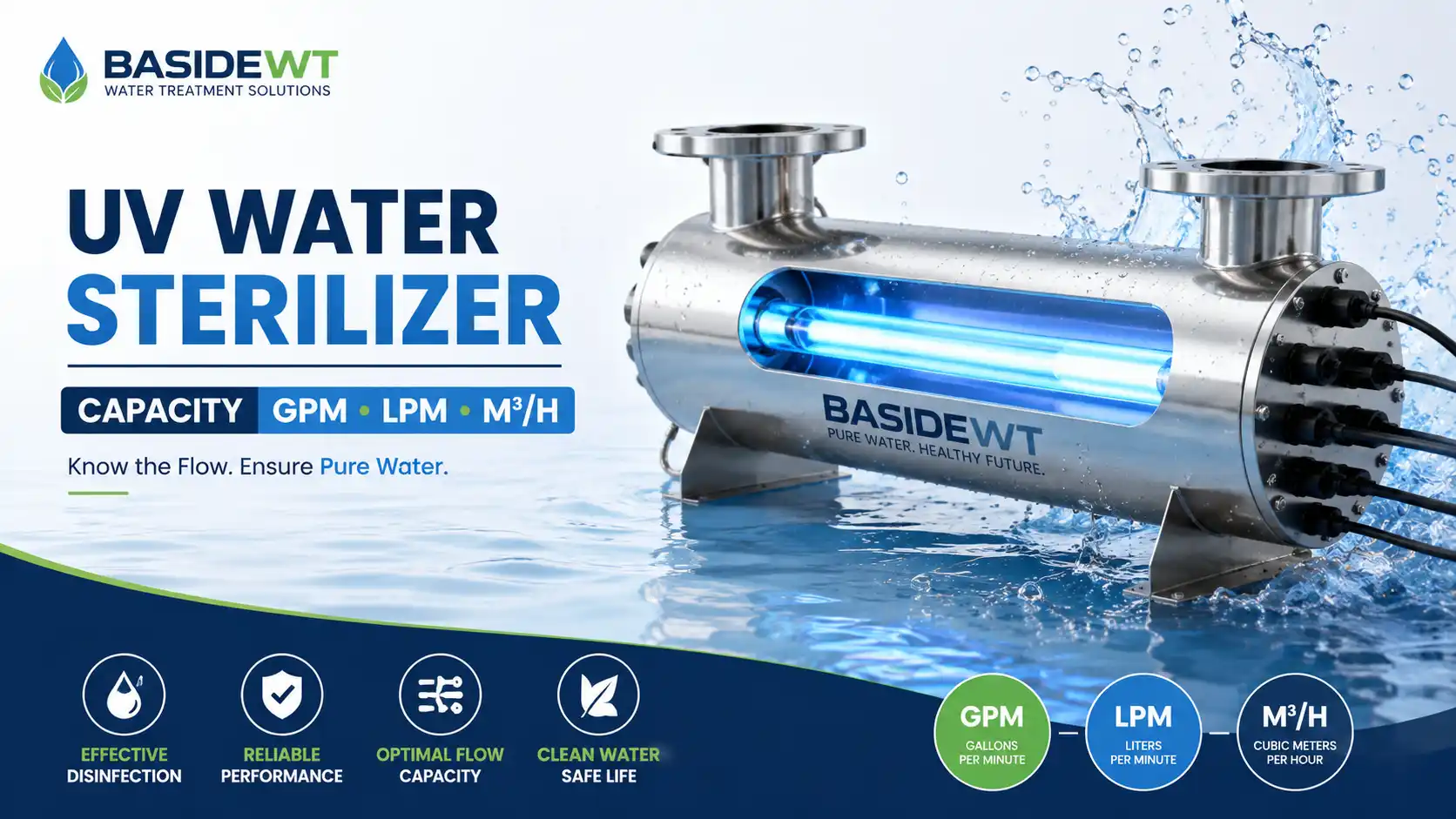
UV water sterilizer capacity describes the maximum water flow a system can treat while still delivering its intended disinfection performance. This rating usual…
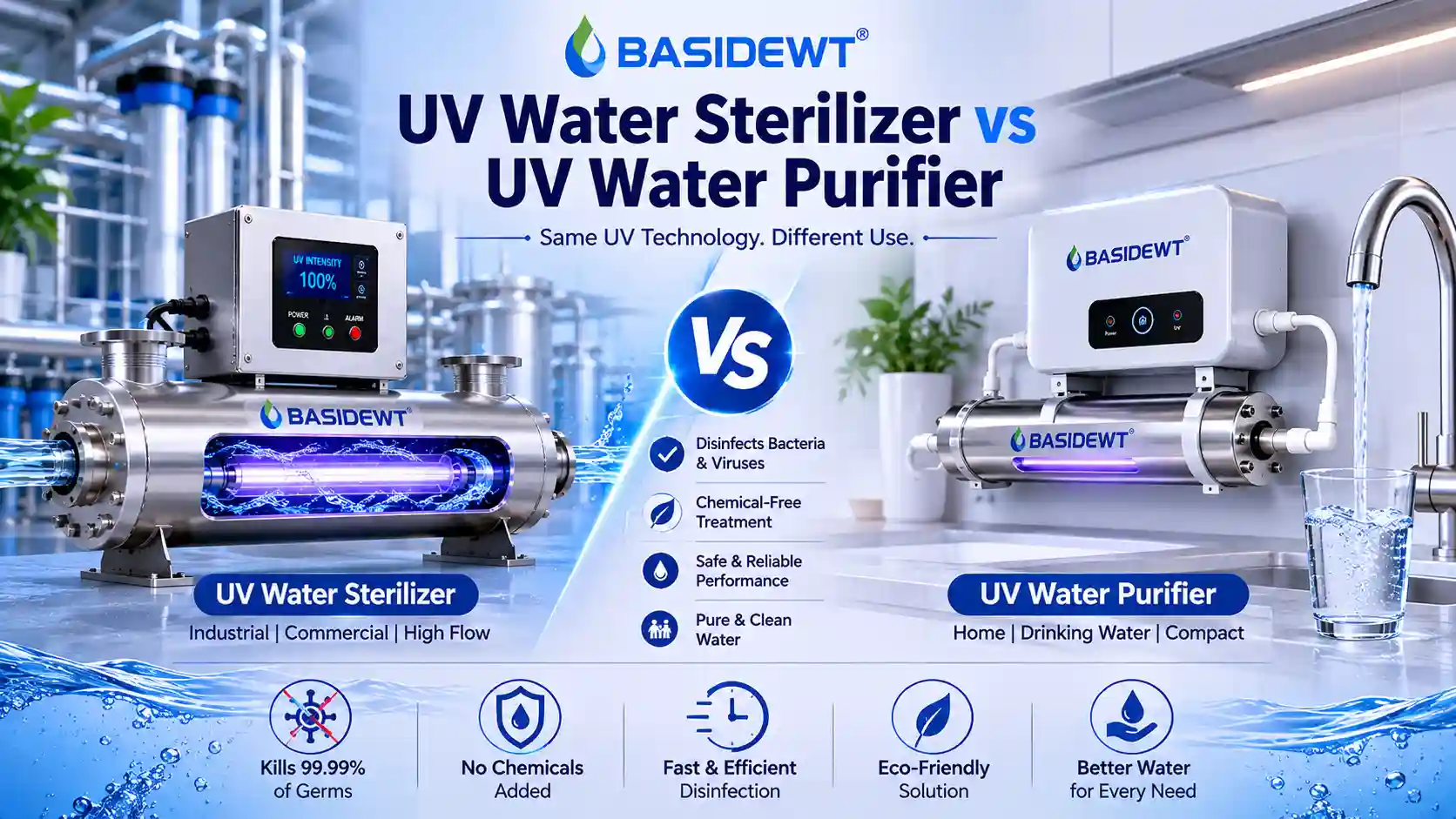
A UV water sterilizer and a UV water purifier are usually the same core technology sold under two different names. Both rely on ultraviolet light to inactivate …
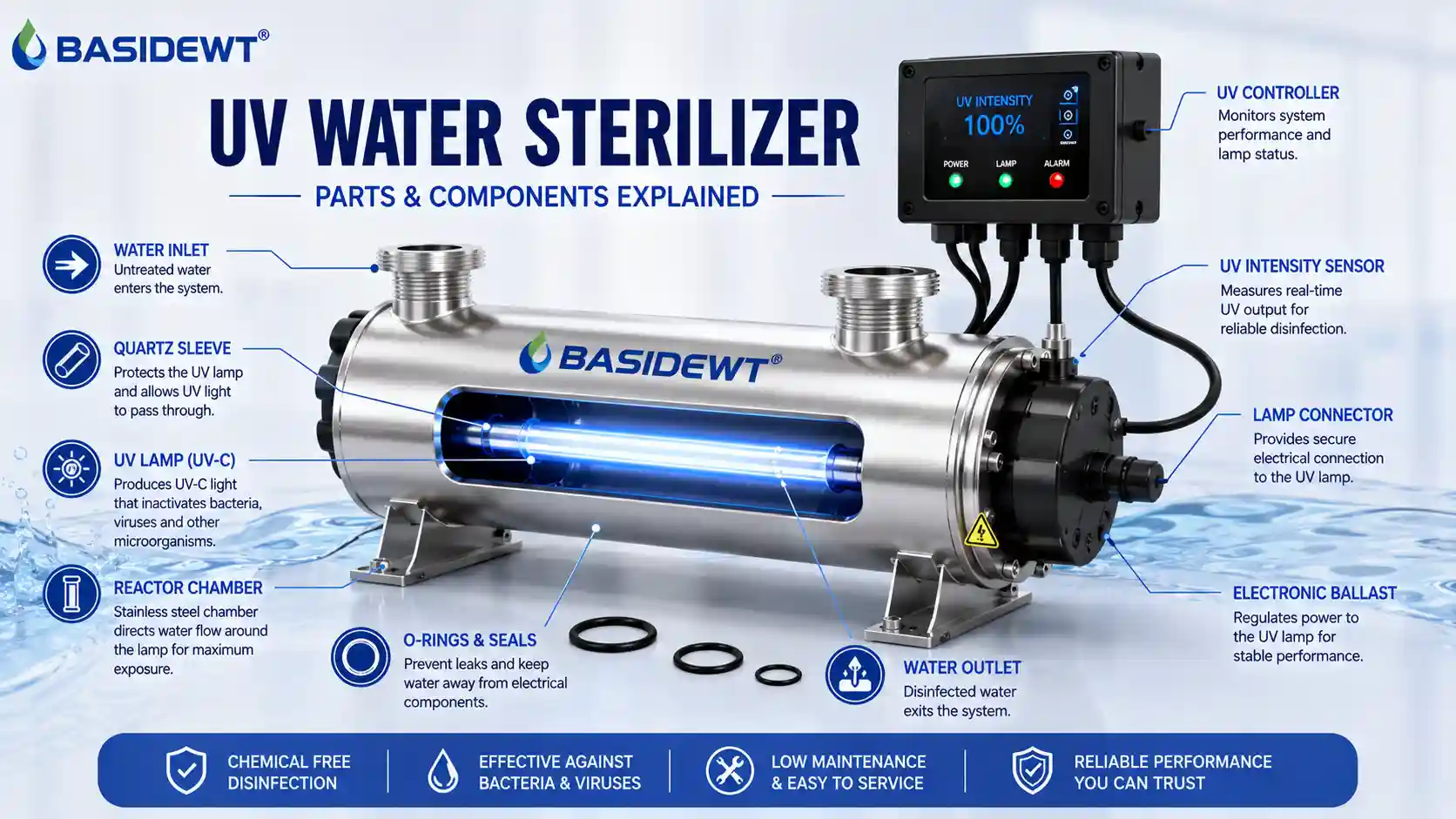
A UV water sterilizer is built from a small set of core parts that work together to treat water: a UV lamp, a quartz sleeve, a reactor chamber, electrical conne…
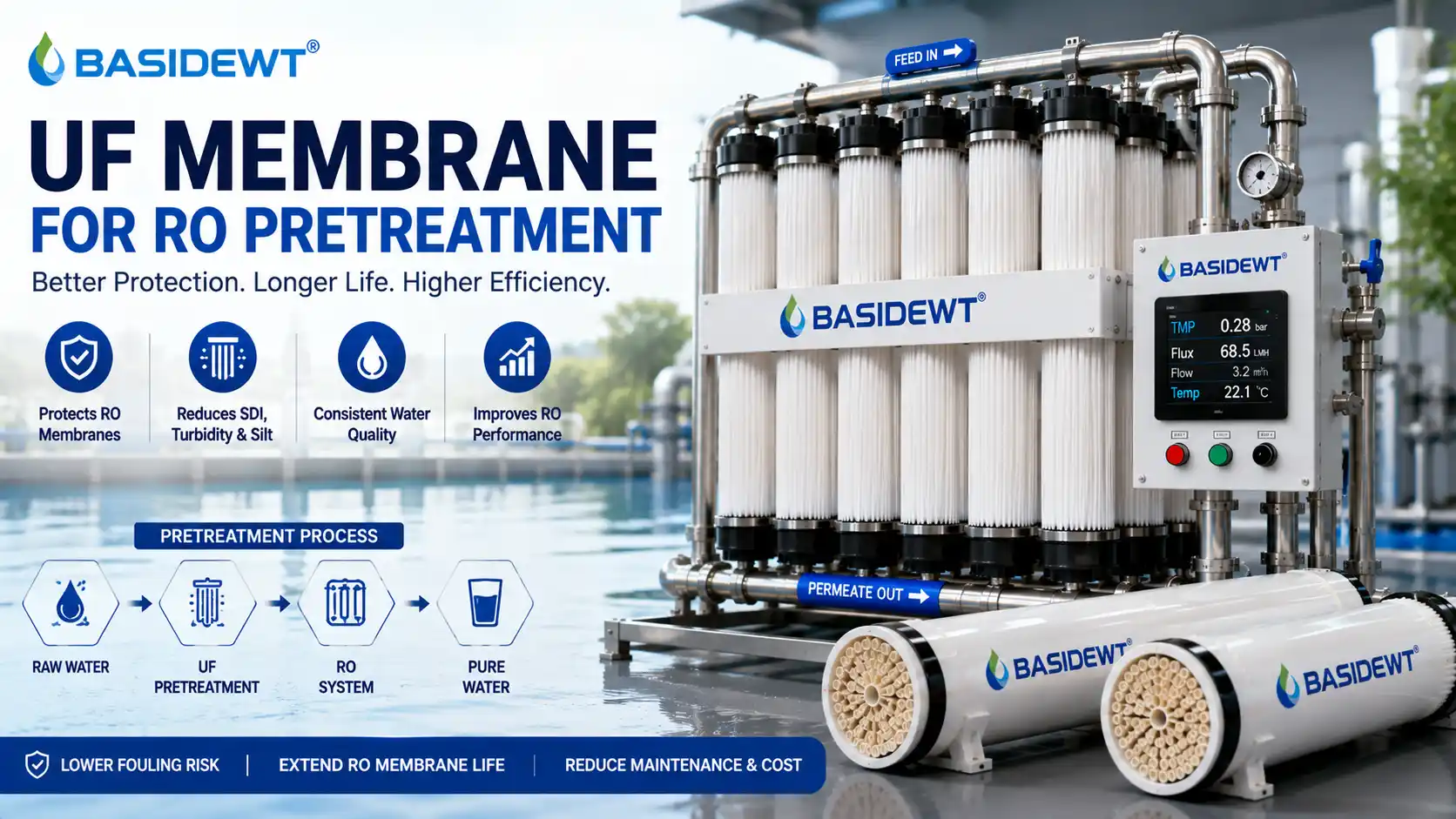
A UF membrane for RO pretreatment is used to physically remove suspended solids, colloids, turbidity, and microorganisms from feed water before it reaches a rev…
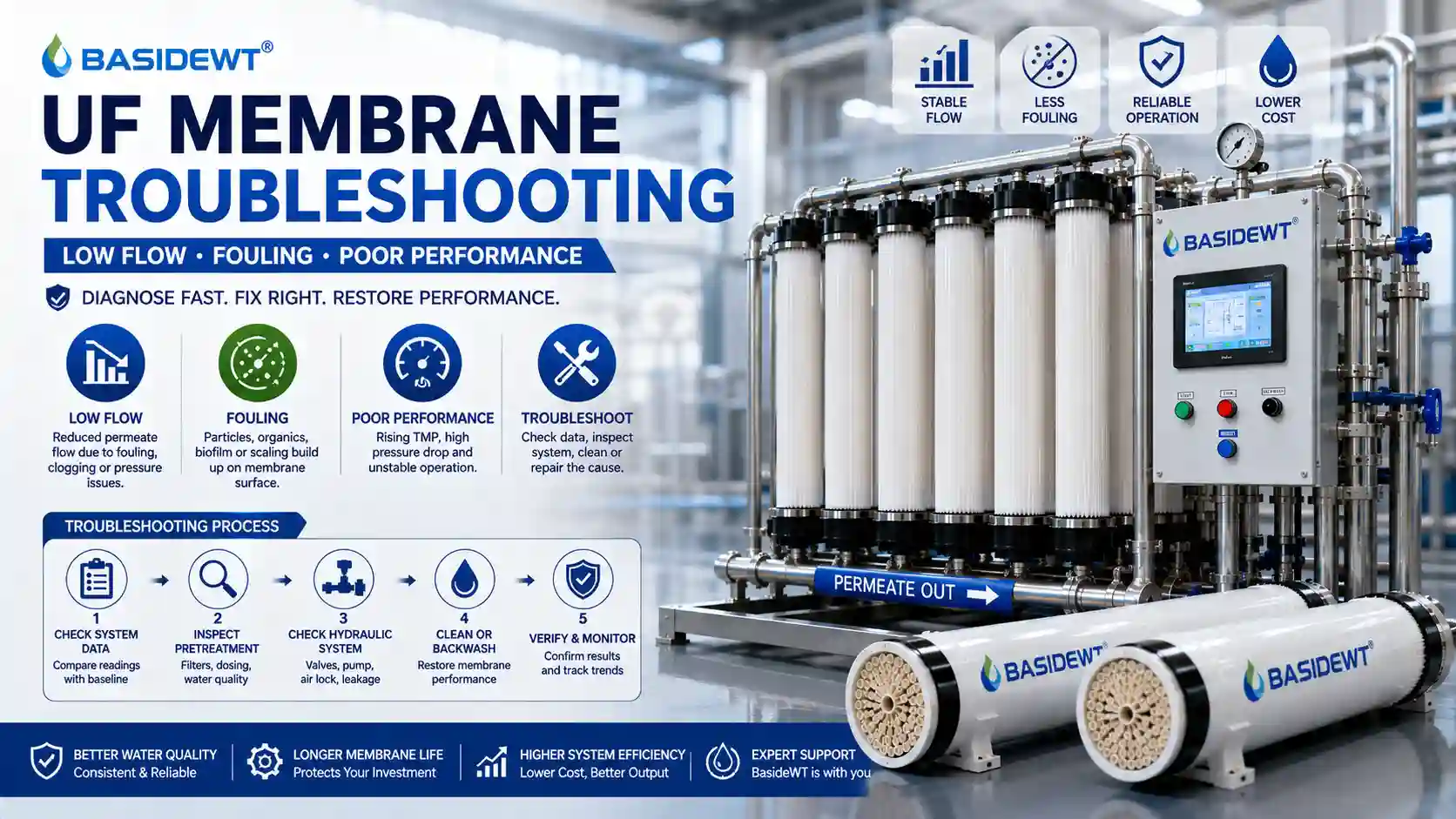
UF membrane troubleshooting means working through a system’s symptoms in a logical order: check the operating readings first, then the water quality, then the m…
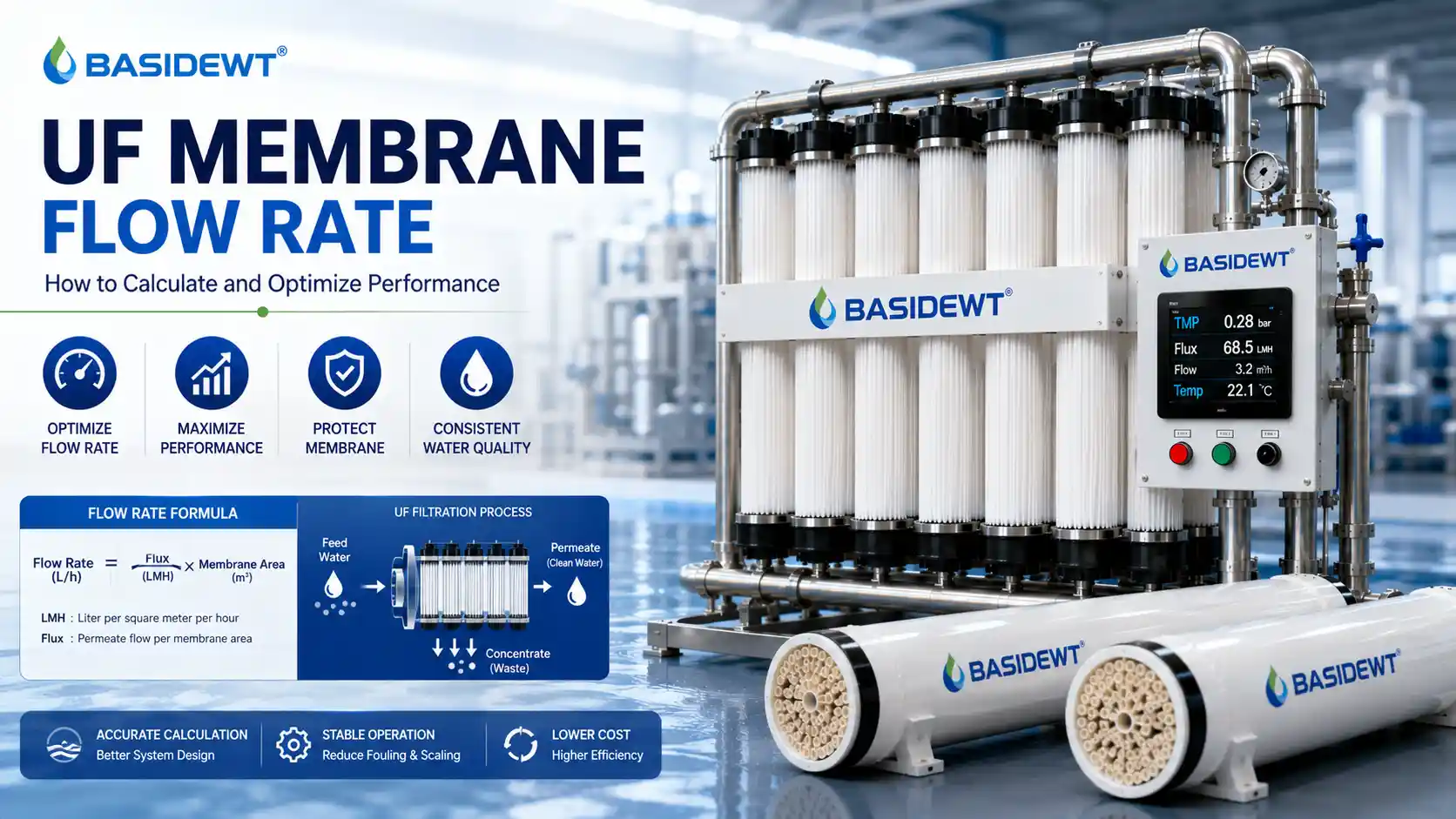
UF membrane flow rate is the volume of water a membrane produces over time. It’s usually measured in liters per hour or gallons per minute. This flow rate depen…
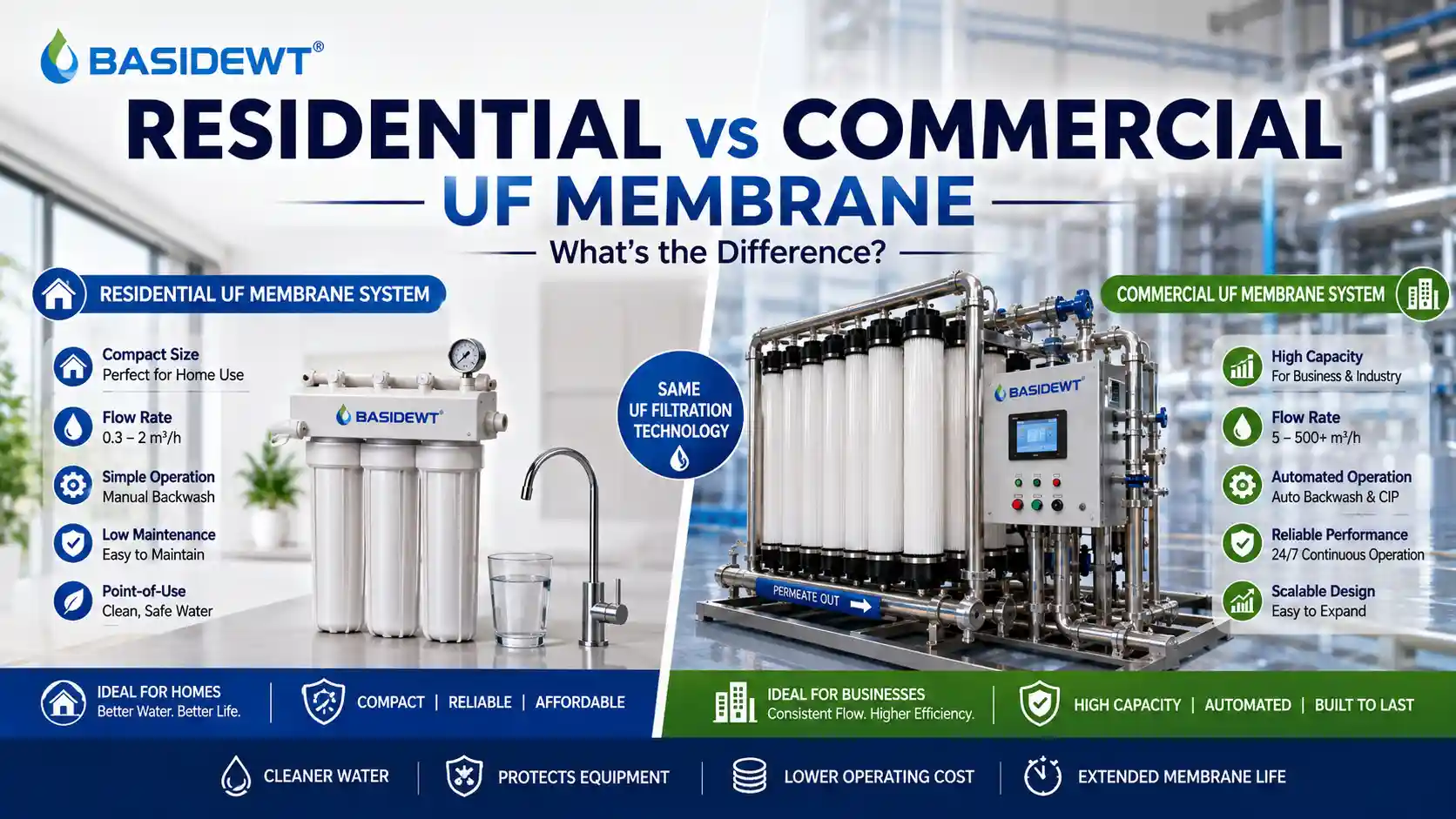
The main difference between residential and commercial UF membrane systems is not the filtration technology itself. Both use the same hollow fiber ultrafiltrati…
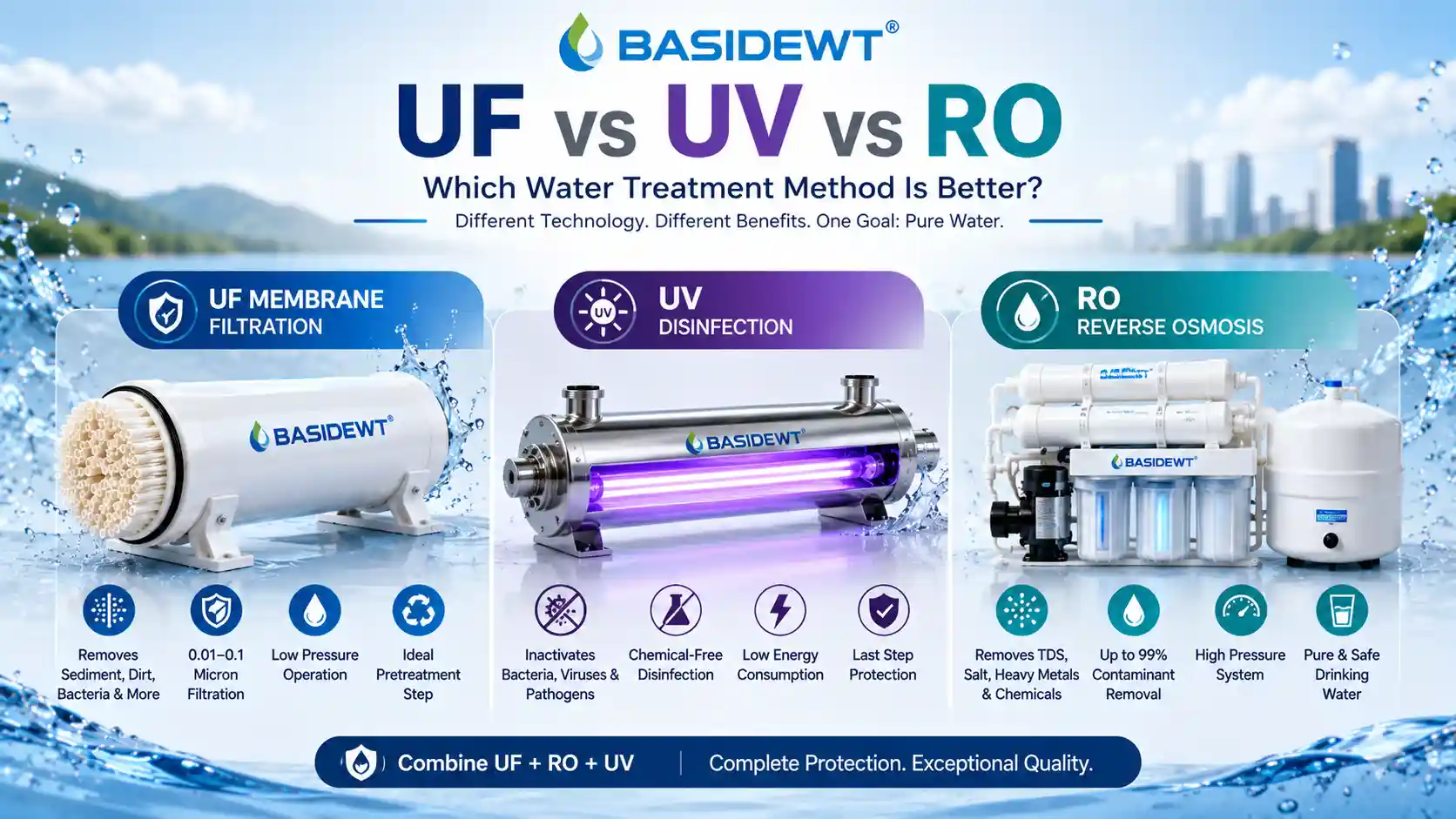
Choosing a water treatment method starts with one question: what is actually in your water? UF membrane, UV, and RO solve different problems, and confusing them…
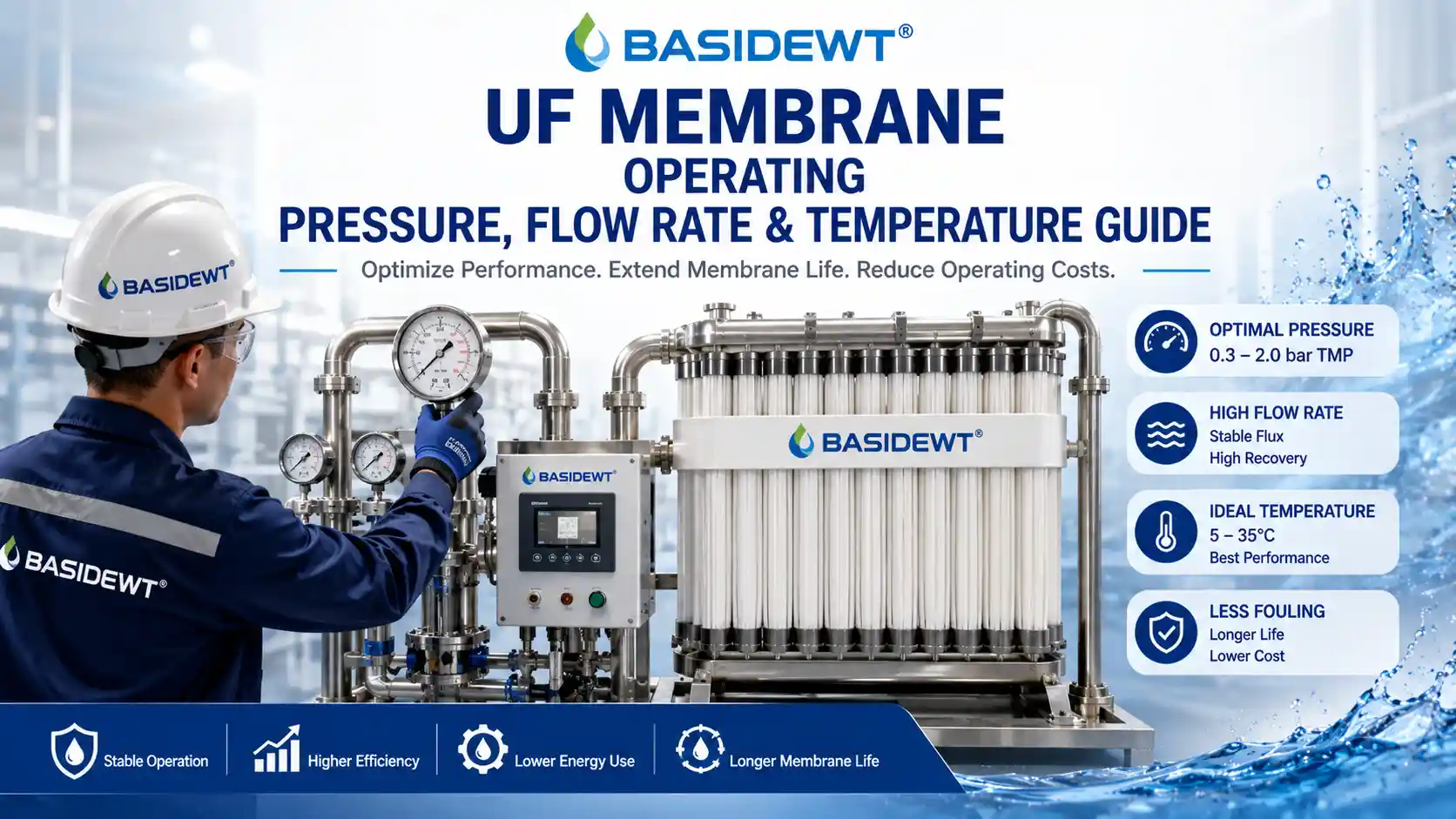
Getting UF membrane operating pressure right is one of the biggest factors in stable filtration performance. Too little pressure, and flow drops. Too much, and …
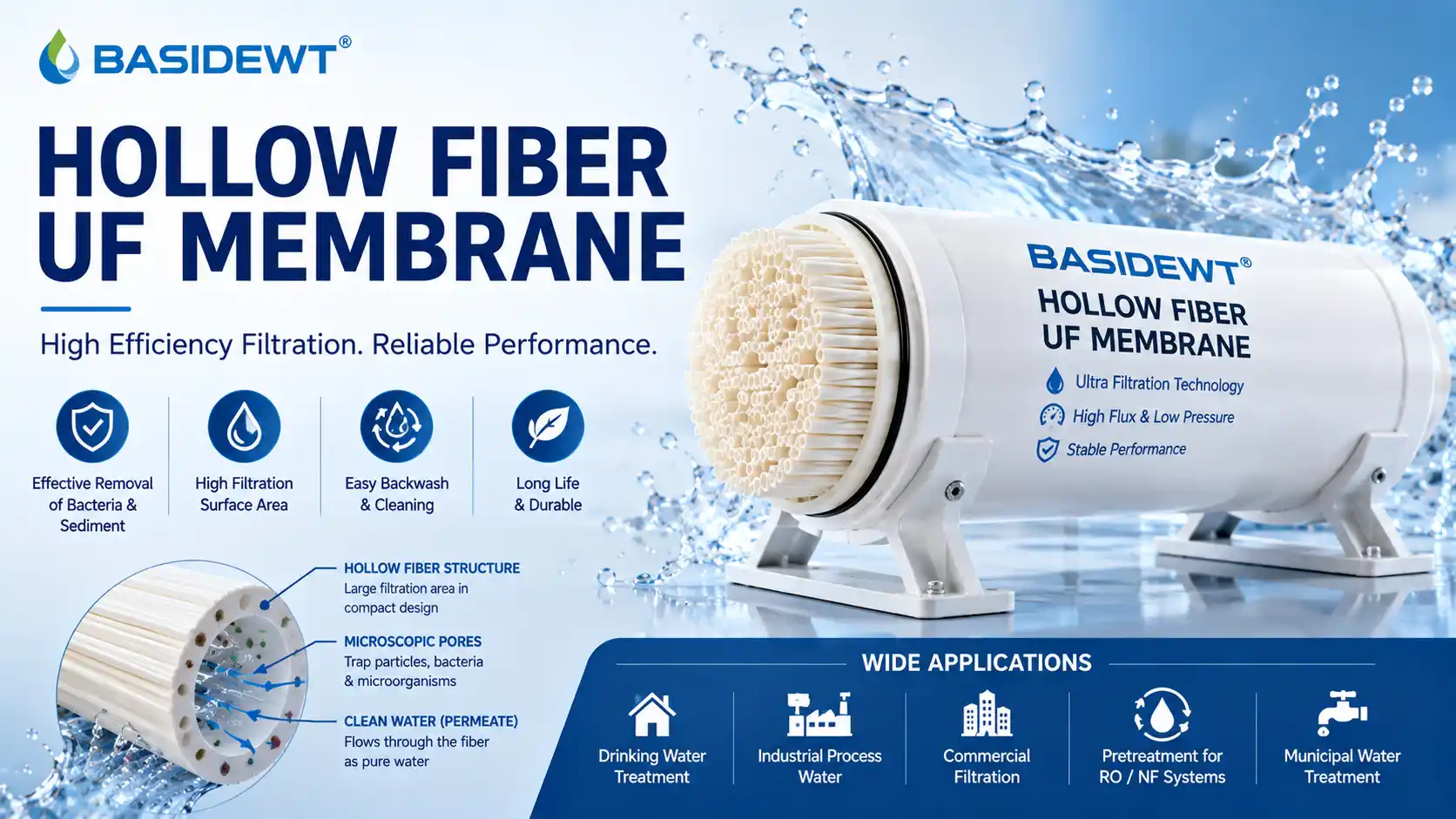
A hollow fiber UF membrane is one of the most widely used membrane formats in water treatment today. It contains thousands of thin, straw-like fibers bundled to…
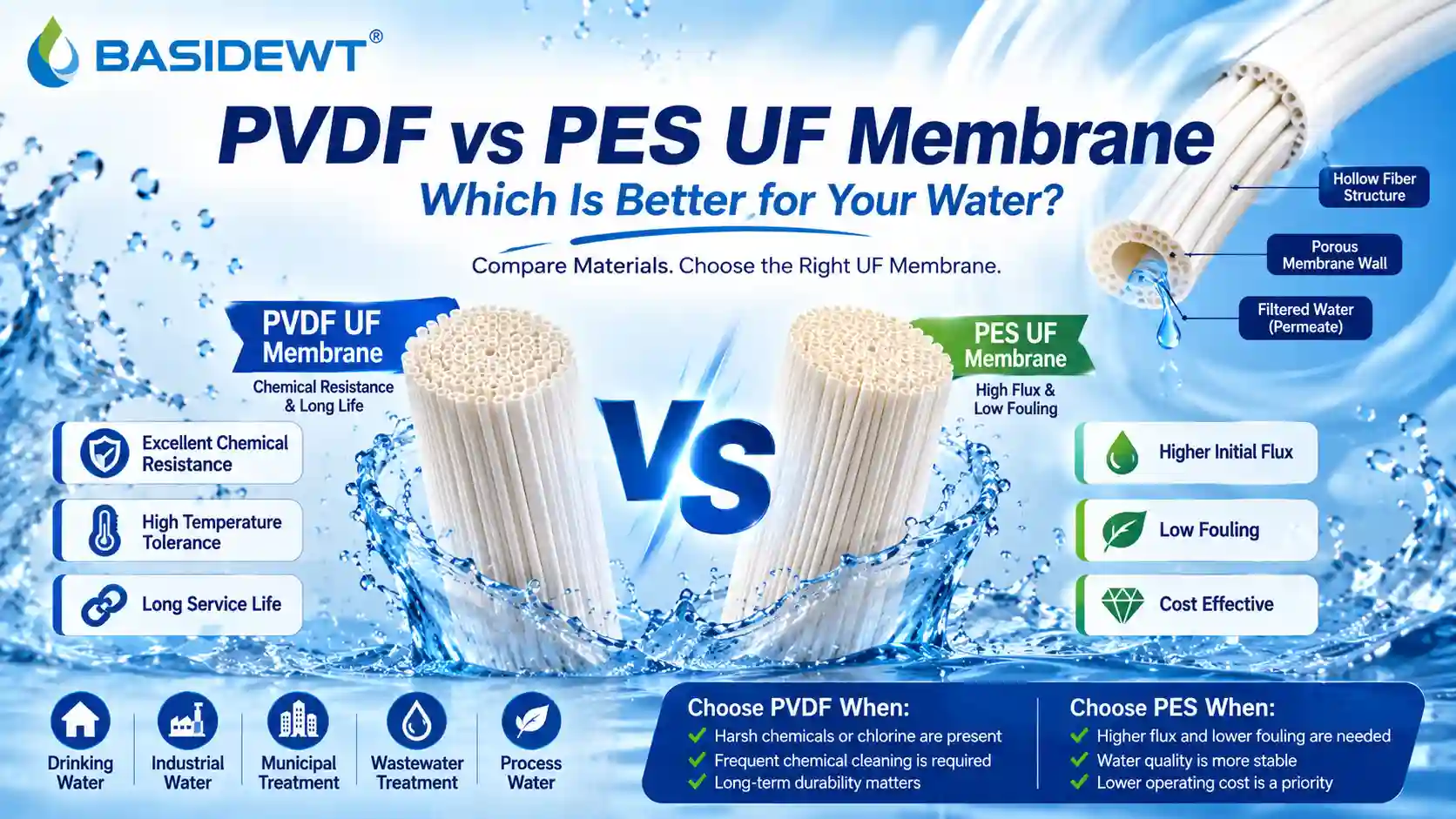
Choosing between a PVDF vs PES UF membrane is one of the most common decisions engineers face when specifying an ultrafiltration system. Both materials dominate…