


Short answer: Shopify now has two native testing tools. SimGym sends AI shoppers through an unpublished theme to flag friction before launch, and its results ar…

Short answer: An agent-ready Shopify checkout keeps working when an AI agent, not a person, drives it. In 2026 agents reach your checkout three ways: direct che…

Agentic commerce is shopping where an AI agent searches, compares and buys on the shopper’s behalf, so a Shopify store has to be understood by machines as well …

Short answer: Black Friday is Friday, November 27, 2026, and Cyber Monday is November 30. This is the first holiday season where AI agents can buy directly from…

Short answer: The four protocols work at different layers. MCP is the general plumbing that connects AI apps to tools and data. UCP (Google and Shopify) and ACP…

Short answer: Muse is Meta's personal AI shopping and task agent, launched in the US on September 8, 2026. Shopify stores reach it through Shopify Catalog and a…

Short answer: Shopify Agentic Storefronts settings live at Shopify admin > Sales channels > Agentic. A master switch called "Allow Shopify to manage for me" is …

Short answer: Shopify Catalog is the product index that AI agents like ChatGPT, Microsoft Copilot and Meta’s Muse read from. For supplement and skincare brands,…

The world of eCommerce has moved beyond using AI to merely help shoppers shop. Now, AI agents have become shoppers, shopping for customers. Instead of browsing …

As Shopify store owners start to take stock of their products, it’s safe to say that the BFCM sale madness has already begun. With each passing day, a new task …
Shopify is a fully hosted ecommerce platform with infrastructure, security, and checkout built in. WooCommerce is a free, open-source plugin that turns a self-h…
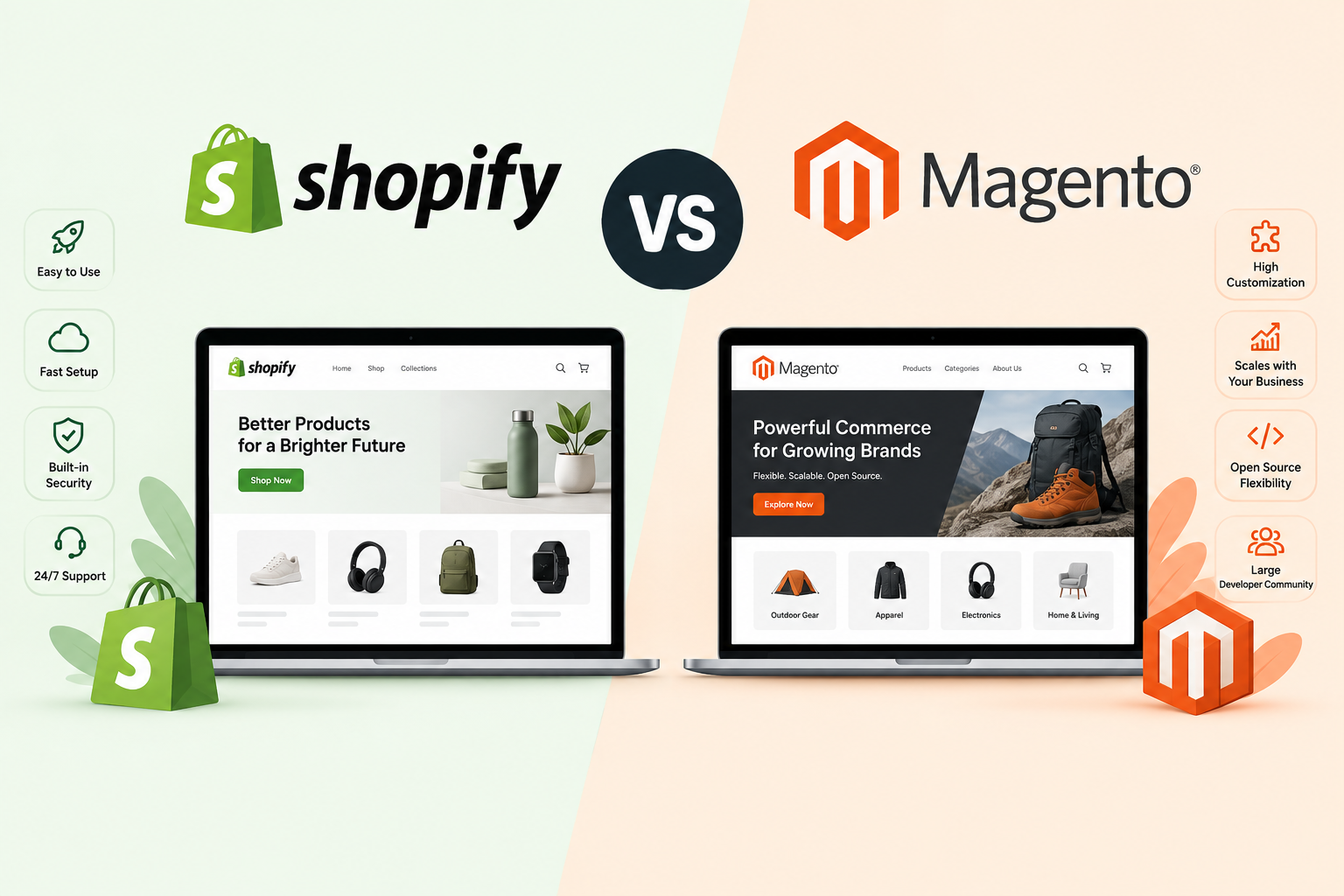
Shopify vs Magento: Enterprise Platform Comparison Shopify Plus is a fully managed enterprise SaaS platform. Magento, now sold by Adobe as Adobe Commerce, is op…

When enterprise eCommerce growth slows down, it’s never because of just one reason. When brands grow, SKUs increase, there are more markets to manage, and more…

When starting off, small and mid-sized eCommerce stores can function well with a storefront, a payment gateway, and a simple spreadsheet. But this isn’t suffici…

While Shopify Plus is a comprehensive platform in itself, it also provides the flexibility for extensibility. Brands can extend the platform in various ways and…

Managing one eCommerce store requires a hundred components to work in sync. To manage a multi-store eCommerce site, multiply that ten times. Catalogs, languag…

Headless ecommerce separates your storefront (what customers see) from your backend (inventory, checkout, payments), connecting the two through APIs instead of …

There’s a lot that goes on behind the scenes in Shopify Plus stores. For instance, inventory, orders, customer queries, fulfillment, finance, product informatio…

Enterprise ecommerce architecture is the blueprint that connects every part of a business - products, customers, inventory, fulfillment, content, payments, and …

As eCommerce businesses grow, their Shopify Plus structure demands more integrations, expanded catalogs, expansion into international markets, and increased use…