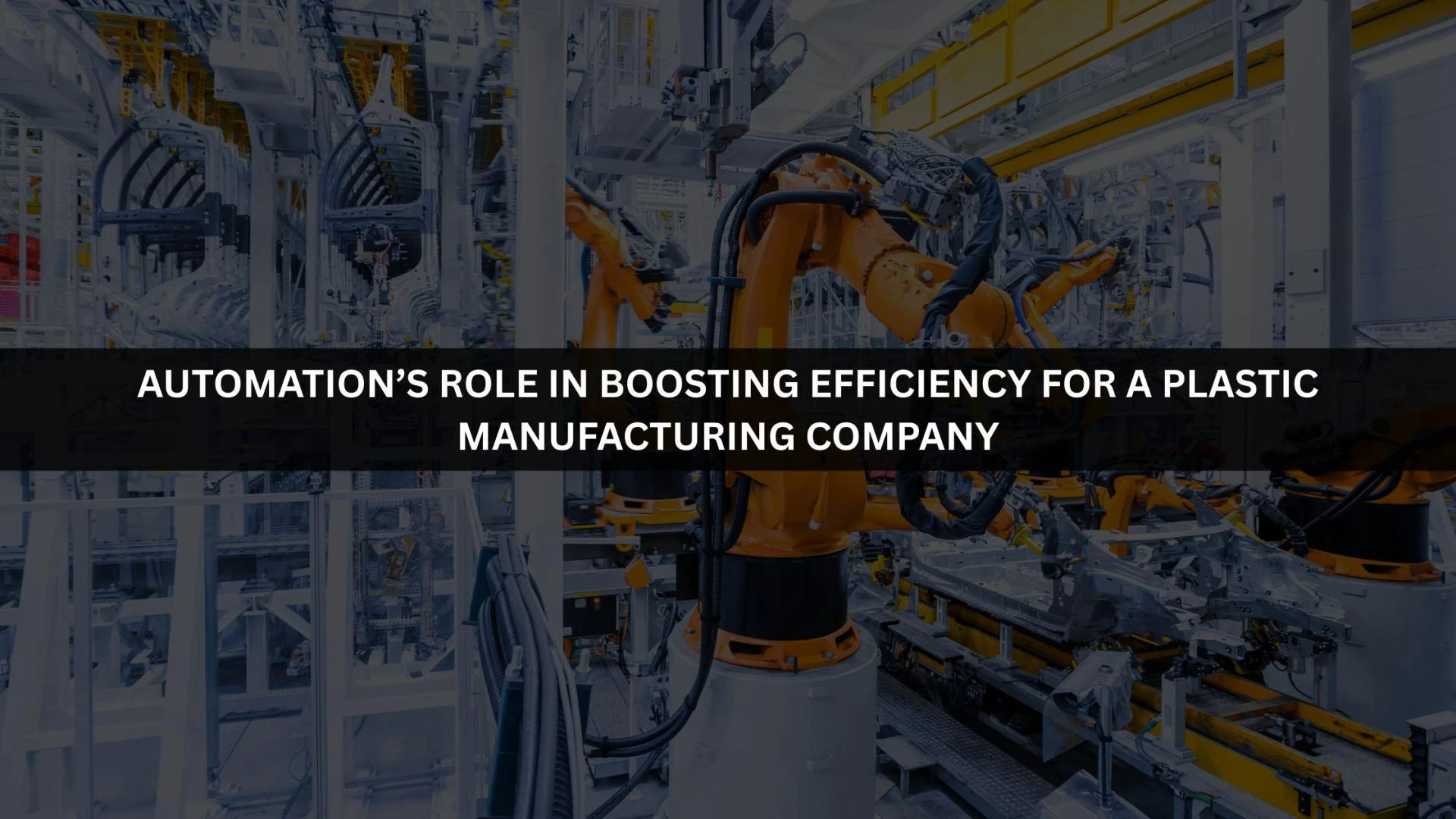
The polymer industry has long been a cornerstone of global manufacturing, supporting diverse sectors such as automotive, packaging, construction, healthcare, and consumer goods. As demand for precision, volume, and sustainability continues to rise, automation has emerged as a powerful catalyst for transformation. For any plastic manufacturing company aiming to stay ahead, embracing automation isn’t just about staying competitive—it’s about redefining operational excellence.
The Shift Toward Smart Manufacturing
The move toward Industry 4.0 is reshaping how plastic manufacturers operate. Advanced robotics, machine learning, IoT (Internet of Things), and real-time data analytics are being integrated across production floors. These technologies not only streamline repetitive tasks but also enable better decision-making, predictive maintenance, and tighter quality control.
For polymer production, this means achieving higher consistency in output, reducing cycle times, and minimizing material waste. In particular, PET preform manufacturing and injection molding processes have seen significant improvements in throughput and defect rates when automated systems are in place.
Enhancing Quality Control Through Precision
One of the primary advantages of automation in polymer production is its contribution to uniform quality. Traditional manual inspection methods, while effective to an extent, leave room for variability and human error. Automation eliminates this issue through sensor-based feedback systems, vision inspection technology, and adaptive process control.
These intelligent systems can detect surface irregularities, dimensional deviations, and inconsistencies in transparency or color in real-time. As a result, a plastic manufacturing company is better equipped to maintain strict product standards, which is especially important in sectors like food-grade packaging or pharmaceutical containers where compliance and safety are non-negotiable.
Increasing Production Speed Without Sacrificing Accuracy
Speed is critical in mass production, but it often comes at the cost of accuracy. Automation breaks this trade-off. High-speed robotic arms, automated mold changers, and coordinated conveyor systems help scale production while ensuring that each part meets exact specifications.
The result is a substantial boost in output per hour, which is vital in meeting seasonal demands or large-volume orders. For manufacturers handling multiple product lines, automated systems allow for faster switching and setup, significantly reducing downtime between production runs.
Cost Efficiency and Resource Optimization
While the initial investment in automation can be significant, the long-term return often outweighs the upfront costs. Automated systems reduce reliance on manual labor, lower error rates, and cut down on material waste through precision dosing and optimized workflows. Energy consumption is also better regulated through intelligent control systems, contributing to cost savings and improved sustainability.
This financial agility enables a plastic manufacturing company to remain resilient in the face of raw material price fluctuations, labor shortages, or shifting market demands. In competitive markets, this cost advantage can be pivotal.
The Role of Data in Modern Polymer Plants
Modern polymer production thrives on data. Smart factories generate and analyze data at every stage of the manufacturing process—from raw material input to the final product. This data provides actionable insights into machine health, operational efficiency, and inventory management.
Automated systems can track parameters such as temperature, pressure, cooling rates, and cycle times in real-time. These insights empower operators and decision-makers to implement process optimizations proactively. Moreover, data-driven traceability enhances accountability and simplifies the certification process for export or regulatory compliance.
Sustainability Through Automation
Sustainability is no longer a secondary concern; it’s central to modern manufacturing strategy. Automation plays a key role in minimizing environmental impact. By reducing material waste, energy use, and product rejects, automated systems contribute to more eco-efficient operations.
Many plastic manufacturing facilities are now integrating closed-loop systems, where excess material is reprocessed and reintegrated into the production line. With precise process control and monitoring, these systems ensure consistent product quality even with recycled content—supporting circular economy goals.
For any forward-thinking plastic manufacturing company, automation isn’t just about business optimization—it’s an enabler of responsible growth.
Workforce Evolution: New Roles and Skillsets
Contrary to common belief, automation doesn’t eliminate human involvement—it transforms it. The rise of automated systems has shifted the workforce demand from manual labor to technically skilled roles such as automation engineers, machine learning analysts, and maintenance specialists.
Employees are now more engaged in managing systems, interpreting data, and ensuring quality assurance rather than executing repetitive tasks. This shift not only improves workplace safety and productivity but also opens up career pathways for skill development and job enrichment.
Investing in upskilling programs and technical training becomes essential for companies aiming to harness the full benefits of automation. The result is a more agile and competent workforce capable of adapting to evolving production technologies.
The Competitive Edge of Early Adoption
In an industry that thrives on speed, precision, and innovation, being an early adopter of automation gives companies a significant advantage. A plastic manufacturing company that integrates automation into its core operations is better positioned to respond to customer demands, reduce lead times, and offer value-added services.
For instance, manufacturers with flexible automation can offer quick design changes, customized PET preforms, or low-MOQ (minimum order quantity) production batches—features that attract niche or regional clients. This agility allows businesses to serve broader markets and strengthen client loyalty.
Looking Ahead
As global supply chains become more interconnected and customer expectations evolve, automation will continue to shape the future of polymer production. It is no longer an optional investment but a critical pillar of scalable, efficient, and sustainable manufacturing.
A plastic manufacturing company that embraces smart technologies and builds its infrastructure around data, robotics, and intelligent systems is not only optimizing production—it is setting the foundation for long-term leadership in the polymer industry. In this era of rapid transformation, success lies in the ability to adapt, innovate, and deliver quality at speed—and automation is the driving force making that possible.



























Sign in to leave a comment.