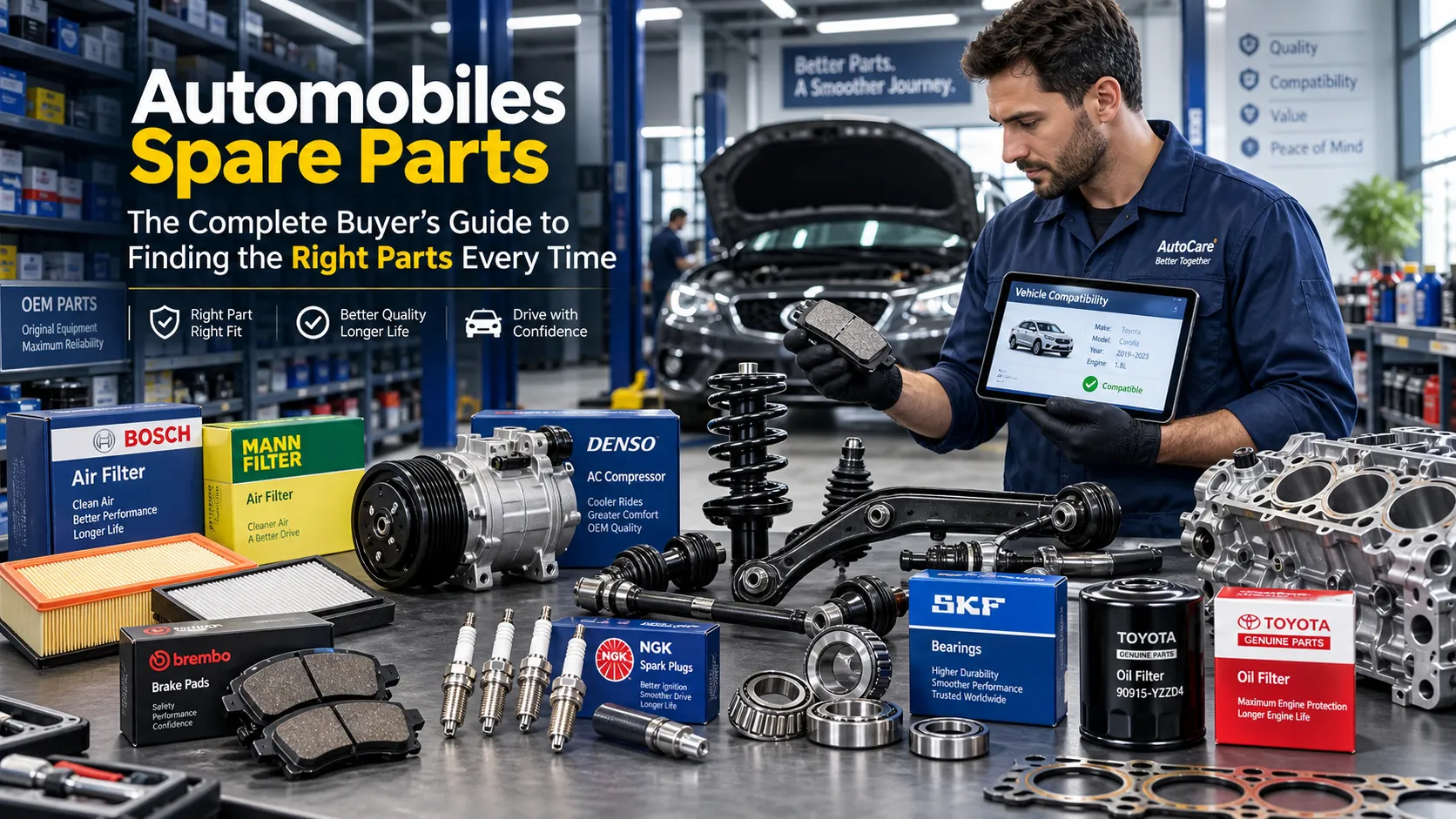

You're staring at a warning light on your dashboard, or maybe your mechanic just called with a list of parts your car needs. Either way, you've got one question running through your mind - where do I find the right automobiles spare parts without getting ripped off or ending up with the wrong fit?
It's a situation every car owner faces sooner or later. Whether it's a worn-out brake pad, a failing alternator, or something as simple as a wiper blade, choosing the correct replacement part matters more than most people realize. The wrong part doesn't just waste money - it can compromise your safety and shorten your vehicle's lifespan.
I've spent over a decade working in the automotive parts industry, and the number of people who buy the wrong component, overpay for a basic part, or get stuck with a counterfeit product is staggering. This guide will help you avoid all of that.
Why Choosing the Right Automobiles Spare Parts Matters More Than You Think
Here's something most people overlook: your car is an interconnected system. Every component - from the engine oil filter to the suspension bushings - is designed to work within specific tolerances. When you replace a part with something that doesn't meet those specs, you create a domino effect.
A cheap, poorly manufactured brake rotor might stop your car fine for a month. But three months later, you'll notice vibrations, uneven pad wear, and reduced stopping distance in wet conditions. That's not a hypothetical scenario - I've seen it happen dozens of times.
The right spare part should:
Match your vehicle's exact make, model, and year
Meet or exceed the original equipment specifications
Come from a reputable manufacturer or supplier
Carry a warranty or guarantee
Skipping any of these criteria is where problems start.
Types of Automobile Spare Parts You Should Know About
Not all replacement parts are created equal. Understanding the categories helps you make smarter buying decisions.
OEM Parts (Original Equipment Manufacturer)
These are parts made by the same manufacturer that supplied the original components for your car. When you buy a genuine Honda oil filter for your Honda Civic, that's OEM. They guarantee a perfect fit and identical performance to what rolled off the assembly line.
The trade-off? They're usually 20–40% more expensive than alternatives.
OES Parts (Original Equipment Supplier)
Here's something most people don't know: many OEM parts are actually manufactured by third-party suppliers. Those suppliers also sell the same parts under their own brand names - at lower prices. For example, Denso manufactures spark plugs for Toyota. You can buy the Denso-branded version for less than the Toyota-branded one, and it's physically the same product.
This is one of the best-kept secrets in the spare parts world.
Aftermarket Parts
These are manufactured by independent companies and designed to fit your vehicle as replacements. Quality varies wildly here. Some aftermarket brands - like Bosch, Monroe, or Brembo - produce parts that rival or even exceed OEM quality. Others cut corners on materials and manufacturing.
The key is knowing which brands to trust for specific components. I wouldn't hesitate to use a quality aftermarket air filter, but I'd think twice about aftermarket engine internals from an unknown brand.
Remanufactured and Refurbished Parts
A remanufactured alternator or starter motor has been professionally disassembled, inspected, and rebuilt with new wear components. When done right, these parts perform like new at 50–70% of the cost. They're also a more sustainable choice, which is worth considering.
Don't confuse remanufactured with "used." A used part from a salvage yard is pulled from another vehicle with no guarantee of remaining life. A remanufactured part has been restored to factory specifications.
How to Identify the Exact Spare Part Your Vehicle Needs
This is where most buyers make their first mistake. They walk into a parts store and say, "I need brake pads for a 2018 Hyundai Creta." That's a start, but it's often not enough.
Step 1: Know Your Vehicle Details
Gather these details before you start shopping:
Make and model (e.g., Maruti Suzuki Swift)
Year of manufacture
Engine type and displacement (e.g., 1.2L petrol or 1.3L diesel)
Variant/trim level (base, mid, top)
VIN (Vehicle Identification Number) - this is the most accurate identifier
Your VIN is a 17-character code usually found on the driver's side dashboard or door jamb sticker. It encodes everything about your vehicle, including factory-installed options that might affect part compatibility.
Step 2: Get the OEM Part Number
Every genuine part has a unique part number assigned by the manufacturer. If your mechanic removes the old part, the number is often stamped or printed on it. Having this number eliminates guesswork entirely.
You can also find part numbers through:
Your vehicle's service manual
Authorized dealership parts counters
Online parts catalogs (many platforms like MechKartz let you search by vehicle or part number)
Step 3: Cross-Reference Across Brands
Once you have the OEM part number, you can cross-reference it to find equivalent aftermarket options. Most reputable aftermarket manufacturers publish cross-reference databases. This lets you compare prices and availability across multiple brands for the same component.
Buying Automobiles Spare Parts Online: What's Changed and What to Watch For
The shift toward purchasing automobiles spare parts online has completely transformed how car owners and even professional mechanics source components. But online shopping for auto parts comes with its own set of challenges.
The Advantages Are Real
Price comparison is instant. You can check three suppliers in the time it takes to drive to one physical store.
Availability is broader. Parts for older or less common vehicles that local shops can't stock are often just a search away.
Detailed product information. Good online platforms show compatibility charts, fitment data, customer reviews, and even installation guides.
Doorstep delivery. For non-urgent replacements, having parts shipped to your home or workshop saves time.
But So Are the Risks
Counterfeit automobile parts are a massive problem globally. A fake brake pad might look identical to the genuine article in photos, but the friction material could be substandard, leading to dangerous braking performance.
Here's how to protect yourself when buying online:
Buy from established, reputable platforms. Sites like MechKartz that specialize in automotive parts typically vet their suppliers and offer return policies.
Check for holographic labels, QR codes, and authentication features. Most major brands now include anti-counterfeit measures on packaging.
Read reviews critically. Look for reviews that mention actual fitment and performance over time, not just unboxing impressions.
Be skeptical of prices that seem too good. If a genuine Bosch fuel injector sells for ₹3,500 everywhere but one seller has it for ₹1,200 - that's a red flag, not a deal.
Confirm the return and warranty policy before purchasing. A trustworthy seller will stand behind the parts they sell.
Parts That Wear Out Most Often - And What to Prioritize
If you're proactive about maintenance, knowing which parts have the shortest service life helps you plan ahead and budget accordingly.
| Component | Typical Replacement Interval | Urgency Level |
| Engine oil filter | Every oil change (5,000–10,000 km) | Routine |
| Air filter | 15,000–20,000 km | Routine |
| Brake pads | 30,000–50,000 km | Safety-critical |
| Spark plugs | 30,000–60,000 km | Performance |
| Timing belt | 60,000–100,000 km | Engine-critical |
| Clutch plate (manual) | 60,000–100,000 km | Drivability |
| Suspension bushings | 80,000–120,000 km | Comfort/Safety |
| Radiator hoses | 80,000–150,000 km | Cooling system |
| Battery | 3–5 years | Electrical |
Pro tip: Replace related components together. When you're changing brake pads, inspect (and often replace) the rotors too. Putting new pads on scored rotors defeats the purpose. Similarly, if you're doing a timing belt, replace the tensioner and water pump at the same time - the labor is the expensive part, and these components have similar lifespans.
Common Mistakes People Make When Buying Spare Parts
1. Choosing Solely on Price
The cheapest option is almost never the best value. A ₹200 oil filter that fails at 3,000 km costs more in engine damage than a ₹600 filter that lasts the full interval. Think in terms of cost-per-kilometer, not sticker price.
2. Ignoring Compatibility Details
"It fits a Hyundai i20" isn't the same as "It fits a 2019 Hyundai i20 1.2 Kappa Petrol Asta variant." Trim levels can have different brake setups, different engine mounts, and different electrical connectors.
3. Not Verifying the Seller
A flashy website doesn't equal legitimacy. Check for GST registration, physical address, customer service responsiveness, and verified buyer reviews before placing large orders.
4. Hoarding Parts "Just in Case"
I've met car owners who stockpile spare parts for future use. The problem? Rubber components degrade on the shelf. Brake fluid is hygroscopic - it absorbs moisture even in sealed containers over time. Buy parts when you need them, not years in advance.
5. Skipping Professional Advice
Unless you're an experienced DIYer, consult a trusted mechanic before ordering parts yourself. They can identify what actually needs replacing versus what a generic diagnostic tool might flag unnecessarily.
How to Build a Relationship With a Reliable Parts Supplier
This might be the most valuable piece of advice in this entire article. Having one or two trusted sources for your automobile spare parts saves you time, money, and headaches over the life of your vehicle.
A good supplier will:
Help you verify fitment before you buy
Offer fair pricing without gouging on urgent orders
Process returns and warranty claims without a fight
Keep you informed about part availability and lead times
Recommend appropriate alternatives when your first choice is unavailable
Online platforms that specialize in automobile parts Online - like MechKartz - often combine the convenience of e-commerce with the expertise of a knowledgeable parts counter. That combination is hard to beat.
The Growing Role of Genuine Parts in Vehicle Resale Value
Here's something sellers rarely think about until it's too late: documented use of genuine or quality spare parts directly affects your car's resale value. Buyers and dealerships increasingly look at service records. A car maintained with documented OEM or equivalent parts commands a noticeably higher price than one with no service history or questionable replacement components.
Keep your invoices. Save the part numbers. If you're buying parts online, most platforms email order confirmations and invoices - file them digitally. This paper trail pays for itself when you sell.
Frequently Asked Questions
What's the difference between OEM and aftermarket spare parts?
OEM parts are made by the vehicle's original manufacturer or their contracted supplier and carry the vehicle brand's logo. Aftermarket parts are produced by independent manufacturers and designed to fit the same vehicles. Quality aftermarket parts from reputable brands often perform comparably to OEM at a lower price point.
Is it safe to buy automobiles spare parts online?
Yes, provided you buy from established and reputable platforms. Look for sellers who provide genuine product guarantees, clear return policies, fitment verification tools, and customer reviews. Avoid deals that seem unrealistically cheap.
How do I know if a spare part is genuine or counterfeit?
Check packaging for holograms, QR verification codes, and manufacturer seals. Compare the part number with the manufacturer's official catalog. Weight differences, poor printing quality on labels, and missing documentation are common signs of counterfeit parts.
Should I always use OEM parts for my car?
Not necessarily. For safety-critical components like brakes, steering, and suspension, sticking with OEM or premium aftermarket brands is wise. For routine maintenance items like filters and wiper blades, quality aftermarket parts are perfectly acceptable and more budget-friendly.
How can I find the right part number for my vehicle?
Your vehicle's service manual, the old part itself (part number is usually stamped on it), authorized dealership parts departments, and online catalogs that let you search by VIN or vehicle details are all reliable sources.
Do aftermarket parts void my car's warranty?
Under most consumer protection guidelines, using aftermarket parts does not automatically void your vehicle warranty. However, if a failure is directly caused by an aftermarket part, the manufacturer may deny that specific warranty claim. Always use quality parts and keep documentation.
Your Next Step
Finding the right automobiles spare parts doesn't have to be a stressful guessing game. Know your vehicle details, understand the difference between part categories, buy from sellers you can trust, and don't let price be your only deciding factor.
Whether you're a DIY enthusiast changing your own brake pads on a Saturday morning or a car owner handing a list to your mechanic, the quality of parts you choose today determines how your car performs and how safe it keeps you tomorrow.
If you're looking for a reliable place to start your search, MechKartz offers a curated catalog of automobiles spare parts online with fitment data, verified brands, and the kind of product detail that actually helps you make the right choice. It's worth bookmarking.




























Sign in to leave a comment.