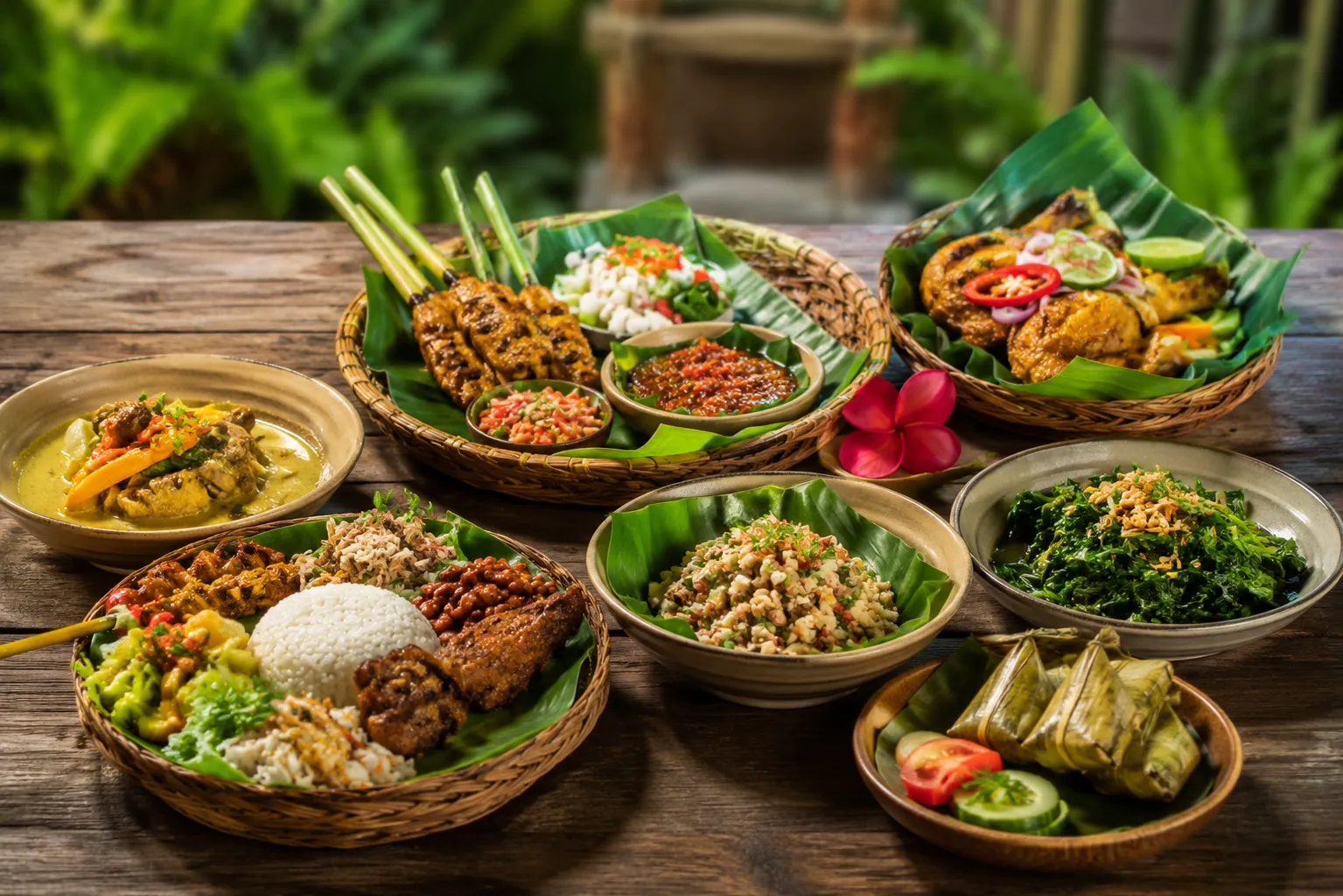

Bali is famous for its beaches, temples, rice terraces and beautiful resorts, but there is another side of the island that deserves just as much attention: its food. For travellers who want to experience Bali beyond its usual attractions, exploring local dishes can be one of the most enjoyable parts of the trip.
Balinese cuisine is known for its fragrant spices, fresh ingredients, sambals and traditional cooking methods. Many dishes are closely connected with local customs and celebrations, while others have become everyday favourites served at small family-run warungs and traditional markets. Indonesia’s official tourism website also highlights dishes such as ayam betutu, sate lilit, babi guling, lawar and nasi campur among Bali’s iconic foods.
If you are planning a food-focused holiday, here are some local dishes worth putting on your Bali food bucket list.
1. Nasi Campur Bali
Nasi campur is one of the easiest ways to sample several Balinese flavours in one meal. A portion of rice is served with a selection of side dishes, which can include sate lilit, ayam betutu, lawar, vegetables and sambal.
The exact combination can vary from one warung to another, making every plate slightly different. It is a practical choice for first-time visitors who want to taste several local specialities without ordering a full portion of each dish.
2. Ayam Betutu
If you enjoy richly spiced chicken, ayam betutu should be high on your list. The chicken is prepared with a complex Balinese spice mixture and traditionally cooked slowly, allowing the flavours to penetrate the meat.
The result is tender, aromatic chicken with a deep savoury taste. Some versions can be quite spicy, so it is worth checking the spice level before ordering. Indonesia Travel describes ayam betutu as one of Bali's signature poultry dishes, prepared using a traditional spice paste known as base genep.
3. Sate Lilit
Sate lilit is not your ordinary satay. Instead of placing chunks of meat on a skewer, minced fish, chicken or other meat is mixed with spices and coconut before being wrapped around a lemongrass stalk or skewer and grilled.
The lemongrass adds a distinctive aroma while the grilling creates a lightly smoky finish. Fish-based versions are particularly popular and make a great option for travellers looking for something different from conventional satay.
4. Babi Guling
Babi guling is one of Bali's best-known traditional dishes. It consists of whole roasted pig prepared with a mixture of local spices and slow-roasted until the skin becomes crisp while the meat remains tender.
It is commonly served with rice, lawar, vegetables and sambal. The dish also has cultural significance and is associated with traditional ceremonies and celebrations.
Travellers should note that babi guling contains pork. If you follow a halal diet, ask about the ingredients before ordering and choose another local speciality where appropriate.
5. Lawar
Lawar offers a completely different texture and flavour. It is traditionally made using a mixture of finely chopped vegetables, grated coconut, spices and minced meat, although recipes differ between locations and households.
Some varieties may contain ingredients that are not suitable for every traveller, so asking about the ingredients is a sensible step. Lawar is also closely associated with Balinese traditions and ceremonies.
6. Tipat Cantok
For a lighter local meal, try tipat cantok. It combines rice cakes and vegetables with a freshly prepared peanut sauce.
The dish is somewhat similar in concept to other Indonesian vegetable and peanut-sauce dishes, but the Balinese preparation gives it its own character. It can also be a good choice if you prefer to control the level of chilli in your meal.
7. Nasi Tepeng
Nasi tepeng is a speciality associated with Gianyar. It has a softer, porridge-like consistency and is served with vegetables, spices and toppings such as chicken or jackfruit.
It is not necessarily the first dish that appears on a typical tourist menu, which makes it an interesting choice for travellers who want to explore beyond the better-known Balinese foods.
8. Rujak Bulung
Bali's coastal influence can also be found in rujak bulung, a seaweed-based dish served with a spicy dressing and fish-based broth.
Its combination of salty, fresh and spicy flavours makes it quite different from the heavier meat dishes commonly associated with Balinese cuisine. Indonesia Travel lists rujak bulung among Bali's distinctive local foods.
9. Jukut Ares
Jukut ares is a traditional soup made using the tender inner part of young banana stems. It may be cooked with chicken or pork and seasoned with Balinese spices.
For visitors unfamiliar with Balinese cooking, this is a good example of how local cuisine makes creative use of regional ingredients. The result is a comforting, savoury dish that is very different from the usual restaurant fare.
10. Bubur Injin
No food adventure is complete without dessert. Bubur injin is a traditional black rice pudding made from black glutinous rice and served with coconut milk and palm sugar.
It is sweet, creamy and comforting, with the earthy flavour of black rice balancing the sweetness. It is an excellent option after a spicy Balinese meal.
11. Jaje Laklak
Jaje laklak is a small traditional Balinese rice-flour pancake, often recognised by its green colour. It is usually served with grated coconut and palm sugar.
You are more likely to come across it at traditional markets and local food stalls than at international-style restaurants. For travellers who enjoy trying local snacks, it is well worth looking out for.
12. Sambal Matah
Technically a condiment rather than a main dish, sambal matah deserves its own mention. This Balinese chilli relish is known for its fresh ingredients and is commonly served alongside rice, meat and seafood.
It can add a sharp, spicy kick to an otherwise mild meal, so start with a small amount if you are not accustomed to chilli-heavy food.
How to Enjoy Bali's Food Like a Local?
One of the best ways to explore Balinese cuisine is to avoid limiting yourself to hotel restaurants. Local warungs, traditional markets and small family-run eateries can offer a more authentic look at everyday food culture.
Pasar Badung in Denpasar, for example, is recognised by Indonesia Travel as a traditional market where visitors can find local dishes including babi guling, sate lilit and nasi campur.
When ordering, do not be afraid to ask about ingredients or spice levels. This is particularly useful if you have dietary restrictions or prefer mild food. Also remember that dishes and recipes can vary considerably between restaurants and regions, so trying the same dish at two different places can be part of the fun.
Plan Your Bali Food Adventure
A food-focused Bali holiday can turn a standard sightseeing trip into a much more memorable experience. From a plate of nasi campur at a local warung to freshly grilled sate lilit, traditional desserts and regional specialities, there is plenty to discover beyond the island's famous beaches.
If you want to combine local food experiences with beaches, temples, cultural attractions and scenic destinations, a well-planned Bali Tour Package can make it easier to experience more of the island during your stay.
The best approach is simple: arrive hungry, try something unfamiliar and give yourself time to enjoy the food rather than treating every meal as just another stop between attractions. In Bali, the dining experience is often part of the journey itself.





























Sign in to leave a comment.