

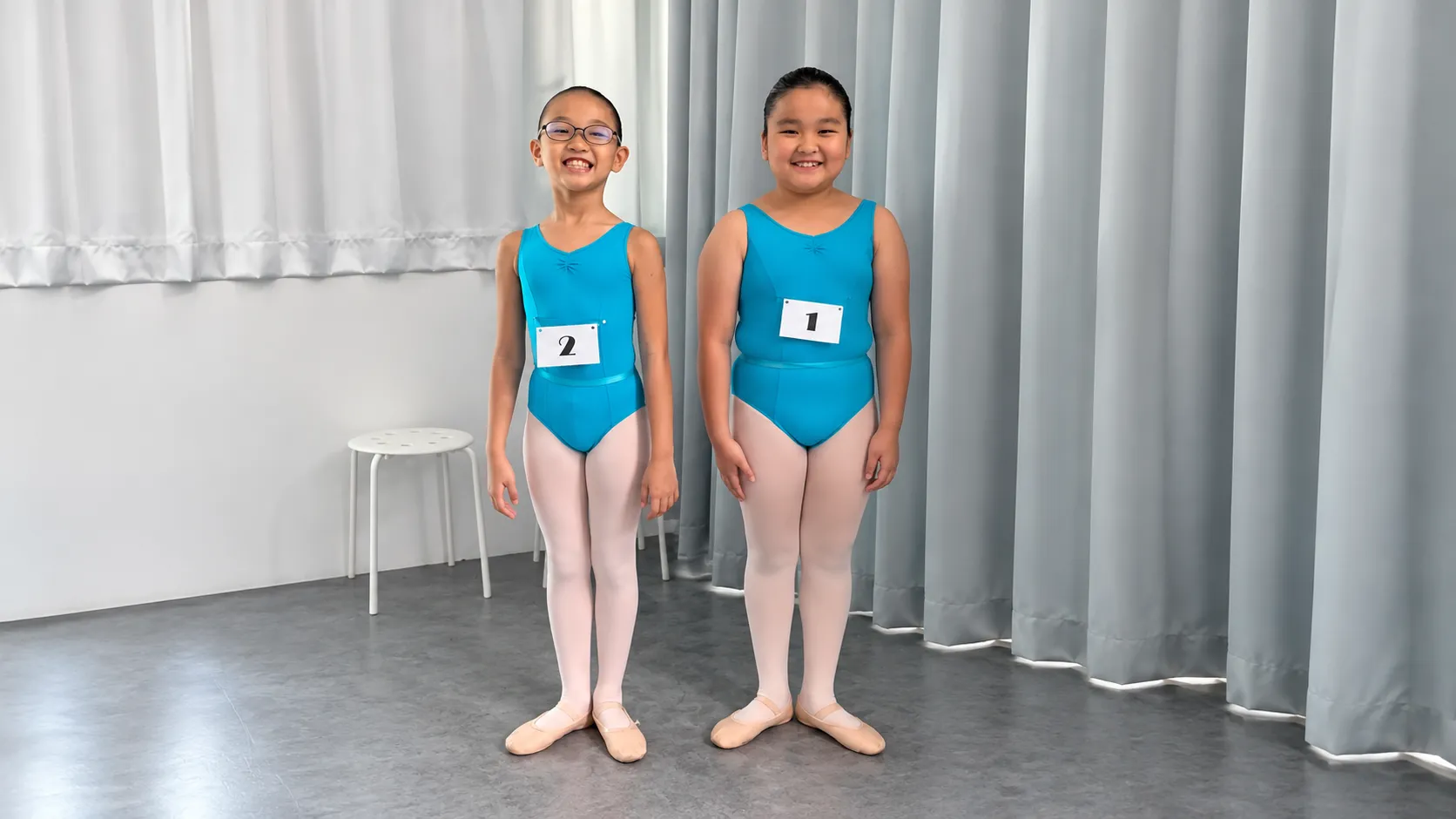
A ballet class for children at age three is not about perfecting technique or performing on stage. It is about helping young children develop rhythm, body awareness, coordination, and the confidence to move freely. At this stage, the focus is on playful, structured movement that lays a healthy physical and emotional foundation for years ahead.
Why Three Is Actually a Great Age to Start Ballet
Parents often ask whether their kids are old enough for structured dance classes. At age three, kids are in an important period when they are developing their physical skills. ECDA, an agency in Singapore, states that the age of two to six years is very crucial because children acquire their gross motor skills, balance, and spatial awareness – and all these abilities are developed through dance classes such as ballet.
Ballet at age three does not require discipline. It directs the energy of children in a useful direction. Properly organized classes involve music, creative play, and repetition to learn how to move intentionally.
What Should a 3-Year-Old Actually Learn in Ballet?
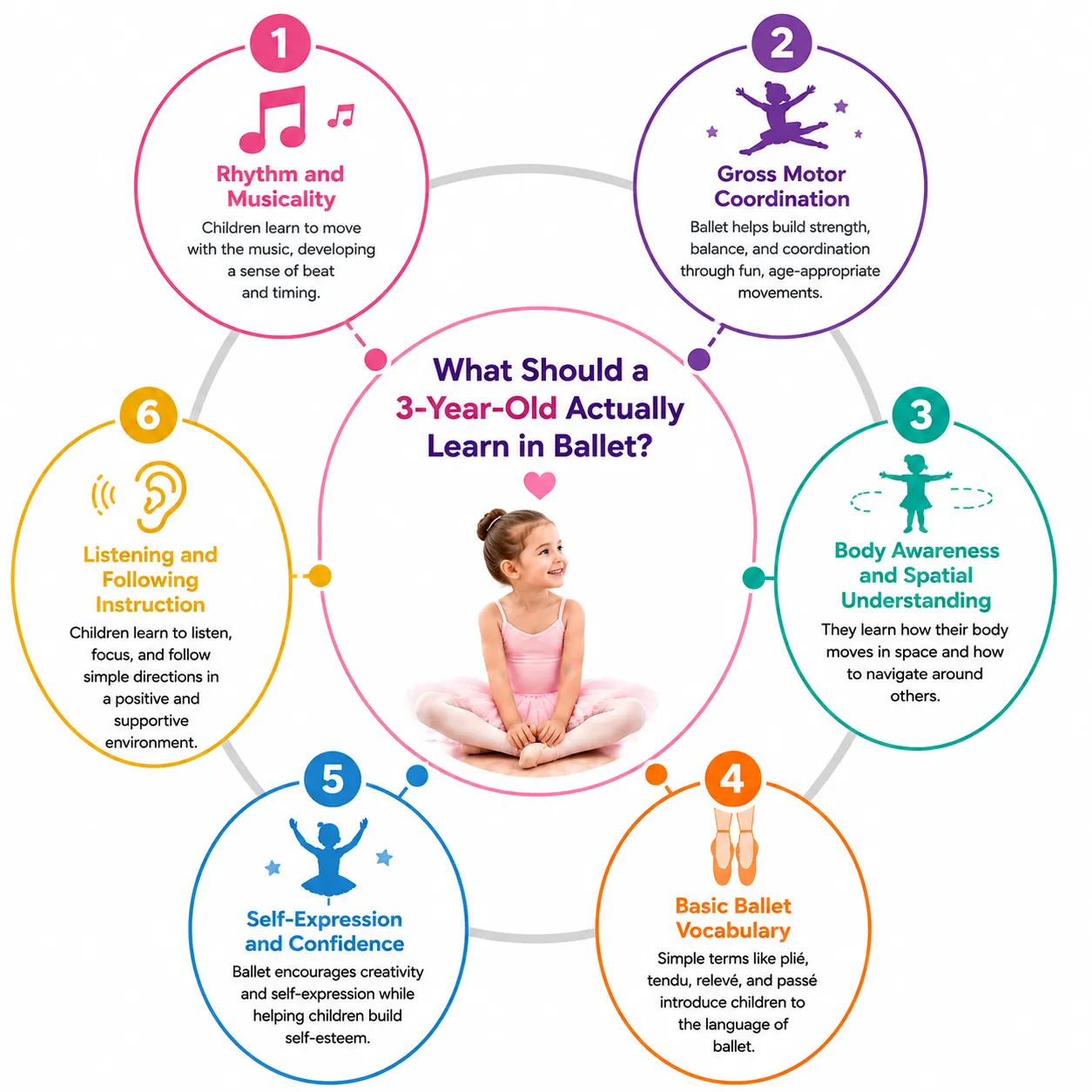
The goals at this stage are deliberately simple and developmentally appropriate. Here is what quality early ballet instruction typically focuses on:
1. Rhythm and Musicality
Children learn to clap, step, and move in time with music. This builds an internal sense of beat that serves them in dance, music, and even academic learning later on. Teachers use drums, piano, and simple songs to make this feel like play rather than practice.
2. Gross Motor Coordination
Skipping, jumping, galloping, and turning are core movements in early ballet. These actions strengthen the legs, improve balance, and help the brain and body communicate more efficiently. A child who can skip in rhythm has already achieved something significant.
3. Body Awareness and Spatial Understanding
Toddlers are still learning where their body ends and the world begins. Ballet helps them understand concepts like up, down, wide, narrow, near, and far through physical experience. Moving in a shared space also teaches children to be aware of others around them.
4. Basic Ballet Vocabulary
Simple positions and movements such as first position, pliés, and relevés are introduced — not as rigid technique, but as named movements that give children a sense of structure. The goal is familiarity, not perfection.
5. Self-Expression and Confidence
Perhaps the most underrated benefit. When a three-year-old is given space to interpret music through movement, they develop emotional vocabulary that they may not yet have in words. A child who can "be a butterfly" or "move like a rainstorm" is learning to express inner experience outwardly — a skill that builds confidence across every area of life.
6. Listening and Following Instruction
Group ballet classes are often a child's first experience in a structured group setting outside of home. Learning to listen to a teacher, wait for their turn, and follow a sequence of movements builds executive function skills that support school readiness.
What Realistic Progress Looks Like at This Age
Parents sometimes come to early classes expecting visible technique. What they see instead is messier — and that is exactly right. A three-year-old in a ballet class may:
- Spin the wrong way half the time
- Stop mid-movement to wave at a parent
- Giggle during a plié
- Nail the gallop one week and forget it the next
This is normal, healthy development. The brain is encoding patterns through repetition. Over weeks and months, the movements become more consistent without the child consciously trying harder. Progress at this age is cumulative and internal before it becomes visible.
What Parents Should Look for in a Kids Ballet Class in Singapore
Not all early childhood dance programmes are structured the same way. When evaluating a kids ballet class in Singapore, here are the factors that genuinely matter for this age group:
| Factor | What to Look For | Red Flag |
|---|---|---|
| Class Size | Small groups (6–10 children) | Large classes with minimal individual attention |
| Teacher Approach | Play-based, patient, encouraging | Strict corrections and performance pressure |
| Curriculum Design | Age-appropriate goals, movement-based learning | Adult technique pushed on young bodies |
| Environment | Safe, clean studio with appropriate flooring | Hard surfaces without proper sprung or cushioned flooring |
| Parental Involvement | Clear updates on what children are learning | No communication or parent engagement |
How Often Should a 3-Year-Old Attend Ballet Classes?
Once a week is generally the sweet spot for toddlers. More frequent sessions at this age rarely improve outcomes and can increase fatigue or reduce enthusiasm. The goal is to keep each class feeling fresh and exciting. Consistency over weeks and months matters far more than frequency in a single week.
Classes typically run between 30 and 45 minutes — long enough to build structure, short enough to hold a three-year-old's attention without pushing past their natural limits.
The Role of Parents Outside the Studio
Learning does not stop when the class ends. Small things at home reinforce what children pick up in the studio:
- Play classical or instrumental music during meals or playtime
- Ask your child to show you a move they learned that week
- Encourage free dancing at home — let them move without correction
- Avoid placing pressure on performance or comparison with other children
Children whose parents show genuine interest in their dance experience — not just attendance — tend to stay engaged with classes longer and build more positive associations with movement.
Setting Realistic Expectations as a Parent
The biggest change that parents need to make is thinking beyond outcomes. Ballet classes at the age of three do not constitute a training regime. They should be considered an opportunity for discovery. If a child leaves their first year of ballet classes loving music, being a bit more balanced, and listening in a group, then they have enjoyed the process – whether or not they could point their toes like a ballerina.
Elevate Dance Academie is one such establishment in Singapore where ballet lessons are conducted for children in an appropriate structured and progressive fashion.
Frequently Asked Questions
Is 3 years old too young to start ballet classes?
No, three is an appropriate age to begin early childhood ballet. Classes at this level focus on rhythm, coordination, and movement exploration rather than formal technique. Many dance schools in Singapore offer programmes specifically designed for this developmental stage, using play-based methods suited to toddlers.
What should I expect my 3-year-old to learn in their first ballet class?
Children in the early stages of ballet classes will usually learn how to dance to music, follow directions, and try out some fundamental movement skills such as jumping, spinning, and balancing. Since the emphasis is on gaining an understanding of their bodies, don’t expect any perfect posture!
How long should a ballet class be for a 3-year-old?
The most suitable length of time for a toddler class would be between 30 and 45 minutes. This period is sufficiently long to allow the development of a routine and structured physical activity but at the same time is not too long to exhaust or distract a young learner.
Do 3-year-olds need ballet shoes to attend class?
It is advisable that most ballet schools insist on soft ballet slippers to ensure safety and enable kids to feel the ground. It is recommended that canvas or leather ballet shoes be worn in the appropriate size. Please note that there may be variations in requirements at the different studios.




























Sign in to leave a comment.