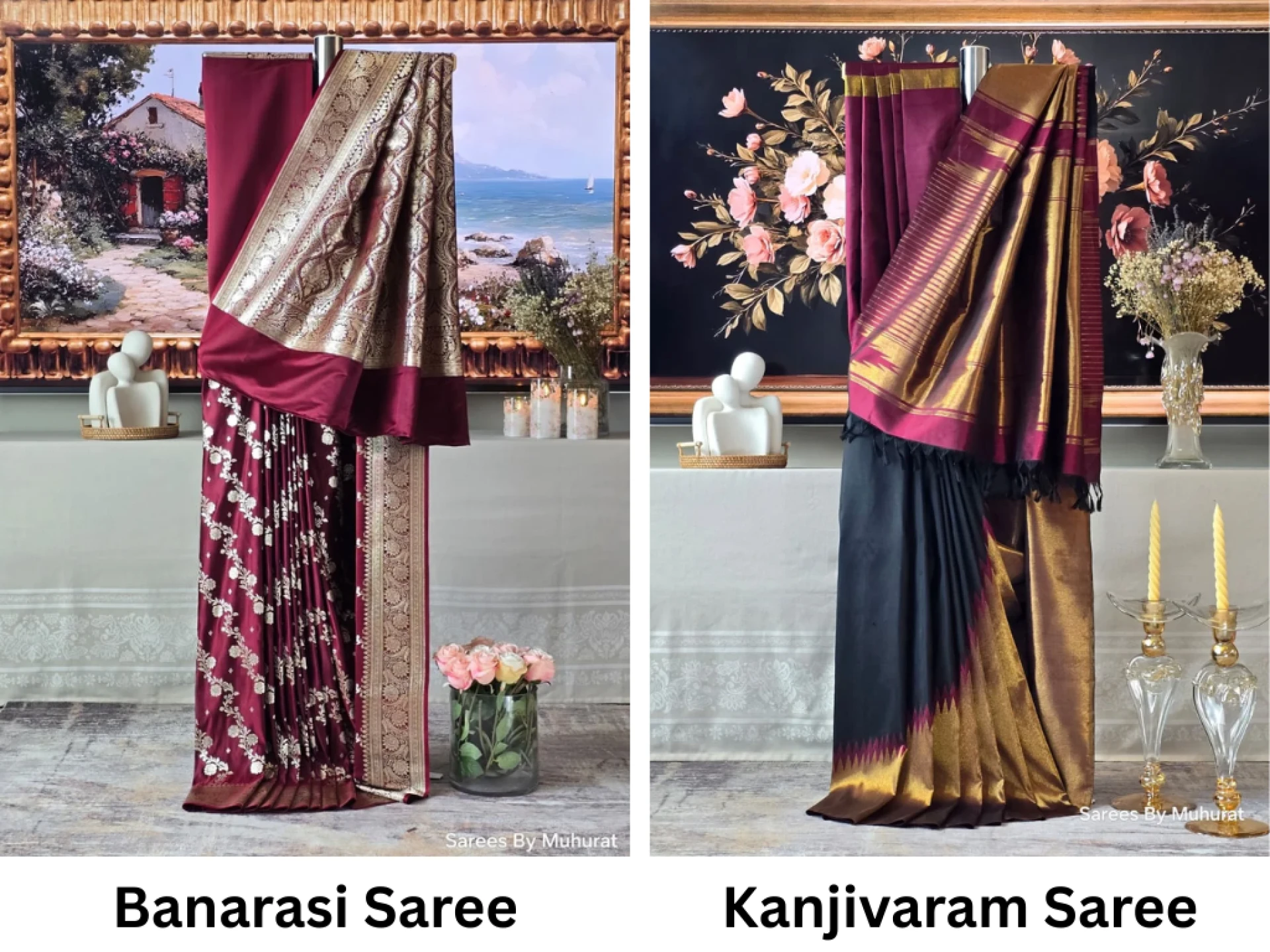
India’s textile heritage is one of the richest in the world, and the saree stands at the center of this cultural legacy. Worn for centuries by women across the country, sarees are more than just garments. They represent tradition, craftsmanship, and regional identity.
Among the many varieties of sarees available in India, two names are often considered the epitome of luxury and elegance: the Banarasi Saree and the Kanjivaram Saree.
Both sarees are renowned for their intricate weaving, premium silk, and rich cultural significance. However, many saree enthusiasts often ask a common question: Which is better, Banarasi or Kanjivaram?
The answer is not entirely straightforward. Each saree has unique characteristics, weaving techniques, design styles, and cultural roots. Understanding these differences can help you decide which saree suits your preferences, occasion, and personal style.
In this detailed guide, we will compare Banarasi and Kanjivaram sarees based on origin, fabric, weaving style, design aesthetics, comfort, price, and usage to help you make an informed choice.
The Heritage of Banarasi Sarees
The Banarasi saree originates from the ancient city of Varanasi, one of the oldest continuously inhabited cities in the world. This saree style gained immense popularity during the Mughal era, when Persian artistic influences merged with Indian weaving traditions.
Banarasi sarees are famous for their luxurious silk fabric and intricate brocade work. Skilled artisans weave elaborate patterns using fine gold or silver zari threads, creating detailed motifs that reflect both nature and royal aesthetics.
Some of the most popular Banarasi patterns include:
- Floral and foliate motifs
- Paisley designs
- Mughal-inspired patterns
- Butidar and Jangla designs
The elegance of Banarasi sarees lies in their delicate craftsmanship and graceful drape. Despite their rich appearance, many Banarasi sarees are relatively lightweight, making them comfortable to wear for long events.
Because of their beauty and cultural importance, Banarasi sarees are widely worn during weddings, festive celebrations, and special ceremonies. Read more about banarasi saree in detail.
The Royal Legacy of Kanjivaram Sarees
Kanjivaram sarees originate from the temple town of Kanchipuram, which has been a major center for silk weaving for centuries.
These sarees are known for their heavy silk fabric, bold colors, and striking temple-inspired designs. Traditionally woven using pure mulberry silk, Kanjivaram sarees are thicker and more durable than many other silk sarees.
One of the most distinctive features of a Kanjivaram saree is its weaving technique. The body, border, and pallu are often woven separately and then interlocked together using a specialized method. This technique makes the saree exceptionally strong and long-lasting.
Typical motifs found in Kanjivaram sarees include:
- Temple borders
- Mythological figures
- Peacocks and elephants
- Traditional geometric patterns
Because of their rich texture and grand appearance, Kanjivaram sarees are particularly popular for South Indian weddings and religious ceremonies. Read more about kanjivaram saree in detail.
Banarasi vs Kanjivaram: Key Differences
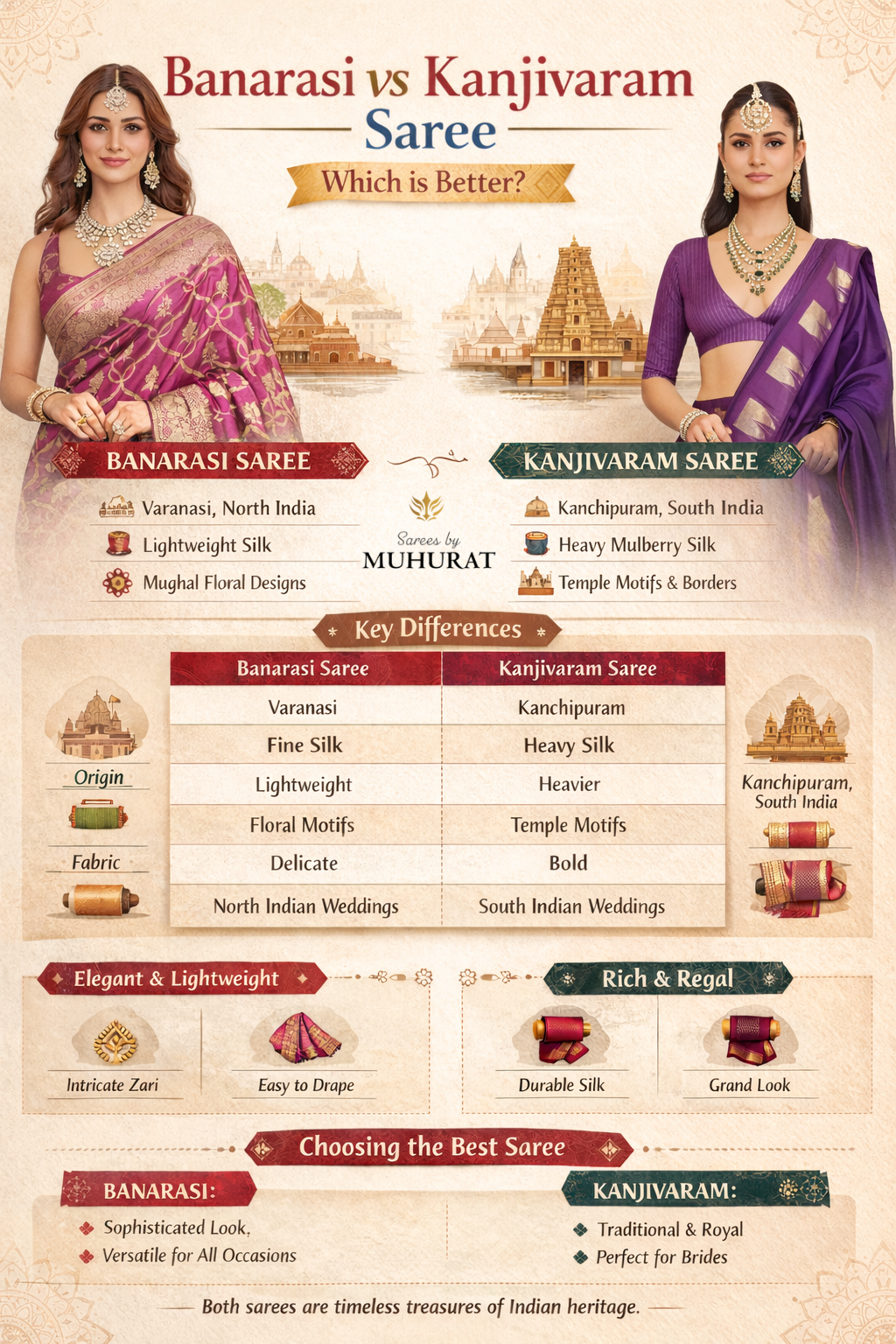
Although both sarees are luxurious silk garments, they differ in several important aspects. Here is a simple comparison to understand their core differences.
| Feature | Banarasi Saree | Kanjivaram Saree |
|---|---|---|
| Origin | Varanasi, North India | Kanchipuram, South India |
| Fabric | Fine silk with brocade | Heavy mulberry silk |
| Weight | Generally lighter | Heavier and thicker |
| Design Style | Mughal-inspired floral motifs | Temple and traditional motifs |
| Zari Work | Delicate and intricate | Bold and prominent |
| Drape | Soft and flowing | Structured and grand |
| Cultural Usage | Popular in North Indian weddings | Traditional South Indian bridal wear |
This comparison highlights that Banarasi sarees emphasize artistic elegance, while Kanjivaram sarees focus on grandeur and durability.
Fabric and Weaving Technique
The weaving technique used in these sarees plays a major role in defining their appearance and durability.
Banarasi weaving is heavily influenced by Persian and Mughal artistry. The brocade weaving technique allows artisans to create intricate patterns using supplementary weft threads. This method produces detailed motifs that appear embossed on the silk surface.
In contrast, Kanjivaram weaving focuses on structural strength and vibrant color combinations. The silk threads used in Kanjivaram sarees are thicker, which gives the fabric a heavier feel. The borders are often woven separately and attached using a technique known as “korvai,” ensuring the saree remains strong even after years of use.
As a result, Banarasi sarees highlight intricate artistry, while Kanjivaram sarees emphasize durability and bold visual appeal.
Design Aesthetics and Visual Appeal
Another important difference between Banarasi and Kanjivaram sarees lies in their design style.
Banarasi sarees are known for their refined and delicate patterns. Many designs feature Mughal-inspired floral motifs, vines, and paisleys woven with shimmering zari threads. The color palette often includes elegant shades like maroon, gold, deep red, and pastel tones.
Kanjivaram sarees, on the other hand, are famous for their bold colors and dramatic contrast borders. The designs often incorporate temple architecture elements and traditional symbols that hold cultural significance.
While Banarasi sarees convey sophistication and subtle luxury, Kanjivaram sarees create a striking and regal appearance.
Comfort and Wearability
Comfort is another factor to consider when choosing between Banarasi and Kanjivaram sarees.
Banarasi sarees are generally lighter and softer, which makes them easier to drape and comfortable for extended wear. They are often preferred for receptions, festivals, and formal gatherings.
Kanjivaram sarees are heavier due to their thicker silk and rich borders. While they may feel slightly heavier, they provide a structured and majestic look that many brides and traditional saree lovers appreciate.
Therefore, if comfort and ease of movement are your priorities, Banarasi sarees may be the better option. However, if you prefer a grand and royal appearance, Kanjivaram sarees can make a stunning statement.
Price and Value
The price of both Banarasi and Kanjivaram sarees can vary widely depending on several factors such as silk quality, weaving complexity, and zari purity.
Authentic handwoven Banarasi sarees can range from moderately priced pieces to extremely luxurious heirloom-quality sarees.
Kanjivaram sarees are often slightly more expensive because of the heavier silk and extensive weaving process involved in creating the borders and pallu.
However, both sarees are considered valuable investments because they can last for generations when properly maintained.
Which Saree Is Better for Weddings?
Both Banarasi and Kanjivaram sarees are iconic choices for weddings, but their popularity varies across regions.
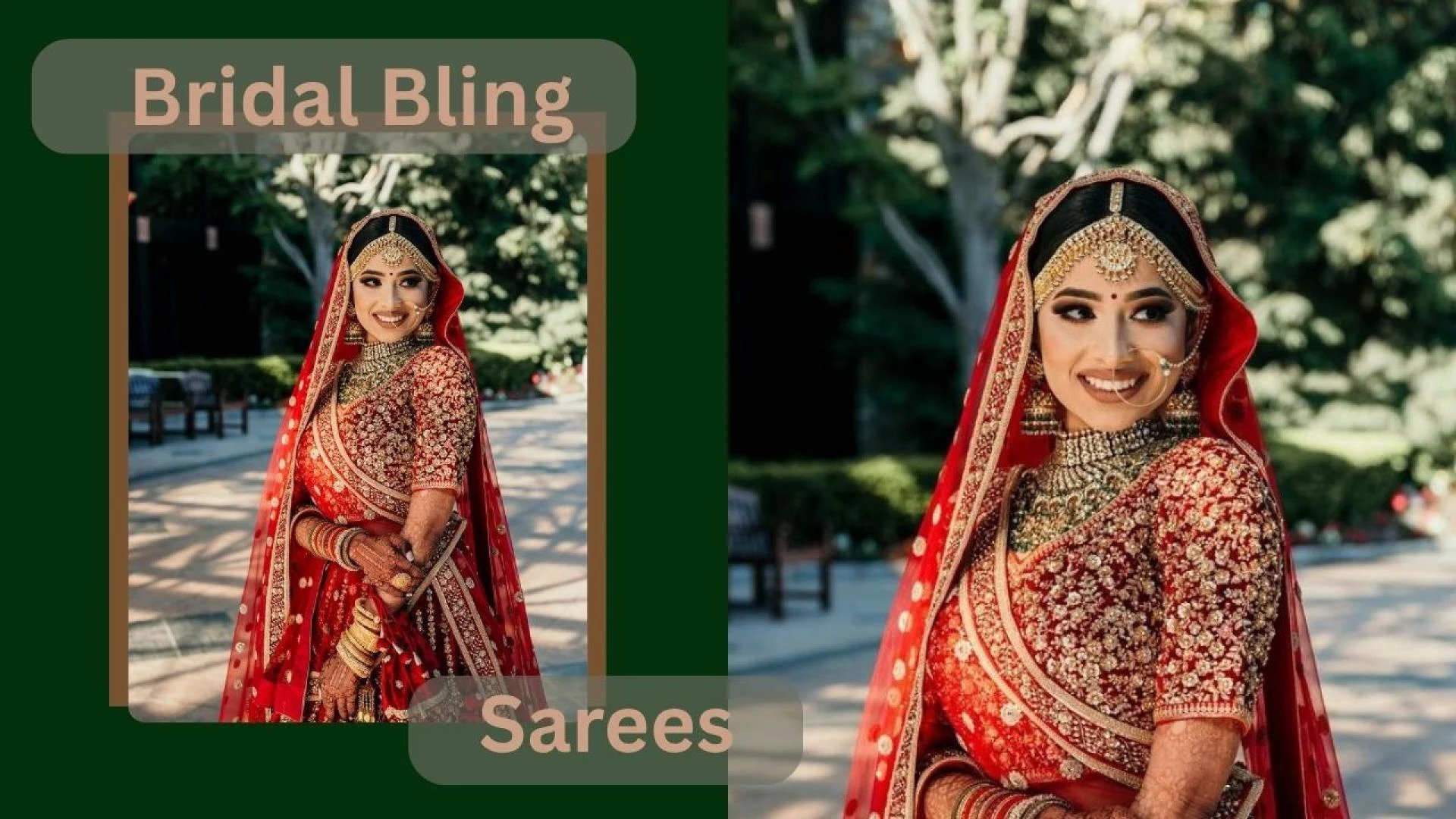
Banarasi sarees are widely worn by brides in North India. Their intricate patterns and elegant drape make them perfect for bridal attire and festive celebrations.
Kanjivaram sarees are deeply rooted in South Indian wedding traditions. Brides often choose bright-colored Kanjivaram sarees paired with traditional temple jewelry to create a majestic bridal look.
Ultimately, the choice depends on cultural traditions and personal preference.
Availability Around the World
In the past, purchasing authentic regional sarees often required visiting the weaving towns themselves. Today, however, the growing popularity of online fashion platforms has made it easier for people across the world to access traditional Indian textiles.
Many international shoppers now look for curated collections of premium silk sarees through specialized stores. For example, people living abroad frequently explore collections of the best sarees in dubai from trusted online retailers like Sarees By Muhurat that focus on authentic craftsmanship and traditional designs.
This growing global demand shows how Indian sarees continue to inspire fashion lovers far beyond the country’s borders.
So, Which Is Better: Banarasi or Kanjivaram?
After comparing all aspects heritage, design, fabric, and comfort it becomes clear that both sarees offer unique advantages.
Banarasi sarees are ideal for those who prefer:
- Elegant and intricate designs
- Lightweight silk fabric
- Versatile styling for multiple occasions
Kanjivaram sarees are better suited for those who want:
- A bold and royal appearance
- Durable and thick silk fabric
- Traditional South Indian bridal style
Rather than choosing one as universally better, it is more accurate to say that both sarees excel in different ways. Your choice should depend on your personal style, cultural preference, and the occasion you are dressing for.
Conclusion
The Banarasi and Kanjivaram sarees are two of the most celebrated creations in India’s textile heritage. Each represents centuries of craftsmanship, cultural history, and artistic excellence.
Banarasi sarees captivate with their delicate brocade patterns and graceful elegance, while Kanjivaram sarees impress with their bold colors, rich silk, and majestic presence.
Whether you choose the refined beauty of Banarasi or the regal charm of Kanjivaram, both sarees continue to symbolize the timeless allure of traditional Indian fashion. here you can read more about kanjivaram/kanchipuram saree here: Saree Spotlight: Elevate Your Look for Every Occasion




























Sign in to leave a comment.