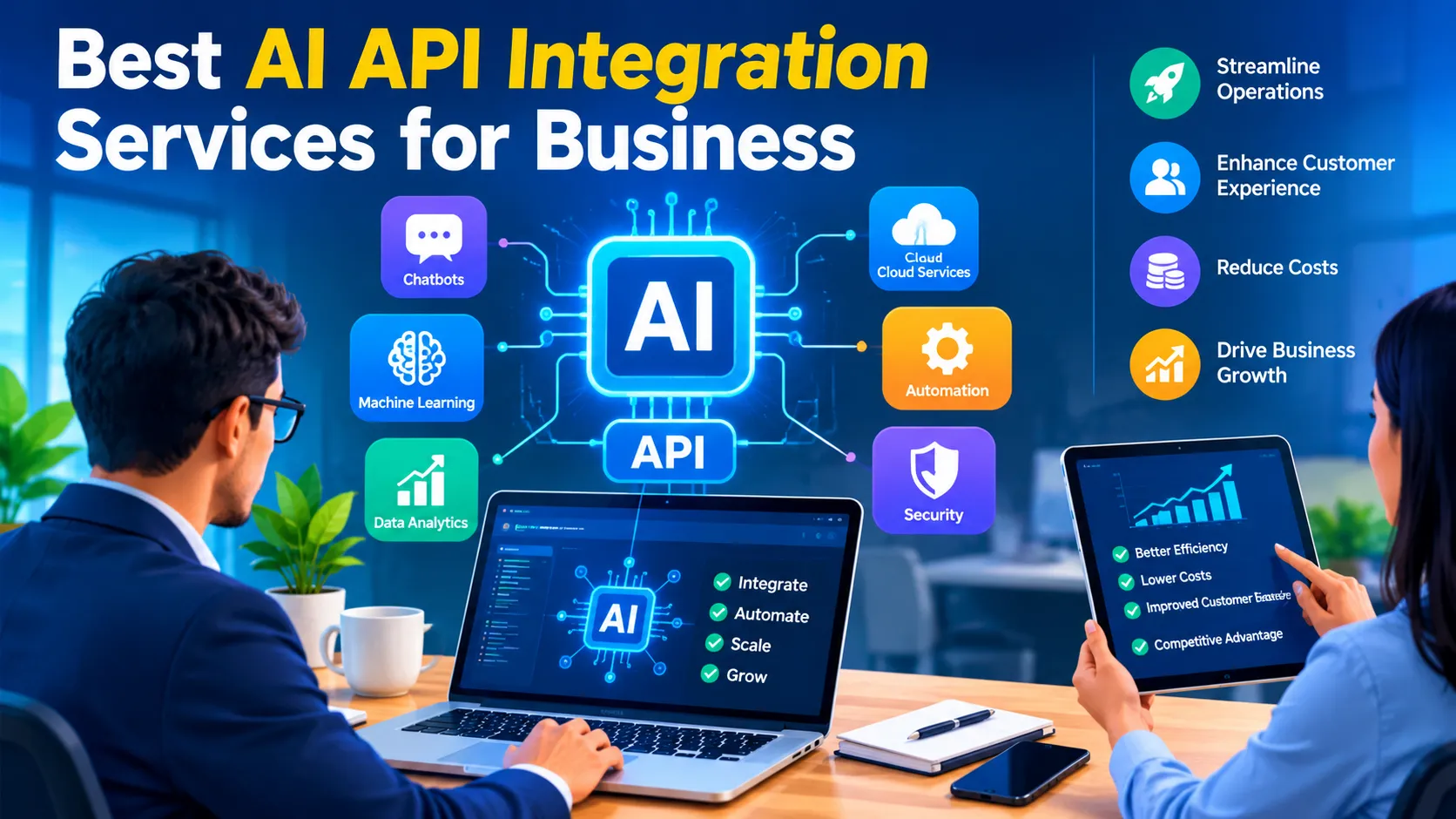

Most businesses don't fail at AI API integration because the technology doesn't work, they fail because of a handful of predictable, avoidable mistakes made during planning and implementation. Instead of another general overview, this guide walks through the most common pitfalls businesses run into when connecting AI models to their existing systems, along with what to actually do instead.
We'll also cover the different integration patterns worth understanding, how to know if your business is ready, and answer the questions that tend to come up once a business starts planning a real integration project.
Mistake One: Treating Integration as an Afterthought
The Problem
Many businesses build or adopt an AI tool first, then try to figure out integration later, only to discover the tool doesn't easily connect to their actual systems, or that meaningful data access wasn't considered during the original selection process.
The Fix
Integration requirements should be part of the conversation from the very beginning, before committing to a specific AI tool or model. Asking "how will this actually connect to our CRM, our support platform, our databases?" early on prevents a costly rework later.
Mistake Two: Underestimating Data Synchronization Challenges
The Problem
It's easy to assume that once two systems are "connected," data will simply stay accurate and up to date. In reality, without proper synchronization design, information can quickly become duplicated or fall out of sync between systems.
The Fix
A proper AI API integration project treats data synchronization as a core requirement, not an afterthought, with clear rules for how conflicts get resolved and how frequently information updates across connected systems.
Mistake Three: Skipping Proper Security Planning
The Problem
Since API integration often means AI systems can access sensitive business data, security gaps introduced during a rushed integration can create genuine risk, especially in industries handling regulated or confidential information.
The Fix
Secure API connectivity needs to be built in from the start, with clear access permissions defining exactly what each connected system and AI application is allowed to see and do.
Mistake Four: Building One-Off Integrations Instead of Scalable Ones
The Problem
Some businesses build a custom integration for a single, specific use case without considering whether similar connections will be needed later, resulting in duplicated work and inconsistent approaches across the business over time.
The Fix
Thinking about integration architecture holistically, even when starting with just one use case, makes it significantly easier to extend AI API integration to new tools and applications down the line without starting from scratch each time.
Mistake Five: Not Testing for Real-World Failure Scenarios
The Problem
Integrations that work perfectly in a controlled test environment can behave very differently once they're handling real business traffic, unexpected data formats, API rate limits, or temporary outages from a connected service.
The Fix
Testing needs to account for these realistic failure scenarios before launch, including what happens when a connected API is temporarily unavailable or returns unexpected data.
Understanding Different AI API Integration Patterns
Direct, Point-to-Point Integration
The simplest pattern connects two systems directly, useful for straightforward use cases but harder to scale as more systems need to be connected, since each new connection requires its own dedicated integration work.
Hub-and-Spoke Integration
A more scalable approach routes data through a central integration layer, allowing new systems to connect to that central hub rather than requiring direct connections between every possible pair of tools.
Event-Driven Integration
Rather than constantly checking for updates, event-driven integration triggers actions automatically when something specific happens, a new record created, a status change, keeping systems synchronized in near real-time without constant manual polling.
How AI API Integration Powers Real Business Applications
Chatbots With Access to Real Business Data
Integrating AI chatbots directly with business systems means customer questions get answered using accurate, current information rather than generic responses disconnected from what's actually happening in your business. This is exactly where AI Chatbot Development Services and API integration work together, since a chatbot's usefulness depends entirely on how much real, connected data it can actually access.
Connected CRM and Support Systems
Businesses frequently use AI API integration to unify their CRM and customer support platforms, ensuring customer history and context follow the conversation instead of staying isolated in a single tool.
Predictive Systems Fed by Real-Time Data
Connecting AI models to unified, current business data allows for genuinely useful forecasting and analysis, rather than predictions based on outdated or incomplete information. This kind of connected foundation is what Machine Learning Development Services rely on to produce forecasts that actually reflect current business conditions.
Signs Your Business Is Ready for AI API Integration
You Already Have Multiple Disconnected Tools
If your business relies on several different platforms that don't currently share information automatically, that's usually a strong signal integration would deliver real, immediate value.
Your Team Is Manually Moving Data Between Systems
Any recurring process where someone copies information from one tool into another by hand is a clear candidate for the kind of automation that proper API integration makes possible.
You're Building or Considering an AI-Powered Tool
If you're planning to deploy an AI chatbot, assistant, or automated system, integration planning should happen alongside that decision, not after the tool is already selected.
Exploring Related AI Development Services
AI API integration frequently supports and connects to other AI development work happening across a business.
AI Chatbot Development Services
AI Chatbot Development depends heavily on solid API integration, since a chatbot's usefulness is directly tied to how much real, connected business data it can actually access.
Tips for Avoiding Integration Problems Before They Start
Involve your security and compliance team early, especially for integrations touching sensitive customer or financial data, rather than looping them in only after something has already been built.
Choose an integration pattern that fits your actual scale, a simple direct connection may be fine for one use case, but plan for a more centralized approach if you expect to connect many systems over time.
Test explicitly for failure scenarios, not just the ideal, happy-path version of how the integration is supposed to work.
Document your integration architecture clearly, so future projects can build on existing connections rather than duplicating work unnecessarily.
Final Thoughts
Most AI API integration problems are avoidable with proper planning, not inevitable technical hurdles. By treating integration as a core part of your AI strategy from the beginning, planning for realistic failure scenarios, and choosing an architecture that fits your actual scale, businesses can avoid the most common, costly mistakes and build connections that genuinely support their AI initiatives rather than undermining them.
Frequently Asked Questions
What's the most common reason AI API integration projects fail?
Treating integration as an afterthought rather than planning for it from the start is one of the most frequent causes, often leading to compatibility issues or missing functionality discovered too late in the process.
How do I know which integration pattern is right for my business?
It depends on scale. A single, straightforward connection may work fine with a direct, point-to-point approach, while businesses expecting to connect many systems over time generally benefit from a more centralized, hub-and-spoke architecture.
Is AI API integration secure?
It can be, but security needs to be planned from the beginning, with clear access controls defining exactly what data and actions each connected system is permitted to access.
How long does a typical AI API integration project take?
Timelines vary based on how many systems need to be connected and how complex your existing infrastructure is, but a focused, single-integration project can often be completed within a few weeks.
Can AI API integration work with older, legacy business systems?
In many cases, yes, though older systems sometimes require additional work to expose the necessary data or functionality for integration, which should be assessed early in the planning process.
What's the biggest technical risk to watch for during integration?
Data synchronization issues, information becoming duplicated or inconsistent across connected systems, tend to be one of the most common and disruptive technical risks if not properly planned for.
























Sign in to leave a comment.