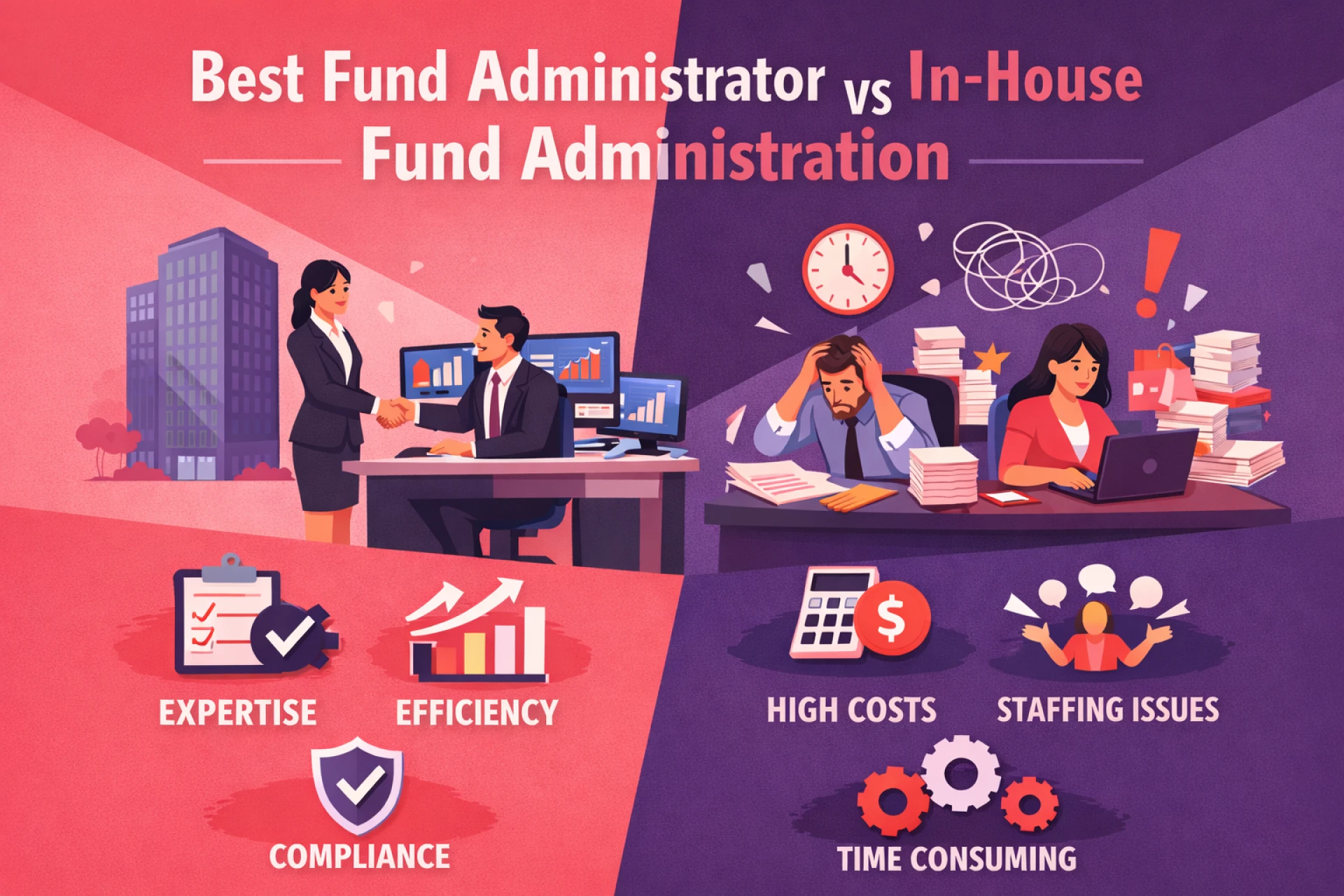

Investment firms across Europe, particularly in financial hubs like Luxembourg and the Netherlands, face increasing operational and regulatory challenges. Managing fund operations requires accurate reporting, compliance monitoring, and efficient investor communication. One of the most important decisions asset managers face is whether to handle investment fund administration internally or partner with an external service provider.
Both options have advantages and limitations. Understanding the differences between outsourcing to a best fund administrator and maintaining an in-house administration team can help firms choose the most suitable approach for their operational needs.
Understanding Fund Administration
Fund administration involves the operational and financial management of investment funds. These tasks ensure transparency, regulatory compliance, and accurate reporting for investors.
A professional fund administrator typically manages the following responsibilities:
- Net Asset Value (NAV) calculation
- Investor reporting and communication
- Financial accounting and reporting
- Regulatory and compliance reporting
- Fund performance monitoring
Many firms rely on specialised fund administration services to manage these processes effectively.
Option 1: Outsourcing to a Fund Administrator
Outsourcing administration tasks to a specialised provider has become increasingly common in the European investment industry. Many firms partner with experienced fund administration companies to handle complex operational requirements.
These organisations often provide third-party fund administration services designed to support asset managers in maintaining efficient fund operations.
Pros of Outsourcing Fund Administration
1. Access to Industry Expertise
Specialised providers have deep knowledge of financial regulations and reporting requirements. Many top fund administrators operate in multiple jurisdictions, including Luxembourg and the Netherlands, giving firms access to international expertise.
2. Improved Operational Efficiency
Working with a professional fund administration company allows asset managers to streamline administrative tasks and focus more on investment strategies and portfolio performance.
3. Cost Efficiency
Building and maintaining an internal administration team requires significant investment in staff, technology, and compliance systems. Outsourcing can reduce operational costs while maintaining high-quality reporting.
4. Advanced Technology and Systems
External administrators often use advanced reporting systems and automated tools that improve accuracy and efficiency in fund operations.
5. Scalability
As funds grow and assets under management increase, external administrators can scale their services easily without requiring the firm to expand internal resources.
Cons of Outsourcing Fund Administration
Reduced Direct Control
When outsourcing operational tasks, investment firms may have less direct control over certain processes and reporting systems.
2. Dependency on External Providers
Firms must rely on external partners for critical operational activities, which can create dependency on service providers.
3. Communication Challenges
Coordination between internal investment teams and external service providers may require strong communication processes.
Option 2: In-House Fund Administration
Some investment firms choose to maintain internal teams responsible for managing fund operations. In-house administration allows firms to retain complete control over their operational processes.
Pros of In-House Fund Administration
1. Full Operational Control
Managing administration internally allows firms to maintain direct oversight of reporting, compliance, and financial processes.
2. Faster Internal Communication
Internal teams can communicate directly with portfolio managers and executives, enabling quicker decision-making and reporting adjustments.
3. Customised Processes
Firms can develop customised operational processes tailored specifically to their fund structures and investment strategies.
Cons of In-House Fund Administration
1. Higher Operational Costs
Maintaining an internal administration team requires investment in skilled professionals, technology infrastructure, and compliance resources.
2. Regulatory Complexity
European financial regulations are constantly evolving. Internal teams must stay updated with regulatory changes, which can be resource intensive.
3. Limited Scalability
As assets under management grow, internal teams may struggle to manage increased reporting requirements without expanding staff and resources.
Which Option Is Better for Investment Firms?
The choice between outsourcing and in-house administration depends on the size, growth strategy, and operational structure of the investment firm.
Outsourcing may be ideal for:
- Small and mid-sized asset managers
- Firms expanding across multiple jurisdictions
- Funds seeking cost-efficient operational support
In-house administration may be suitable for:
- Large investment firms with extensive internal resources
- Firms requiring complete control over operational processes
- Organisations with specialised administrative needs
For many firms operating in Luxembourg and the Netherlands, outsourcing remains a strategic option due to the expertise offered by top fund administrators and the ability to scale operations efficiently.
Final Thoughts
Fund administration plays a crucial role in ensuring transparency, compliance, and operational efficiency for investment funds. Both outsourcing and in-house administration have their own advantages and challenges.
However, as regulatory complexity increases and fund structures become more sophisticated, many asset managers choose to partner with experienced providers offering fund administration services. By working with specialised administrators, investment firms can focus on investment performance while maintaining strong operational support.
Choosing the right approach ultimately depends on the firm’s long-term strategy, resources, and operational priorities.






























Sign in to leave a comment.