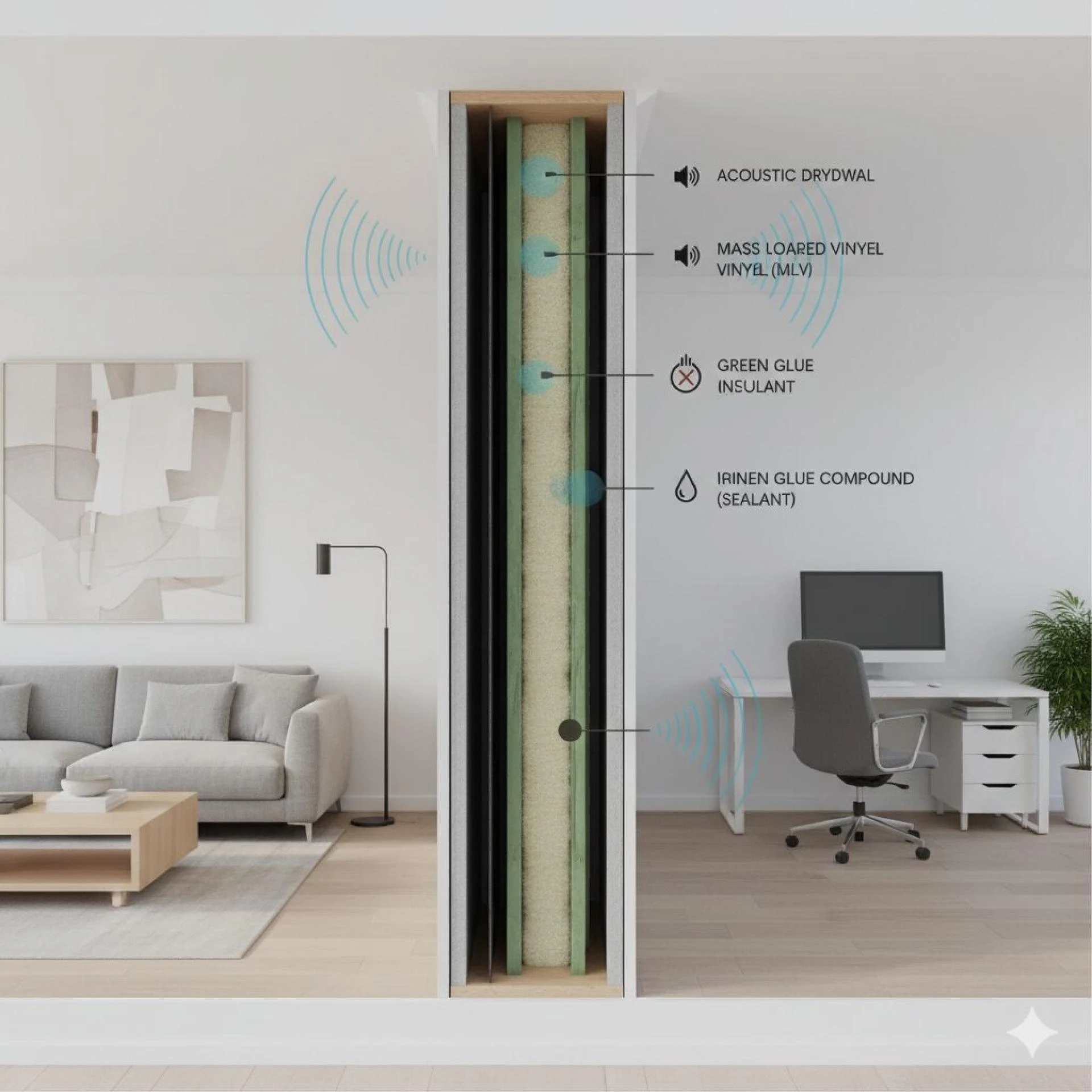
Noise pollution ranks among the biggest comfort killers in modern life. Whether you live in a bustling Indian metropolis like Mumbai or work in Dubai's commercial districts, sound from traffic, neighbors, and office equipment can easily penetrate your space.
For homes, noise disrupts sleep, relaxation, and privacy. In offices, it reduces focus, increases stress, and undermines productivity.
That's why sound blocking—also called soundproofing—has become a top design priority for modern interiors.
Understanding the Difference
It's crucial to distinguish between two concepts:
- Sound blocking (soundproofing) prevents noise from traveling between rooms or from outside to inside
- Sound absorption controls echoes and reverberation within a room
This guide focuses on materials that block sound transmission—ideal for homeowners, interior designers, architects, and builders across India and the UAE.
How Noise Blocking Works: The Science Behind It
Noise travels as vibrations through air and building materials. When these vibrations encounter walls, floors, or ceilings, they pass through unless the structure incorporates:
- Mass – Heavier materials resist vibrations more effectively
- Density – Compact, tightly bonded materials reduce sound penetration
- Damping – Materials that convert sound energy into heat (like viscoelastic compounds)
- Decoupling – Separating layers (such as double walls) prevents direct vibration transfer
- Sealing – Even small gaps around windows, doors, or electrical outlets can leak significant sound
Key Performance Metric: STC Rating
STC (Sound Transmission Class) measures how effectively a material blocks airborne sound. Higher STC values indicate better noise isolation.
Reference Guide:
- STC 25: Normal speech easily understood
- STC 30: Loud speech audible but not intelligible
- STC 35: Loud speech heard as murmur
- STC 42: Loud speech barely audible
- STC 45+: Must strain to hear loud speech
- STC 50+: Excellent soundproofing—loud sounds barely audible
- STC 60+: Superior isolation—very loud sounds heard faintly
Example: A regular stud wall with single drywall achieves STC 30-35, while a properly soundproofed wall can reach STC 50-60.
Top Materials for Blocking Noise
1. Mass Loaded Vinyl (MLV)
Best for: Walls, ceilings, floors, and pipes
MLV is a dense, flexible sheet designed to block noise without adding excessive thickness. At 1-2 pounds per square foot, it provides excellent mass in a thin profile.
Benefits:
- Outstanding mass-to-thickness ratio
- Flexible—conforms to irregular surfaces
- Fire-resistant and moisture-tolerant
- Easy to install behind drywall, under flooring, or wrapped around pipes
- Commonly used in apartments, conference rooms, home theaters, and recording studios
Application Tips:
- Overlap seams by 2-3 inches and seal with acoustic caulk
- Can be combined with other materials for enhanced performance
- Ideal for retrofitting existing walls without major construction
Widely Used In: Premium residential projects, luxury apartments, and commercial interiors in Mumbai, Delhi, Dubai, and Abu Dhabi.
2. Acoustic Plasterboard / Drywall
Best for: Partition walls, ceilings
Acoustic plasterboards are high-density versions of standard gypsum boards, typically 30-50% denser. Some include viscoelastic polymers within the core for enhanced damping.
Benefits:
- Integrates seamlessly with existing construction methods
- Fire-rated (up to 4 hours in some variants)
- Clean, paintable finish
- Available in moisture-resistant versions for bathrooms and kitchens
- Can achieve STC 50-55 when installed as double layers with damping compound
Installation Best Practices:
- Use with Green Glue or similar damping compound between layers
- Install on resilient channels or isolation clips for better decoupling
- Stagger seams between layers
3. Mineral Wool / Rock Wool Insulation
Best for: Wall cavities, ceiling voids, floor assemblies
Manufactured from molten rock or slag spun into fibers, mineral wool provides acoustic, thermal, and fire protection in one material.
Benefits:
- Excellent sound absorption within cavities (complements mass layers)
- Non-combustible—melting point above 1,000°C
- Moisture-resistant and doesn't support mold growth
- Environmentally friendly with high recycled content
- Cost-effective solution for large areas
- Typical density: 40-100 kg/m³
Performance: When combined with mass layers (drywall + MLV), can boost wall STC by 10-15 points.
Popular Applications: Multi-story apartments, villas, home theaters, recording studios, and industrial buildings.
4. Green Glue Noiseproofing Compound
Best for: Between layers of drywall, plywood, or MDF
This viscoelastic damping compound is applied between rigid layers to convert sound vibration energy into trace amounts of heat.
Benefits:
- Reduces sound transmission by up to 90% in certain frequencies
- Simple application—applies with standard caulking gun
- Effective across a broad frequency range
- Works with most building materials
- Remains flexible—won't dry out or crack over time
- Two tubes between two sheets of drywall can add STC 9-12 points
Application Guidelines:
- Use 1-2 tubes per 4x8 sheet (coverage matters more than thickness)
- Allow 30 days for full curing
- Combine with MLV or acoustic drywall for maximum effect
Ideal For: Recording studios, home theaters, bedroom walls, meeting rooms, and luxury residences requiring superior acoustic privacy.
5. Acoustic Sealants and Caulks
Best for: Edges, joints, penetrations, and gaps
Even the best soundproofing system fails if sound leaks through gaps. Acoustic sealants remain permanently flexible to accommodate building movement while maintaining an airtight seal.
Benefits:
- Maintains continuous sound barrier at vulnerable points
- Flexible—doesn't crack or shrink
- Paintable and weather-resistant
- Essential for achieving rated STC performance
Critical Application Points:
- Perimeter of all drywall sheets (especially floor and ceiling)
- Around door frames and window casings
- Electrical outlets and switch boxes
- HVAC penetrations and pipe chases
- Anywhere two different materials meet
Note: Don't confuse acoustic sealant with regular caulk—standard caulks dry hard and crack, creating sound leaks.
6. Sound Isolation Clips and Resilient Channels
Best for: Decoupling drywall from studs
These metal components create a mechanical break between wall studs and drywall, preventing direct vibration transfer.
Benefits:
- Highly effective against low-frequency noise (bass, machinery, footsteps)
- Works with standard construction techniques
- Can improve STC rating by 10-15 points
- Resilient channels are more affordable; isolation clips offer better performance
Installation Note: Proper installation is critical—bridging clips or channels defeats their purpose.
7. Acoustic Doors and Door Seals
Best for: Entry points requiring soundproofing
A soundproofed wall is only as good as its weakest point. Standard hollow-core doors have STC ratings around 15-20.
Solutions:
- Solid-core doors: STC 25-30
- Acoustic-rated doors: STC 40-55
- Automatic door bottom seals: Seal gap when door closes
- Perimeter gaskets: Compress against frame
Recommended For: Bedrooms, home offices, conference rooms, recording studios, and medical facilities.
8. Acoustic Windows and Secondary Glazing
Best for: Blocking external noise
Windows are typically the weakest acoustic element in exterior walls.
Options:
- Laminated glass: PVB interlayer provides damping (STC 32-38)
- Double/triple glazing with air gaps: Minimum 100mm gap between panes (STC 35-45)
- Secondary glazing: Adding an interior window creates large air gap (STC 45-55)
- Different glass thicknesses: Prevents resonance between panes
Climate Consideration: For UAE's intense heat and India's coastal humidity, opt for Low-E coatings and proper sealing to avoid condensation.
9. Floating Floor Systems
Best for: Impact noise from footsteps and furniture
Impact noise (footsteps, dropped objects) requires different treatment than airborne sound.
Components:
- Rubber underlayment: 3-6mm thick
- Cork sheets: Natural, eco-friendly option
- Mass loaded vinyl: For maximum isolation
- Isolation pads: Under flooring joists
Performance: Measured by IIC (Impact Insulation Class)—higher is better. Quality floating floors achieve IIC 50-65.
10. Emerging Materials for 2025 and Beyond
Innovation is driving the next generation of soundproofing solutions:
Nanofiber Composites
- Ultra-lightweight with exceptional acoustic performance
- 50% thinner than conventional materials at same STC rating
- Currently used in aerospace and automotive—entering building sector
Recycled PET Acoustic Panels
- Made from recycled plastic bottles
- Sustainable and affordable
- Good for absorption; developing denser variants for blocking
Phase-Change Materials (PCM)
- Materials that adapt to temperature and vibration
- Experimental use in high-end commercial projects
Smart Glass
- Electronically switchable acoustic properties
- Can adjust opacity and sound blocking on demand
- Being tested in luxury hotels and corporate offices in Dubai
Bio-Based Materials
- Mycelium (mushroom) panels
- Hemp fiber boards
- Coconut coir composites
- All sustainable alternatives with moderate acoustic performance
These innovations are gaining traction in LEED and green-certified projects across India and the UAE.
Choosing the Right Materials for Your Space
Your ideal soundproofing solution depends on several factors:
1. Type of Noise
- Airborne (voices, TV, music): Mass and sealing are critical
- Impact (footsteps, machinery): Floating systems and isolation clips
- Low-frequency (bass, traffic rumble): Decoupling and thick mass layers
- High-frequency (whistles, alarms): Density and absorption
2. Budget Considerations
- Economy: Mineral wool + acoustic sealant
- Mid-range: Acoustic drywall + mineral wool + proper sealing
- Premium: MLV + double acoustic drywall + Green Glue + isolation clips
- Luxury: Full decoupled assembly with floating floor and acoustic doors
3. Aesthetic Requirements
- Hidden solutions: MLV behind walls, mineral wool in cavities
- Exposed treatments: Decorative acoustic panels, fabric-wrapped boards
- Modern minimalist: Clean drywall with concealed soundproofing
4. Climate Factors
- Humid regions (Mumbai, coastal UAE): Moisture-resistant gypsum, mineral wool (not fiberglass)
- Hot climates (Dubai, Abu Dhabi): Materials that provide thermal insulation too
- Temperate zones: Standard materials suitable
Installation Best Practices for Maximum Performance
Even premium materials fail without proper installation:
Essential Steps:
- Seal Every Gap
- Apply acoustic sealant at all perimeters
- Don't forget electrical boxes—use acoustic putty pads
- Seal HVAC registers with lined ductwork
- Layer Mass Materials
- Use multiple thinner layers rather than single thick layer
- Alternate materials (drywall + MLV + drywall)
- Apply damping compound between rigid layers
- Decouple Structural Elements
- Use resilient channels or isolation clips
- Ensure no rigid connections bridge the gap
- Floating floors must not touch walls
- Fill Cavities with Absorptive Material
- Mineral wool or fiberglass in all wall/ceiling cavities
- Don't compress—reduces effectiveness
- Fill 70-90% of cavity depth
- Address Flanking Paths
- Sound can travel through adjoining walls, ceilings, and floors
- Treat adjacent spaces to prevent sound from bypassing main barrier
- Pay attention to shared ducts and plenums
- Test Before Finishing
- If possible, conduct acoustic tests before final finishes
- Check for gaps with smoke pencil or thermal camera
- Verify all penetrations are sealed
When to Hire Professionals
Professional installation is recommended for:
- Large commercial projects
- Multi-room residential soundproofing
- Critical spaces (recording studios, medical offices)
- Projects requiring specific STC ratings for code compliance
- Situations involving HVAC modifications or structural changes
Common Mistakes to Avoid
- Ignoring gaps and seals – Responsible for 50%+ of soundproofing failures
- Using wrong materials – Absorption materials (foam) don't block sound effectively
- Insufficient mass – Single layer of standard drywall isn't enough for real noise problems
- Rigid connections – Screws bridging isolation systems defeat decoupling
- Incomplete coverage – Stopping soundproofing at ceiling line while sound travels through plenum
- Wrong door choices – Hollow-core doors undermine wall performance
- Compressed insulation – Reduces acoustic and thermal effectiveness
Cost Considerations: India vs. UAE Markets
Approximate Material Costs (2025):
India (per sq ft):
- Mineral wool insulation: ₹40-80
- Acoustic drywall: ₹80-150
- MLV: ₹250-400
- Green Glue: ₹180-250 per tube
- Acoustic sealant: ₹350-600 per tube
UAE (per sq ft):
- Mineral wool insulation: AED 8-15
- Acoustic drywall: AED 15-28
- MLV: AED 45-70
- Green Glue: AED 35-50 per tube
- Acoustic sealant: AED 65-110 per tube
Installation costs typically add 40-100% to material costs depending on complexity and location.
Future Trends in Soundproofing Materials
The acoustic design market in India and the UAE is evolving rapidly:
Sustainability Focus
- Circular economy materials: Recycled and recyclable options
- Carbon-neutral manufacturing: Low-embodied energy materials
- Bio-based alternatives: Natural fibers replacing petroleum products
- Certifications: LEED, WELL, and Green Building Council requirements driving material selection
Technology Integration
- AI-assisted acoustic modeling: Precise noise mapping before construction
- BIM integration: Acoustic performance built into digital twins
- Smart materials: Tunable acoustic properties responding to environment
- IoT sensors: Real-time monitoring of acoustic performance
Regional Innovations
- Desert-adapted materials: Solutions for extreme heat and sandstorms (UAE)
- Monsoon-resistant systems: Anti-fungal, moisture-tolerant materials (India)
- Modular systems: Pre-fabricated acoustic wall assemblies for faster installation
These innovations promise quieter, greener, and more efficient buildings suited for contemporary living and working environments.
Maintenance and Longevity
Quality soundproofing materials require minimal maintenance:
- Mineral wool: Lasts 50+ years, doesn't degrade
- MLV: 20-30 year lifespan, may harden slightly over time
- Acoustic drywall: Same as standard drywall (decades with proper care)
- Green Glue: Permanent—doesn't dry out or lose effectiveness
- Acoustic sealants: Check every 10-15 years; reseal if cracks appear
Regular inspection points:
- Door seals and weather stripping (annual)
- Window seals (every 2-3 years)
- Acoustic caulk around penetrations (every 5-10 years)
Conclusion: Crafting Quiet Spaces with the Right Materials
Creating a peaceful home or productive office requires more than just blocking sound—it demands the strategic combination of appropriate materials, proper installation, and attention to detail.
From mass loaded vinyl and acoustic drywall to Green Glue and isolation systems, every layer contributes to comfort, privacy, and focus. The investment in quality soundproofing pays dividends in:
- Improved sleep quality and health
- Enhanced productivity and concentration
- Greater privacy for sensitive conversations
- Increased property value
- Better quality of life overall
Taking the Next Step
Whether you're designing a new home, renovating an office, or building a recording studio, the right soundproofing strategy makes all the difference.
At Extint Decor, we combine advanced acoustic materials with expert design to help you build spaces that sound as good as they look—delivering proven results across India, the UAE, and beyond.
Need help selecting the right soundproofing solution? Our acoustic consultants can assess your specific needs and recommend materials that fit your budget, aesthetic preferences, and performance requirements.
Ready to eliminate unwanted noise? Contact Extint Decor today for a consultation.























Sign in to leave a comment.