
Introduction to Networking Courses
What is computer networking?
Computer networking is the digital backbone of our modern world. Whether you're browsing social media, streaming your favorite show, or attending a virtual meeting, networking is what makes it all possible. Networking refers to the interconnection of computers and other devices to share data and resources. It includes everything from simple home Wi-Fi setups to massive corporate intranets.
But networking isn’t just about wires and routers—it's a critical skill that underpins cybersecurity, cloud computing, and even emerging technologies like the Internet of Things (IoT). Understanding how networks operate can open the door to a wide range of IT careers.
In a networking course, you'll learn how data moves from point A to point B, how to troubleshoot connection issues, and how to secure your network from unauthorized access.
Why Learn Networking?
So, why should you bother learning about networking? One simple reason: every business and organization depends on it. From local businesses to multinational corporations, everyone needs professionals who understand how to build, maintain, and secure networks.
Learning networking equips you with essential skills that are always in demand. As more companies migrate to the cloud and rely on remote work infrastructure, the need for network-savvy professionals is only going to grow.
Benefits of Taking a Networking Course
Career Growth and Job Opportunities
Completing a networking course isn’t just an educational achievement—it’s a direct gateway to professional growth. The IT industry is booming, and network-related roles are among the most secure and well-paying jobs. Whether you're aiming to become a network engineer, a systems administrator, or a cybersecurity analyst, having formal training in networking is your foot in the door.
The job market recognizes certification and practical knowledge. According to recent employment reports, roles like Network Administrator and IT Support Specialist are among the top tech jobs with high job satisfaction and strong salary growth. Employers don’t just want people who can memorize protocols; they need individuals who can configure routers, manage switches, and troubleshoot real-world network issues.
Key Concepts Covered in a Networking Course
OSI and TCP/IP Models
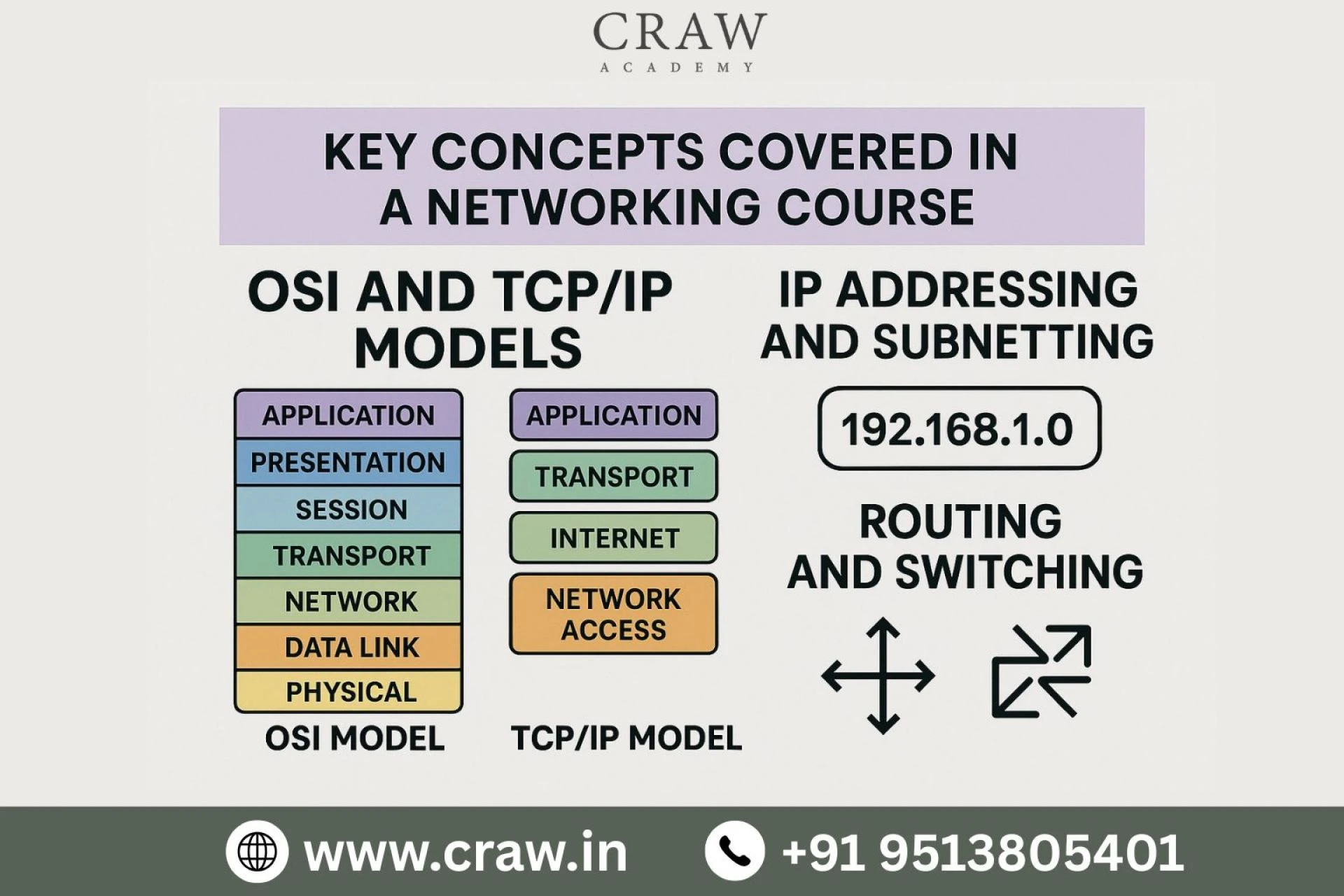
Let’s face it—no networking course is complete without the OSI and TCP/IP models. These are the blueprints for understanding how data travels across a network. Think of them as the grammar rules of networking—they tell you how communication happens, step by step.
The OSI model breaks down networking into seven layers, from the physical cabling (Layer 1) to the actual applications we interact with (Layer 7). It gives you a clear picture of where things can go wrong and how to troubleshoot effectively.
IP Addressing and Subnetting
If the OSI and TCP/IP models are the grammar of networking, IP addressing is the vocabulary. Every device on a network needs a unique address to communicate. You'll learn the difference between IPv4 and IPv6, public vs. private IPs, and how to assign addresses properly.
But here’s where it gets interesting—subnetting. It's like solving math puzzles with real-world applications. Subnetting allows networks to be segmented efficiently, improving performance and security. Once you get the hang of it, you'll be able to create custom network layouts and calculate IP ranges with ease.
Routing and Switching
Routing and switching are at the heart of network design. Routers direct traffic between different networks, while switches manage traffic within a network. These aren’t just devices—they’re the conductors of data flow.
In a quality networking course, you’ll dive deep into concepts like static vs dynamic routing, routing protocols (like RIP, OSPF, and EIGRP), and Layer 2/Layer 3 switching. You’ll get hands-on experience configuring routers and switches, setting up access control lists (ACLs), and troubleshooting network paths.
Types of Networking Courses
Beginner-Level Courses
Beginner networking courses are designed for individuals with little to no prior experience in IT. These programs introduce you to core networking concepts such as IP addressing, hardware components, and basic configuration of routers and switches. Perfect for students or career changers, they often require no prerequisites. Courses like CompTIA IT Fundamentals or Cisco’s IT Essentials are excellent starting points.
Advanced and Specialized Courses
For those who already grasp the basics, advanced courses dive deeper into specific areas like network security, wireless communication, and cloud networking. These programs often require some foundational knowledge or experience. They are tailored for professionals aiming to specialize or move into senior IT roles. Subjects such as firewalls, VPNs, and network architecture are commonly included.
Vendor-Specific Certifications (Cisco, CompTIA, etc.)
Networking certifications from major tech vendors carry global recognition. Cisco's CCNA and CompTIA’s Network+ are two of the most sought-after certifications. Vendor-specific courses are often more focused, teaching you how to work with specific hardware or software platforms. These certifications can make a big difference in your job search and salary negotiations.
Choosing the Right Networking Course
Define Your Career Goals
Choosing the right course starts with identifying your goals. Are you just starting in IT or planning to specialize in cybersecurity or cloud computing? If you know where you’re headed, picking a course becomes easier. Entry-level roles may only require basic certifications, while advanced career paths need specialized training.
Compare Course Content and Duration
Not all courses are created equal. Some offer a quick overview in a few weeks, while others go into depth over several months. Check the syllabus—make sure it includes hands-on labs, updated technologies, and real-world applications. Also, look out for extra resources like practice exams or projects.
Consider Industry Recognition and Accreditation
Accreditation matters. Choose a course from a well-known provider like Cisco Networking Academy, CompTIA, or Microsoft Learn. These organizations offer structured paths and are trusted by employers. Read reviews and testimonials to ensure you’re investing in quality education.
Top Networking Certifications You Can Earn
Cisco Certified Network Associate (CCNA)
The CCNA is one of the most respected networking certifications globally. It covers key topics like network access, IP connectivity, security fundamentals, and automation. Ideal for both beginners and mid-level professionals, earning a CCNA proves you can install, configure, and troubleshoot networks effectively.
CompTIA Network+
CompTIA Network+ is vendor-neutral, making it a great choice if you're not tied to specific brands like Cisco or Juniper. It focuses on practical network skills and foundational knowledge. It’s perfect for helpdesk professionals, technicians, or anyone looking to break into IT.
Craw Security Certification
Craw Security certification are ideal if you're working with Juniper devices or in telecom environments. The JNCIA (Juniper Networks Certified Internet Associate) is the entry-level cert, but higher-level paths like JNCIP are great for specialists. It’s a solid choice for expanding into network architecture or service provider environments.
Online vs Offline Networking Courses
Advantages of Online Learning
Online networking courses offer unmatched flexibility. You can study anytime, anywhere—perfect for busy schedules or part-time learners. Many platforms provide recorded lessons, downloadable materials, and interactive quizzes. Plus, online courses often cost less and allow you to revisit lessons whenever needed.
Classroom-Based Learning Experience
On the flip side, classroom-based courses offer in-person interaction with instructors and peers. You get immediate feedback, real-time troubleshooting help, and sometimes access to physical labs. If you prefer face-to-face learning or need more structure, classroom settings may suit you better.
Course Duration and Structure
Typical Duration of Networking Courses
Networking courses vary in length depending on complexity. Beginner programs may last 4–8 weeks, while more advanced courses can run from 2 to 6 months. Self-paced options are also available, giving you control over your schedule. Certification-focused bootcamps are intense but quick.
Modules and Learning Path
Most courses are divided into modules that cover specific topics—network fundamentals, IP addressing, routing and switching, and security. You typically progress from basic to advanced levels, with assessments along the way. Some include final projects or mock exams to reinforce learning and prep for certification tests.
Conclusion
Taking a networking course with certification is one of the smartest moves you can make in the IT world. It gives you a strong foundation, practical skills, and recognized proof of your abilities. Whether you're aiming to enter the field, level up your current role, or pivot to cybersecurity or cloud computing, networking is the gateway.
These courses are flexible, available online and offline, and cater to all experience levels. With industry demand constantly growing, there's no better time than now to get started. Equip yourself with the right skills, get certified, and open the doors to endless opportunities.
FAQs
1. What is the best networking certification for beginners?
CompTIA Network+ and Cisco CCNA are great starting points for beginners due to their foundational content and wide recognition.
2. Can I learn networking without any IT background?
Yes, many beginner-level courses require no prior knowledge and start with the very basics.
3. How long does it take to complete a networking course?
Courses can take anywhere from 4 weeks to 6 months, depending on your pace and the course depth.
4. Are networking certifications worth it?
Absolutely. They validate your skills and can significantly improve your job prospects and salary potential.
5. Do networking courses include hands-on training?
Most quality courses include labs or simulators to give you real-world practice.
6. Which is better: online or offline networking courses?
Both have their benefits. Online is flexible, while offline provides hands-on instruction. Choose based on your learning style.
7. Can I get a job with just a networking certification?
Yes, many entry-level roles accept certifications in place of degrees or experience.
8. Are free networking courses effective?
They’re good for learning basics but often lack depth, support, and certification preparation.
9. Is the CCNA hard to pass?
It’s challenging but manageable with proper study, hands-on practice, and test prep.
10. What equipment do I need to practice networking at home?
Basic setups include routers, switches, and a PC. Alternatively, you can use virtual labs like Packet Tracer.
11. Is networking a good career choice in 2025?
Yes, the demand for networking professionals is strong and continues to grow with tech advancements.
12. Can I specialize after learning general networking?
Absolutely. You can branch into areas like security, cloud networking, or wireless technologies.
13. Are networking skills needed for cybersecurity?
Yes, a strong networking foundation is crucial for understanding threats and securing systems.
14. What’s the next step after completing a networking course?
You can apply for jobs, pursue advanced certifications (like CCNP or CEH), or explore specialties like cloud or security.





























Sign in to leave a comment.