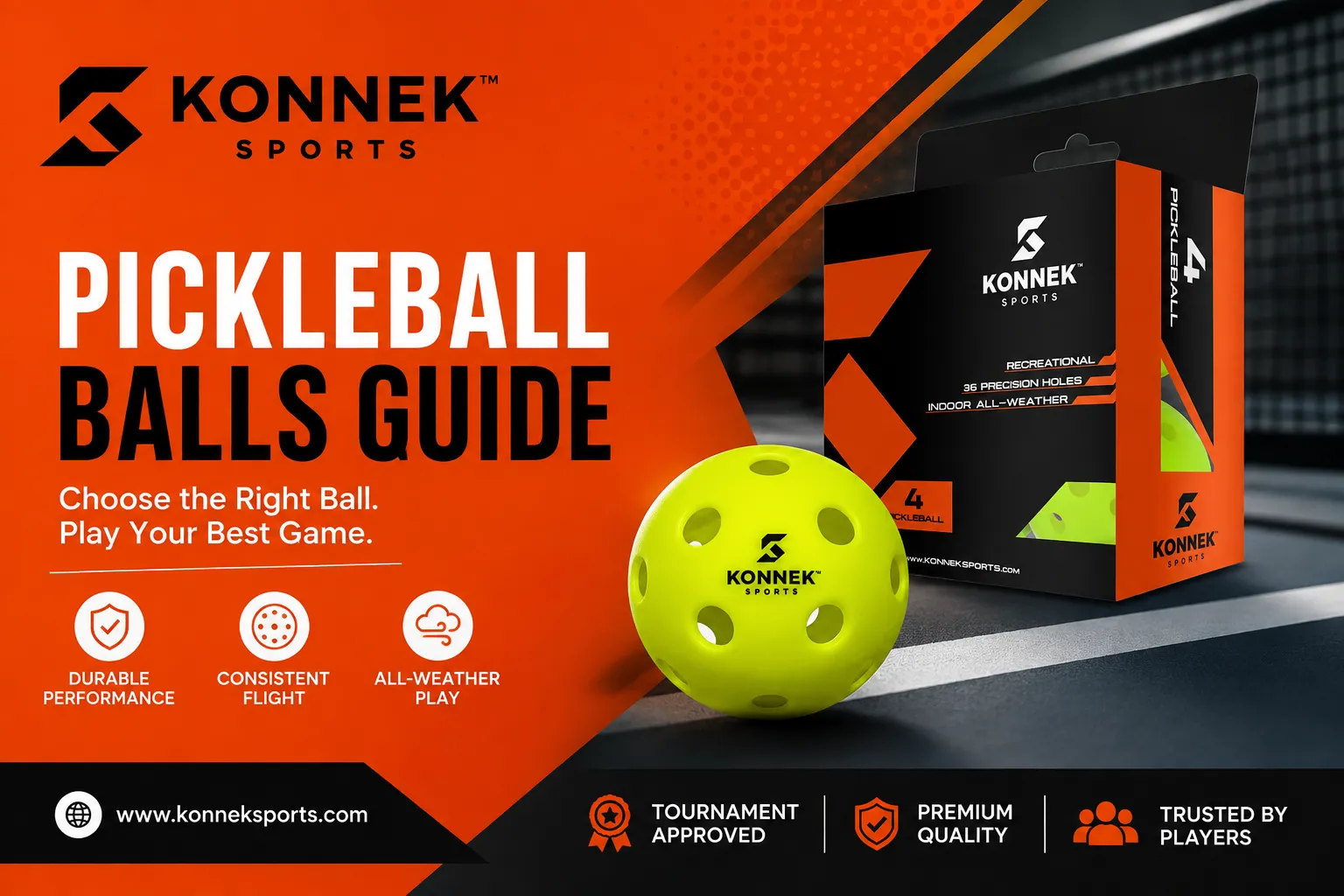

Choosing the right pickleball ball can have a bigger impact on your game than many beginners realize. The ball affects bounce, speed, control, durability, visibility, and how consistently your shots travel across the court. Whether you play recreational games, competitive matches, or organized tournaments, selecting the right ball helps create a more predictable and enjoyable experience.
For players searching for pickleball equipment California, understanding the difference between indoor and outdoor pickleball balls is especially useful. California offers a wide variety of playing environments, from indoor gyms to outdoor community courts, and the conditions you play in can influence which ball performs best.
What Is the Difference Between Indoor and Outdoor Pickleball Balls?
The main difference between indoor and outdoor pickleball balls is their construction. Indoor balls generally have fewer, larger holes and are made with softer plastic. Outdoor balls typically have more, smaller holes and use harder plastic to provide better stability in outdoor conditions. Current pickleball guides consistently identify this hole pattern and material difference as one of the most important factors when choosing a ball.
Indoor pickleball balls are designed for controlled environments where wind is not a major factor. Their softer construction can provide a more comfortable feel and predictable response on smooth indoor courts. Outdoor pickleball balls are engineered to handle wind, rougher court surfaces, and greater temperature variation.
If you regularly play outside, an outdoor ball is generally the better choice. If your games take place primarily inside a gym or indoor pickleball facility, an indoor ball is usually more appropriate.
How Many Holes Does a Pickleball Have?
One of the easiest ways to distinguish indoor and outdoor pickleball balls is by looking at the holes.
Indoor pickleball balls commonly feature approximately 26 larger holes, while outdoor balls commonly feature approximately 40 smaller holes. The different hole patterns influence airflow and ball behavior during play. Outdoor balls use the smaller-hole design to improve stability when players are dealing with wind and changing outdoor conditions.
However, hole count should not be the only factor in your buying decision. Material, weight, durability, visibility, playing surface, and intended use all matter.
Are Outdoor Pickleball Balls Better?
Outdoor balls are not automatically better than indoor balls. They are simply designed for different playing conditions.
An outdoor ball is usually the better option when playing on outdoor concrete, asphalt, sport courts, or converted tennis courts. Outdoor conditions can expose the ball to wind, rough surfaces, heat, and temperature changes, so a harder construction is beneficial.
Indoor balls are designed for smooth indoor surfaces where wind resistance is less important. Using the wrong type can change the pace and feel of the game and may also shorten the life of the ball.
The best pickleball ball is therefore the one that matches your court and playing environment.
What Should California Pickleball Players Look For?
Players researching pickleball equipment California should consider the environment in which they play rather than simply choosing the most popular ball.
Outdoor California pickleball can involve bright sunlight, warm temperatures, breezy conditions, and a wide variety of court surfaces. Visibility can become particularly important during daytime games, while wind resistance can affect ball flight on exposed courts.
For frequent outdoor players, look for a ball with consistent flight, reliable bounce, good durability, and a color that remains easy to track against your surroundings. Players who participate in competitive events should also check the specific ball requirements of their tournament before purchasing.
This practical approach can help you avoid buying a ball that looks good online but does not match your normal playing conditions.
How Do You Know When a Pickleball Ball Needs to Be Replaced?
Pickleball balls do not last forever. Frequent contact with paddles and hard court surfaces can gradually affect their shape and performance.
Common signs that a pickleball needs replacing include visible cracks, noticeable deformation, inconsistent bounce, soft spots, and unusual flight. A ball that no longer stays reasonably round can become unpredictable during rallies.
Outdoor balls may experience particularly demanding conditions because they are exposed to harder surfaces and environmental changes. Some players also report cracking or changes in shape depending on temperature and ball construction.
Replacing worn balls is not just about performance. A consistent ball makes practice sessions more productive and competitive games fairer.
What Makes a Good Tournament Pickleball Ball?
Tournament players should look beyond price. Consistent bounce, predictable flight, durability, visibility, and compliance with applicable tournament requirements are important considerations.
A tournament-quality ball should perform consistently from the beginning of a match through extended rallies. Players should also verify the competition's required or approved ball because tournament standards can vary.
If you regularly compete, buying a ball that matches the type used in your events can make practice more realistic. It also prevents you from adjusting your timing and shot selection to a substantially different ball on competition day.
How Should Beginners Choose Pickleball Balls?
Beginners do not necessarily need the most expensive ball available. The priority should be choosing a ball appropriate for the court and developing consistent technique.
Start by identifying whether you play primarily indoors or outdoors. Then consider durability, visibility, playing frequency, and whether you expect to enter tournaments.
If you are joining an established pickleball group, asking which ball the group normally uses can also be helpful. Playing with the same type of ball as other players makes it easier to develop consistent expectations for bounce, pace, and flight.
Does the Ball Affect Your Pickleball Game?
Yes. The ball can influence reaction time, rally speed, bounce, shot placement, and overall feel.
A harder outdoor ball may produce a faster-feeling game, while an indoor ball can behave differently because of its softer construction and larger holes. Wind can also magnify differences between ball designs.
This is why experienced players often develop preferences for particular balls. What feels ideal for one player may not be ideal for another, especially when playing environments differ.
Quick Pickleball Ball Buying Checklist
Before purchasing your next set of balls, consider these questions:
- Do I play indoors or outdoors?
- Is my court smooth or rough?
- Is wind usually a factor?
- Do I need a tournament-appropriate ball?
- Is visibility important in my playing environment?
- How frequently do I play?
- Do I prioritize durability, speed, control, or feel?
- Does my local pickleball group use a specific ball?
- Will I use the balls primarily for practice or competition?
Answering these questions makes it much easier to narrow down the right option instead of choosing based only on brand recognition or price.
Find the Right Pickleball Balls for Your Game
Whether you're a beginner looking for dependable practice balls or an experienced player preparing for competitive games, choosing the right pickleball starts with understanding your playing environment. Indoor and outdoor balls are designed differently, and factors such as hole pattern, construction, court surface, weather, durability, and tournament requirements can all influence performance.
For players building their collection of pickleball equipment California, making an informed ball choice can improve consistency while helping you get more value from every practice session and match.
Ready to upgrade your game? Explore the pickleball ball collection from Konnek Sports and find options designed to support consistent play, practice, and competition.
Conclusion
The best pickleball ball is not necessarily the most expensive or most popular option—it is the one that matches your court, conditions, playing style, and goals. Indoor players should generally look for balls designed for controlled indoor surfaces, while outdoor players should prioritize stability, durability, and reliable flight. Tournament players should additionally verify the ball requirements of their events.
By considering these factors before buying, players can choose more confidently and spend less time dealing with inconsistent bounce, cracking, or poor flight. Konnek Sports provides pickleball players with a convenient destination to explore pickleball balls and other equipment for their next game.























Sign in to leave a comment.