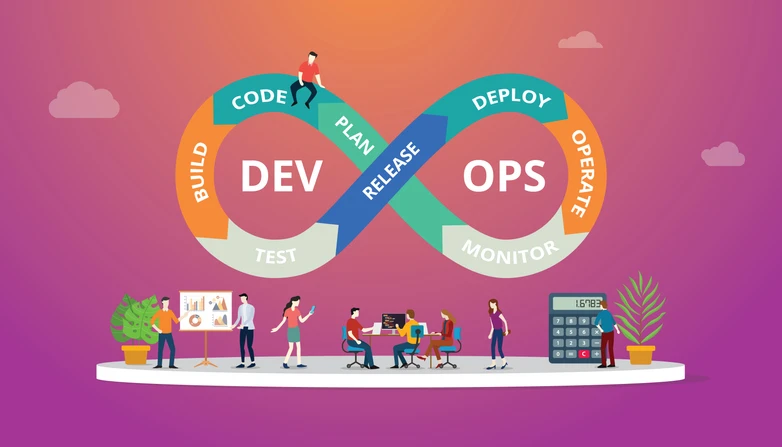

DevOps facilitates faster application development and deployment. Among other things, it encourages seamless communication and collaboration between the development and the operations team.
According to Atlassian, ‘It's best to understand DevOps as a business drive to improve communication and collaboration among development and operations teams, to increase the speed and quality of software deployment. It’s a new way of working that has profound implications for teams and the organizations they work for.’
DevOps has become a buzzword for companies who are looking for reliable DevOps development services to fulfill their software development needs. Moreover, it is becoming increasingly popular for companies looking to scale. Speaking of scalability, agile processes were always in the spotlight, even though DevOps services and solutions did not replace them but they definitely outshine them.
Common DevOps Methods
There are a few popular methods that DevOps services companies use such as Scrum, Kanban, and agile.
Scrum: It highlights how team members should work together to speed up development and projects related to quality assurance. Scrum’s core processes include workflows, sprints, daily scrum meetings, and scrum masters.
Kanban: They include Kanban boards that keep track of the status of a project using a comprehensive board. Trello is one such example.
Agile: Agile methodologies influence DevOps practices and tools. Methods like Scrum and Kanban have elements of agile processes too. They include great responsiveness, gathering needs and requirements, daily standup meetings, and continuous customer feedback.
DevOps Development Best Practices
Test Automation: Regular testing of the software is essential for ensuring the quality of code and is a major part of DevOps automation services. Through test automation, developers can fix bugs during the development phase. Whereas manual testing slows down the testing process and ultimately the development. With test automation, developers don’t have to repeatedly perform mundane tasks. The time that they can otherwise spend on productive tasks such as developing innovative test use cases.
Keep Things Streamlined: DevOps keeps all the processes streamlined and all the stakeholders along with their teams on the same page. DevOps can not work without collaboration among teams, therefore seamless communication is a must. To have an effective DevOps, it’s important to come up with an effective DevOps strategy for smooth communication, better hire a DevOps development company if you lack the expertise.
Application Infrastructure Monitoring: Application monitoring is very important for maximizing the application’s performance no matter where it resides: on cloud or local data centers. It eliminates the chances of bugs occurring during the deployment stage which can otherwise lead to application failure. Therefore, proactive app monitoring is a must for the DevOps team to ensure the optimal performance of the application during different stages of development and deployment. There are many tools available that facilitate DevOps with app monitoring through various graphics and analytics.
Continuous Integration (CI): Continuous integration is a DevOps practice that enhances collaboration to deliver a high-quality product. DevOps are obligated to regularly check code changes in the repository, and CI ensures the quality of the code and addresses the challenges during the software development life cycle early on, which facilitates the team to fix issues as soon as possible.
Continuous Deployment (CD): The deployment process itself has multiple stages such as build validation, deployment, post-deployment, etc. CD enables the development team to automatically deploy the code. Various tools are used to accelerate the process such as Spinnaker, Jenkins, Harness, Ansible, etc. These tools enable the team to set-up automated processes to deploy the code with minimum human supervision.
Change Management: CM is a process of planning, evaluating, and implementing the changes needed to meet newer application requirements. If the system requires any additional infrastructure changes, change management comes into play. Operations teams are liable to give reasons for the need for change and what consequences might they bring and how will they impact the application. This practice is basically about managing change in the code without any undesirable conditions.
Important DevOps Tool Categories
Version Control: Tools that track different versions of the software when they are released such as tracking the configuration and environmental dependencies including the operating system, type, brand, and version of the database and the server.
Build and Deploy: Tools that automate the deployment of the software throughout the DevOps process, including continuous development and continuous integration.
Testing: Tools for automated testing. They provide integrated unit, performance, and security testing services.
Change Management: These include application monitoring tools and automated tools for change management.
Don’t know which tool to use in which category? Outsourcing a DevOps development services is a step in the right direction. DevOps consulting services can assist and fulfill your DevOps needs from start till finish.






Sign in to leave a comment.