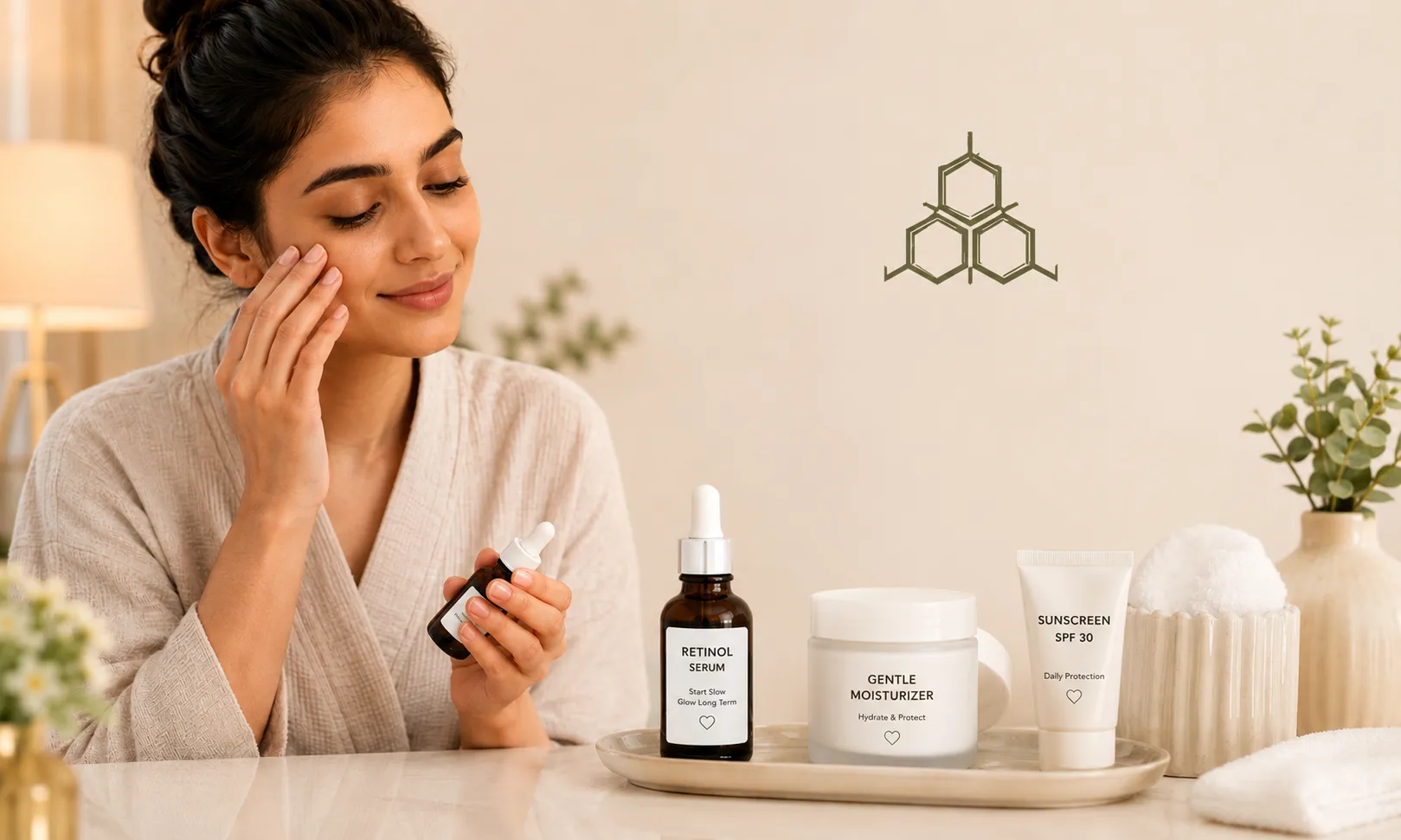

If you have sensitive skin, adding retinol to your routine can feel a little intimidating. You may have heard about its benefits for smoother-looking skin, improved texture, and a more even complexion, but you might also worry about dryness, redness, or irritation. The good news? Sensitive skin does not always mean you have to skip retinol. It simply means choosing a formula that works with your skin, not against it.
Why Sensitive Skin Needs a More Careful Retinol Choice
Retinol is a powerful vitamin A derivative known for supporting natural skin renewal. It helps encourage a fresher-looking complexion by promoting smoother texture and improving the appearance of uneven tone over time.
However, sensitive skin often has a more delicate barrier, which means it may react more easily to strong active ingredients. That is why choosing the right retinol formula matters. Instead of focusing only on a high concentration, look for products designed with gentle delivery systems and skin-supporting ingredients.
A well-developed retinol product should help your skin adjust gradually while maintaining comfort and hydration.
What Makes a Retinol Gentle Enough for Sensitive Skin?
The best retinol for sensitive skin is usually not the strongest one-it is the one your skin can tolerate consistently.
Many gentle formulas use encapsulated retinol, a technology that releases retinol slowly into the skin. This controlled delivery helps minimize sudden exposure and may reduce the chances of irritation.
A thoughtfully created formula may also include hydrating and calming ingredients that support the skin barrier. These ingredients help your skin stay balanced while retinol works behind the scenes to improve its appearance.
When choosing a retinol, think about long-term skin health rather than instant results. A comfortable formula used consistently often delivers better results than a stronger product that leaves your skin feeling stressed.
How to Start Retinol Without Overwhelming Your Skin
Introducing retinol slowly is one of the easiest ways to make the transition smoother. Start by applying it once or twice a week, then gradually increase usage as your skin becomes more comfortable.
A simple Retinol Skincare routine focuses on maintaining balance while allowing your skin to adapt. This means pairing retinol with gentle cleansing, proper hydration, and daily sun protection instead of overwhelming your skin with too many active ingredients at once.
During the beginning, avoid combining multiple strong products together, as this may increase the chance of sensitivity, especially if your skin is already reactive.
Can You Use Retinol If Your Skin Is Extremely Sensitive?
Many people with sensitive skin can enjoy the benefits of retinol when they choose the right approach. The key is patience, consistency, and paying attention to how your skin responds.
Before fully adding retinol into your routine, patch testing is always a smart step. Everyone’s skin reacts differently, so it is important to understand your own tolerance level.
If your skin often feels uncomfortable, irritated, or easily disrupted, consider speaking with a skincare professional before starting a retinol product.
Finding a Retinol Formula That Fits Your Skin
Choosing the right retinol for sensitive skin is about finding the perfect balance between effectiveness and comfort. With a clinically gentle formula, the right application method, and a little patience, sensitive skin can experience the benefits of retinol without unnecessary irritation.
A successful retinol routine is not about rushing results-it is about supporting healthier-looking skin one step at a time.

















Sign in to leave a comment.