
Introduction
In a hyperconnected world where mobile devices are the lifeline of both personal and professional communication, running out of battery is more than an inconvenience—it’s a crisis. Whether in an airport, shopping mall, or bustling café, the need for instant, accessible charging solutions has spurred the meteoric rise of shared power banks.
These compact lifelines are now a global phenomenon. Users can rent, charge, and return them with seamless ease. Behind this convenience are companies racing to dominate an increasingly competitive market. This article explores the best of them.
What Makes a Shared Power Bank Company Stand Out
Not all shared power bank providers are created equal. The strongest players distinguish themselves through a trifecta of hardware reliability, network coverage, and intuitive user experience.
High-capacity lithium-polymer batteries, fast-charging capabilities, and durability under frequent use are the baseline. But what elevates a brand is the ecosystem—an app that syncs flawlessly, stations that are visible and ubiquitous, and customer support that actually solves problems. The best companies go beyond power delivery; they create micro-moments of digital trust.
Top Shared Power Bank Companies Globally
The global shared power bank market is clustered around Asia, with China leading the pack. However, other regions like Southeast Asia, Japan, and increasingly Europe and North America are catching on.
The current heavyweights include:
- AnkerBox (China): Backed by the globally recognized charging tech brand Anker.
- Energy Monster (China): Known for scale and innovation.
- ChargeSPOT (Japan/Hong Kong): A regional leader expanding steadily into international territories.
- Jiadian (China): Massive urban penetration and aggressive pricing.
Each has carved a unique niche in a competitive field.
Company Spotlight: AnkerBox
AnkerBox, an extension of the Anker consumer electronics empire, benefits from strong R&D roots. Leveraging Anker’s heritage in premium charging technology, it launched with a focus on delivering quality over sheer volume.
The brand deploys aesthetically minimalist stations often placed in premium urban venues—think boutique hotels, co-working spaces, and flagship retail stores. Integration with Alipay and WeChat Pay ensures frictionless user experience in China, while its Android/iOS app offers real-time location tracking and usage history. Though its global presence is more limited than some, AnkerBox has become synonymous with trust.
Company Spotlight: Energy Monster
Energy Monster isn’t just a company—it’s a symbol of how fast innovation can scale. Founded in 2017, the company capitalized on a booming demand and expanded across thousands of cities in China within just a few years. Its aggressive station placement strategy saw it dominate restaurants, shopping malls, and subway stations with a presence that became impossible to ignore.
Its pricing is competitive, offering short-term rentals with cap pricing after certain hours. The design of the power banks is ergonomic, while the app features QR scan-to-rent simplicity that anyone can master in seconds. Partnerships with chains like KFC and Starbucks helped the brand cement itself into consumer routines.
Company Spotlight: ChargeSPOT
ChargeSPOT has taken a more regionalized approach, with strongholds in Japan, Hong Kong, and parts of Southeast Asia. What makes ChargeSPOT unique is its relentless focus on station density. In places like Tokyo or Bangkok, one is rarely more than a 5-minute walk from a ChargeSPOT terminal.
Its mobile app supports English, Japanese, and Chinese—crucial in catering to tourists. The units are sleek, often built with retractable cables for all device types. A partnership with FamilyMart and Lawson in Japan granted the company high-traffic visibility, driving rapid adoption among locals and travelers alike.
Emerging Players to Watch
Beyond the giants, several up-and-coming brands are pushing boundaries. Companies like HiCharger and Stwpowstar are targeting hyperlocal markets—airports, music festivals, or coworking hubs—with tailored solutions. These companies focus on form factor innovation, wireless charging, solar-rechargeable docks, or even ad-supported rental models.
Sustainability is also becoming a differentiator. Brands incorporating biodegradable casings, recyclable batteries, or ESG-backed logistics are starting to win over eco-conscious consumers and venues.
Factors to Consider When Choosing a Shared Power Bank Service
As a user or business partner evaluating shared power bank providers, several factors deserve close scrutiny:
- Device Compatibility: Does it support USB-C, Lightning, and Micro-USB?
- Charging Speed: Is fast-charging supported or just standard output?
- Location Density: Can the bank be rented and returned easily, even across cities?
- User Interface: Is the app multilingual and intuitive?
- Pricing Transparency: Are there hidden fees or time caps?
- Customer Support: Can issues be resolved promptly, especially during travel?
These criteria define not just convenience, but trust.
Future Trends in the Shared Power Bank Industry
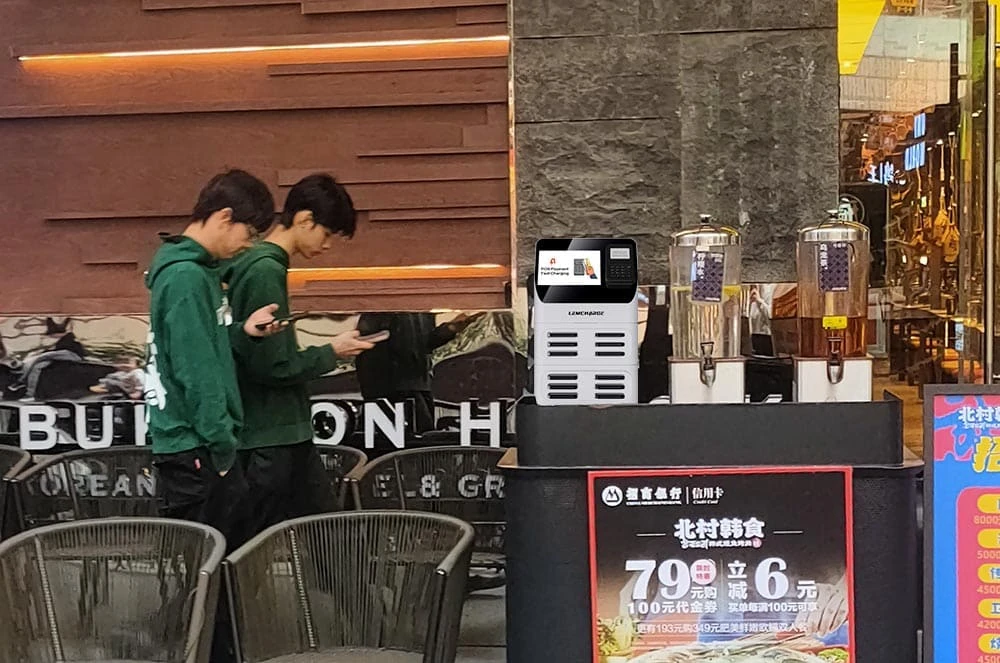
The next generation of shared power bank services will be smarter, faster, and greener. Expect AI-powered predictive maintenance, where failing units are flagged before they inconvenience users. Cross-border interoperability is also on the horizon—imagine renting a power bank in Seoul and returning it in Singapore.Among the many shared charging services, LemChargo offers a wide range of intelligent charging stations. Users can access the charging station by simply scanning a QR code, making it ideal for use in shopping malls, airports, trade shows, and other locations.
Moreover, the integration of wireless pads, biometric rentals, and 5G-enabled charging lockers will push the envelope of innovation. Sustainability will evolve from optional to expected, with companies investing in closed-loop recycling and carbon-neutral logistics.
Conclusion
Shared power banks have transcended utility—they’ve become an essential service layer in modern urban life. As the industry matures, only those companies that combine technological robustness with relentless focus on user experience will thrive. From giants like AnkerBox and Energy Monster to regional champions like ChargeSPOT, the field is vibrant and fast-evolving.
In the end, it’s not just about power—it’s about empowering movement, connection, and freedom.

























Sign in to leave a comment.