
Why Sustainable Packaging Is No Longer Optional for U.S. Brands
Across the United States, from New York retail stores to California e-commerce warehouses, one shift is reshaping the way businesses operate and it starts at the box, the bag, and the label.
Sustainable packaging is no longer a niche trend reserved for organic food brands or boutique retailers. Today, it is a strategic business decision that directly affects profit margins, customer retention, and brand reputation. According to recent consumer data, over 74% of American shoppers are willing to pay a premium for products packaged sustainably and that number continues to climb.
Whether you run a small business in Texas, a mid-sized manufacturer in Ohio, or a growing DTC brand in California, this guide breaks down everything you need to know about the best sustainable packaging options available in the U.S. market right now.
What Is Sustainable Packaging? (And What It Is Not)
Sustainable packaging refers to materials and design practices that minimize environmental impact across the entire product lifecycle from raw material sourcing to end-of-life disposal or composting.
Truly sustainable packaging meets three core criteria:
- Recyclable, compostable, or reusable — reducing landfill contribution
- Made from renewable or recycled materials — lowering carbon footprint
- Designed for efficiency — using the least amount of material possible without compromising product protection
It is important to note that "green-washed" packaging products marketed as eco-friendly without verifiable certifications or data does not qualify. U.S. businesses should look for packaging that meets FTC Green Guides standards and carries recognized third-party certifications such as FSC, SFI, BPI Compostable, or How2Recycle labels.
Top 7 Best Sustainable Packaging Options for U.S. Businesses
1. Recycled Corrugated Cardboard Boxes
Corrugated cardboard made from post-consumer recycled (PCR) content remains one of the most cost-effective and widely available sustainable packaging solutions in the United States. It is accepted in curbside recycling programs across all 50 states, making it convenient for end consumers.
Best for: E-commerce, retail, food & beverage, electronics shipping
U.S. Availability: High — major suppliers include Uline, PaperMart, and Veritiv Corporation
Certifications to look for: SFI (Sustainable Forestry Initiative), FSC-certified
2. Compostable Mailers and Poly Bags
Made from plant-based materials such as cornstarch or PBAT (polybutylene adipate terephthalate), compostable mailers are rapidly gaining traction among U.S. DTC and apparel brands as a direct replacement for traditional plastic poly mailers.
Best for: Apparel, subscription boxes, beauty brands, small goods
U.S. Availability: Medium to high — available through EcoEnclose, NoIssue, and The Better Packaging Co.
Certifications to look for: BPI Certified Compostable, TÜV Austria OK Compost
3. Molded Pulp Packaging
Molded pulp — made from recycled paper, newsprint, or agricultural fibers — provides excellent cushioning and structural integrity. It is fully compostable and biodegradable, making it a superior alternative to expanded polystyrene (EPS) foam.
Best for: Electronics, fragile goods, wine & spirits, food service
U.S. Availability: Medium — key suppliers include UFP Technologies, Sealed Air, and Hartmann Certifications to look for: FSC, ASTM D6400 compostability standard
4. Recycled and Recyclable Glass Packaging
For food, beverage, and cosmetics brands, glass packaging made from recycled cullet (crushed glass) offers a premium, infinitely recyclable option. The U.S. glass recycling infrastructure, while still developing in some states, is strong in major metro areas.
Best for: Beverages, candles, beauty, food products
U.S. Availability: High — suppliers include Owens-Illinois (O-I), Berlin Packaging, and Ardagh Group
Certifications to look for: GPI (Glass Packaging Institute) certification
5. Kraft Paper Void Fill and Wraps
Kraft paper wraps, honeycomb paper, and crinkle cut paper void fill are excellent recyclable alternatives to bubble wrap and plastic peanuts. Many U.S. businesses are switching to paper-based protective packaging as part of their extended producer responsibility (EPR) commitments.
Best for: Retail gifting, fragile product wrapping, void fill in shipping boxes
U.S. Availability: Very high — widely available through Amazon Business, Uline, and Ranpak Certifications to look for: FSC, recycled content percentage disclosure
6. Mushroom Packaging (Mycelium)
One of the most innovative sustainable packaging materials to emerge in recent years, mycelium (mushroom root) packaging is grown rather than manufactured. Companies such as Ecovative Design — based in Green Island, New York — are leading the charge in bringing this material to U.S. businesses at scale.
Best for: High-end electronics, furniture, luxury goods, fragile items
U.S. Availability: Low to medium — growing but still limited to specialty suppliers Certifications to look for: ASTM D5988 biodegradability standard
7. Aluminum Packaging with Recycled Content
Aluminum is one of the most recyclable materials on the planet, with U.S. recycled aluminum requiring 95% less energy to produce than virgin aluminum. For beverage brands, canned goods, and cosmetics, aluminum packaging with high recycled content is a strong sustainable choice.
Best for: Beverages, canned food, aerosol products, travel-size personal care
U.S. Availability: High — suppliers include Ball Corporation, Crown Holdings, and Trivium Packaging
Certifications to look for: Recycled content percentage disclosure, Aluminum Stewardship Initiative (ASI)
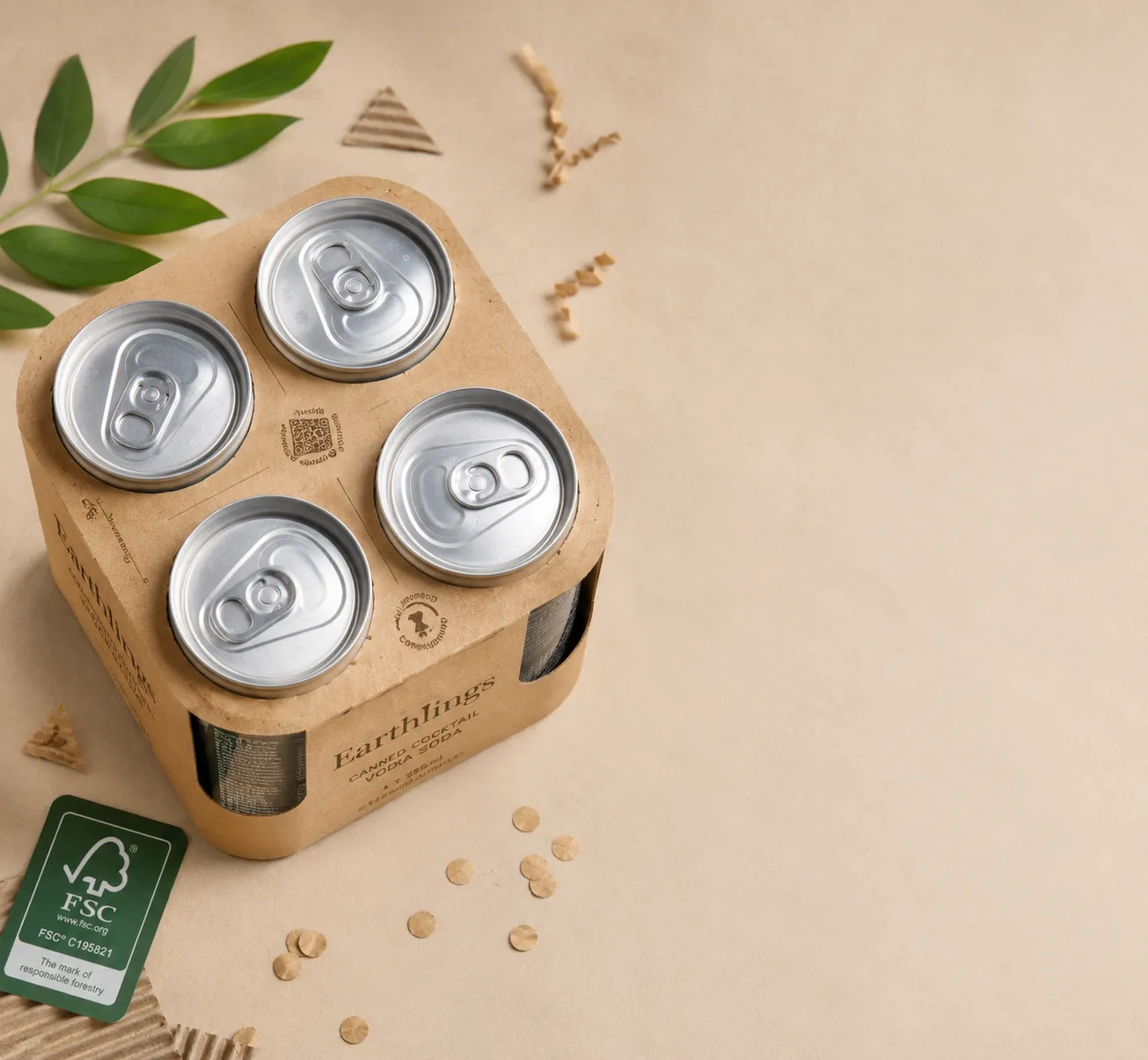
One often-overlooked aspect of canned beverage packaging is the multi-pack carrier. Traditional plastic six-pack rings are increasingly banned or restricted under state legislation and cardboard can carriers are emerging as the leading sustainable alternative. Brands like Earthrings are purpose-built to address this exact need, offering recyclable cardboard can carriers paired with production-line applicators, making the switch away from plastic rings practical for breweries and beverage brands of all sizes.
How to Choose the Right Sustainable Packaging for Your U.S. Business
Choosing sustainable packaging is not one-size-fits-all. Here is a practical decision framework for American businesses:
Step 1 — Audit your current packaging. Understand what materials you currently use, how much waste is generated, and what your customers are doing with packaging post-purchase.
Step 2 — Define your sustainability goals. Are you focused on reducing plastic? Lowering carbon emissions? Meeting state-level packaging regulations (California AB 1201, for example)? Your goals shape your material choices.
Step 3 — Evaluate total cost of ownership. Sustainable packaging does not always cost more. Many options — such as right-sizing corrugated boxes or switching to paper void fill — actually reduce material and shipping costs over time.
Step 4 — Verify certifications. Do not take supplier claims at face value. Require documentation for any certification a supplier claims, and cross-check against the FTC Green Guides to avoid greenwashing liability.
Step 5 — Communicate with customers. Print recycling or composting instructions on your packaging. Use the How2Recycle label program — widely recognized by U.S. consumers — to guide proper disposal.
State-by-State Regulatory Snapshot: What U.S. Businesses Need to Know
Packaging regulations vary significantly by state. Here is a quick overview of key markets:
| State | Key Regulation | What It Means for Businesses |
|---|---|---|
| California | SB 54 (Plastic Pollution Prevention Law) | 65% of all plastic packaging must be recyclable or compostable by 2032 |
| New York | PFAS in Food Packaging Ban (2023) | Prohibits PFAS (forever chemicals) in food packaging |
| Colorado | HB 22-1355 | Extended Producer Responsibility for packaging |
| Oregon | Plastic Pollution & Recycling Modernization Act | Brands responsible for funding recycling infrastructure |
| Maine | EPR for Packaging Law | First U.S. EPR packaging law, phased implementation ongoing |
Businesses operating nationally should begin aligning with the strictest state standards typically California to future-proof their packaging strategy.
The Business Case: ROI of Switching to Sustainable Packaging
Beyond compliance and brand values, sustainable packaging delivers measurable business returns:
Reduced material costs. Right-sizing packaging and eliminating unnecessary void fill directly reduces per-shipment costs. Companies like Dell and Unilever have reported packaging cost reductions of 10–20% after sustainability-driven redesigns.
Lower shipping costs. Lighter, compact sustainable packaging reduces dimensional weight charges — a major cost driver for U.S. e-commerce businesses shipping via FedEx, UPS, and USPS.
Customer loyalty and acquisition. Nielsen research consistently shows that sustainability is a purchasing driver for Millennial and Gen Z consumers, who now represent the largest segment of U.S. retail spending.
Retailer and marketplace requirements. Major U.S. retailers including Walmart, Target, and Amazon have active supplier packaging sustainability programs. Meeting these standards is increasingly a prerequisite for shelf placement and marketplace visibility.
Tax incentives and grants. The U.S. EPA and several state governments offer grants and tax incentives for businesses that invest in sustainable materials. The EPA's Sustainable Materials Management (SMM) program is a valuable starting resource.
Top Sustainable Packaging Suppliers in the USA
Here are some of the most reputable suppliers for U.S. businesses sourcing sustainable packaging domestically:
Featured Supplier: Earthrings
For beverage brands, breweries, and canned goods businesses across the United States, finding a sustainable alternative to plastic can carriers has historically been one of the trickiest packaging challenges. That is exactly the problem Earthrings was built to solve.
Earthrings specializes in cardboard can carriers and applicators a clean, planet-friendly replacement for the traditional plastic six-pack rings that have long been a symbol of packaging waste. Their products are designed for real-world production environments, combining environmental responsibility with operational efficiency.
What Earthrings Offers:
- Cardboard Can Carriers — Made from recyclable and sustainably sourced cardboard, Earthrings' can carriers securely hold beverage cans while being 100% curbside recyclable. They eliminate the need for plastic ring carriers, helping U.S. beverage brands meet state plastic reduction mandates and sustainability commitments without sacrificing shelf appeal or structural integrity.
- Can Carrier Applicators — Earthrings also supplies the applicator equipment needed to attach cardboard carriers to cans efficiently on the production line. This end-to-end solution means beverage businesses do not have to source hardware and packaging separately Earthrings handles both, reducing supplier complexity and ensuring compatibility.
This makes Earthrings a particularly strong fit for:
- Craft breweries and regional beverage brands scaling production
- Canned beverage startups looking to launch plastic-free from day one
- Established drink manufacturers transitioning away from plastic multi-pack rings under California SB 54 and similar state regulations
What sets Earthrings apart in the U.S. market is the combination of a genuinely sustainable material cardboard with practical production-ready applicator technology. Many brands want to go plastic-free but struggle with the operational side of switching. Earthrings removes that barrier entirely.
Explore Earthrings cardboard can carriers and applicator systems at earthrings.com
Other Notable Suppliers
- EcoEnclose (Boulder, CO) — compostable mailers, recycled boxes, paper tape
- Ranpak (Concord Township, OH) — paper-based void fill and protective packaging
- Pregis (Deerfield, IL) — sustainable protective packaging systems
- Noissue (global, U.S. operations) — custom compostable and recycled mailers for brands
- Ecovative Design (Green Island, NY) — mycelium packaging for specialty applications
- Sealed Air (Charlotte, NC) — sustainable protective and food packaging
- UFP Technologies (Grand Rapids, MI) — molded fiber and sustainable cushioning
Frequently Asked Questions (FAQ)
Q: Is sustainable packaging more expensive than traditional packaging?
A: It depends on the material and volume. In many cases, right-sized recycled cardboard or paper-based packaging is comparable in cost to conventional alternatives. As demand has scaled, prices for compostable and recycled materials have come down significantly.
Q: What certifications should I look for when sourcing sustainable packaging in the U.S.? A: The most recognized certifications include FSC (Forest Stewardship Council), BPI Certified Compostable, How2Recycle, and SFI (Sustainable Forestry Initiative). For food contact materials, FDA compliance is also required.
Q: Does sustainable packaging affect product protection?
A: Not when properly engineered. Modern sustainable materials — including molded pulp, honeycomb paper, and mycelium — offer comparable or superior protection to conventional foam and plastic alternatives.
Q: What is the most recyclable packaging material available in the U.S.?
A: Corrugated cardboard and aluminum have the highest recycling rates in the U.S. Both are accepted by virtually all curbside recycling programs nationwide.
Q: Are there federal regulations on sustainable packaging in the U.S.?
A: Currently, packaging regulation in the U.S. is primarily state-driven rather than federal. However, the FTC Green Guides set national standards for environmental marketing claims, and the EPA actively promotes sustainable materials management.
Conclusion: The Future of Packaging Is Sustainable and It Starts Now
For U.S. businesses in 2026, sustainable packaging is simultaneously a compliance requirement, a competitive differentiator, and a reflection of brand values. The good news is that the American market has never offered more options, better pricing, or stronger supplier infrastructure for making the switch.
Whether you are transitioning from plastic to compostable mailers, right-sizing your corrugated boxes, or exploring cutting-edge mycelium cushioning, the most important step is the first one auditing where you are today and committing to a clear roadmap forward.
The brands that lead on sustainable packaging today will not only meet tomorrow's regulations they will win the loyalty of the next generation of American consumers.



























Sign in to leave a comment.