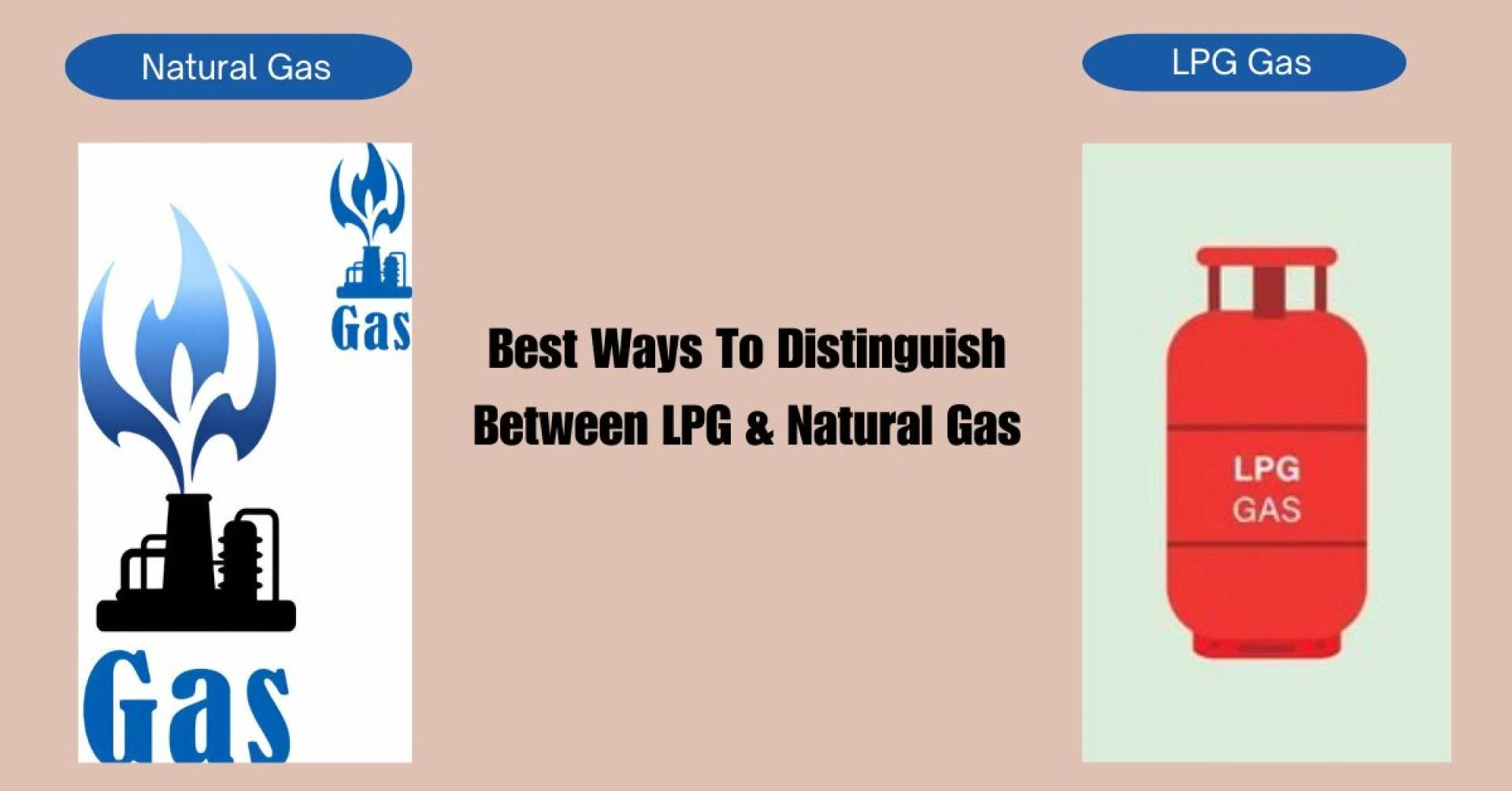

There is a lot of confusion that both individuals and businesses face when it comes to choosing between liquefied petroleum gas (LPG) & natural gas. Natural gas and LPG have chemical compositions that are completely different from each other.
Natural gas is methane while LPG or liquefied petroleum gas is made up of butane or propane- which is also known as bottled gas. Thus, quite understandably their uses and advantages are completely different from each other. They both thrive in different kinds of situations. One of the major differences that determine the final outcome is the calorific value. The calorific value of LPG as compared to natural gas is significantly higher. While the calorific value of LPG is 93.2, for natural gas it is 38.7 joules per cubic meter. Another very obvious reason that acts as a major determining factor is cost-effectiveness. Anything that is more economical is without a question more energy efficient and certainly hints towards sustainability.
Now let’s understand the difference in application and composition of the two fuels in brief: Natural gas is a popular fuel. In fact, it is even cheaper than liquefied petroleum gas. However, not every area in a country as diverse as India is stocked up with pipelines, thus making LPG the definite stand-out option for every off-grid solution, and backup power generation that is needed in the country. Because of the higher calorific value of LPG, it can provide heat and energy more quickly and with less fuel consumption. This means that LPG is a far more efficient option than natural gas, thus making sure people in need get more quantity and that too at an economical value. This is something that natural gas is not capable of. Thus, the accessibility, efficiency and economic nature of liquefied petroleum gas makes it a better option than natural gas.
Key Points of Differences That Will Help You Identify
- Natural gas is one of the cleaner fuels that are available. With low emissions, it is a safer alternative than most others. Nowadays due to the pressure from international institutions, all companies- be it a big corporate giant or a start-up, everyone has to mandatorily make sure to abide by all the rules and regulations that have been placed. Thus, cleaner fuel is now no longer an option that environmentally conscious companies opt for. Instead, it is a must- a prerequisite for success. Without it, you will not have the image in the industry to grow as a business person. Although natural gas is cleaner than most fuel, LPG’s convenience, traditionality and cleanliness all combine together to make it emerge as the better choice out of the two.
- This is clearly visible in the way now LPG is used in abundance. Not just in cooking and heating, the applications of LPG are now totally dominating fields and sectors like automotive and agriculture. Emitting fewer greenhouse gases and pollutants, the carbon footprint of LPG is minimal. It paves the way for a sustainable future. As the world keeps getting warmer and as traditional fuels get exhausted, LPG is emerging as the primary for all companies and customers likewise. It is a healthier way of living that benefits all who use it. In terms of eco-friendliness, LPG has thus overtaken others by a mile.
- LPG-powered systems require almost no maintenance. For off-grid usage, the cost is critical. This is not the case when it comes to natural gas. Natural gas pipelines need a lot of maintenance due to the way it is sent and transported to people and businesses for use. Thus, for many people especially those who are cut off from the urban world, LPG is literally the only choice. Natural gas cannot make its way there at all.
- People who need off-grid usage are not well off like the urban population. They rely on a lifestyle that reduces expenses as well as provides efficiency. Liquefied Petroleum Gas through its high energy output, efficiency and low cost achieves this in areas where off-grid solutions are mandatory.
- Used across residential, commercial and industrial sectors, LPG allows heating, cooking and even powering all sorts of appliances. Now even available in the agricultural sector with LPG-powered gadgets, it is a fuel that through the installation of a gas power plant can also run generators for electricity. Natural gas, although versatile is nowhere close to being to what LPG gas offers you.
- LPG also has a lot to offer when it comes to contingencies. It can set up generators in places where it is needed urgently without any interruptions in operations. Although natural gas has a lot of uses and benefits to offer, it has yet to offer this level of protection to those who are actually in the need of it.
Here’s What You Should Opt For
Thus, you should definitely keep in mind that LPG or liquefied petroleum gas and natural gas are both viable options. But their different energy content, densities and chemical composition means that their uses and needs are totally different. Thus, although both are flammable and hydrocarbon gases, their utilities are different and to ensure complete optimization which any business owner or individual would, you have to make sure that you are making the right choice.
In a general sense, because of its extensive usage, it is safer to conclude that for most people and individuals operating, LPG is the safer option out of the two we’ve been discussing about. It is the best solution that ensures long periods of usage without depletion. Thus, to maximise energy efficiency, eco-friendliness and longevity, LPG is the best option out there for you at all times.
Author Bio: Bishan Mukherjee is a fuel expert who has been working in LPG and Natural Gas manufacturing units for years. Armed with insights, his writing is informative and engaging and is always written with the intent to add value to the readers’ minds and help them make the best choices for themselves.



























Sign in to leave a comment.