
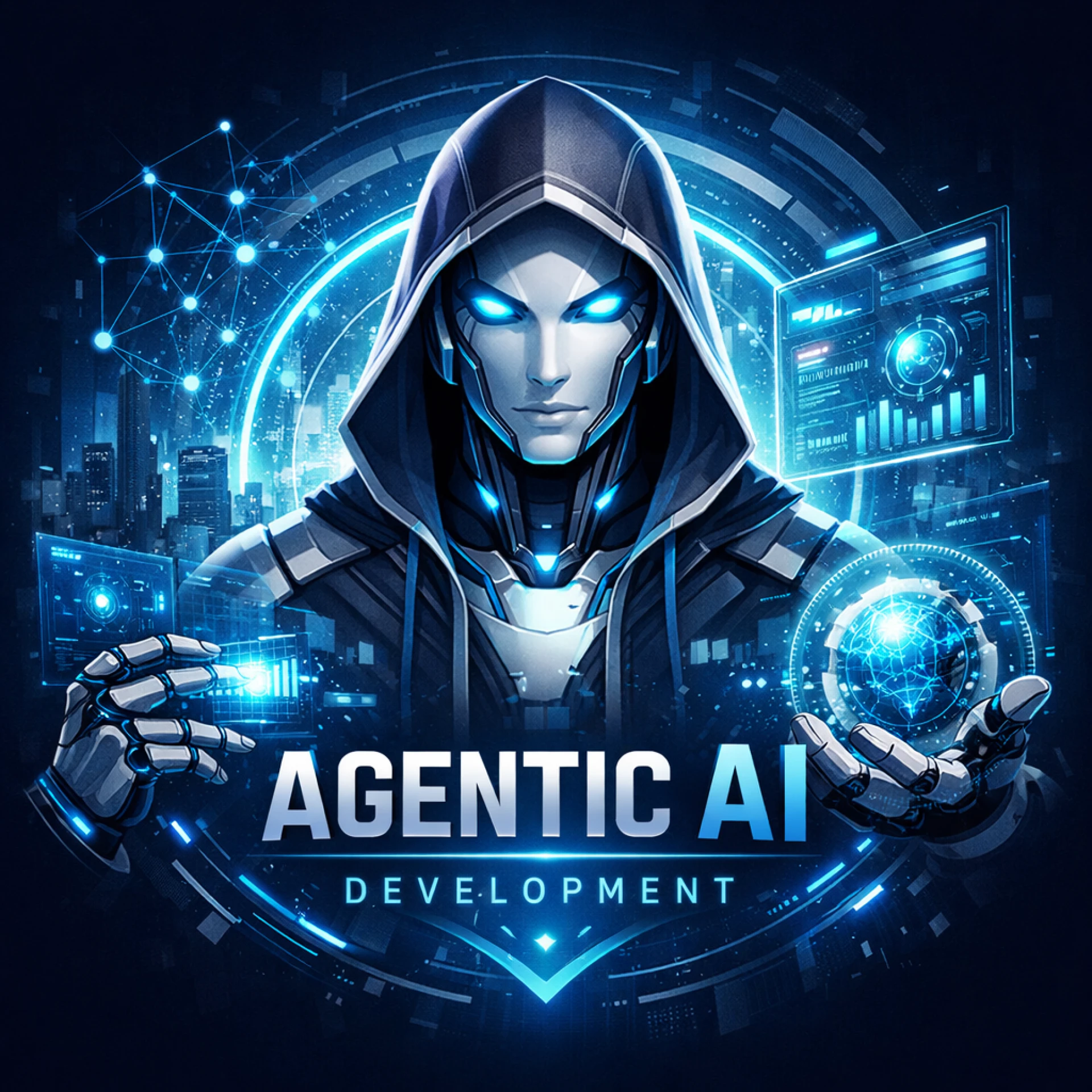
Artificial intelligence is moving beyond answering questions and generating text. Businesses are increasingly exploring systems that can interpret instructions, access information, use digital tools, and complete multistep tasks. AI agent development services are gaining attention as organizations look for practical ways to automate workflows, improve productivity, and create more responsive digital experiences. Unlike conventional chatbots, AI agents can take action within defined boundaries, making them useful for tasks that involve multiple systems and decisions.
Understanding how these systems work, where they provide value, and what responsible implementation requires can help businesses make informed technology decisions.
What Makes AI Agents Different from Traditional Chatbots?
Traditional chatbots primarily respond to user messages. They may follow predefined conversation flows or use language models to generate relevant answers. AI agents can go further by combining reasoning, planning, memory, and tool integration to work toward a specific objective.
For example, a chatbot might explain a company's return policy. An AI agent could retrieve an order's details, check the applicable return conditions, prepare a return request, and send it for approval when necessary.
The key difference is not simply the ability to generate better responses. It is the ability to coordinate actions across a workflow.
Depending on their design, AI agents may use application programming interfaces (APIs), databases, search tools, and enterprise software to retrieve information or complete tasks. Their autonomy depends on the permissions, instructions, and safeguards established by developers.
How AI Agents Work
An AI agent typically combines several technical components to understand a task and determine how to complete it.
1. Understanding Instructions
The process begins when a user or another system provides a request. A language model interprets the instruction, identifies the intended outcome, and determines whether additional information is required.
For instance, a sales manager might ask an agent to summarize the latest interactions with a particular customer. The agent needs to identify the relevant customer record and determine which information is necessary.
2. Planning the Next Steps
Some tasks require several actions rather than a single response. An agent may need to retrieve information, compare results, apply business rules, and prepare an output.
The system can organize these activities into manageable steps. Depending on the application, the sequence may be predefined or selected dynamically.
3. Using External Tools
Tool integration allows agents to interact with systems beyond the language model itself. These tools may include internal search engines, customer relationship management platforms, spreadsheets, databases, and communication applications.
For example, an agent supporting a service team might retrieve a customer's account information through an authorized API before preparing a response.
4. Executing and Checking Actions
After gathering information, the agent performs the actions permitted by its configuration. It may update a record, generate a report, or prepare a message for review.
Reliable systems also include validation mechanisms to detect errors, handle unavailable tools, and request human assistance when a task cannot be completed safely.
Not every AI agent requires complex planning or long-term memory. The appropriate architecture depends on the task, expected reliability, and operational risks.
Practical Applications of AI Agents Across Industries
AI agents can support different business functions when they address clearly defined problems and operate within appropriate safeguards.
Customer Support and Service
Customer service agents can classify incoming requests, retrieve answers from approved knowledge bases, check order information, and direct complex issues to human representatives.
These capabilities can help teams manage routine inquiries more efficiently. However, businesses should establish escalation procedures for complaints, sensitive situations, and requests involving exceptions to company policy.
Sales and Marketing
Sales teams can use AI agents to summarize customer interactions, organize prospect information, and prepare follow-up drafts. When connected to approved business tools, agents may also help update records and organize sales activities.
Marketing teams can explore applications such as campaign reporting, customer feedback analysis, and content research. Human review remains important for accuracy, brand consistency, and external communications.
Healthcare Administration
Healthcare organizations may use AI agents to assist with appointment coordination, administrative documentation, and information retrieval.
Systems handling sensitive health information require strict access controls, privacy safeguards, and appropriate professional oversight. Agents should not independently make high-impact clinical decisions without suitable validation and supervision.
Finance and Accounting
Financial teams can use intelligent systems to extract information from invoices, categorize transactions, flag unusual entries, and prepare preliminary reports.
Sensitive actions such as payments, refunds, and financial commitments should follow established authorization procedures. Independent validation is essential when errors could have significant consequences.
E-Commerce and Retail
Retail businesses can use agents to assist with product discovery, order tracking, inventory inquiries, and customer communication.
By retrieving current information from connected systems, an agent can provide more contextual assistance than a basic scripted chatbot. Its responses still depend on the quality and availability of the underlying data.
When Should Businesses Invest in Custom AI Agent Development?
Prebuilt AI assistants can handle many everyday tasks, including summarizing documents, drafting emails, and answering general questions. However, specialized workflows may require custom integrations, unique business rules, or controlled access to internal systems.
Custom AI agent development can help organizations build solutions around specific operational requirements, proprietary data, and existing technology infrastructure.
A business might need an internal assistant that retrieves information from several document repositories, a support agent that follows company-specific escalation rules, or an operations agent that coordinates tasks across multiple applications.
Custom development does not always require training a model from scratch. In many cases, an existing language model can be combined with retrieval systems, APIs, workflow orchestration, and validation logic to achieve the desired outcome.
Before investing, businesses should compare the benefits of customization with the cost, complexity, and maintenance requirements of existing solutions.
Essential Steps for Implementing AI Agents
A structured implementation process helps organizations reduce uncertainty and build systems that deliver measurable value.
Step 1: Identify a Specific Business Problem
Begin with a task that consumes significant time, creates operational bottlenecks, or requires employees to search multiple systems for information.
Define the expected outcome and establish baseline metrics. Examples include reducing the time needed to process support requests or improving the accuracy of document classification.
Step 2: Evaluate Data and Integrations
Assess whether the required information is available, accurate, and accessible through approved channels.
Identify the applications the agent must use and determine the permissions required for each integration. Poor data quality or unreliable connections can undermine an otherwise well-designed system.
Step 3: Select an Appropriate Architecture
Choose the model, tools, and workflow structure according to the task's complexity. A straightforward information retrieval assistant may need fewer components than an agent coordinating multiple business processes.
Avoid unnecessary complexity. A predictable workflow can sometimes deliver better reliability and lower costs than a highly autonomous architecture.
Step 4: Test Realistic Scenarios
Evaluate the system using common requests, ambiguous instructions, incomplete information, and unexpected failures.
Measure task completion rates, response accuracy, processing time, operating costs, and the frequency of human intervention. Security testing should also examine attempts to manipulate the agent through malicious instructions or untrusted documents.
Step 5: Deploy and Monitor
Begin with a limited rollout before expanding access. Monitor performance, collect user feedback, and investigate recurring errors.
Regular evaluations help teams identify changes in data quality, model behavior, tool availability, and operating costs.
Security and Human Oversight in AI Agent Systems
AI agents can interact with sensitive information and perform actions in connected applications. Without appropriate controls, they may expose confidential data, misuse permissions, or execute an incorrect action.
Businesses should incorporate security throughout the development lifecycle.
Important safeguards include:
- Access controls: Restrict each agent to the information and tools required for its assigned role.
- Authentication and encryption: Protect accounts, communications, and stored information.
- Human approval: Require authorization for sensitive or irreversible actions.
- Output validation: Verify critical results against trusted sources or deterministic business rules.
- Audit logging: Maintain appropriate records of significant actions and tool usage.
- Continuous monitoring: Track errors, unusual activity, and changes in performance.
Organizations should also define clear limits on agent autonomy. Allowing a system to draft a financial transaction is different from authorizing it to execute that transaction independently.
These safeguards help balance operational efficiency with accountability and reliability.
Choosing the Right AI Development Partner
Selecting a technology partner requires evaluating more than model expertise. Businesses should consider experience with software integration, data management, security, testing, and production deployment.
An experienced AI agent development company should be able to explain how its proposed solution addresses business objectives, integrates with existing systems, and manages potential risks.
Before selecting a provider, examine its technical capabilities, project planning process, testing methodology, and approach to ongoing maintenance. Ask how the solution will be evaluated and which performance indicators will determine success.
Businesses exploring these opportunities can also discuss their requirements with 75way Technologies to assess potential implementation approaches and project priorities.
Starting with a small proof of concept is often a practical strategy. It allows organizations to test feasibility, validate expected benefits, and identify limitations before committing to a broader deployment.
The Future of AI Agents in Business
AI agents are moving toward more connected workflows in which specialized systems coordinate different parts of a process. One agent might collect information, another could analyze it, and a third might prepare a report for human review.
These multi-agent architectures can support complex tasks, but they also introduce additional coordination, security, and testing requirements. More agents do not automatically produce better results.
Businesses will likely gain the greatest value from systems that combine targeted automation with reliable data, clear accountability, and human expertise.
The objective should not be to remove people from every process. Instead, AI agents can help employees spend less time on repetitive work and more time on activities that require judgment, creativity, and relationship-building.
Conclusion
AI agents represent a practical evolution in business automation, enabling software to move beyond answering questions and assist with completing connected tasks. Their effectiveness depends on clear objectives, appropriate integrations, reliable data, and well-defined boundaries.
Businesses should start with measurable problems, validate their solutions through realistic testing, and expand only when results demonstrate value. By combining intelligent automation with security and human oversight, organizations can adopt AI agents in a more responsible and sustainable way.




















Sign in to leave a comment.