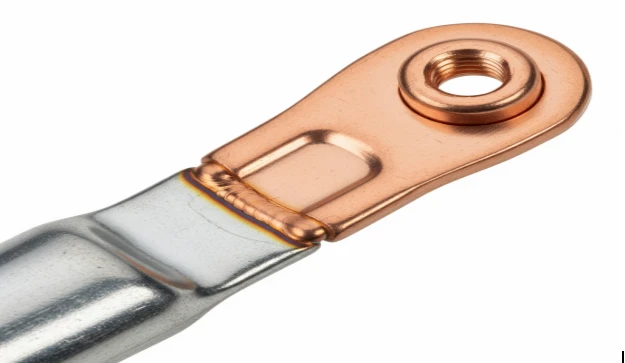

The connection quality in an advanced electrical system is very important, just like the quality of the cable itself. In case the installers are to connect wires made of different materials like aluminum and copper, a special component that guarantees a safe and durable connection is necessary. The bi-metallic terminal lugs are the solution here.
In this guide, we will look at the functions, major kinds, and significant applications of these indispensable electrical parts.
What Is a Bimetal Lug?
A bi metallic terminal lug is a connector specifically manufactured for electrical purposes that is intended to connect aluminum (Al) conductor to copper (Cu) termination point such as a busbar or circuit breaker both safely and efficiently.
It is a mixture of two materials. The barrel (the part which takes the cable) consists of aluminum of very high conductivity, and the palm (the part that is connected to the terminal) consists of copper of most superior conductivity and is solid. The two sections are widely and securely connected through a very strong and electrically stable bond created by a high-pressure friction welding process.
These bi-metallic cable lugs are the professional solution to the long-standing problem of connecting different metals.
The Primary Purpose of Bi Metallic Terminal Lugs
The foremost function of a bimetallic lug is to avert the occurrence of galvanic corrosion. When metals like aluminum and copper are placed under pressure together in a wet and electrically conductive environment, they undergo a chemical reaction known as galvanic corrosion. This type of corrosion has several negative effects:
- The resistance at the joint increases.
- The connection gets hot, which can lead to fire hazard.
- The connection becomes quickly broken, and thus, failure of the whole system is imminent.
The use of bi metallic terminal lugs prevents this problem from arising as they provide separation between the two metals. First, the aluminum cable is put into the aluminum barrel then the copper palm is secured to the copper busbar.
The place where the barrel and palm of the lug meet is joined by friction-welding which is the only point of contact between the two metals, and this joint is sealed at the factory, which ensures that no moisture or oxygen can reach this point and cause corrosion.
Common Types of Bi Metal Terminal Lugs
While all Bi metal terminal lugs serve the same core purpose, they come in several types to suit different applications.
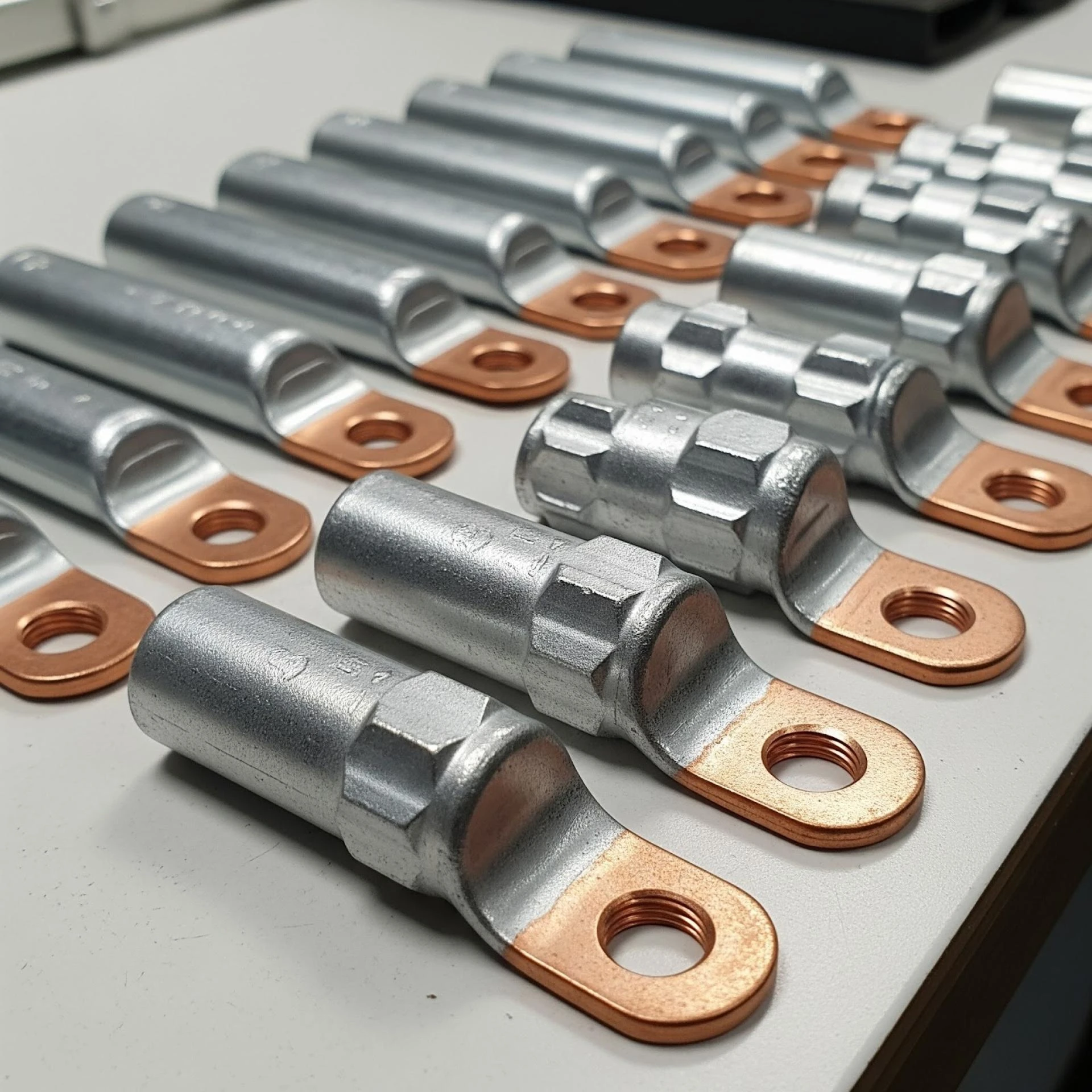
Compression Lugs
This type is the standard one. The aluminum barrel which is hollow is made to be compressed on the aluminum cable with the help of a hydraulic compression tool. This process results in a connection that is secure, permanent and has low resistance at the same time.
Mechanical (Bolted) Lugs
The lugs in question do not call for a unique crimping tool at all. On the contrary, they come with the barrel having one or several "shear bolts" installed. The installer puts the cable in and with the help of a universal wrench, the bolts are tightened. The design of the bolt heads is such that they get sheared off once a specific torque is reached, thus making the connection perfectly tight.
Pin Lugs
Bi-metallic lugs connectors on one hand have a solid round or rectangular pin instead of a flat palm with a bolt hole. These are made specifically for interconnection in some types of tunnel connectors or blocks used in switchgear and transformers.
Where Are Bi Metallic Lugs Used?
In high-current applications, bi metal lugs connectors can already be found where aluminum cables are used mainly because of their lighter weight and lower cost, nevertheless, they must connect to standard copper equipment.
Common applications include:
- Power Distribution: Connecting main aluminum feeder cables to copper busbars in switchgear.
- Transformers: Terminating aluminum cables onto copper transformer bushings.
- Control Panels: Providing a safe transition point inside industrial control systems.
- Substations: Used in high-voltage terminations.
- Junction Boxes: Transitioning from aluminum building wire to copper equipment terminals.
Your Source for Reliable Bi Metallic Terminals
Bi metallic terminal lugs are not accessories, but rather essential safety parts. They maintain the long-term reliability, productivity, and safety of electrical connections by eliminating the dangers of galvanic corrosion.
Choosing a high-quality, standards-compliant lug is essential for any professional installation. At Pioneer Power International, we specialize in manufacturing a comprehensive range of durable and reliable bi metal terminal lugs. Our products are friction-welded to the highest standards, ensuring a safe and permanent connection for your most critical applications.


























Sign in to leave a comment.