
Introduction
Birthmarks are common skin markings that are present at birth or develop shortly afterward. While many birthmarks are harmless and do not require treatment, some people choose to have them removed for cosmetic reasons, while others may need medical evaluation if the birthmark changes in appearance or affects their health.
Modern dermatology offers several safe and effective birthmark removal treatments that can significantly improve the appearance of the skin with minimal downtime. Understanding the type of birthmark you have is the first step in determining the most appropriate treatment.
This guide explains the different types of birthmarks, available treatment options, benefits, risks, and what you can expect during the removal process.
What Is a Birthmark?
A birthmark is a colored mark on the skin that appears either at birth or within the first few weeks of life. Birthmarks occur due to abnormalities in blood vessels, pigmentation, or skin development.
Birthmarks are broadly classified into two categories:
- Pigmented Birthmarks
- Vascular Birthmarks
Each type requires a different treatment approach.
Types of Birthmarks
1. Pigmented Birthmarks
Pigmented birthmarks result from an excess of melanin, the pigment responsible for skin color.
Common examples include:
Congenital Moles (Congenital Nevi)
These are moles present at birth. They vary in size from very small to large and may become darker or grow hair over time.
Café-au-Lait Spots
These are flat, light brown patches resembling the color of coffee with milk. Most are harmless, although multiple spots may warrant medical evaluation.
Mongolian Spots
These appear as bluish-gray patches, commonly seen on the lower back or buttocks of infants. They usually fade naturally during childhood.
Becker's Nevus
A large brown patch that often develops during adolescence and may contain excessive hair growth.
2. Vascular Birthmarks
These occur due to abnormal blood vessel formation beneath the skin.
Common types include:
Port-Wine Stains
Flat pink, red, or purple patches that usually persist throughout life and may darken or thicken with age.
Hemangiomas
Often called "strawberry marks," these are raised red growths made up of blood vessels. Many shrink naturally during childhood.
Salmon Patches
Also known as "angel kisses" or "stork bites," these light pink patches are common in newborns and often fade with age.
Why Consider Birthmark Removal?
People choose birthmark removal for various reasons, including:
- Cosmetic concerns
- Improved self-confidence
- Frequent irritation from clothing or shaving
- Functional issues affecting vision, breathing, or movement
- Prevention of complications
- Suspicious changes requiring medical evaluation
Is Birthmark Removal Necessary?
Not all birthmarks require treatment.
Removal is generally recommended if the birthmark:
- Changes in size, color, or shape
- Bleeds repeatedly
- Becomes painful or itchy
- Interferes with daily activities
- Causes emotional distress
- Shows signs suggestive of skin cancer
A dermatologist can determine whether removal is medically necessary or elective.
Birthmark Removal Treatment Options
The ideal treatment depends on the birthmark's type, size, depth, location, and your skin type.
1. Laser Birthmark Removal
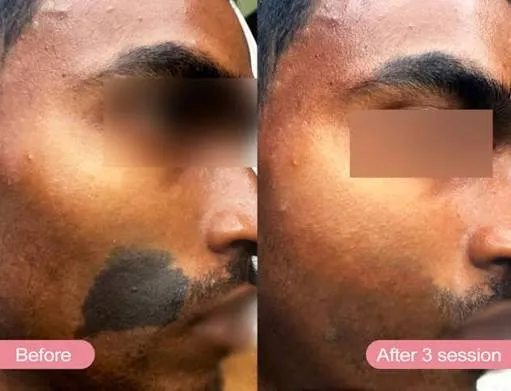
Laser treatment is one of the most effective methods for many vascular and pigmented birthmarks.
It works by targeting either pigment cells or abnormal blood vessels while preserving the surrounding skin.
Best for:
- Port-wine stains
- Café-au-lait spots
- Some congenital nevi
- Certain pigmented lesions
Benefits include:
- Non-surgical
- Minimal downtime
- Precise treatment
- Excellent cosmetic results
- Reduced scarring
Several sessions may be required depending on the birthmark.
2. Surgical Excision
Surgical removal involves cutting out the birthmark and closing the skin with stitches.
Recommended for:
- Large congenital moles
- Suspicious moles
- Deep birthmarks
- Birthmarks requiring biopsy
Benefits:
- Complete removal
- Allows laboratory examination
- Permanent solution in many cases
A small scar is expected after surgery.
3. Cryotherapy
Cryotherapy uses liquid nitrogen to freeze and destroy abnormal tissue.
Suitable for selected superficial lesions and small pigmented birthmarks.
4. Radiofrequency or Electrosurgery
These techniques use controlled heat to remove certain raised skin lesions.
They may be recommended for selected benign birthmarks.
5. Medical Observation
Many infantile hemangiomas and salmon patches improve naturally over time.
In such cases, your dermatologist may recommend periodic observation instead of immediate treatment.
Which Laser Is Used for Birthmark Removal?
Different lasers are selected depending on the type of birthmark.
Commonly used lasers include:
- Q-Switched Nd:YAG Laser
- Pico Laser
- Pulsed Dye Laser (PDL)
- Alexandrite Laser
- Fractional Laser (for selected cases)
Your dermatologist will choose the safest and most effective technology based on your diagnosis.
What Happens During the Procedure?
A typical laser treatment session includes:
Consultation
The dermatologist evaluates the birthmark and discusses suitable treatment options.
Skin Preparation
The area is cleansed, and protective eyewear is provided if laser treatment is planned.
Treatment
The laser delivers controlled pulses to the affected area.
Patients usually describe the sensation as mild snapping or warmth.
Cooling
Cooling devices or soothing creams help improve comfort during and after treatment.
Most sessions last between 10 and 45 minutes.
Is Birthmark Removal Painful?
Most patients experience only mild discomfort.
Depending on the treatment, the doctor may use:
- Topical numbing cream
- Local anesthesia
- Cooling devices
Pain is usually minimal and temporary.
Recovery After Birthmark Removal
Recovery varies according to the treatment performed.
After laser treatment, patients may notice:
- Mild redness
- Swelling
- Temporary darkening
- Mild crusting
These effects usually resolve within a few days.
After surgical removal:
- Stitches may remain for 7–14 days.
- Mild swelling is expected.
- Scar care instructions should be followed carefully.
Aftercare Tips
To promote proper healing:
- Keep the treated area clean.
- Apply prescribed creams.
- Avoid picking scabs.
- Use sunscreen with SPF 30 or higher daily.
- Avoid excessive sun exposure.
- Attend all follow-up appointments.
Proper aftercare helps reduce pigmentation changes and improves cosmetic outcomes.
Are There Any Risks?
Birthmark removal is generally safe when performed by an experienced dermatologist.
Possible temporary side effects include:
- Redness
- Swelling
- Mild discomfort
- Temporary pigmentation changes
- Scarring (rare)
- Infection (uncommon)
Following medical advice significantly reduces these risks.
Results: What to Expect
Results depend on the type of birthmark and treatment used.
Many patients notice gradual improvement over several weeks.
Some birthmarks disappear completely, while others become significantly lighter after multiple sessions.
Large vascular birthmarks may require several laser treatments for optimal improvement.
Frequently Asked Questions
Can all birthmarks be removed?
Many birthmarks can be significantly improved or completely removed, although results vary depending on the type and depth of the lesion.
Will the birthmark come back?
Most surgically removed birthmarks do not return. Some laser-treated lesions may require maintenance sessions if pigmentation or blood vessels recur.
Is laser birthmark removal safe?
Yes. When performed by a qualified dermatologist using appropriate laser technology, the procedure is considered safe and effective.
How many sessions are needed?
Small birthmarks may improve after one treatment, while larger or deeper lesions often require multiple sessions.
Can children undergo birthmark removal?
Yes. Certain vascular birthmarks, especially port-wine stains and problematic hemangiomas, may benefit from early treatment after evaluation by a dermatologist.
When Should You See a Dermatologist?
Seek medical advice if your birthmark:
- Changes rapidly
- Becomes painful
- Starts bleeding
- Develops irregular borders
- Changes color
- Grows quickly
- Causes cosmetic or functional concerns
Early evaluation ensures timely diagnosis and the most appropriate treatment.
Conclusion
Birthmarks are usually harmless, but they can sometimes affect appearance, confidence, or overall health. Thanks to advances in dermatology, treatments such as laser therapy, surgical excision, and other minimally invasive procedures make birthmark removal safer and more effective than ever.
If you're considering birthmark removal, consult a qualified dermatologist who can accurately diagnose your birthmark and recommend the most suitable treatment plan based on your skin type and individual needs.
Clinic Address
Dr. Aggarwal's Clinic
H No. 119, New Power House Road
Near Deeksha Classes
Jodhpur, Rajasthan
Appointment Booking
📞 9239993999



























Sign in to leave a comment.