
Introduction
In today’s competitive electronics and technology market, product quality, safety, and regulatory compliance are essential for building customer confidence and entering the Indian market successfully. Manufacturers, importers, and businesses dealing with specified electronic and IT products need to understand the applicable Indian regulatory requirements before manufacturing, importing, selling, or distributing their products.
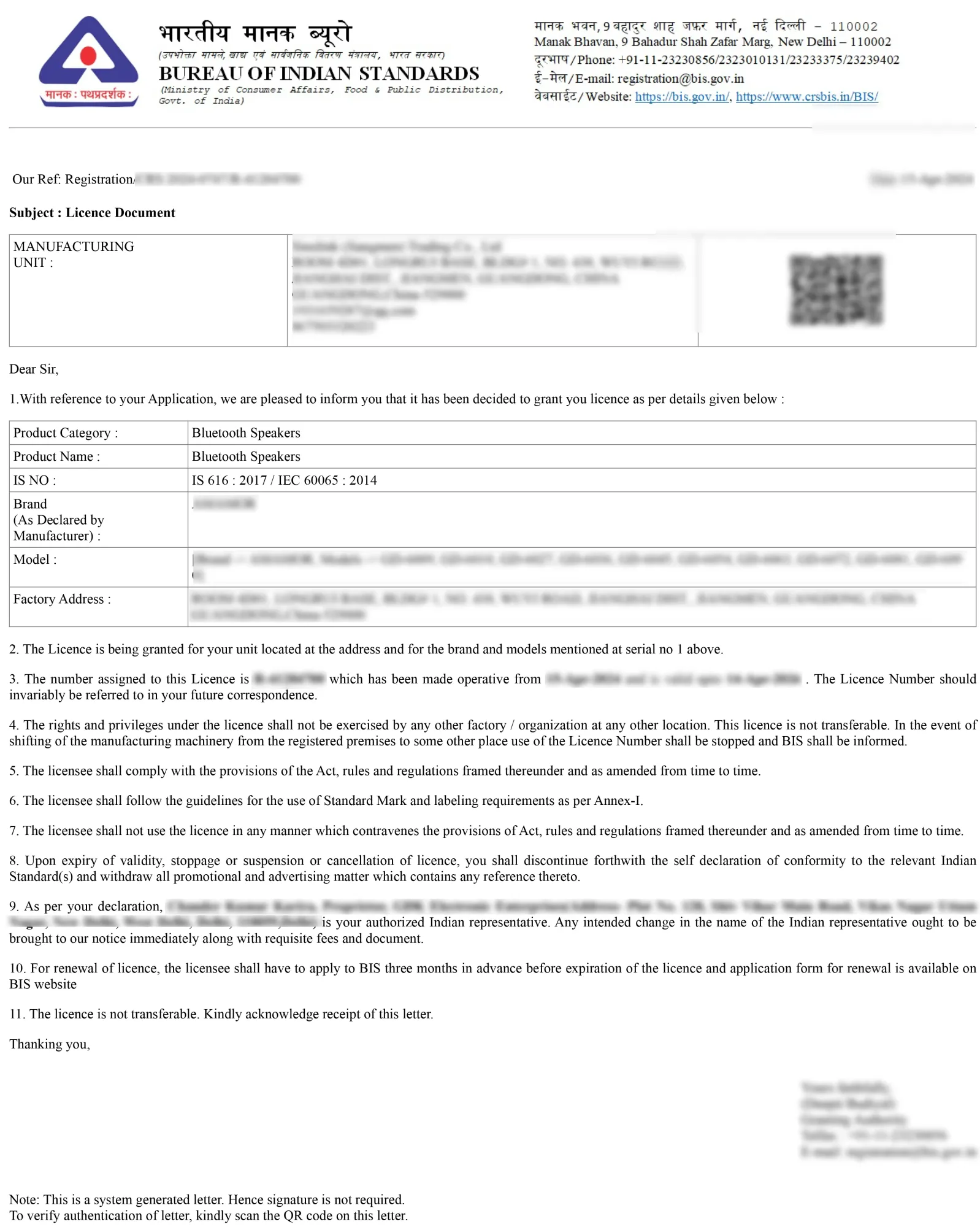
BIS CRS Certification is an important compliance requirement for many notified electronic and IT products in India. The Compulsory Registration Scheme (CRS) is administered by the Bureau of Indian Standards (BIS) under Scheme-II of the BIS (Conformity Assessment) Regulations, 2018. The scheme primarily focuses on the safety and conformity of specified products with applicable Indian Standards.
For businesses, obtaining the required registration is more than a regulatory formality. It demonstrates that the product has undergone testing through a BIS-recognized laboratory and meets the applicable standard before it is placed in the Indian market.
This guide explains the meaning, benefits, eligibility, documentation, process, and importance of BIS CRS Certification, helping businesses understand the compliance journey in a simple and practical way.
What Is BIS CRS Certification?
BIS CRS Certification refers to registration under the Compulsory Registration Scheme for notified electronics, IT products, and certain other products covered by applicable government orders.
The scheme was introduced by the Ministry of Electronics and Information Technology (MeitY) through the Electronics and Information Technology Goods (Requirement for Compulsory Registration) Order, 2012. Additional product categories have been added through subsequent notifications, while solar photovoltaic products have also been brought under a related compulsory registration framework.
Under the scheme, manufacturers of notified products are required to get their products tested by a BIS-recognized laboratory and apply for registration with BIS. Once registration is granted, the manufacturer can use the applicable BIS Standard Mark along with the registration details as permitted under the relevant requirements.
Some products covered under the current framework include laptops, tablets, televisions, power adaptors, power banks, mobile phones, CCTV equipment, smart watches, LED-related products, UPS/inverters, digital cameras, webcams, and several other notified categories. The applicable product list and standards can change through government notifications and amendments, so businesses should verify the current requirements before applying.
Who Needs This Registration?
Manufacturers of products covered under the applicable CRS orders can apply for registration. The requirement can apply to manufacturers located both in India and outside India. BIS also states that separate registration numbers may be required for products manufactured at different locations and for different brands manufactured at the same location.
Therefore, before starting an application, a business should first identify:
| Requirement | What to Check |
| Product category | Whether the product appears in the notified list |
| Indian Standard | Which applicable IS/IEC standard applies |
| Manufacturer | Actual manufacturing entity and location |
| Brand | Brand name under which the product is marketed |
| Testing | Availability of testing through a BIS-recognized laboratory |
| Documents | Technical and business documents required for application |
| Marking | Applicable BIS marking and registration requirements |
Benefits of BIS CRS Certification
Obtaining BIS CRS Certification can provide several important benefits to manufacturers and businesses.
1. Regulatory Compliance
The most important advantage is compliance with applicable Indian regulatory requirements. Products covered under compulsory registration cannot simply be manufactured, imported, sold, or distributed without meeting the requirements applicable to them. BIS explains that the CRS is intended to prevent non-conforming products from entering the market.
2. Improved Consumer Confidence
A compliant product gives customers greater confidence regarding safety and conformity with the applicable Indian Standard. For electronics and technology products, safety is particularly important because consumers depend on these products every day.
3. Market Access
For businesses entering India with notified products, completing the applicable registration requirements can support lawful market entry. It can also make regulatory documentation easier to manage when dealing with distributors, marketplaces, retailers, and business customers.
4. Stronger Brand Reputation
Regulatory compliance can strengthen a company's reputation. Businesses that maintain proper certification and product documentation can demonstrate a commitment to quality and responsible manufacturing.
5. Better Business Opportunities
Many distributors, retailers, institutional buyers, and commercial partners may expect manufacturers to maintain the necessary regulatory approvals. Having the required registration can therefore support business expansion and partnerships.
6. Reduced Compliance Risks
A structured compliance process helps businesses identify product testing, documentation, labeling, and registration requirements before launching a product. This can reduce the possibility of avoidable regulatory problems.
Why Choose Agile Regulatory?
Regulatory procedures can involve technical documentation, product testing, application preparation, communication with laboratories, and coordination with authorities. For a manufacturer unfamiliar with the process, managing every stage independently can become complicated.
Agile Regulatory helps businesses understand and manage regulatory requirements in a structured manner. The team can assist businesses with identifying the applicable compliance route, preparing documentation, coordinating relevant activities, and supporting the registration process.
The objective is to make the compliance journey more organized and easier to understand for manufacturers and businesses.
A professional consultant can be particularly useful when:
- You are applying for registration for the first time.
- You are unsure whether your product falls under the notified category.
- You need help identifying the applicable Indian Standard.
- You need assistance with documentation.
- You are coordinating product testing with a recognized laboratory.
- You manufacture products outside India and need to understand the Indian compliance process.
- You need support with regulatory updates or amendments.
Businesses can also refer to the official BIS product list because applicable products and standards can be updated through notifications and amendments. Recent BIS updates in 2026 include guidance concerning product categories, revised standards, license validity, and implementation dates.
BIS CRS Certification Process
The application process generally involves several important stages. The exact requirements may vary depending on the product category, applicable standard, manufacturing location, and current government notifications.
Step 1: Identify the Applicable Product Category
First, determine whether the product is covered under the Compulsory Registration Scheme. The product should be matched with the relevant category and applicable Indian Standard.
This is an important first step because not every electronic product automatically falls under the same requirements.
Step 2: Identify the Applicable Standard
After identifying the product category, determine the applicable IS or IS/IEC standard. The product must be evaluated against the relevant requirements.
Step 3: Select a BIS-Recognized Laboratory
The product sample is tested through a laboratory recognized by BIS for the relevant testing requirements. The laboratory evaluates the product against the applicable standard.
Step 4: Product Testing
The manufacturer submits the required samples and information to the laboratory. Testing may cover relevant safety and technical parameters specified by the applicable standard.
Step 5: Obtain the Test Report
After successful testing, the laboratory issues the required test report. Businesses should carefully review the report and ensure that the product details, model information, manufacturer information, and applicable standard are correct.
Step 6: Prepare the BIS Application
The required information and documents are prepared for submission. Depending on the application, documents may include manufacturer details, product information, test reports, technical documents, brand details, authorization-related documents, and other supporting records.
Step 7: Submit the Application
The manufacturer submits the application through the applicable BIS registration system along with the required documents and prescribed fees.
Step 8: BIS Review
BIS reviews the submitted application and supporting documentation. If clarification or additional information is required, the applicant may need to respond accordingly.
Step 9: Registration Grant
Once the application satisfies the applicable requirements, BIS grants the registration. The manufacturer can then follow the applicable requirements for using the BIS Standard Mark and registration details.
Step 10: Maintain Compliance
Registration is not the end of the compliance journey. Businesses should continue monitoring applicable standards, amendments, product changes, manufacturing locations, brands, and renewal or validity requirements.
Important Documents
The exact document list depends on the product and application. Common information and documents may include:
- Manufacturer details
- Factory or manufacturing location information
- Product specifications
- Brand and model details
- Product photographs
- Technical documentation
- Test reports from the relevant recognized laboratory
- Authorization documents, where applicable
- Business registration information
- Undertakings and declarations
- Details required by the BIS application system
It is important to ensure consistency across the test report, product documents, application, model numbers, brand information, and manufacturer details. Errors or inconsistencies can create unnecessary delays.
Important Points Businesses Should Remember
Before applying for BIS CRS Certification, businesses should verify the latest applicable product list rather than relying only on older articles or outdated information. BIS periodically publishes new circulars, amendments, implementation guidelines, and revised standards. For example, BIS published additional CRS-related guidance and updates during 2026.
Businesses should also remember that the requirement is linked to the notified product and applicable standard. A manufacturer should not assume that one registration automatically covers every product, brand, model, or manufacturing location.
BIS states that manufacturers may need separate registration numbers for products manufactured at different locations and for different brands manufactured at the same location.
Conclusion
BIS CRS Certification plays an important role in maintaining safety and regulatory compliance for notified electronics, IT goods, and other covered products in India. The scheme helps ensure that products entering the Indian market conform to applicable Indian Standards and provides a structured mechanism for manufacturers to demonstrate conformity.
For manufacturers, import-oriented businesses, technology brands, and electronic product companies, understanding the registration requirement before launching a product can help prevent compliance complications and support smoother market entry.
The process generally includes product-category identification, applicable-standard selection, laboratory testing, preparation of documents, online application, BIS review, registration, and continued compliance. Since product categories, standards, and implementation requirements can change, businesses should always verify the latest requirements from official sources before proceeding.
If you are unsure whether your product requires registration or need assistance with the application process, Agile Regulatory can help you understand the applicable requirements and organize the compliance process.
Frequently Asked Questions (FAQ)
1. What is BIS CRS Certification?
It is a registration under BIS's Compulsory Registration Scheme for products notified under the applicable government orders. Manufacturers of covered products need to demonstrate conformity with the relevant Indian Standard through the prescribed testing and registration process.
2. Is CRS the same as BIS certification?
CRS is a specific BIS conformity assessment route operated under Scheme-II. It should not automatically be treated as identical to every other BIS certification or licensing scheme. The applicable route depends on the product and relevant government notification.
3. Who can apply under CRS?
Manufacturers of notified products located in India or outside India can apply, subject to the applicable requirements. BIS specifies requirements concerning manufacturing locations and brands.
4. Is product testing required?
Yes. The CRS framework requires manufacturers to get the relevant product tested through a BIS-recognized laboratory before applying for registration.
5. Which products are covered?
The scheme covers various notified electronics, IT goods, and other products. Examples include laptops, tablets, mobile phones, power banks, smart watches, CCTV equipment, televisions, power adaptors, UPS/inverters, and several other categories. The current official list should always be checked before applying.
6. Can foreign manufacturers apply?
Yes. Manufacturers located outside India can apply for registration for applicable notified products, subject to the relevant requirements and documentation.
7. Why is registration important?
It helps businesses meet applicable regulatory requirements and demonstrate conformity with the relevant Indian Standard. It can also support market access, consumer confidence, and stronger business credibility.
8. Can one registration cover different brands?
Not necessarily. BIS states that separate registration numbers may be required for each brand manufactured at the same location. Businesses should verify the exact requirements applicable to their product and manufacturing setup.
9. Can Agile Regulatory help with the process?
Yes. Agile Regulatory can assist businesses with understanding the applicable requirements, documentation, laboratory coordination, application preparation, and other compliance-related activities.
10. How can I confirm whether my product requires registration?
Check the latest BIS CRS product list and applicable government notifications for your specific product category and standard. Because the list and requirements can change, using current official information is important.





















Sign in to leave a comment.