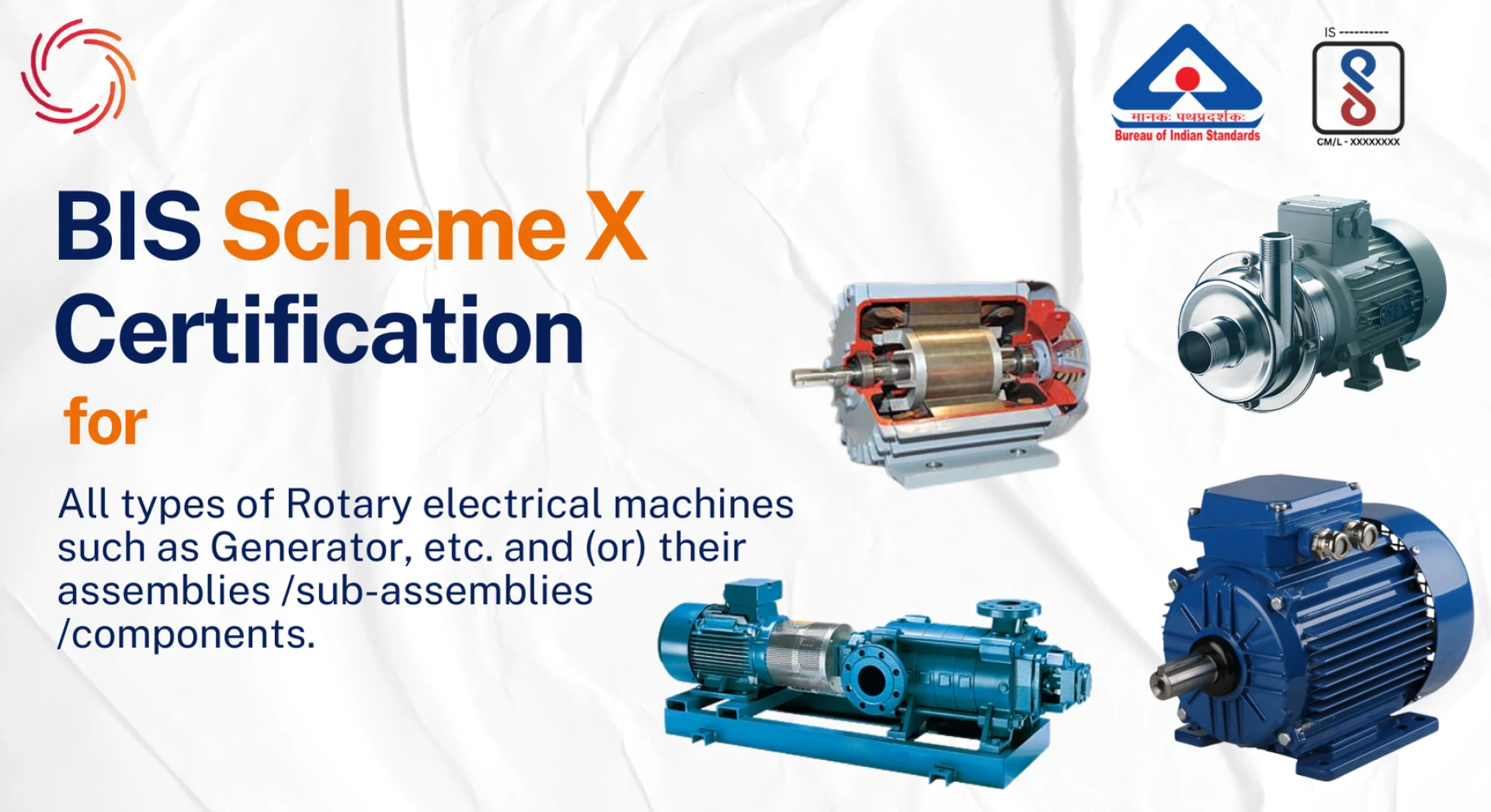
Rotary Machines are the electromagnetic devices that can convert electrical energy to mechanical energy. From electric motors and alternators, to generators and custom rotating machinery, these machines drive factories, transportation, energy infrastructure, and infrastructure itself. Their durability and security are key to such use across diverse industries.
BIS Scheme X Certification for Rotary electrical machines, such as Generators, etc., and (or) their assemblies /sub-assemblies /components is a pivotal regulatory move towards quality and safety of essential industrial equipment.
To control their quality standards and conform to Indian Standards the BIS (Bureau of Indian Standards) have included the BIS Certification in its list of mandatory certification products for the categories of Rotary Electrical Machines under the Scheme X Certification. Under this scheme, Indian as well as foreign manufacturers will be required to obtain approval before selling or importing a rotary machine in India.
Below we provide an overview of the BIS Scheme X Certification for Rotary Electrical Machines, the 2024 OTR mandate, and the route manufacturers can take to become BIS compliant for Scheme X.
Importance of BIS For Rotary Electrical Machines
Rotary machines are used in:
● Generating and distribution of electricity
● Industrial automation and equipment
● Transportation (railroads, boats, electric cars)
● Oil, gas, and energy sectors
● Electrical appliances for consumer and commercial use
Some of the possible risks of no certification include:
● Electrical hazards, short-circuits and fire-hazards
● Mechanical breakdowns and expensive downtime
● Wastage of energy
● Prohibition from government tendering and projects
The Scheme X certification for Rotary Electrical Machines guarantees that these products satisfy rigorous quality, efficiency & safety standards.
What is BIS Scheme X Certification of Rotary Electrical Machines?
The BIS Scheme X Certification for Rotary Electrical Machine is a government regulation scheme under the BIS Conformity Assessment Regulation, 2018. It certifies goods for Indian Standards before they enter the Indian market.
(h3) Some of the features of Scheme X Certification:
● Must for All Manufactures (Domestic & Foreign)
● Includes motors, generators, alternators, and other rotary electric machines
● Needs testing in BIS recognized labs
● Factory audit to ensure quality control
● It allows the use of BIS Standard Mark on the product after certification.
BIS OTR for Rotary Machines
The Omnibus Technical Regulation (OTR) for Rotary Electrical Machines has been announced by the Ministry of Heavy Industries in 2024.
Compliance Date: As per this OTR scheme, all manufacturers and importers of Rotary Electrical Machines must be certified under BIS Scheme X certification by September 1, 2026. After this deadline, uncertified rotary electrical machines cannot be sold, manufactured, or imported in India.
Advantages of BIS Certification for Rotary Electrical Machine
● Product Safety & Reliability: Ensures safety with electrical and mechanical standards.
● Regulatory Compliance: Meets the requirement as far as the OTR for Rotary Electrical Machines.
● Market Competitiveness: Certification is an advantage in government and private procurement.
● Consumer Trust: The BIS Standard Mark ensures quality and safety for use.
● Global Market Access: Assists foreign brands to easily penetrate the strictly regulated market of India.
Types of Rotary Electrical Machines Included
Scheme X certification for Rotary Electrical Machines covers a wide variety of equipment as listed below;
● AC and DC motors
● Generators and alternators
● Turbo–generators and hydro–generators
● Special types of Rotary machines employed in Industries and Utilities
All types are required to be in accordance with appropriate Indian Standards (IS codes) like IS 16819:2018/ ISO 12100:2010 (Safety of Machinery General Principles for Design- Risk Assessment and Risk Reduction). All machine types have to comply with the corresponding Indian Standards to be approved.
Process of BIS Certification for Rotary Electrical Machine
● Identify Standards: Go through IS codes applicable to the type of the machine.
● Product Testing: Perform performance, safety & efficiency testing in BIS-approved labs.
● Factory Inspection: Review of the BIS officials on the manufacturing plant and quality assurance systems.
● Documentation Submission: Submit technical documentation, specifications and bill of material.
● Grant of License: If the application is approved, BIS grants the certification and permits the use of the BIS Standard Mark.
● Continuous Compliance: Regular testing and audits to keep certification current.
Penalties for Non-Compliance
Manufacturers not following the BIS Certification for Rotary Electrical Machines covered under the OTR for Rotary Electrical Machines are subject to:
● Prohibition on the sale or import of uncertified articles
● Confiscation of articles and substantial fines
● Elimination from government work or projects and bidding
● Economic losses and reputational damage
Conclusion
The BIS Scheme X Certification for Rotary Electrical Machines, in line with OTR for Rotary Electrical Machines (2024), is a vital step to strengthen industrial safety, energy conservation and their performance in India’s electrical machinery industry.
For manufacturers and importers, Scheme X certification for Rotary Electrical Machines is not just a box-ticking exercise, it is important to ride on this certification and position itself strategically advantageous to be seen as credible to the customer as part of their growth story
























Sign in to leave a comment.