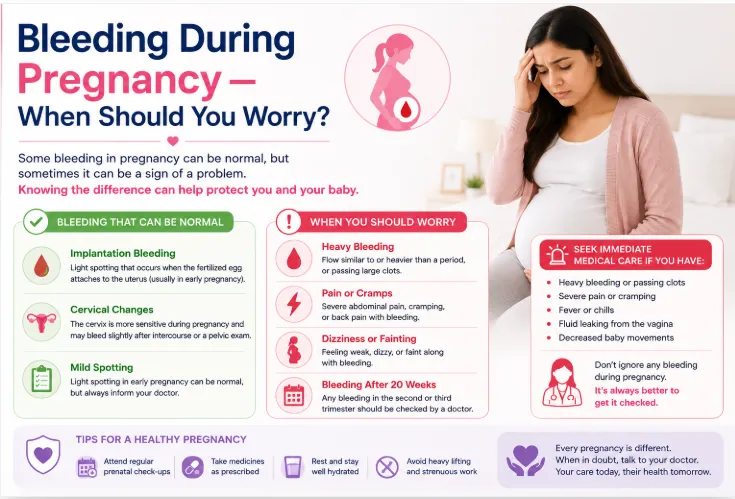

Experiencing bleeding during pregnancy can be frightening for any expecting mother. While some bleeding can be harmless, other cases may indicate a serious problem that needs immediate medical attention. Knowing the difference can help you respond calmly and get the right care at the right time.
Is All Bleeding Dangerous?
Not necessarily. Light spotting, especially in the first trimester, is fairly common and often not a cause for alarm. It may happen due to implantation, hormonal changes, or minor irritation of the cervix. However, bleeding should never be ignored — it's always best to inform your doctor whenever it happens, no matter how light it seems.
Causes of Bleeding by Trimester
First Trimester:
- Implantation bleeding
- Hormonal changes
- Miscarriage
- Ectopic pregnancy (when the embryo implants outside the uterus)
Second and Third Trimester:
- Placenta previa (placenta covering the cervix)
- Placental abruption (placenta separating from the uterine wall)
- Preterm labor
- Cervical changes as the body prepares for delivery
Warning Signs That Need Immediate Attention
While any bleeding should be reported to your doctor, certain signs mean you should seek emergency care right away:
- Heavy bleeding, similar to or heavier than a menstrual period
- Bleeding accompanied by severe abdominal pain or cramping
- Passing of tissue or clots
- Dizziness or fainting along with bleeding
- Reduced fetal movement along with bleeding
- Fever or chills accompanying the bleeding
If you notice any of these symptoms, don't wait — head to the hospital immediately.
What to Do If You Experience Bleeding
- Stay calm and avoid panicking, as stress can worsen the situation.
- Note the amount, color, and consistency of the bleeding.
- Avoid using tampons or having intercourse until you've consulted your doctor.
- Rest and avoid strenuous activity until you get medical advice.
- Contact your doctor or visit the emergency room if bleeding is heavy or painful.
Diagnosis and Care
Your doctor may perform an ultrasound, pelvic exam, or blood tests to determine the cause of bleeding. Depending on the diagnosis, treatment can range from simple monitoring and rest to more active medical intervention. Early diagnosis often leads to better outcomes for both mother and baby.
Dr. Harpreet Kaur, a senior gynecologist at Miracles Healthcare, advises that no bleeding episode during pregnancy should be dismissed as "normal" without a doctor's evaluation. She emphasizes prompt reporting and quick diagnostic action as the best way to protect both mother and baby.
If you're experiencing any bleeding during pregnancy, don't wait to seek help. Searching for the best gynecologist in Gurgaon for urgent pregnancy concerns? Our team at Miracles Healthcare is available to provide timely, expert evaluation.
Need a reliable gynae near you who can respond quickly to pregnancy emergencies? We offer round-the-clock support for expecting mothers facing unexpected symptoms.
As one of the best multispecialty hospitals in Gurgaon, we are equipped with advanced diagnostic imaging and emergency obstetric care to ensure you and your baby receive the fastest, safest treatment possible.
Your peace of mind matters. If you notice any bleeding during your pregnancy, reach out to our team right away for expert care and guidance.
























Sign in to leave a comment.