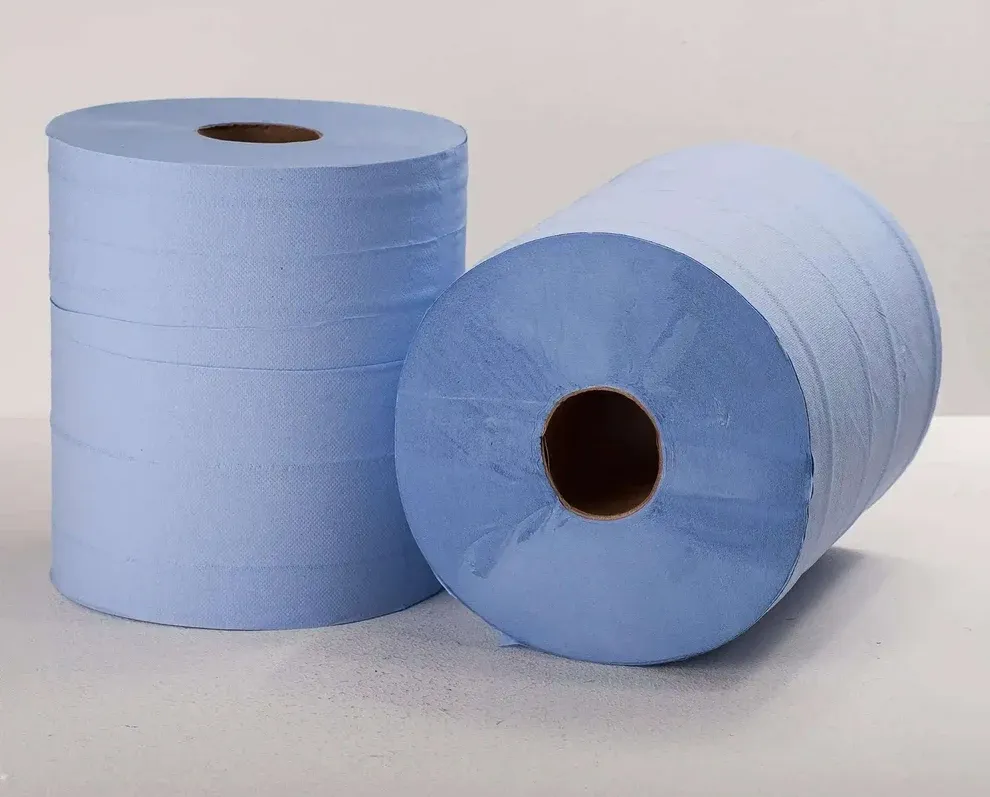

Quick answer: Blue paper rolls are wide, absorbent centre-feed or roll-format wipes coloured blue on purpose, so kitchen staff can tell them apart from anything meant for hands, tabletops or general cleaning. Ireland's food safety guidance leans on colour-coding to stop cross-contamination, and blue is the shade most catering teams reserve for food-prep surfaces. Picking the right one comes down to ply, absorbency, roll width and whether your dispenser can actually hold it.
If you've ever worked a lunch service in a busy kitchen, you'll know the moment: a spill happens, someone reaches for a roll, and it's gone in four wipes instead of one. That's usually a sign the wrong product is on the wall bracket.
Blue paper rolls sit at an odd crossroads. They're not glamorous. Nobody puts them on a wishlist. But they show up constantly in Irish kitchens, cafés, garages, butchers and factory floors, and the difference between a good one and a poor one shows up fast — in your bin, your budget and your health inspection.
This piece looks at what these rolls are actually for, how Irish food businesses tend to use them, and what separates a roll worth reordering from one that falls apart halfway through a shift.
What Exactly Is a Blue Paper Roll?
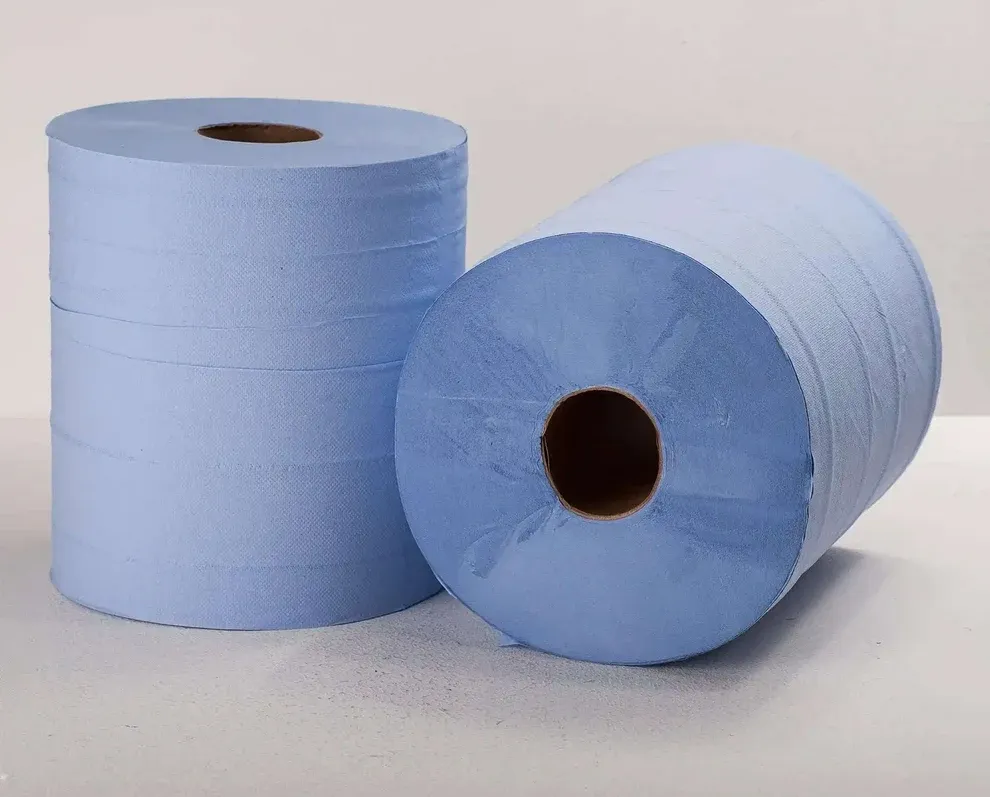
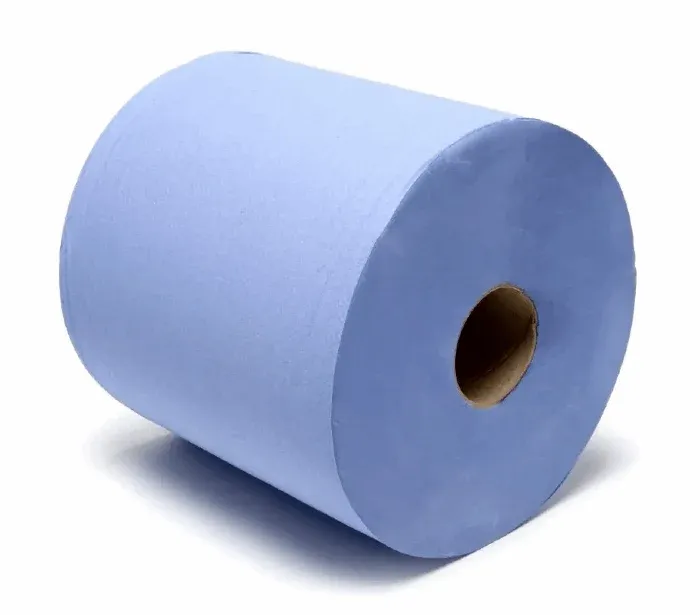
At its simplest, a blue paper roll is a tissue or wipe product, usually two-ply, dyed blue and sold on a cardboard core. You'll see it called a blue roll, blue wiper roll, or catering wipe depending on the supplier.
The colour isn't decoration. Most commercial kitchens follow some version of colour-coded cleaning, where each shade is tied to a job — chopping boards, cloths, and paper all included. Blue tends to be set aside for general kitchen and front-of-house wiping, separate from red (raw meat), green (fruit and veg) or yellow (bar areas), depending on the scheme a particular site follows.
That means a blue paper roll isn't just a bigger version of kitchen towel from the supermarket. It's built to soak up more liquid, hold together when wet, and get pulled through a wall-mounted dispenser dozens of times a shift without shredding.
Where You'll Actually See Them Used
Ask around any Irish food business and the answers are fairly consistent.
- Cafés and restaurants use them for wiping down counters, mopping spills, and drying hands between tasks.
- Butchers and delis rely on them for quick surface cleans between customers.
- Garages and workshops use the heavier grades for oil, grease and general mess — often a different colour entirely, but the same roll format.
- Hotels and B&Bs keep them in back-of-house kitchens for the same reasons as any commercial catering site.
Takeaways and hospitality venues with tight turnaround times lean on blue rolls especially hard, since a wipe-down between orders can't eat up minutes they don't have.
Two-Ply, Absorbency, and Why It Matters More Than Price
Here's where a lot of buyers get caught out. A cheaper blue roll often means fewer sheets, thinner paper, or a single ply that tears the moment it meets a wet surface.
Two-ply rolls cost a bit more per box but tend to work out cheaper per use, because staff aren't doubling up sheets to mop the same spill. If your kitchen goes through several rolls a week, that difference adds up across a year.
A few things worth checking before ordering in bulk:
- Ply count — two-ply is the standard for most catering settings; one-ply suits lighter, low-mess environments.
- Sheet width and roll diameter — this has to match your dispenser, or you'll be forcing rolls in that jam halfway through.
- Recycled content — several Irish suppliers now offer rolls made from recycled fibre, which matters if your business reports on waste or holds an environmental certification.
- Wet strength — some blue rolls turn to mush the second they touch liquid; a decent one should hold its shape for at least a few wipes.
A quick trick from kitchen managers: tear off one sheet, run it under a tap, then try to wipe a surface with it. If it disintegrates in your hand, that's the box to avoid reordering.
Colour-Coding and Food Safety in Ireland
Ireland's Food Safety Authority sets out expectations around hygiene and cross-contamination control for food businesses, and colour-coded cleaning materials are one of the more common ways sites meet that expectation without overcomplicating staff training. You can read more about general food hygiene obligations on the FSAI website.
Sticking to one colour for one purpose, and training new staff on it from day one, tends to matter more during an inspection than which brand of roll sits on the wall. That said, inspectors do notice when paper falls apart mid-wipe and staff end up using extra sheets or, worse, a cloth that should've been elsewhere.
Buying in Bulk Without Overspending
Most catering and retail sites don't buy a single roll — they buy a case, sometimes a pallet. A few practical points from businesses that order regularly:
- Storage space matters. A pallet of blue rolls takes up more room than people expect; measure your stockroom before committing to a large order.
- Delivery frequency beats hoarding. Smaller, more frequent deliveries usually work out better than one enormous order sitting in a damp storeroom.
- Compare cost per sheet, not cost per roll. A roll with fewer, thicker sheets can outlast a cheaper one with more, thinner sheets.
Irish suppliers dealing in high volumes of catering paper and POS consumables — companies like Discount Till Rolls, a Dublin-based supplier working with retail, hospitality and catering businesses across the country — often bundle blue rolls alongside other everyday items such as till rolls, gloves and cleaning cloths, which can simplify ordering for sites juggling several suppliers at once.
The Bottom Line
Blue paper rolls rarely get much thought until the wrong one is on the shelf and staff are burning through a case a week instead of a month. Getting the ply, width and absorbency right for your particular kitchen or shop floor is a small decision that quietly saves money and keeps hygiene checks straightforward.
For Irish catering and retail businesses reordering consumables regularly, it's worth treating blue rolls with the same attention given to till rolls or gloves — a small line item that adds up fast when it's wrong, and barely gets noticed when it's right.
A Short FAQ
Are blue paper rolls food safe?
Yes, standard catering-grade blue rolls are made for food environments, though they're meant for wiping surfaces and spills rather than direct food contact — check the product listing if you're unsure.
Why is the roll blue and not another colour?
Colour is used to separate cleaning tasks. Blue is commonly assigned to general kitchen or front-of-house wiping, though the exact scheme can vary between businesses.
How many sheets are in a typical blue roll?
This varies by brand and roll size, generally somewhere between 150 and 400 sheets per roll, depending on sheet length and ply.
Can blue paper rolls be recycled?
Once used for cleaning, they usually can't go into standard paper recycling due to contamination, but many are made from recycled pulp to begin with.

























Sign in to leave a comment.