

I still remember the days when HR and payroll lived in two different worlds. Attendance was tracked in one system. Leave was calculated in another. Salary was processed somewhere else. And every month, the same ritual repeated itself — downloading spreadsheets, cross-checking formulas, correcting mismatched numbers, and praying that nothing slipped through the cracks. It wasn’t just tiring. It was draining.
Productivity wasn’t lost in big, dramatic failures. It disappeared quietly in small manual corrections, duplicate entries, delayed approvals, and endless email follow-ups. That’s when I realized something powerful: productivity doesn’t grow by working harder. It grows by working smarter — with systems that speak to each other.
Today, even providers offering payroll services in Bangalore are moving toward fully integrated HR-payroll ecosystems where attendance, leave, compliance, and salary processing flow seamlessly within one connected framework. When data moves automatically between systems, errors reduce, approvals speed up, and teams regain valuable time.
That’s where integrated HR-payroll technology changed everything.
When HR and Payroll Finally Start Talking
In many organizations, HR and payroll still operate like distant cousins. HR manages people. Payroll manages numbers. But in reality, they are deeply connected.
- A leave entry affects salary.
- A promotion impacts tax.
- An attendance update changes overtime.
- A new hire alters compliance requirements.
When these functions are disconnected, productivity suffers. HR teams spend hours reconciling data instead of focusing on strategy. Payroll teams double-check figures instead of optimizing processes. Managers wait for reports that should have been instant.
Integrated HR-payroll technology removes that friction.
It creates a unified ecosystem where employee data flows seamlessly from onboarding to salary processing without manual intervention. Attendance syncs automatically. Leave updates instantly reflect in payroll. Compliance calculations run in the background without panic.
The result? Fewer interruptions. Faster cycles. Sharper focus.
The Hidden Productivity Drain No One Talks About
Let me be honest — most productivity loss in HR doesn’t come from lack of effort. It comes from fragmented systems.
Imagine calculating payroll while simultaneously verifying attendance sheets from multiple sources. Or answering employee queries about salary breakdowns because the data isn’t transparent. Or scrambling at the end of the month because one approval was delayed in an email thread.
These aren’t massive problems individually. But together, they create a silent productivity leak.
Integrated HR-payroll technology seals those leaks.
Instead of chasing data, you access it in one dashboard. Instead of correcting errors, the system validates inputs in real time. Instead of sending reminders, automated workflows trigger approvals.
The shift is subtle, but powerful. HR moves from reactive firefighting to proactive workforce planning.
Real-Time Accuracy, Real-Time Confidence
There’s something incredibly calming about knowing your numbers are accurate before salary day arrives.
Integrated systems use rule-based structures to calculate earnings, deductions, taxes, and benefits automatically. Any mismatch in attendance or leave is flagged instantly. Compliance updates are embedded directly into the system logic.
This doesn’t just improve accuracy. It builds confidence.
Employees trust the process because salary calculations become predictable. HR teams trust the system because it eliminates guesswork. Leadership trusts the reports because they are generated from a single, unified source of truth.
And when trust increases, productivity follows.
Because teams stop double-checking. They start moving forward.
Automation That Feels Effortless
Automation often sounds complex. But when done right, it feels invisible.
Integrated HR-payroll technology automates repetitive tasks without removing human control. Salary structures are predefined. Tax calculations are updated automatically. Payslips are generated instantly. Reports are available on demand.
- No more late-night formula corrections.
- No more last-minute compliance panic.
- No more manual reconciliations.
Instead, HR professionals get something rare — breathing space.
And that breathing space fuels productivity.
It allows teams to focus on engagement strategies, performance planning, skill development, and employee experience. When administrative burden decreases, strategic thinking increases.
That’s the true productivity multiplier.
Data That Tells a Story
One of the most underrated advantages of integration is data intelligence.
When HR and payroll systems operate together, data becomes interconnected. You can see how attendance patterns affect overtime costs. You can analyze how compensation impacts retention. You can measure productivity trends linked to workforce planning.
Integrated technology doesn’t just store information. It reveals insights.
And insights drive smarter decisions.
Instead of relying on assumptions, leaders can review real-time dashboards. Instead of reacting to problems, they can anticipate them. Instead of making isolated choices, they can align compensation, performance, and compliance into a cohesive strategy.
Productivity isn’t just about speed. It’s about clarity.
Integrated systems deliver that clarity.
Compliance Without Chaos
Compliance used to be one of the most stressful parts of payroll management. Changing regulations, evolving tax rules, statutory updates — all demanded constant monitoring.
When systems are disconnected, compliance becomes a manual checklist. And manual checklists are risky.
Integrated HR-payroll technology embeds compliance directly into the workflow. Tax updates are reflected automatically. Statutory deductions are calculated accurately. Reports are generated in standardized formats.
This reduces risk, but more importantly, it reduces anxiety.
HR teams no longer operate in fear of penalties or last-minute errors. They operate with structure and assurance.
And when fear disappears, productivity rises.
Faster Onboarding, Faster Impact
Productivity begins on day one.
An integrated system ensures that new employee data flows instantly into payroll, benefits, attendance, and compliance modules. There’s no repeated data entry. No forgotten fields. No delays in salary setup.
The new hire experience becomes smooth and professional.
Offer letters convert into employee records automatically. Salary structures are assigned without manual duplication. Compliance documentation is stored securely within the same ecosystem.
The result is simple: employees become productive faster because administrative hurdles disappear.
And HR teams spend less time processing paperwork and more time welcoming talent.
Employee Empowerment Through Transparency
Productivity is not just about HR efficiency. It’s about employee empowerment.
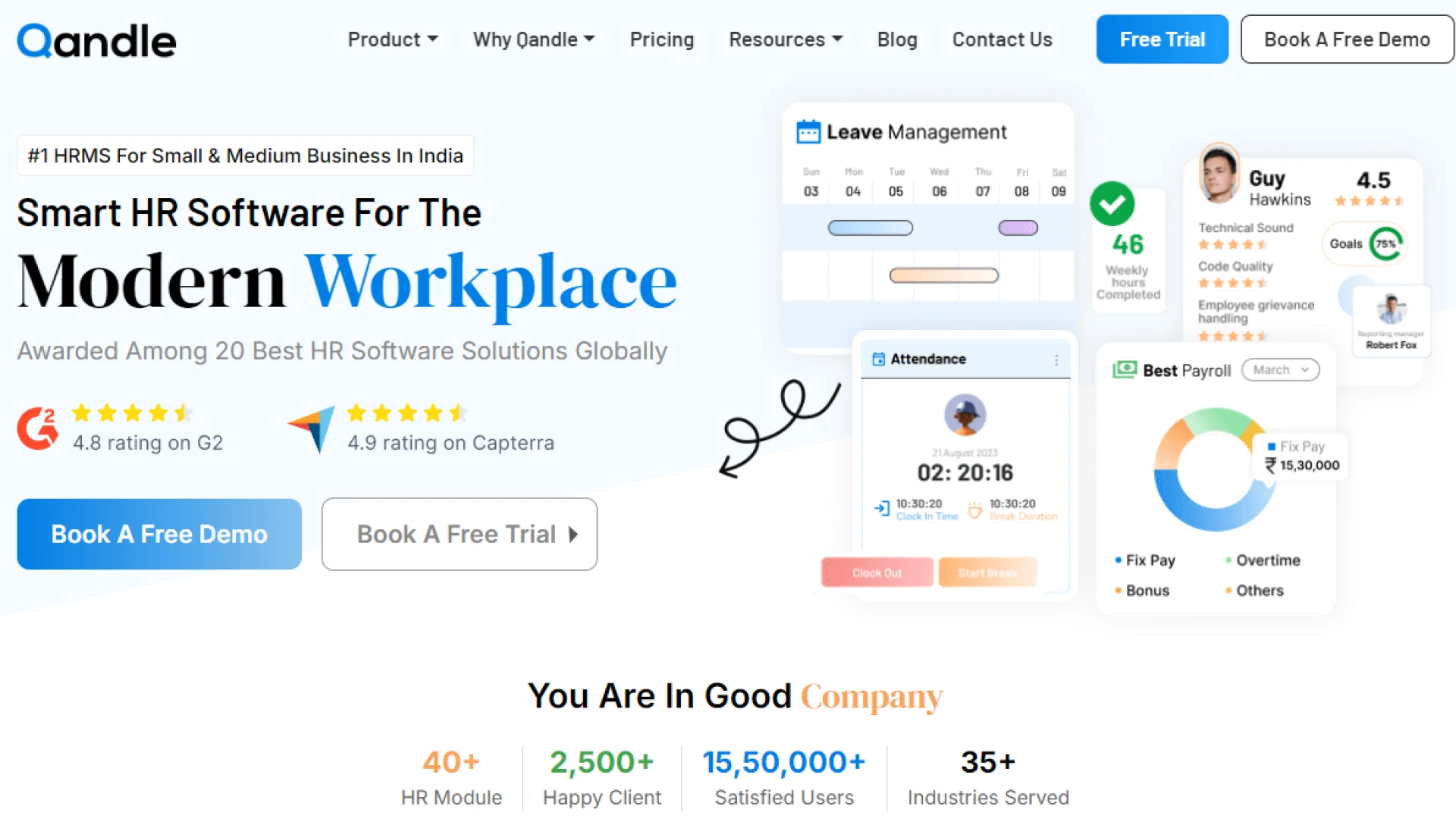
Integrated HR-payroll platforms often include self-service portals where employees can access payslips, tax details, leave balances, and reimbursement status instantly.
This transparency reduces repetitive queries. It builds trust. It encourages accountability.
When employees can view their own data anytime, HR teams are freed from routine clarifications. That saved time translates into higher-value activities.
Transparency isn’t just a feature. It’s a productivity accelerator.
The Strategic Evolution of HR
What excites me most about integrated HR-payroll technology is how it transforms the HR role itself.
- HR stops being transactional.
- Payroll stops being stressful.
- Operations stop being fragmented.
Instead, everything becomes synchronized.
With administrative tasks automated and data unified, HR professionals can finally step into strategic leadership roles. They can analyze workforce costs, forecast hiring needs, optimize compensation structures, and design policies that truly support growth.
Integrated technology doesn’t replace human judgment. It enhances it.
It turns HR from a support function into a productivity engine.
The Productivity Ripple Effect
When HR and payroll integrate seamlessly, the impact spreads beyond departments.
- Finance gains accurate cost projections.
- Managers receive real-time workforce data.
- Employees experience reliable salary processing.
- Leadership gets consolidated reports instantly.
The organization moves faster because internal friction reduces.
Think of it like removing invisible speed bumps from daily operations. The journey becomes smoother. The pace becomes steady. The destination arrives sooner.
That is the real magic of integration.
My Final Reflection
When processes are simplified and systems are connected, work flows naturally instead of feeling forced. This is why many organizations investing in payroll services in India are not just looking for salary processing support—they are looking for streamlined structures that eliminate duplication, reduce manual intervention, and create clarity across departments.
Integrated HR-payroll technology does exactly that.
- It connects processes.
- It automates intelligently.
- It validates in real time.
- It empowers transparency.
- It strengthens compliance.
- It unlocks strategic potential.
And most importantly, it gives HR professionals something invaluable — control with confidence.
In a world where time is limited and expectations are high, integration is no longer a luxury. It’s a necessity. Because when HR and payroll work as one unified force, productivity doesn’t just improve. It accelerates.






Sign in to leave a comment.