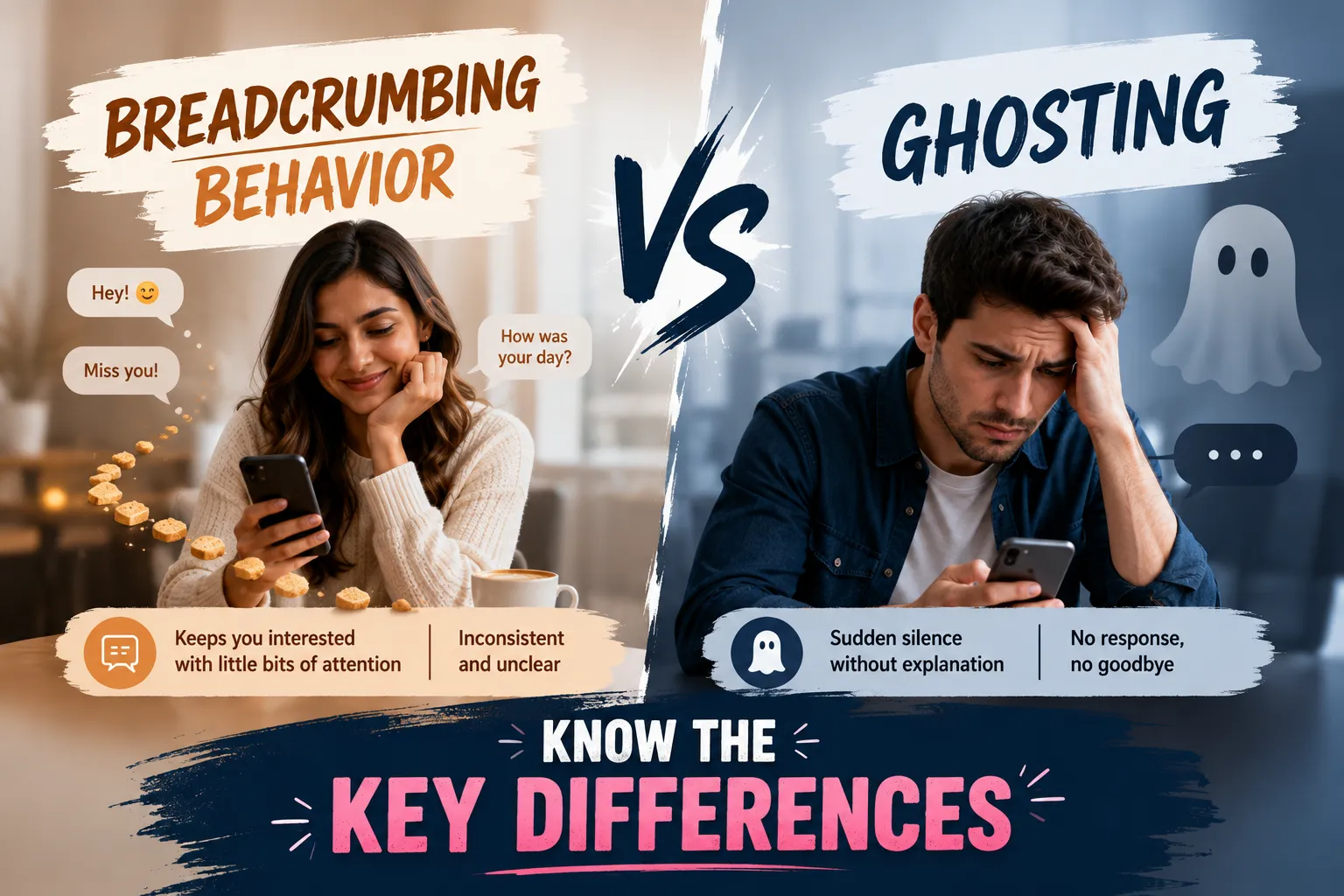

Modern dating has made it easier to meet new people, but it has also created new relationship problems. One of the most confusing is Breadcrumbing. Many people also deal with ghosting, and while both can hurt, they are not the same. Knowing the difference can help you protect your feelings, make better choices, and build healthier relationships.
In this guide, you'll learn what breadcrumbing and ghosting mean, how they differ, why people do them, and what you should do if it happens to you.
What Is Breadcrumbing?
Breadcrumbing happens when someone gives you just enough attention to keep you interested but never commits to a real relationship. They may send a random text, like your social media posts, or promise to meet without following through.
Instead of ending things honestly, they leave small signs of interest that keep your hopes alive.
Common Signs of Breadcrumbing
- They message only when it suits them.
- They avoid making real plans.
- Conversations stop for days or weeks.
- They flirt but never commit.
- They give mixed signals.
Why It Feels So Confusing
The attention comes and goes. One day they seem interested, and the next day they disappear. This creates uncertainty and makes many people wonder if they are doing something wrong.
Ghosting vs Breadcrumbing: The Biggest Differences
Although both behaviors can be painful, they happen in different ways.
| Breadcrumbing | Ghosting |
|---|---|
| Gives occasional messages | Stops all communication suddenly |
| Keeps hope alive | Ends contact without explanation |
| Sends mixed signals | Gives no signals at all |
| May return after weeks | Often never comes back |
| Leaves you emotionally confused | Leaves you searching for closure |
How Ghosting Works
Ghosting means someone suddenly cuts off all communication without saying goodbye. They stop replying to texts, ignore calls, and disappear from your life.
Unlike breadcrumbing, ghosting is a complete stop instead of occasional attention.
Which One Hurts More?
There isn't one answer. Some people find ghosting more painful because there is no explanation. Others believe breadcrumbing hurts longer because it keeps false hope alive.
Why Do People Use Breadcrumbing or Ghosting?
People behave this way for many reasons. Their actions often reflect their own emotional struggles rather than your worth.
Fear of Commitment
Some people enjoy attention but fear serious relationships. They stay connected without moving forward.
Poor Communication Skills
Instead of having an honest conversation, they avoid difficult talks by disappearing or sending occasional messages.
They Want Attention
Some people enjoy knowing someone is interested in them. They may reach out only when they feel lonely or bored.
They Like Keeping Options Open
Dating apps make it easy to talk to many people at once. Some people keep several conversations going without planning to build a real relationship.
How Breadcrumbing and Ghosting Affect Mental Health
Being treated this way can affect your confidence and emotional well-being.
Emotional Effects
- Self-doubt
- Anxiety
- Stress
- Sadness
- Confusion
- Loss of trust
You May Blame Yourself
Many people think they did something wrong. In most cases, these behaviors say more about the other person's communication habits than about you.
It Can Make Future Dating Harder
After repeated disappointment, trusting new people may become difficult. Setting healthy boundaries becomes even more important.
Example 1: Breadcrumbing in Daily Life
Imagine someone who texts every two weeks saying, "I miss talking to you," but cancels every plan to meet. Months pass without any real progress. This is a common example of breadcrumbing because they keep showing small signs of interest without commitment.
Source: American Psychological Association
Example 2: Ghosting in Modern Dating
A person talks with someone every day for three weeks. Suddenly, all replies stop. Calls go unanswered, and the person blocks them on social media without explanation. This is a clear example of ghosting.
Source: Cleveland Clinic
How to Respond to Breadcrumbing and Ghosting
Healthy relationships depend on honesty, respect, and clear communication.
Set Clear Boundaries
If someone's actions keep confusing you, ask directly what they want. Honest communication saves time and protects your feelings.
Focus on Consistent Actions
Pay more attention to actions than words. Someone who truly cares usually follows through on promises.
Don't Chase Unclear Signals
If someone repeatedly disappears or only contacts you when convenient, step back. Your time and emotional energy matter.
Choose Healthy Dating Platforms
Meeting people through trusted dating communities can help you connect with individuals looking for genuine relationships. For luxury dating, platforms like Favor Dating focus on helping people build meaningful connections instead of endless mixed signals.
Frequently Asked Questions (FAQs)
1. What is Breadcrumbing in dating?
Breadcrumbing is when someone gives small amounts of attention without wanting a real relationship. They send occasional messages or compliments but avoid commitment.
2. Is Ghosting worse than Breadcrumbing?
Ghosting ends communication completely, while breadcrumbing keeps giving false hope. Both can be emotionally painful, but people react differently depending on the situation.
3. Why do people use Breadcrumbing instead of being honest?
Many people choose Breadcrumbing because they fear conflict, enjoy attention, or are unsure about commitment. Honest communication requires emotional maturity.
4. Can someone come back after Ghosting?
Yes, some people return after Ghosting, but that does not always mean they have changed. Before reconnecting, look for honest communication and consistent behavior.
5. How can I protect myself from Breadcrumbing and Ghosting?
The best way to avoid Breadcrumbing and Ghosting is to set healthy boundaries, value consistent actions, and stop investing in people who repeatedly send mixed signals.
Conclusion
Both Breadcrumbing and Ghosting can leave people feeling hurt, confused, and uncertain. The biggest difference is that breadcrumbing keeps giving small signs of attention, while ghosting ends communication without warning. Neither behavior supports a healthy relationship.
The best way to protect yourself is to notice consistent actions, communicate openly, and walk away from people who repeatedly avoid honesty. Healthy relationships are built on trust, respect, and clear communication not mixed signals or sudden silence.
Frequently Asked Questions
What is Breadcrumbing in dating?
Breadcrumbing is when someone gives small amounts of attention without wanting a real relationship. This can include sending occasional messages, liking social media posts, or making promises to meet but never following through.
Is Ghosting worse than Breadcrumbing?
Ghosting ends communication completely and can feel more abrupt, while breadcrumbing keeps giving false hope through intermittent attention. Both can be emotionally painful, but individuals may react differently depending on their experiences.
Why do people use Breadcrumbing instead of being honest?
People may choose breadcrumbing due to fear of conflict, a desire for attention, or uncertainty about commitment. This behavior often reflects their own emotional struggles rather than a reflection of your worth.
Can someone come back after Ghosting?
Yes, some individuals may return after ghosting, but this doesn’t guarantee that their behavior will change. It's important to evaluate their willingness to communicate honestly and show consistent actions before reconnecting.
How can I protect myself from Breadcrumbing and Ghosting?
To avoid breadcrumbing and ghosting, set clear boundaries and focus on consistent actions rather than just words. It's also crucial to stop investing in people who repeatedly send mixed signals, as your emotional well-being matters.
What are the emotional effects of Breadcrumbing and Ghosting?
Both breadcrumbing and ghosting can lead to feelings of self-doubt, anxiety, stress, and confusion. Many individuals may blame themselves for the other person's behavior, which can erode their confidence and trust in future relationships.
How do I recognize if I’m being Breadcrumbed?
Signs of breadcrumbing include receiving sporadic messages, flirtation without commitment, and a lack of real plans being made. If someone seems interested one moment but disappears the next, it may indicate breadcrumbing.



























Sign in to leave a comment.