

The right bridal jewellery should work with your outfit, face, neckline, wedding function, and personal style without making every part of your look compete for attention. The easiest way to choose is to plan your jewellery function by function, then build each look around one main statement piece.
The 1-line job the searcher is actually trying to get done
Choose bridal jewellery that matches each wedding outfit and function while keeping the complete bridal look balanced, comfortable, and personal.
That sounds simple until you are looking at necklaces, earrings, bangles, rings, maang tikka, nath, waist belts, anklets, and multiple jewellery styles at the same time.
Then every decision starts affecting another decision.
Your necklace affects your neckline. Your earrings affect your hairstyle. Your maang tikka affects the balance around your face. Your bangles need to work with your sleeves and outfit. The jewellery also needs to make sense for the ceremony itself.
A bridal jewellery guide should help you make those decisions in the right order.
What should a bridal jewellery guide cover?
A useful guide needs to go beyond naming jewellery styles.
Most brides need help with the actual buying decisions:
- Which jewellery should be worn for each wedding function?
- How should jewellery match the bridal outfit?
- Which necklace works with a particular neckline?
- Should the necklace and earrings be equally heavy?
- How should gold, diamonds, Polki, Kundan, Jadau, or pearls fit into the wedding wardrobe?
- How much jewellery is enough?
- Which pieces deserve a larger share of the budget?
- How should jewellery work across Haldi, Mehendi, Sangeet, wedding, and reception?
- What should you check before buying bridal jewellery?
- Which pieces will still work after the wedding?
That last question gets ignored too often.
A wedding outfit has one job. Your jewellery should have a life beyond one photograph.
Why buying one bridal jewellery set for everything rarely works
A wedding usually includes several different outfits, moods, and levels of formality.
A jewellery set designed for the wedding ceremony might feel too heavy with a Mehendi outfit. A delicate necklace that works beautifully with a reception gown might disappear against a heavily embroidered bridal lehenga.
The answer is not to buy more jewellery without a plan.
Start with your outfits.
Write down every major function and the outfit you expect to wear. Then note the neckline, dominant colours, embroidery, sleeve style, and overall level of detail.
You will quickly see which pieces need to change.
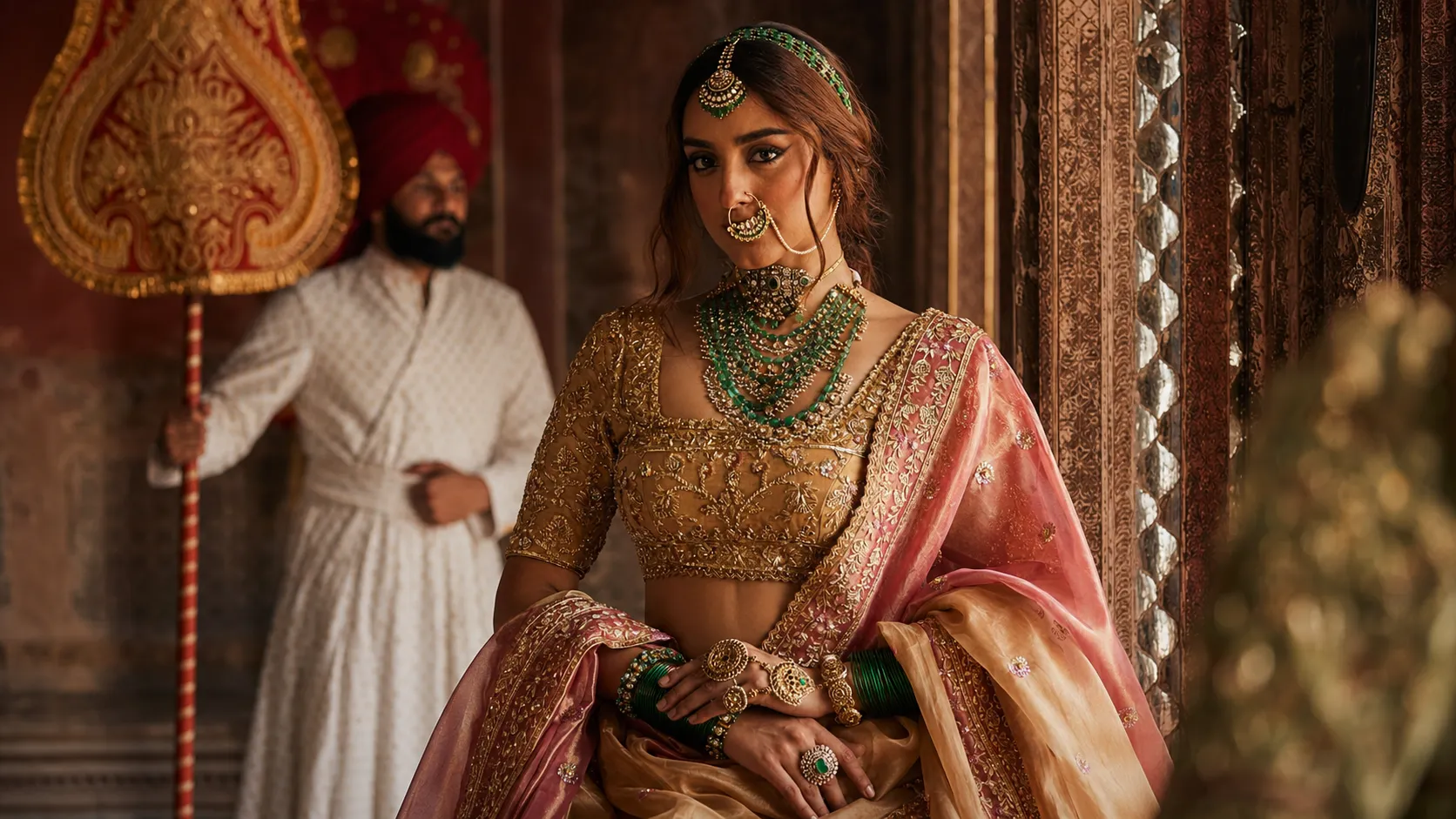
For example, a heavily embroidered wedding lehenga already has visual weight. Pairing it with an equally elaborate necklace, oversized earrings, heavy maang tikka, and multiple statement pieces can make the look feel crowded.
A simpler outfit gives your jewellery more room to become the focal point.
The goal is balance, not maximum jewellery.
Which jewellery should you wear for each wedding function?
Each function gives you a different opportunity to express your style.
Haldi: keep the jewellery light and easy to wear
Haldi is usually associated with a more relaxed setting, so heavy bridal jewellery is rarely necessary.
Floral jewellery, lightweight earrings, simple bangles, or delicate pieces work well with bright Haldi outfits.
The practical test is simple: if you would worry about damaging an important jewellery piece during the function, choose something else.
Your Haldi look should feel festive without requiring you to protect every necklace from turmeric.
Mehendi: let colour and detail lead
Mehendi outfits often have strong colours, embroidery, prints, or playful details.
This gives you room to use jewellery that feels different from your wedding-day pieces.
Statement earrings work particularly well when your outfit already has plenty of detail around the neckline. Bangles and rings add interest without making the upper half of the outfit too heavy.
If your Mehendi outfit has a simple neckline, a necklace becomes a stronger option.
The key is to decide where you want attention first.
Sangeet: choose jewellery around movement and styling
The Sangeet is different because your outfit, hairstyle, and jewellery need to work together while you move.
Large earrings paired with a simpler necklace can create a strong look without layering too many pieces around the face and neckline.
If your outfit has a dramatic neckline or detailed blouse, earrings might deserve the spotlight.
Do not choose jewellery only because it looks impressive when displayed separately. Look at the complete outfit.
Wedding ceremony: build the look around the main bridal piece
This is where most brides want traditional bridal jewellery to take centre stage.
Gold, Polki, Kundan, Jadau, diamonds, pearls, or a combination of styles can work depending on the outfit and personal preference.
The mistake is treating every piece as equally important.
Choose the main piece first.
It could be a necklace. It could be a traditional choker. It could be a statement maang tikka. It could even be a family heirloom.
Once the focal piece is decided, build the remaining jewellery around it.
This approach creates a more controlled look than buying a matching set and adding every piece simply because it belongs to the set.
Reception: give your jewellery a different personality
The reception gives you space to move away from the traditional wedding look.
A gown, saree, contemporary lehenga, or structured outfit might work better with diamonds, pearls, refined gold jewellery, or a statement pair of earrings.
The reception also gives you a chance to reuse jewellery differently.
A necklace worn with the wedding outfit might become the main statement piece with a simpler reception outfit. Earrings from the ceremony might work with a completely different hairstyle.
Your wedding jewellery does not need to look identical across every photograph.
How do you choose a bridal necklace for your neckline?
Your neckline should be one of the first things you check before choosing a necklace.
A V-neck naturally creates a vertical opening, so a pendant or necklace with a similar visual direction tends to sit more naturally within the outfit.
A high neckline already fills the area around the neck. In this case, statement earrings or a shorter necklace might create better balance.
A sweetheart neckline gives you more room around the upper chest, making it easier to introduce a necklace as the main statement.
The point is not to follow rigid rules.
Look at the shape created by the neckline first. Then choose jewellery that works with that shape instead of fighting it.
This is one reason buying jewellery before finalising the outfit often creates unnecessary problems.
Should your necklace and earrings match?
They should coordinate. They do not need to look identical.
A common bridal styling mistake is matching the necklace, earrings, maang tikka, bangles, ring, and every other piece so closely that nothing stands out.
Instead, think in terms of visual weight.
If the necklace is elaborate, the earrings do not need to compete at the same level.
If the earrings are the statement piece, the necklace can become quieter.
The same principle applies to a maang tikka.
Your face should still have space around it.
A bridal jewellery set should feel connected through colour, metal, stones, design language, or craftsmanship. Matching every detail exactly is not the goal.
How do you choose between gold, Polki, Kundan, Jadau, diamonds, and pearls?
Start with the look you want, then choose the jewellery style.
Gold works naturally with many traditional Indian bridal outfits and offers flexibility across wedding functions.
Polki, Kundan, and Jadau have distinct design traditions and visual characteristics. They are often associated with elaborate bridal jewellery, especially when the outfit calls for a traditional look.
Diamonds suit brides who prefer a refined and versatile appearance. They also pair easily with reception outfits and other non-traditional looks.
Pearls offer another direction. Their softer appearance works well when you want jewellery to feel elegant without relying on heavy ornamentation.
There is no requirement to choose one jewellery category for the entire wedding.
Your wedding wardrobe might have traditional gold for the ceremony, lighter jewellery for Mehendi, and diamonds or pearls for the reception.
That creates variety without making the jewellery choices feel random.
How much bridal jewellery do you actually need?
Start with your functions, not a jewellery checklist.
A bride does not need every possible jewellery piece simply because it exists.
Think about the pieces you know you will wear:
A necklace.
Earrings.
Bangles or bracelets.
A ring.
Maang tikka or another headpiece if it suits your look.
Then consider additional pieces based on the outfit and ceremony.
A nath, kamarbandh, hathphool, anklets, or additional necklaces should have a styling reason.
This also helps with your budget.
Instead of dividing money equally across every jewellery category, identify the pieces that will define your bridal look and give those pieces more attention.
A pair of earrings that works with three outfits might offer more long-term value than an elaborate piece designed for one ceremony.
What should you check before buying bridal jewellery?
Do not start with the question, “How beautiful is this?”
Start with, “Does this work for my wedding wardrobe?”
Check the jewellery against the actual outfit or a photograph of it.
Look at the neckline. Then check the blouse or sleeve detail. Look at the embroidery. Consider the hairstyle you plan to wear. Think about the other jewellery pieces.
Then check practical details.
Ask about the metal, stones, workmanship, care requirements, return or exchange terms, and any certification relevant to the piece you are buying.
For valuable jewellery, keep the purchase documentation safely.
Also check how the piece feels when worn.
A necklace that looks perfect in a display case still needs to sit comfortably on your neck. Heavy earrings need particular attention because you will wear them for hours during wedding celebrations.
Beauty is not useful if you spend the ceremony thinking about taking the earrings off.
Should you buy a complete bridal jewellery set?
A complete set makes sense when the pieces already match your wedding outfit and the jewellery style you want.
It becomes less useful when the set forces your entire bridal look into one visual style.
Before buying a complete set, separate the pieces mentally.
Ask yourself:
Would I wear the necklace with another outfit?
Would I wear these earrings without the necklace?
Would the bangles work with another colour?
Does the maang tikka suit my planned hairstyle?
If most answers are yes, the set has more value beyond the wedding.
If everything only works when worn together, think carefully before buying it.
What bridal jewellery mistakes should you avoid?
Buying jewellery before understanding the outfits is one of the biggest mistakes.
The jewellery should respond to the outfit, not force the outfit to accommodate it.
Another mistake is choosing pieces from separate collections without checking their visual relationship. Different jewellery styles can work together, but they need a reason to sit together.
Overloading the face is another common problem. A large maang tikka, heavy earrings, elaborate necklace, and dramatic hairstyle all compete for the same visual space.
Then there is the emotional purchase.
A piece might remind you of your wedding dream. That matters. But pause before buying it. Ask where else you will wear it, whether it works with your wardrobe, and whether you would still choose it without the wedding pressure around you.
Your wedding is emotional. Jewellery stores know this. Human beings have been spending money because of feelings since commerce began. Give yourself a minute before handing over the card.
How do you build a bridal jewellery plan before shopping?
Create a simple function-by-function jewellery plan.
For each outfit, record:
Function
Outfit
Neckline
Main jewellery piece
Supporting jewellery
Metal or jewellery style
Hairstyle
Any family or heirloom jewellery
Then photograph the full outfit.
When you visit a jeweller, use those photos instead of trying to remember every detail from memory.
This changes the conversation.
You are no longer asking, “What bridal jewellery do you have?”
You are asking, “I have this outfit, this neckline, and this hairstyle. Which jewellery works with the look?”
That is a much better buying question.
How can family jewellery become part of the bridal look?
Family jewellery deserves a separate place in your planning.
An heirloom piece does not need to match every new jewellery item perfectly. Its emotional meaning might be the reason you want to wear it in the first place.
Start with the heirloom.
Then build the rest of the jewellery around it.
If the inherited necklace is elaborate, let it lead. If the piece is smaller, use it as a personal detail within a larger bridal look.
This approach also prevents the common mistake of buying a new piece that makes the family jewellery look out of place.
The best bridal jewellery plan leaves room for both.
What every ranking bridal jewellery guide covers, and what it misses
Most bridal jewellery content covers jewellery categories, traditional styles, outfit matching, and basic buying advice.
Those topics belong in the guide.
But they are only the starting point.
The more useful question is how those decisions interact.
A bride does not buy a necklace in isolation. She buys a necklace for a specific outfit, neckline, function, hairstyle, budget, and future wardrobe.
That is the gap worth solving.
Instead of asking, “Which bridal jewellery is best?” ask:
“What does this jewellery need to do for this outfit?”
That question produces a better buying decision.
A simple bridal jewellery decision system
Use this order every time you are unsure:
First, choose the outfit.
Then identify the neckline and the strongest design detail.
Next, select one main jewellery piece.
Add supporting pieces without giving them the same visual weight.
Check the hairstyle and face area.
Try the complete look together.
Then ask whether each important piece works beyond one wedding function.
If the answer is yes, you have moved from buying jewellery to building a bridal jewellery wardrobe.
That distinction matters.
What should you do before your next bridal jewellery appointment?
Take photos of every wedding outfit you have finalised.
Include close photographs of the neckline, blouse, embroidery, sleeves, and colours. Add your preferred hairstyle if you have already chosen one.
Then make a function-by-function jewellery list.
Take any family jewellery you plan to wear, or clear photographs of it, so new pieces can be selected around it.
Most importantly, do not shop with the goal of filling a jewellery checklist.
Shop with the goal of completing your wedding looks.
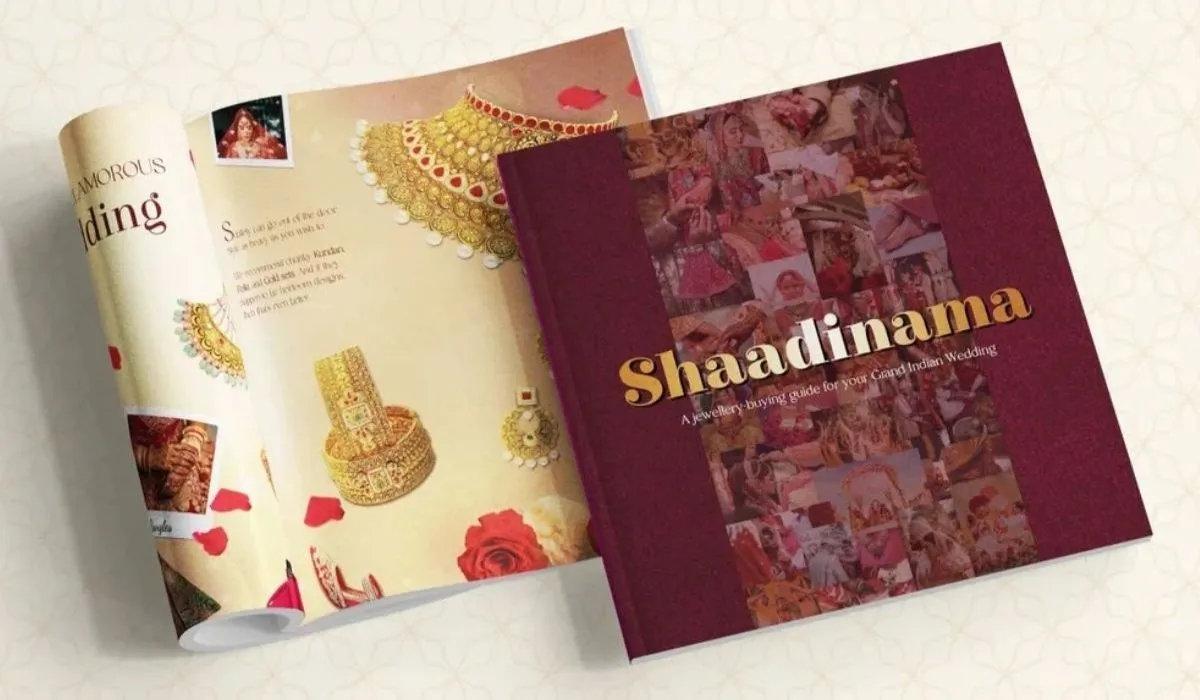
For a more personalised approach to bridal jewellery choices, explore Shaadinama, the Indian bridal jewellery buying guide designed to help you think through jewellery based on your wedding outfits, functions, styling, and personal choices.
Start with your wedding wardrobe. Choose the main piece for each important function. Then build the rest around it. That simple order will make your bridal jewellery decisions far easier to manage.


























Sign in to leave a comment.