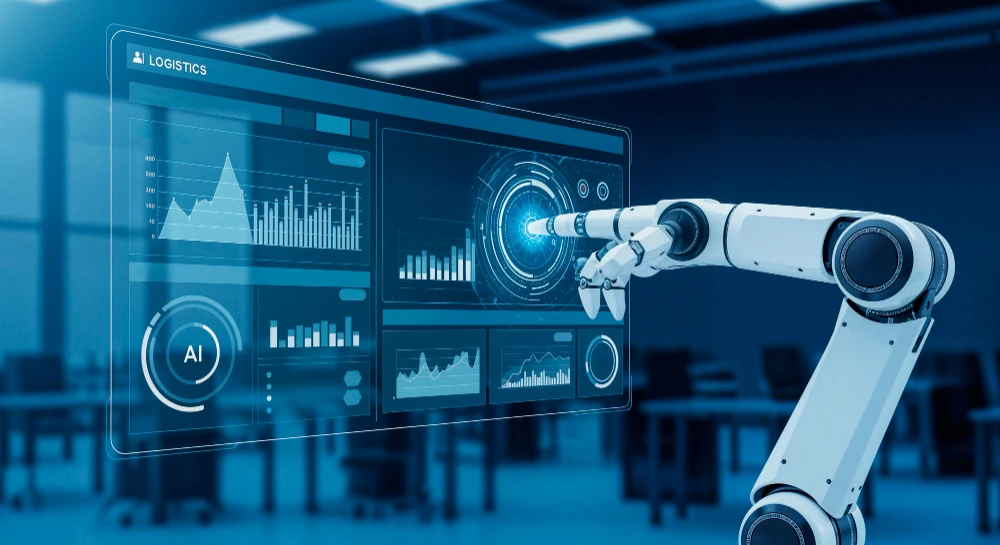

Automation and artificial intelligence (AI) have moved from buzzwords to business essentials — not just for global corporations, but for the agile, mid-market firms that form much of Chicago’s economic foundation.
A credible business consulting firm in Chicago does more than recommend software; it helps organizations navigate AI’s potential, risks, and implementation realities within the unique dynamics of the Chicagoland business environment.
The AI Adoption Surge: From Future Promise to Current Reality
AI adoption in the American middle market is accelerating fast.
According to Netguru (2025), around 78% of organizations worldwide now use AI in at least one business function — one of the fastest technology adoption rates in recent history.
The RSM US LLP (2025) Middle Market AI Survey further reports that mid-sized firms across the U.S. are rapidly embracing AI and Generative AI (GenAI) to improve decision-making, customer experience, and efficiency.
This isn’t just an IT trend; it’s a fundamental shift in business capability. Organizations adopting AI and Robotic Process Automation (RPA) are seeing clear advantages in:
- Process Automation: Using digital tools to manage high-volume, repetitive workflows, freeing human teams for higher-value tasks.
- Scaled Decision Support: Leveraging predictive analytics, fraud detection, and customer churn analysis to inform smarter, faster decisions.
- Strategic Differentiation: Early adopters report measurable gains in productivity and customer satisfaction, reinforcing AI as a competitive edge when used effectively.
However, implementation maturity still varies.
The RSM (2025) report found that most middle-market firms face significant challenges during rollout — from data quality and internal skill gaps to change resistance. This gap between initial adoption and full-scale value creation is where experienced consulting guidance becomes essential.
Common AI Implementation Pitfalls (and the Consultant Fix)
1. Automating Complexity
The most common mistake is automating before simplifying. Automating a broken process only accelerates inefficiency.
Consultant Fix: Business consultants apply Process Mining and Value Stream Mapping to eliminate waste and redesign workflows before introducing automation — ensuring that AI enhances efficiency, not chaos.
2. The Data Readiness Gap
AI models rely on clean, consistent data — something many Chicago firms still struggle with due to legacy systems.
Consultant Fix: Consultants conduct Data Health Audits, unify data sources, and establish strong governance to ensure reliability and compliance, particularly in sectors governed by laws like HIPAA (healthcare) and FINRA (finance).
3. Failing the Human Test
Even the most advanced AI tools can fail if employees resist change — a challenge that’s especially relevant in Chicago’s competitive labor market.
Consultant Fix: Experts deploy structured Change Management Playbooks with transparent communication, upskilling programs, and human-centered design to ensure AI adoption is seen as empowerment, not replacement.
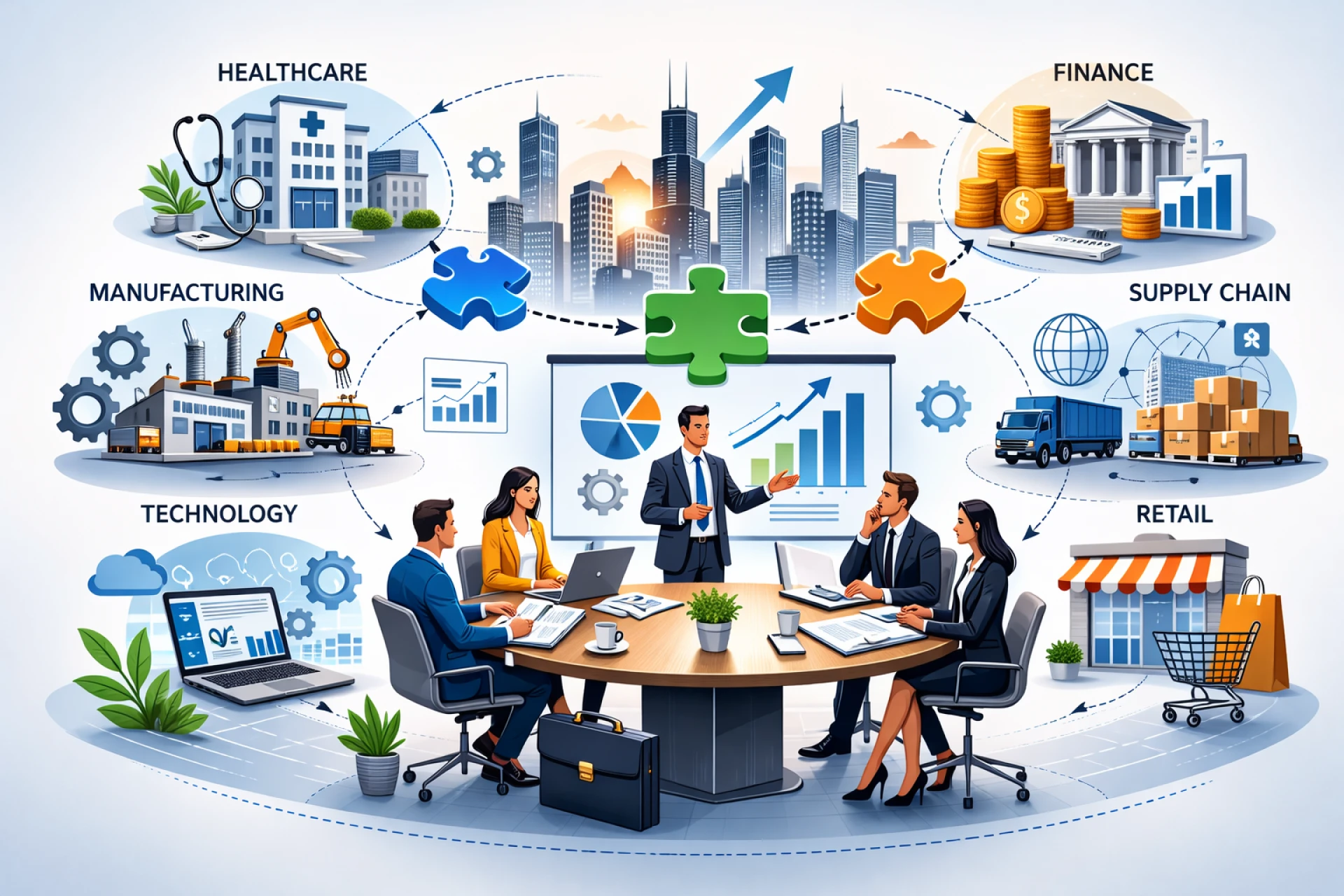
How AI and Automation Are Evolving Across Chicago’s Key Industries
While city-specific data on AI adoption is limited, the following industry applications reflect national and regional trends highly relevant to Chicago’s economic landscape:
1. Financial Services & FinTech
Chicago’s financial and trading ecosystem prioritizes compliance and transparency.
- Focus: Automating Risk and Compliance processes such as AML (Anti-Money Laundering), KYC (Know Your Customer), and fraud detection.
- Consulting Role: Local advisors help ensure AI systems meet audit and fairness requirements.
- Legal analyses, such as Loeb & Loeb LLP (2023/2025), emphasize that AI in finance must comply with evolving frameworks like the FTC’s AI oversight standards and international regulations such as the EU AI Act.
2. Healthcare & Life Sciences
Chicago’s hospital networks and research centers are adopting AI to enhance operational efficiency and patient safety.
- Focus: Automating Revenue Cycle Management (RCM) — claims processing, coding, and prior authorizations.
- Consulting Role: Consultants ensure HIPAA compliance while integrating AI within complex Electronic Health Record (EHR) systems, helping clinical teams trust and effectively use AI tools.
3. Manufacturing & Logistics
As part of the Midwest’s industrial core, Chicago’s manufacturing and logistics sectors focus on cost reduction and uptime.
- Focus: Using AI for Predictive Maintenance, Demand Forecasting, and invoice automation.
- Consulting Role: Business consultants manage union collaboration, upskilling, and ethical rollout strategies to ensure automation supports — not replaces — the workforce.
Is AI Truly “Mandatory” for Competitiveness?
Reports from RSM (2025) and Netguru (2025) agree that AI is fast becoming a major differentiator — firms that implement it strategically tend to outperform peers in efficiency, innovation, and speed. However, widespread transformation is still underway. Most organizations are transitioning from pilot projects to enterprise-level implementation.
A balanced view is that AI is becoming a key driver of competitiveness, but success depends on thoughtful alignment between technology, data readiness, and human capability — not just adoption alone.
The Strategic Value of a Consultant During AI Deployment
While internal teams handle daily operations, effective AI deployment requires specialized strategic expertise. Partnering with a business consultant in Chicago transforms a tech rollout into a value-driven transformation initiative.
Key consulting benefits include:
- Accelerated Time-to-Value: Consultants apply proven frameworks that fast-track implementation and identify high-ROI use cases.
- Risk and Governance Mitigation: Consultants help build strong AI governance frameworks that meet state and federal compliance standards.
- Bridging Skill Gaps: Instead of permanent hires, consultants act as knowledge-transfer partners, upskilling existing staff for long-term sustainability.
- Local Insight: Chicago-based consultants understand local regulatory nuances, industry dynamics, and workforce culture, enabling smoother adoption.
Final Thought
AI and automation give Chicago businesses the opportunity to streamline operations and enhance human potential — allowing teams to focus on creativity, strategy, and customer experience.
However, meaningful success depends on disciplined execution, ethical data practices, and employee readiness.
By partnering with an experienced Chicago business consultant, local firms can implement AI pragmatically, safely, and profitably — turning technological change into a competitive advantage for the next decade.
References
- Netguru. (2025). AI Adoption Statistics in 2025. — Supports the 78% global AI adoption figure.
- RSM US LLP. (2025). Middle Market Firms Rapidly Embracing Generative AI, But Expertise Gaps Pose Risks: RSM 2025 AI Survey. — Supports the 92% challenge rate and focus on skill gaps and data quality.
- Loeb & Loeb LLP. (2023/2025). Financial Services and AI: Regulatory Developments. — Supports emphasis on compliance and governance in finance.
- SAP LeanIX. (2025). AI Implementation: Best Practices and Challenges. — Supports identification of process, privacy, and scalability challenges.































Sign in to leave a comment.