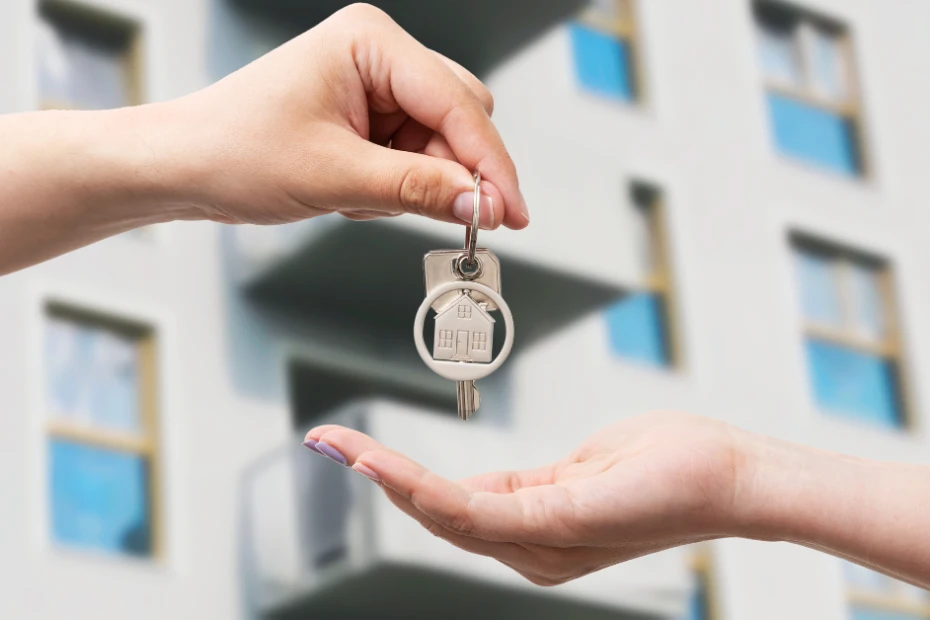

The South African property market has shifted over the past few years. Rising interest rates, tighter lending criteria, and the cost of living going up have all changed how people think about buying their first home. For a growing number of buyers, especially younger professionals and small families, an apartment has become the most practical entry point into property ownership.
Freestanding houses in major metros like Johannesburg, Cape Town, and Pretoria have priced a lot of first-time buyers out. An apartment in a well-located complex offers a more realistic starting point, often at half the price of a standalone house in the same area. The trade-off is space, but for many buyers, the benefits of security, shared maintenance, and location make up for a smaller floor plan.
Why Apartments Are Becoming the Go-To for First-Time Buyers
The numbers tell the story. Bond originator data from the past two years shows that a large share of first-time home loans in South Africa are being approved for sectional title properties rather than freehold homes. The average bond size for first-time buyers sits well below R1 million in most provinces, and in that price bracket, apartments are often the only option in desirable areas.
Location is a big part of it. Buying a house for under R1 million in Sandton, Rosebank, or the Cape Town City Bowl is not going to happen. But an apartment in those areas at that price? That is realistic. Being close to work, public transport, and amenities matters, and apartments in central locations deliver on that.
Security is another factor. Complexes with access control, perimeter fencing, CCTV, and on-site management give peace of mind that a standalone house in an open suburb often does not. For single buyers and young couples, this weighs heavily in the decision.
What to Look at When Searching for Apartments for Sale
Not every apartment is a good buy. The price tag is just one part of the equation. There are a few things worth paying close attention to before signing anything.
Levies and special levies. Every sectional title unit comes with a monthly levy that covers the body corporate’s running costs: building insurance, maintenance of common areas, security, and reserve funds. These levies vary a lot. A well-managed complex with healthy reserves will have stable, predictable levies. A complex with deferred maintenance might hit owners with a special levy of R10,000 or more to fix a roof or repaint the building. Asking for the body corporate’s financial statements before making an offer is a smart move.
The body corporate minutes. These minutes show what has been discussed and decided at owners’ meetings. They reveal upcoming expenses, disputes, rule changes, and the general health of the building’s management. A buyer who skips reading the minutes is flying blind.
Location within the complex. Ground floor units are easier to access but may have less privacy. Top floor units get more light and views but can be hotter in summer and involve stairs if the lift breaks. Units facing a busy road will be noisier. Units near the pool or braai area might deal with weekend noise. Walking the complex at different times of day gives a better sense of what living there actually feels like.
When looking at apartments for sale, checking these details up front saves time and avoids surprises down the line.
New Builds vs Older Buildings
South Africa has seen a wave of new property developments going up over the past decade, particularly in Gauteng and the Western Cape. These developments offer modern finishes, energy-efficient designs, fibre-ready infrastructure, and amenities like gyms, pools, co-working spaces, and rooftop entertainment areas.
Buying in a new development has some clear advantages. Everything is brand new, so there are no maintenance surprises in the first few years. Developers often include appliances and finishes in the purchase price. Transfer costs on new properties can be structured more favourably in some cases. And new builds are designed with current building regulations and energy codes in mind, which means better insulation, solar-ready roof space, and water-saving fixtures.
Older buildings have their own appeal. Established complexes in mature suburbs often sit on larger stands, have bigger unit sizes, and come with the benefit of known track records. The body corporate history is there to review. The neighbourhood is established. And prices per square metre are sometimes lower than new builds in the same area.
The choice between new and old comes down to priorities. Someone who values modern finishes and low initial maintenance will lean toward a new build. Someone who wants more space and an established neighbourhood might prefer an older complex.
How Pricing Works
Property for sale in South Africa is priced based on location, size, condition, and demand. In apartment complexes, the floor and aspect of the unit also play a role. A north-facing unit on the top floor of a building with city views will command a premium over a south-facing ground-floor unit with a view of the parking lot.
In Gauteng, entry-level apartments in areas like Midrand, Centurion, and parts of Johannesburg South start from around R500,000 to R700,000. Move closer to Sandton, Rosebank, or Waterfall, and the prices climb to R900,000 and beyond for a one-bedroom unit.
In Cape Town, the City Bowl and Atlantic Seaboard are the most expensive. A one-bedroom apartment in Sea Point or Green Point starts at well over R1.5 million. Move out to areas like Bellville, Parow, or Table View, and the pricing comes down significantly, with units available from R600,000 to R900,000.
Durban and Pretoria offer strong value. A two-bedroom apartment in a decent part of Umhlanga or Hatfield can sit under R1 million, which is tough to match in Johannesburg or Cape Town for the same size and finish quality.
Getting a Bond Approved
Banks in South Africa will typically finance up to 100% of the purchase price for qualifying buyers, though this depends on creditworthiness, income stability, and the property’s valuation. Having a deposit, even a small one of 5% to 10%, improves the interest rate offered and reduces the monthly repayment.
Pre-approval is worth getting before starting the search. It sets a clear budget, shows sellers and agents that the buyer is serious, and speeds up the process once an offer is accepted. Most banks offer pre-approval at no cost, and the process takes a few days at most.
Keeping debt levels low in the months before applying helps. Banks look at the debt-to-income ratio closely, and existing car payments, store accounts, and credit card balances all count against the amount the bank is willing to lend.
Making the Move
Buying a first apartment is one of the biggest financial decisions most people will make. Taking the time to look at multiple options, reading the body corporate financials, understanding the levy structure, and getting bond pre-approval all make the process smoother. The South African apartment market has a lot to offer across all major cities, and for buyers willing to do the homework, there are solid options at almost every price point.







Sign in to leave a comment.