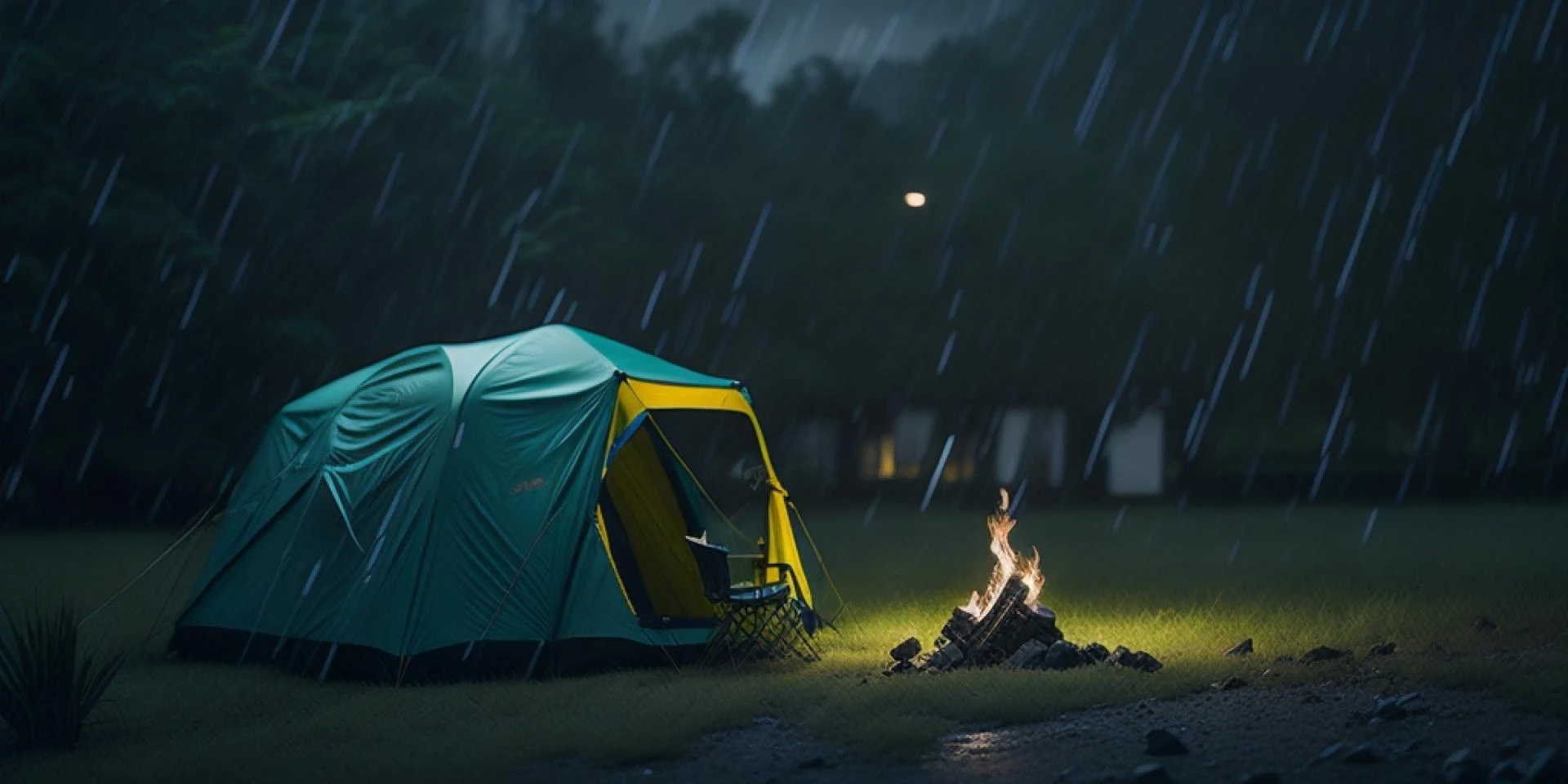

Camping in the rain can present some challenges, but with the right preparation and mindset, it can still be an enjoyable experience. Here are some tips and guidelines to help you make the most of camping in wet weather:
Choose the right campsite: When selecting your campsite, look for areas that offer natural shelter, such as under trees or near rock formations. Avoid low-lying areas or spots that could potentially flood. Ensure your tent pitched on higher ground to prevent water from pooling around it.
Set up your tent properly:
Make sure your tent is properly waterproof and has a rainfly. Before your trip, practice setting up your tent in dry conditions to become familiar with the process. Ensure that the rainfly is securely attach and covers the entire tent to provide maximum protection from the rain.
Use a groundsheet or tarp: Place a groundsheet or tarp underneath your tent to provide an extra layer of protection against moisture from the ground. Make sure the edges of the groundsheet or tarp folded up slightly to prevent rainwater from seeping underneath.
Stay organized and keep gear dry: Use waterproof stuff sacks or dry bags to store your clothing, gear, and other essentials inside your tent. Keep items off the ground by using elevated platforms or hanging storage solutions. Consider using a separate tarp or canopy to create a dry area outside the tent where you can store wet gear or take off wet clothing.
Stay dry with proper clothing: Wear appropriate rain gear, including a waterproof jacket, pants, and waterproof boots. Pack extra layers of clothing, as wet clothing can make you feel cold. Avoid wearing cotton, as it retains moisture and takes longer to dry. Opt for quick-drying and moisture-wicking materials instead.
Create a sheltered outdoor area:
Set up a tarp or canopy adjacent to your tent to create a covered space where you can cook, eat, or relax without getting wet. Use guy lines and stakes to secure the tarp properly, ensuring that it is pitched at an angle to allow rainwater to run off.
Ventilate your tent: Condensation can be a challenge when camping in wet conditions. Keep your tent properly ventilated by opening vents or slightly cracking the tent door. This will help reduce moisture buildup inside the tent.
Plan indoor activities: Prepare for the possibility of spending more time inside the tent due to the rain. Pack some entertainment options such as books, card games, or board games to keep yourself occupied during inclement weather.
Stay safe: Be cautious of potential hazards during wet weather, such as slippery trails and falling branches. Avoid camping near rivers or streams that may rise due to heavy rain. Keep an eye on weather forecasts and be prepared to adjust your plans accordingly.
Maintain a positive attitude: Embrace the experience and stay positive even if the weather is not ideal. Remember that camping in the rain can offer a unique and peaceful atmosphere, with fewer crowds and stunning views of nature in its rainy glory.
Remember to always prioritize safety and make informed decisions based on the conditions and your level of experience. By being prepared, flexible, and maintaining a positive mindset, camping in the rain can still be a memorable and enjoyable adventure.
Do's and Don'ts during Camping in the rain
Do's
Do research and plan ahead: Choose your camping destination, check for any required permits, make reservations if necessary, and familiarize yourself with the rules and regulations of the area. Do pack appropriately: Bring essential camping gear such as a tent, sleeping bag, cooking equipment, food, water, appropriate clothing, first aid kit, and any other necessary items based on your specific needs and the nature of your camping trip. Do inform others: Let someone know about your camping plans, including the location, duration, and expected return date. This is important for safety purposes and to ensure someone is aware of your whereabouts. Do practice Leave No Trace principles: Minimize your impact on the environment by packing out all your trash, leaving natural items where you found them, and respecting wildlife and their habitats. Do follow campsite rules: Observe any rules and regulations set by the campsite or park management. This includes guidelines on campfires, noise levels, waste disposal, and any specific activities or areas that may be restricted. Do prioritize safety: Take necessary precautions to ensure your safety and the safety of others. This includes setting up your tent properly, using fire safety measures, being aware of potential hazards, and having a basic understanding of first aid. Do respect other campers: Be considerate of other campers by keeping noise levels reasonable, maintaining a clean campsite, and respecting their privacy and space.
Don'ts:
Don't leave a mess: Always clean up after yourself and leave your campsite in the same or better condition than you found it. Dispose of trash properly and avoid littering. Don't disturb wildlife: Enjoy observing wildlife from a safe distance without feeding or approaching them. Respect their natural behaviors and habitats. Don't ignore fire safety: Follow fire safety guidelines and regulations. Ensure campfires are properly extinguished before leaving your campsite or going to sleep. Never leave a fire unattended. Don't trespass or camp in unauthorized areas: Respect private property and only camp in designated camping areas or public lands where camping is allowed. Don't forget to check the weather: Stay informed about weather conditions before and during your camping trip. Be prepared for changing weather and adjust your plans accordingly. Don't rely solely on technology: While technology can be helpful, don't solely rely on it for navigation or safety. Bring physical maps, a compass, and other essential tools as a backup. Don't overpack or bring unnecessary items: Pack efficiently and avoid bringing unnecessary items that can add unnecessary weight or take up valuable space in your camping gear.
By following these do's and don'ts, you can ensure a safe, enjoyable, and responsible camping experience for yourself and others around you.









Sign in to leave a comment.