

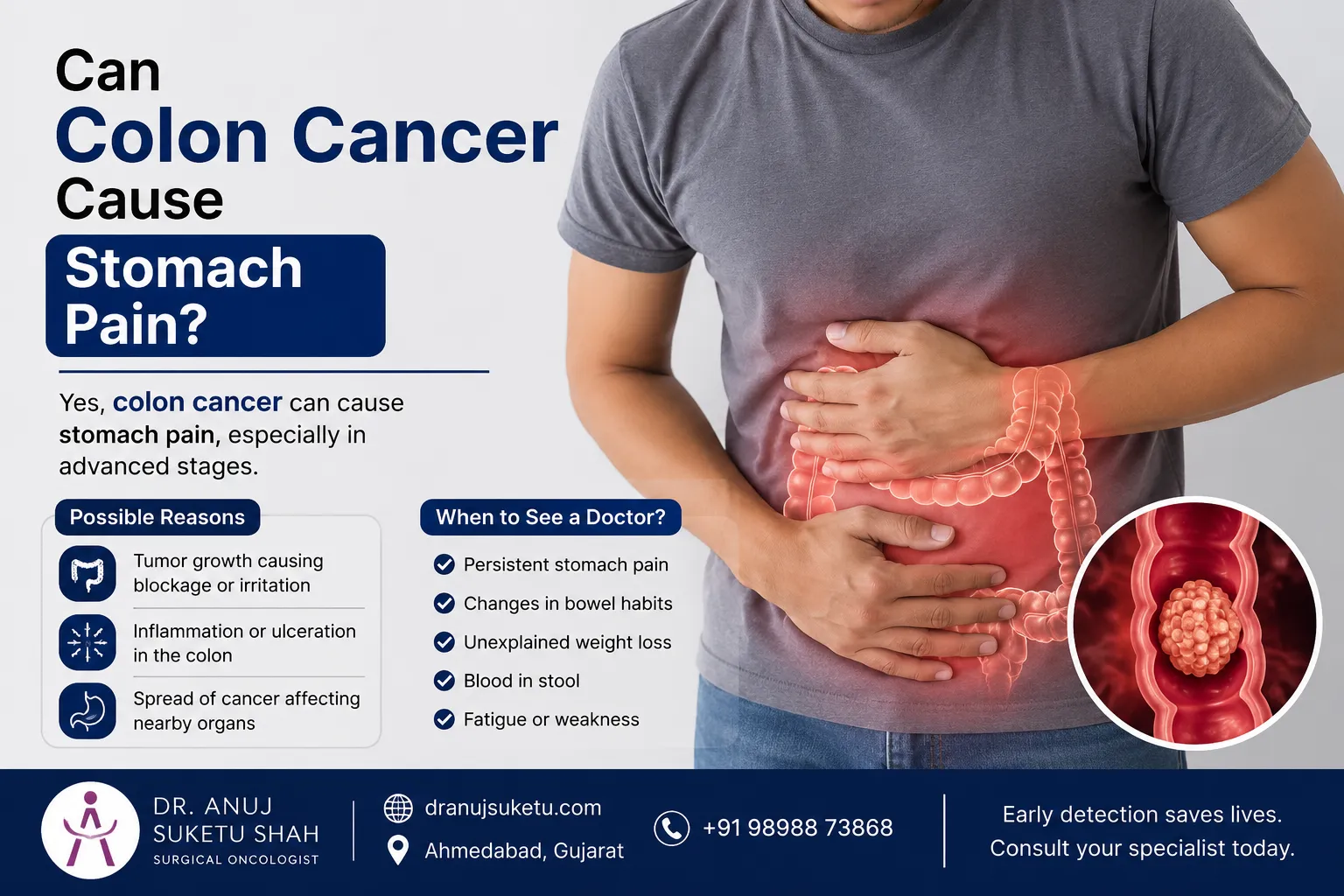
A dull ache in your stomach is easy to shrug off. Most of the time, it's just gas, stress, or something you ate. But when the pain lingers for weeks or keeps coming back, it's natural to start wondering if something more serious is going on. This is one of the most common concerns patients bring to my clinic: can colon cancer really cause stomach pain?
The short answer is yes, it can. But stomach pain by itself rarely means cancer. Learning to tell the difference between everyday discomfort and genuine warning signs can help you know when it's time to get checked, and when it's safe to simply wait it out.
How Does Colon Cancer Actually Cause Abdominal Pain?
As a tumor grows inside the colon, it can gradually narrow the passage where stool and gas move through. This narrowing leads to cramping, bloating, and pain that often feels different from an ordinary stomachache. Some patients describe a constant pressure. Others notice sharp cramps that come in waves.
Where the pain shows up often depends on where the tumor is sitting.
- Right-sided colon cancer tends to cause a dull, vague ache, along with fatigue and unexplained weight loss.
- Left-sided colon cancer usually brings cramping pain, paired with visible changes in bowel habits.
- Rectal tumors can create a sensation of incomplete emptying, along with lower abdominal discomfort.
What Other Symptoms Deserve Your Attention?
Stomach pain rarely shows up alone when colon cancer is the cause. It's worth paying closer attention if the pain comes along with:
- Blood in the stool, or stools that look darker than usual
- A noticeable change in bowel habits lasting more than two weeks
- Unexplained weight loss
- Ongoing tiredness that doesn't improve with rest
- A feeling that the bowel hasn't fully emptied
None of these symptoms confirm cancer on their own. Conditions like IBS, ulcers, and infections cause similar complaints far more often. Still, when several of these signs appear together, it's better to get checked than to wait and hope it passes.
When Should You See a Doctor?
If stomach pain lasts more than two to three weeks, or keeps returning without a clear reason, don't wait for it to sort itself out. This matters even more if you're over 45, have a family history of colon cancer, or have already noticed a shift in your bowel patterns.
Early evaluation genuinely changes outcomes. Colon cancer caught early is highly treatable, and a simple colonoscopy can spot problems long before they turn serious.
What Does Colon Cancer Treatment Usually Involve?
Every treatment plan looks a little different, shaped by the stage and location of the tumor. In general, it may include surgery to remove the affected part of the colon, chemotherapy to target any remaining cancer cells, or a combination of both. Patients exploring colon cancer treatment in Ahmedabad today have access to advanced diagnostic tools and minimally invasive surgical options that support quicker recovery and better long-term results.
The Bottom Line: Don't Ignore Stomach Pain That Won't Go Away
Stomach pain is common, and most of the time it's harmless. But pain that persists or comes with other warning signs deserves attention, not dismissal. Listening to your body and acting early can make a real difference to your outcome.
If you or someone you love has ongoing abdominal pain along with any of the symptoms above, don't hesitate to seek expert advice. Dr. Anuj Suketu Shah, a trusted surgical oncologist in Ahmedabad, focuses on early diagnosis and personalized colon cancer treatment in Ahmedabad, helping patients move forward with clarity, confidence, and the right care plan.



















Sign in to leave a comment.