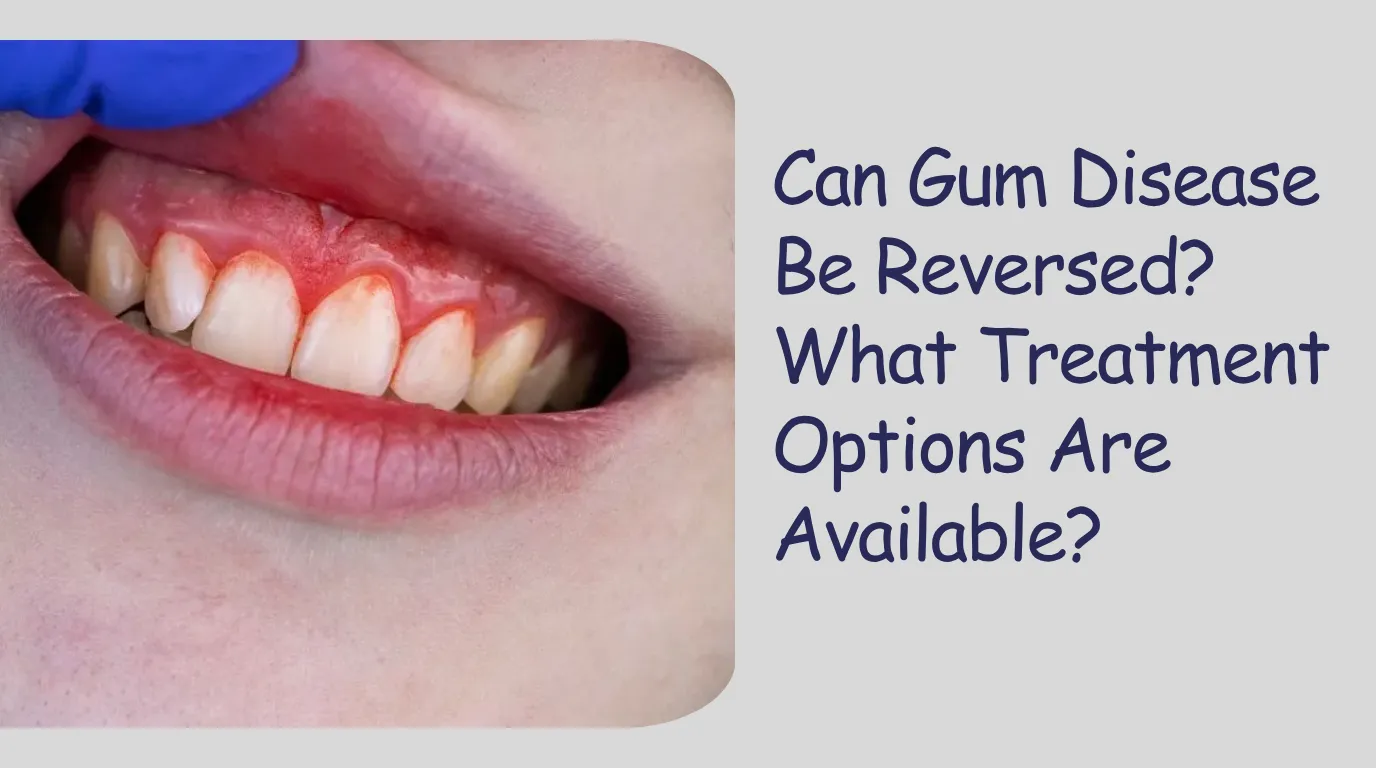

Most people don't realise they have gum disease until a dentist points it out. There's no dramatic moment just gums that bleed a little when you floss, maybe some puffiness you've been quietly ignoring for months. By the time it becomes uncomfortable, the condition has often been brewing for a while.
So yes, gum disease is more common than most people think.
And the question we hear constantly is: can it actually be fixed?
The short answer is it depends on how far along it is.
Gingivitis vs Periodontitis: Why the Difference Matters
| Gingivitis Early stage | Periodontitis Advanced stage | ||
| What it is | Inflammation of the gums a warning sign your body is reacting to plaque buildup. | A deeper infection that spreads below the gumline and attacks the bone structure holding your teeth in place. | |
| What causes it | Plaque and tartar buildup along the gumline that isn't removed properly. | Untreated gingivitis that progresses over time. | |
| Bone affected? | No, bone and connective tissue are still intact. | Yes, bone loss begins and can worsen without treatment. | |
| Common symptoms | Red or puffy gums, bleeding when brushing or flossing, mild tenderness. | Receding gums, loose teeth, deep gum pockets, persistent bad breath, possible pain. | |
| Can it be reversed? | Yes, fully reversible with professional cleaning and improved home care. | Not fully reversible, bone loss can't be regrown, but the disease can absolutely be stopped and controlled. | |
| Treatment goal | Complete reversal, restore gums to full health. | Halt progression , stop further damage and manage long-term | |
| Typical treatment | Professional scale and clean + better brushing and flossing at home. | Deep cleaning (root planing), antibiotics, possibly surgery, ongoing maintenance every 3–4 months. | |
| Long-term outlook | Excellent, most patients recover completely with no lasting damage. | Very good, patients who commit to treatment and maintenance keep their teeth for life. | |
What Gum Disease Treatment Actually Involves
There's no single treatment what your dentist recommends depends entirely on how advanced the disease is.
For gingivitis, a professional scale and clean is often enough. A dental hygienist removes the hardened tartar that your toothbrush was never going to reach, and with better brushing and flossing habits at home, most patients see real improvement within weeks.
For deeper infection, root planing is the next step. This is a more involved clean that goes beneath the gumline to clear bacteria from the root surface itself. It's done under local anaesthetic, usually across a couple of appointments, and it's remarkably effective when done early enough.
In some cases, your dentist may also use antimicrobial gels placed directly into the gum pockets, or a short antibiotic course alongside the deep clean particularly if certain bacteria aren't responding to mechanical cleaning alone.
Surgical options exist for advanced periodontitis. Flap surgery gives the dentist direct access to areas that simply can't be properly cleaned any other way. Bone and gum grafts are sometimes used to restore what's been lost.
And then importantly there's the maintenance phase. Every three to four months, back in the chair. It's not optional if you want to hold onto the results.
What You Can Control at Home
Honest truth: no treatment works long-term without decent home care. That means brushing properly twice a day, flossing daily (not just when you remember), and not smoking smoking actively impairs gum healing in ways that make treatment far less effective.
Worth Getting Checked Sooner Rather Than Later
The frustrating thing about gum disease is that the early stages often don't hurt. People put it off. But dentists in Greensborough consistently say the same thing catching it at the gingivitis stage is a completely different conversation to catching it at the periodontitis stage. One appointment and a change in habits versus months of treatment and ongoing management.
If your gums bleed, feel tender, or your breath hasn't been great lately that's your cue.
Frequently Asked Questions
What are the first signs of gum disease I should watch for?
Bleeding when you brush or floss is the most common early sign and it's one people tend to normalise when they shouldn't. Gums that look darker red than usual, feel swollen, or seem to be pulling away from the teeth are also warning signs. Persistent bad breath that doesn't clear up with brushing can be another indicator.
Is gum disease treatment uncomfortable?
The cleaning itself is done under local anaesthetic, so most patients feel pressure rather than pain. Afterwards, your gums might be a bit sensitive for a few days completely normal. Over-the-counter pain relief usually handles it fine.
Once treated, can it come back?
It can. Periodontitis especially requires ongoing management not because treatment fails, but because the bacteria are always there. Regular maintenance visits keep them under control. Skipping those appointments is one of the most common reasons people end up needing retreatment.
How many appointments does treatment take?
It varies. A routine scale and clean is one appointment. A full course of root planing might take two to four visits over a few weeks. More complex cases involving surgery take longer with healing time in between. Your dentist will map out a realistic timeline after your initial assessment.
Is gum disease connected to anything beyond dental health?
There's growing evidence linking periodontal disease to conditions like type 2 diabetes, cardiovascular disease, and respiratory issues. The association is consistent enough that treating gum disease is increasingly seen as part of broader health management not just a dental issue.





























Sign in to leave a comment.