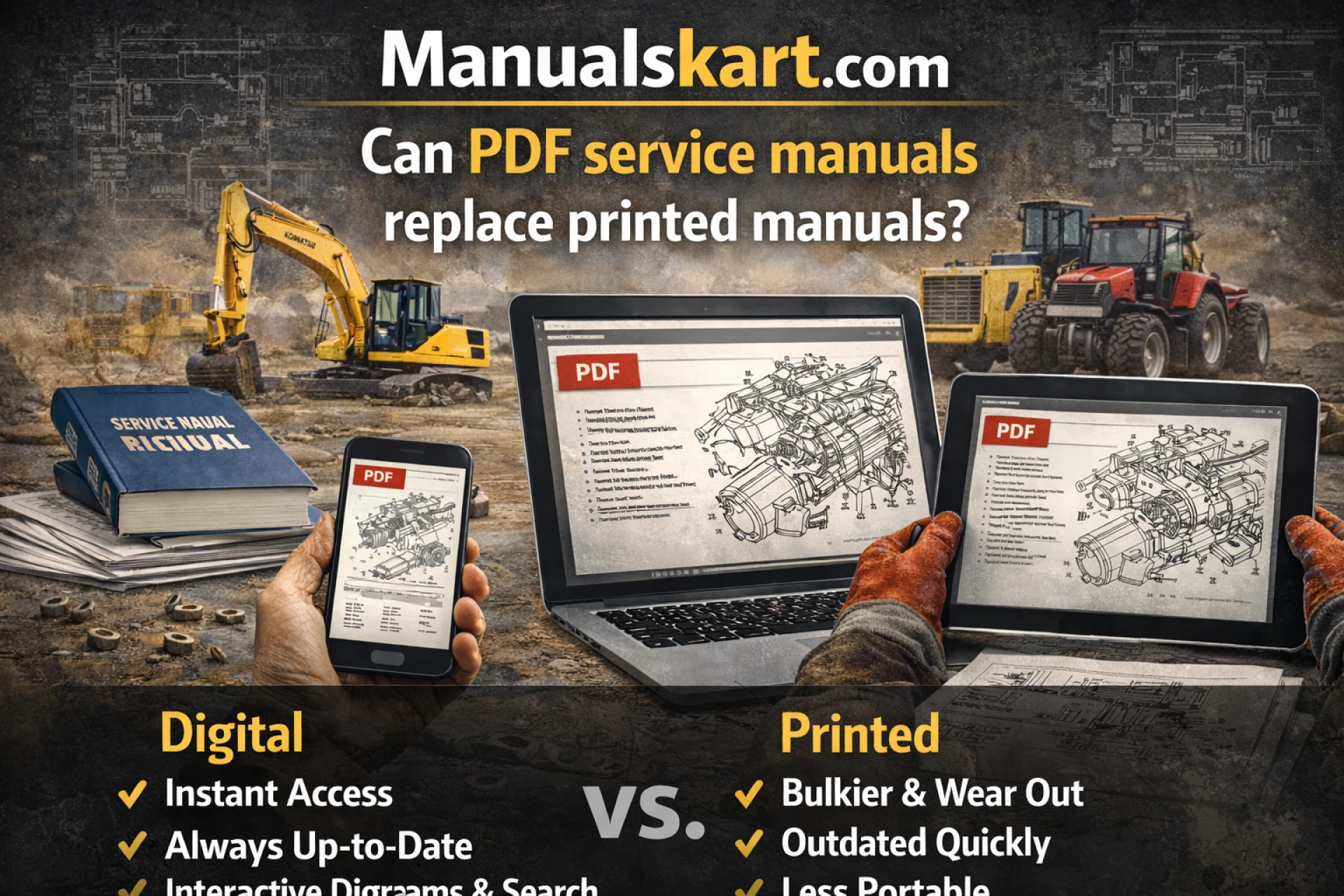
In the world of heavy equipment maintenance, the debate over whether PDF service manuals can replace printed manuals is heating up. As mechanics, owners, and enthusiasts of brands like Caterpillar, John Deere, and Komatsu increasingly turn to digital solutions, it's worth exploring this shift. PDF service manuals offer detailed diagrams, repair instructions, and parts catalogs in a downloadable format, making them a convenient alternative to traditional paper versions. But can they truly take the place of printed manuals? This blog post dives into the pros, cons, and practical considerations, tailored for those working with heavy machinery. We'll examine accessibility, cost savings, and real-world applications to help you decide what's best for your needs. With technology advancing, many are finding PDFs not only sufficient but superior in many ways, especially for on-the-go troubleshooting.
Table of Contents
- What Are the Key Differences Between PDF and Printed Service Manuals?
- What Are the Advantages of Using PDF Service Manuals?
- What Are the Disadvantages of PDF Service Manuals?
- In What Scenarios Might Printed Manuals Still Be Preferable?
- How Can You Transition from Printed to PDF Manuals Smoothly?
- Where Can You Find Reliable PDF Service Manuals for Heavy Equipment?
- Conclusion
- FAQ
What Are the Key Differences Between PDF and Printed Service Manuals?
Service manuals are essential tools for heavy equipment mechanics and owners, providing step-by-step guidance on repairs, maintenance, and operations. But PDF and printed versions differ in format, usability, and features. Let's break it down.
Format and Delivery
- PDF Manuals: These are digital files you can download instantly from websites or receive via email. They're viewable on computers, tablets, or smartphones using free software like Adobe Reader.
- Printed Manuals: Physical books or booklets, often bound and shipped, requiring storage space and potentially longer wait times for delivery.
Searchability and Navigation
PDFs shine with built-in search functions, allowing you to type keywords like "hydraulic system repair" and jump directly to relevant sections. Printed manuals rely on indexes and tabs, which can be slower for complex queries.
Updates and Revisions
Digital PDFs can be updated easily by manufacturers, ensuring you have the latest information without buying a new copy. Printed versions become outdated quickly, as new models or fixes aren't reflected until a reprint.
In short, PDFs prioritize convenience and modernity, while printed manuals offer a tactile, no-tech-needed experience. For heavy equipment enthusiasts, understanding these differences helps in choosing the right tool for the job.
What Are the Advantages of Using PDF Service Manuals?
PDF service manuals bring a host of benefits that make them appealing for heavy equipment work. Here's a step-by-step look at why they're gaining popularity.
Portability and Accessibility
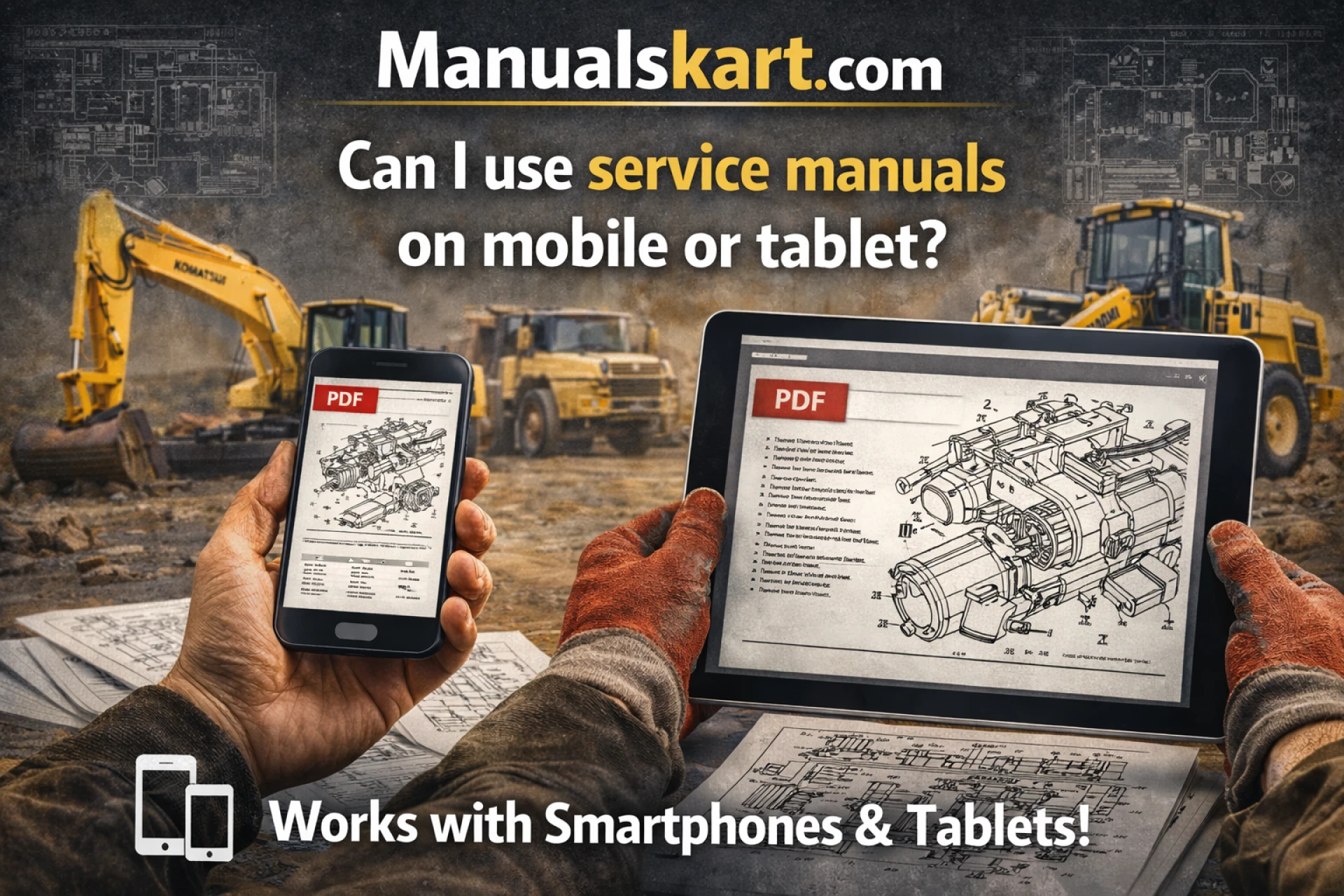
Gone are the days of lugging heavy binders to the job site. PDFs fit on your phone or tablet, accessible anywhere—even in remote fields or workshops without electricity.
- Download once and access offline.
- Share easily with team members via email or cloud storage.
- Ideal for owners of multiple machines, like a fleet of Volvo excavators.
Cost-Effectiveness
Printed manuals can cost hundreds due to printing and shipping. PDFs are often cheaper or even free in some cases, with no recurring fees for physical replacements.
- Save on storage: No need for shelves full of bulky books.
- Eco-friendly: Reduces paper waste, appealing to environmentally conscious mechanics.
Enhanced Features for Efficiency
Modern PDFs include hyperlinks, zoomable diagrams, and annotations.
- Search for specific error codes in seconds.
- Integrate with apps for augmented reality overlays on parts.
- For brands like Komatsu, detailed wiring schematics are clearer in digital zoom.
Overall, these advantages make PDFs a strong contender for replacing printed manuals, especially for tech-savvy users who value speed and flexibility.
What Are the Disadvantages of PDF Service Manuals?
While PDFs offer many upsides, they're not perfect. Let's explore the drawbacks in a balanced way.
Dependency on Technology
You need a device and power source to view PDFs. In dusty, oily workshops, screens can get dirty or damaged, making reading tough.
- Battery life issues during long repair sessions.
- Potential for file corruption or compatibility problems with older software.
Lack of Tactile Experience
Many mechanics prefer flipping pages physically. Printed manuals allow for quick annotations with a pen and don't strain your eyes like screens do.
- Harder to multitask: Holding a tablet while wrenching can be awkward.
- No "feel" for the manual's weight or easy bookmarking with dog-ears.
Security and Sharing Concerns
Digital files can be pirated or shared illegally, raising legal issues.
- Risk of viruses from untrusted downloads.
- Manufacturers might restrict updates to paid subscribers.
Despite these cons, for most heavy equipment tasks, workarounds like printing select pages can mitigate issues.
In What Scenarios Might Printed Manuals Still Be Preferable?
Even in a digital world, printed manuals have their place. Consider these situations step by step.
Harsh Environments
In extreme conditions—like rainy construction sites or high-vibration machinery—paper holds up better than electronics.
- Water-resistant covers protect against spills.
- No glare from sunlight on screens.
Training and Team Use
For group sessions or apprenticeships, a shared printed manual fosters collaboration.
- Easier to point and discuss diagrams hands-on.
- Examples: Teaching Case IH tractor repairs to new mechanics.
Personal Preference and Reliability
Older enthusiasts might favor the familiarity of print.
- Always available without tech failures.
- Collectible value for vintage equipment like old New Holland models.
Printed manuals aren't obsolete; they're ideal when reliability trumps convenience.
How Can You Transition from Printed to PDF Manuals Smoothly?
Switching doesn't have to be daunting. Follow this step-by-step guide.
Step 1: Assess Your Needs
Inventory your current manuals and identify which can be digitized. Scan important pages if needed.
Step 2: Choose Reliable Sources
Look for official or trusted vendors offering PDFs for brands like JCB or Hitachi.
Step 3: Organize Digitally
Use folders or apps like Evernote to categorize files by machine type.
- Backup to cloud services.
- Test search functions on sample files.
Step 4: Hybrid Approach
Print key sections for fieldwork while keeping the full PDF for reference.
- Gradually phase out prints as you adapt.
This transition can save time and money for heavy equipment owners.
Where Can You Find Reliable PDF Service Manuals for Heavy Equipment?
Finding quality PDFs is key to a successful switch. Reputable sites offer comprehensive collections for various brands.
For instance, if you're working on Caterpillar machinery, explore high-quality Caterpillar PDF manuals that include service, repair, and parts catalogs. Similarly, for Komatsu equipment, check out dedicated Komatsu PDF manuals.
Other options include manufacturer websites or specialized platforms, but ensure they're authorized to avoid fakes. Always verify compatibility with your model.
Conclusion
In summary, PDF service manuals can indeed replace printed manuals for many heavy equipment mechanics, owners, and enthusiasts. They offer unmatched portability, searchability, and cost savings, though printed versions excel in tactile reliability and harsh conditions. By weighing the pros and cons, you can decide what's best for your workflow—perhaps a hybrid approach. If you're ready to embrace digital efficiency, start exploring affordable PDF options today. For a vast selection of manuals for brands like Case, Volvo, and more, visit Manualskart.com and elevate your maintenance game with detailed, downloadable resources.
FAQ
Are PDF service manuals as detailed as printed ones?
Yes, they often include the same content, with added features like hyperlinks and zoomable images for better clarity.
Can I print a PDF manual if I prefer paper?
Absolutely! Most PDFs are printable, allowing you to create custom hard copies of specific sections.
Do PDF manuals get updated automatically?
Not always, but many vendors provide revision notifications, and digital formats make updates easier to apply than reprints.
Are there legal issues with downloading PDF manuals?
Stick to legitimate sources to avoid copyright violations. Authorized sellers ensure you're getting accurate, legal files.
How do PDFs help with heavy equipment diagnostics?
With searchable text and clear diagrams, they speed up troubleshooting, especially for complex systems in machines like Kubota tractors.
Sign in to leave a comment.