When a baby comes home, a lot of small things start becoming part of the routine without much planning. Baby powder is often one of them. It just stays nearby after bath time, and at some point, parents begin using it almost automatically, especially on areas like the neck or underarms where the skin tends to stay a little moist.
Most people don’t really stop to question it in the beginning. It feels like something that helps, and it’s also something they’ve seen being done around them for years. So it continues in the same way, becoming part of daily care before anyone really thinks too much about it.
With time, this step becomes so familiar that it is rarely questioned, especially during warmer months when moisture tends to build up quickly and can make babies uneasy. At the same time, things have started to change a little in recent years, as more parents are paying closer attention to what goes onto their baby’s skin and whether those long-followed habits are actually the safest choice.
What is a talc free baby powder
A talc free powder is essentially a type of traditional baby powder that does not use talc as its base ingredient. Instead, it is made using alternatives such as corn starch or other plant-derived ingredients that help manage moisture while still feeling gentle on delicate skin.
Even though the base ingredient changes, the purpose of the powder stays quite similar. It is still used in areas where moisture tends to collect, such as the diaper area, neck folds, or underarms, helping the skin feel drier and more at ease during the day.
Many parents today choose talc free options because the ingredient list feels easier to understand and is way more familiar. It is not necessarily about completely changing what they have always done but about making small adjustments that feel more reassuring for their baby’s skin.
Does talc free powder help with diaper rash
Keeping the area dry does tend to help in managing this, and this is where talc-free powder can play a role. By absorbing extra moisture, it can make the skin feel less damp and more comfortable, particularly when used in small amounts during regular diaper care routines.
At the same time, diaper rash creams can also be helpful, as they create a protective barrier on the skin and support it while it recovers from irritation. Many parents find that using a combination of both - powder for moisture control and cream for protection, works well as part of a balanced care routine.
However, it is not a complete solution on its own. Regular diaper changes, gentle cleaning, and allowing the skin some time to breathe remain equally important. On days when the rash looks more noticeable, relying only on powder usually does not feel sufficient.
So, rather than being a complete solution, it becomes one part of a larger care routine that helps keep the skin comfortable and cared for.
Talc vs cornstarch: which feels more suitable
The comparison between talc and cornstarch often comes up as parents explore different baby care options. While talc has been used for many years, growing awareness has led many families to consider plant-based alternatives like cornstarch.
Cornstarch is plant-based and is often preferred for its light, breathable feel on the skin. It helps absorb excess moisture without creating a heavy layer, allowing the skin to stay more comfortable, especially in areas like the diaper region.
Another reason many parents lean towards cornstarch-based powders is their natural absorbency. They tend to keep the skin feeling dry while still allowing it to breathe, which can be helpful during daily use.
Talc, on the other hand, is a mineral-based ingredient that has traditionally been used for moisture control. However, some parents today prefer lighter, plant-derived options that feel gentler on delicate skin.
While both options are used, cornstarch-based powders are increasingly chosen for their breathable texture and everyday comfort, especially for regular baby care routines.
What parents usually look for in a baby powder
When choosing a talc free baby powder, most parents are not necessarily looking for something complex or feature-heavy. They're usually more concerned with how it performs in practice and whether it seamlessly integrates into their daily lives.
They may notice if the powder spreads smoothly, whether it feels light or slightly heavy on the skin, and whether the fragrance is mild enough for regular application. Over time, these small observations tend to matter more than anything else.
Ingredients also start to influence decisions more strongly. Powders made with familiar components like corn starch, oats, chamomile oil, aloe vera, jojoba oil, marigold seed oil, and oat kernels are often preferred because they feel simpler and easier to trust.
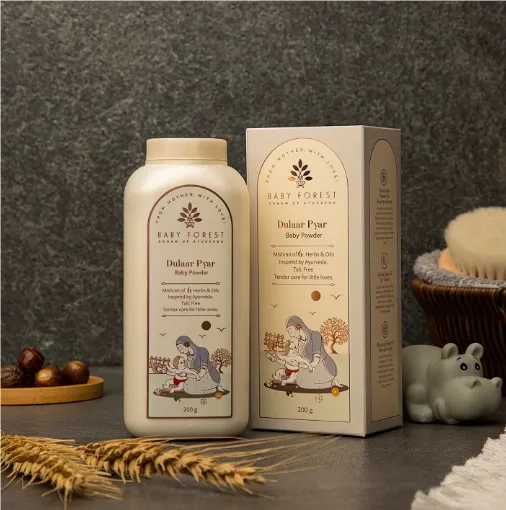
Products like Dulaar Pyar talc-free baby powder follow this approach, offering a gentle formulation that feels light on the skin and can be used regularly with ease.
How baby powder fits into everyday routines
In most cases, baby powder is used in small amounts rather than as a heavy application. Parents often take a little powder onto their palm first and then apply it gently, which gives them better control and avoids overuse.
It is usually applied after bath time or during diaper changes, depending on what feels necessary at the moment. While it may not be used every single time, it often remains a consistent part of the routine.
At times, infants may become restless and resist staying still during caregiving routines, which can lead to even simple tasks being done in a hurry. As a result, parents often focus on keeping the process gentle and manageable rather than aiming for perfection.
Conclusion
Whether it helps or not is not always something parents can answer immediately. In some cases, it does seem to make the skin feel a little drier and more comfortable, especially in areas where moisture tends to stay for longer. But it is also not something that works on its own or shows a very quick difference.
Most parents figure this out gradually. Powder may help in keeping the area less damp, but they usually continue with other small habits as well, like changing diapers more often or letting the skin stay uncovered for a while when possible. It is often a combination of these things that seems to work better rather than relying on just one product.
Over time, baby powder continues to become part of the routine in many homes, but not in the same obvious way as before. It is still used, just with a little more awareness and a bit more care around how and when it fits into the day.


























Sign in to leave a comment.