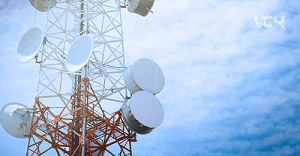

The progression of smart grids has been a game changing step towards achieving sustainable and efficient energy distribution in emerging suburbs, towns and cities. As urban development gravitates towards more intelligent infrastructure, the synergy between smart grids and telecommunication, particularly through the Internet of Things (IoT), becomes increasingly significant and very interesting. This blog looks at the unique relationship between smart grids and telecom IoT, exploring how this combination boosts the performance, dependability, and environmental friendliness of modern energy systems.
Understanding Smart Grids
So what are smart grids? Great question! Smart grids refer to electricity networks that utilize digital communication technology to detect and react to local changes in usage. Unlike traditional grids, smart grids are designed to be more flexible, reliable, and efficient by incorporating advanced sensors, meters, and data analytics. These technologies facilitate real-time monitoring, improved energy distribution, and quicker restoration of power after disturbances.
Key Components of Smart Grids
Smart grids, due to their extensive nature, are made up of several key components. Featured in this blog are 7 of them which we unpack in more detail, looking at both their descriptions and functionalities. These components collectively enhance the functionality, efficiency, and sustainability of modern electrical grids, ensuring a reliable and resilient energy supply for the future.
Smart MetersDescription: Devices that record energy consumption in real-time and communicate this information back to the utility for monitoring and billing purposes.
Functions:
Real-time data collection.Two-way communication between the utility and consumers.Enhanced billing accuracy and customer service.Enable demand response and dynamic pricing.Advanced SensorsDescription: These include Phasor Measurement Units (PMUs) that provide real-time monitoring of electrical waves, improving grid stability and reliability.
Functions:
Real-time monitoring of voltage and current.Enhance grid stability and reliability.Facilitate fault detection and isolation.Improve the efficiency of grid operations through detailed data analysis.Distributed Energy Resources (DERs)Description: Integration of renewable energy sources like solar panels and wind turbines into the grid.
Functions:
Diversification of energy supply.Reduction of greenhouse gas emissions.Enhanced grid resilience and reliability.Support for local energy generation and consumption.Energy Storage SystemsDescription: Technologies such as batteries that store excess energy generated for use during peak demand times.
Functions:
Balancing supply and demand.Enhancing grid stability by providing backup power.Enabling the integration of intermittent renewable energy sources.Reducing the need for peaking power plants.Advanced Metering Infrastructure (AMI)Description: The entire system that includes smart meters, communication networks, and data management systems.
Functions:
Supports the deployment and operation of smart meters.Ensures secure data transmission and storage.Provides utilities with detailed consumption data.Enhances customer engagement and energy efficiency programs.Communication NetworksDescription: Networks that facilitate data transfer between various grid components and the utility.
Types:
Wide Area Networks (WAN): Cover large geographical areas for utility communication.Local Area Networks (LAN): Connect devices within localized areas such as substations.Home Area Networks (HAN): Connect smart devices within homes.Functions:
Enable real-time data exchange.Support remote monitoring and control.Facilitate coordination between distributed resources.Grid Management SoftwareDescription: Software systems that monitor, control, and optimize grid operations.
Components:
SCADA Systems: Supervisory control and data acquisition systems for monitoring and controlling grid operations.Distribution Management Systems (DMS): Manage the distribution network and optimize grid performance.Functions:
Real-time monitoring and control.Enhance operational efficiency.Improve fault detection and response times.How do Telecom and Smart Grids relate to each other?
The telecommunication functionality within a smart grid is the highway which unlocks all the key messaging each component needs in order to function correctly and at the right time. Telecommunication becomes crucial. Without telecommunication integrated into the smart grid system, the smart grid system is not able to achieve all of its functionalities and associated benefits. Here is an in-depth look at the role of telecom in smart grids:
Enhancing Communication - Telecommunication networks are the backbone of smart grids, providing the necessary communication channels for data transmission between various grid components. The integration of IoT in telecom enhances this capability by enabling seamless, real-time communication and control.Data Management and Analytics - The vast amount of data generated by smart grids requires robust data management and analytics solutions. Telecom IoT facilitates this by providing platforms for big data analytics, machine learning, and artificial intelligence, which are crucial for predictive maintenance, demand forecasting, and anomaly detection.Reliability and Resilience - Telecom networks contribute to the reliability and resilience of smart grids by ensuring continuous communication, even in adverse conditions. Technologies such as 5G provide low-latency, high-reliability connections that are essential for real-time grid management.Case Studies: IoT and Smart Grids in Action
Enel's Smart Grid Initiative - Enel, an Italian multinational energy company, has implemented one of the largest smart grid projects in Europe. With over 30 million smart meters deployed, Enel leverages IoT to enhance grid efficiency and customer service. Real-time data from smart meters allows Enel to manage energy distribution effectively, reduce losses, and improve grid reliability. Read more about Enel’s project here - https://www.enel.com/
State Grid Corporation of China - The State Grid Corporation of China (SGCC) has integrated over 1.1 billion IoT-connected devices into its network. This extensive IoT deployment enables SGCC to monitor and control its grid with high precision, enhancing demand response, reducing outages, and improving the integration of renewable energy sources. Learn more about SGCC’s initiatives - http://www.sgcc.com.cn/
VC4's Contribution to Telecom IoT in Smart Grids
Incorporating IoT into smart grids is not just a technological advancement but a necessity for modern energy management. The synergy between telecom and IoT paves the way for a more intelligent, responsive, and sustainable power infrastructure. This dynamic relationship ensures that our grids are prepared to meet the challenges of the future, providing reliable and efficient energy for all.
VC4's Inventory Management System (IMS) is a comprehensive solution that supports the integration of telecom and IoT in smart grids. By providing a unified view of all network assets and enabling real-time data synchronization, VC4-IMS enhances the management and operation of smart grids. Check more out on our video link: https://www.youtube.com/watch?v=L2mRy8CoRRM










Sign in to leave a comment.