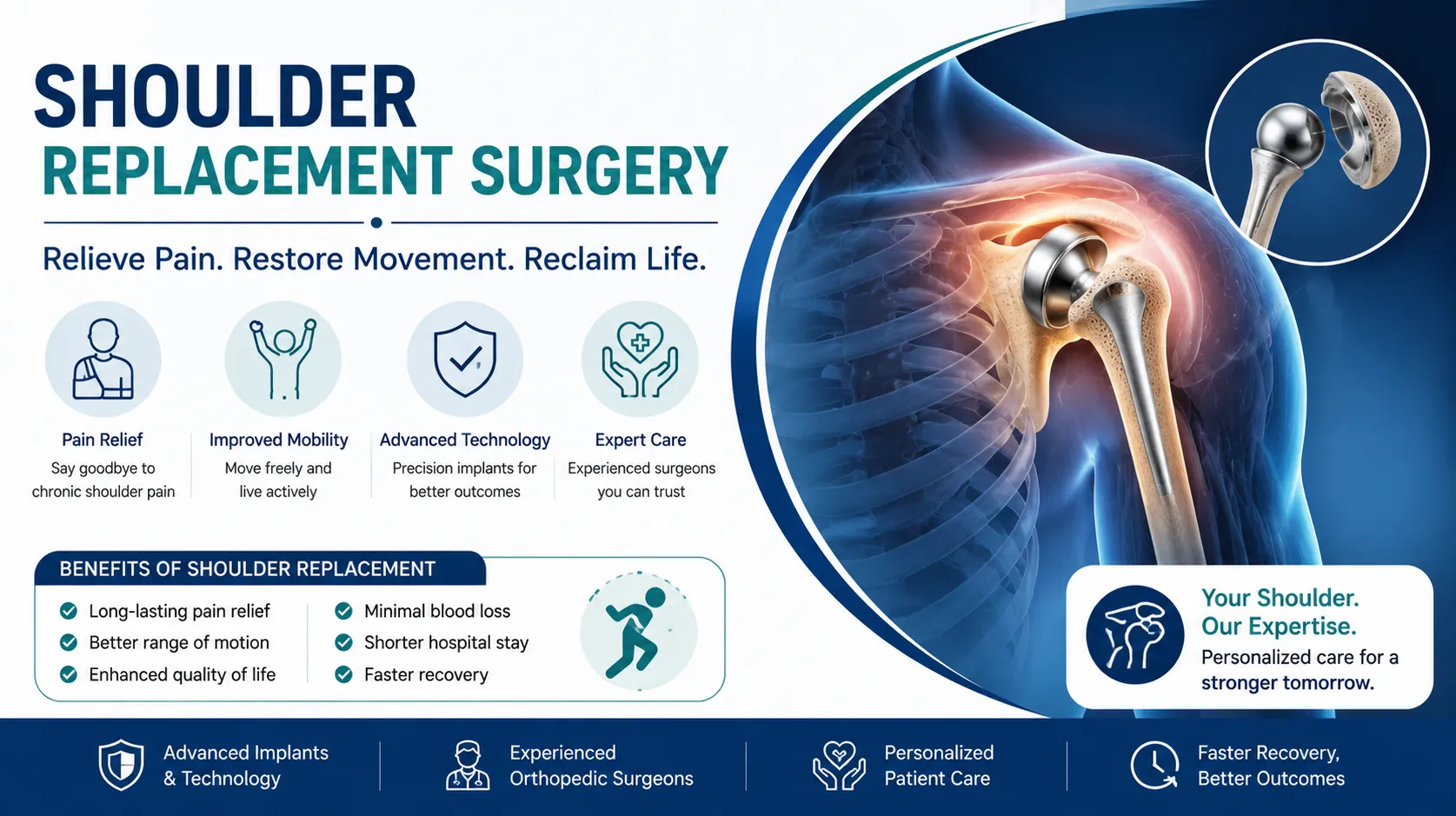

If you've been living with a stiff, painful shoulder for a while, this is probably the question on your mind: will you actually get your arm movement back? It's one of the first things patients ask before shoulder replacement surgery in Ahmedabad, and it's a completely fair question. After all, what's the point of surgery if you still can't reach the top shelf or brush your own hair afterward?
The good news is that most patients do regain a solid, practical range of motion after surgery. It may not look exactly like it did at twenty-five, but for daily life — dressing, cooking, driving, sleeping without pain — the results are usually life-changing. Let's look at what actually decides how much movement you'll get back.
What Limits Shoulder Movement Before Surgery?
Before talking about recovery, it helps to understand why the shoulder stops moving freely in the first place.
- Cartilage wears away with arthritis, leaving bone rubbing against bone
- The joint capsule tightens and becomes stiff from lack of use
- Old rotator cuff tears change how the shoulder blade and arm bone work together
- Bone spurs can form and physically block the joint from moving
- Pain itself causes people to avoid movement, which makes stiffness worse over time
This combination is why so many patients arrive at the clinic barely able to lift their arm past waist height.
What Are the Signs Your Shoulder Movement Is Already Affected?
You don't need an X-ray to know something is wrong. Watch for:
- Difficulty raising your arm overhead or reaching behind your back
- Needing help to put on a jacket or fasten a bra
- A grinding or catching feeling when you move your shoulder
- Stiffness that's worse first thing in the morning
- Avoiding activities you used to enjoy, like gardening or playing with grandchildren
If this sounds familiar, it's worth getting your shoulder properly evaluated rather than simply adjusting your life around the pain.
What Affects How Much Movement You Regain After Surgery?
Not every patient starts from the same place, so recovery looks a little different for everyone. A few things matter most:
- How much motion you had before surgery — more pre-op movement usually means more post-op movement
- The condition of your rotator cuff tendons
- Whether you receive an anatomic or reverse shoulder replacement, depending on your joint damage
- Your consistency with physiotherapy in the weeks after surgery
- Any other joint or muscle conditions affecting the same arm
This is exactly why a proper assessment before surgery matters so much — it helps set realistic, honest expectations rather than guesswork.
How Can You Regain Movement After Surgery?
Getting your motion back isn't automatic. It takes steady effort.
- Start gentle pendulum and passive movement exercises as soon as your surgeon allows
- Attend physiotherapy sessions regularly, even when progress feels slow
- Gradually add resistance and strengthening exercises as healing progresses
- Avoid rushing — pushing too hard too early can actually set you back
- Keep your follow-up appointments so your surgeon can track your progress and adjust your plan
Most patients notice a real difference by six to twelve weeks, with continued improvement over several months.
How Can You Protect Your Range of Motion Long-Term?
Once you've regained movement, the goal shifts to keeping it.
- Continue shoulder mobility exercises even after formal physiotherapy ends
- Avoid sudden heavy lifting or overhead strain in the first year
- Maintain good posture, especially if you sit at a desk for long hours
- Report any new stiffness or pain early instead of waiting
A Reassuring Final Word
Yes, most patients can expect to reach overhead, sleep comfortably, and go back to the everyday tasks that pain once took away. Shoulder replacement surgery in Ahmedabad, done at the right time with a clear recovery plan, gives most people their independence back.
If shoulder stiffness is holding you back from simple daily activities, Dr. Vijay Bang can help you understand your options and what recovery would realistically look like for you. Book a consultation and take the first step toward moving freely again.



























Sign in to leave a comment.