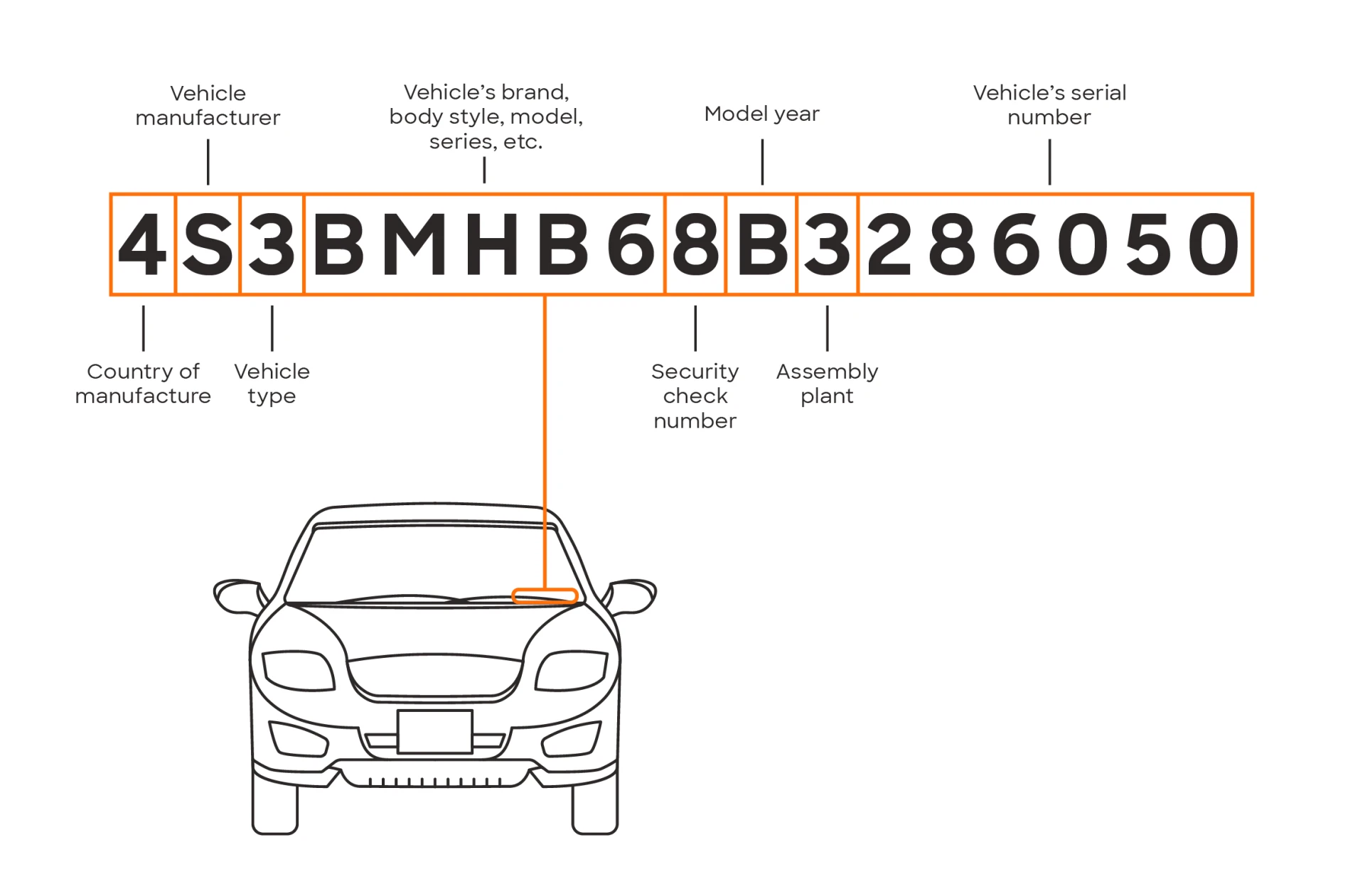

The DMV database has that information, but you cannot legally access it without proper authorization due to the federal Driver's Privacy Protection Act (DPPA) of 1994. While this restriction may seem inconvenient, it protects you you and all other unwanted people accessing sensitive information.
But if you REALLY want to avoid this, you can hire a licensed private investigator who may be exempt from the DPPA. The investigator will generally be able to obtain this information from the DMV upon request for certain well-defined purposes. See The Lost Vehicle Registry for more information.
What if I can't remember the VIN?
If you don't remember the VIN from your previous vehicle, there are ways to find it, such as:
#1 – Old documents
When you owned the vehicle, you handled various documents that had the VIN on it, such as registration documents, loan documents, insurance cards, and others. You may still have one of these documents at home, at work, or even with your mechanic.
If you've ever been in an accident with your vehicle, you probably have a police report that contains the VIN. Once you find a document that contains your old VIN, you'll be one step closer to locating your car or truck.
#2 – Old license plate number
Using your old vehicle's license plate number, you can obtain your VIN from your state's DMV. The DMV will use the license plate number to find the vehicle in its database and will provide you with the VIN upon request.
#3 – Driver's License Number
The DMV keeps a record of every vehicle you have registered with your license number, even if you have moved out of state and have a new driver's license. They will be able to provide you with the VIN number by showing your license.
#4 – Contact your auto insurer
The auto insurer for your vintage car can provide you with its VIN. Before you can get the information, you will need to provide identification and some personal information. After proving your identity, the company must provide you with the VIN.
#5 – Bill of Sal
Whenever you sell a vehicle, both parties create and sign a simple bill of sale document. In it, the VIN of the vehicle is almost always noted. Check your files at home for a copy of this document.
How can you find a car you previously owned without a VIN?
#1 – Post Ads
You can post online and offline ads to attract the attention of the current owner of the vehicle or someone else who has seen the car. The ad should contain as many details as possible, such as the make, model, year, color, engine type, and other distinguishing features of the vehicle.
For quick results, place your ad in the vehicle's last known location. Even if the vehicle has moved, someone in the area may be able to contact you with helpful information. It also helps if your ad indicates why you are looking for the vehicle. Otherwise, people might be wary of responding.
#2 – Contact the buyer
If you have the details of the person who bought the car, you can contact them to ask if they still have it or if they have details about who bought it from them. If you have a name, you can search online for a social media account or phone number to contact the person.
#3 – Use online forums
On platforms like The Lost Car Registry, you can post details and photos of your long-lost vehicle. Members who have information about your old vehicle will share it.
Also, many car makes and models have their own unofficial online forums for enthusiasts. Sites like BimmerForums.com, AudiWorld.com, Honda-Tech.com, and CorvetteForum.com are some of the most popular.
#4 – Facebook Groups
Like online forums, there are many private Facebook groups for car enthusiasts of a particular car manufacturer or model. You'll usually get better results by finding a less common car that's popular with enthusiasts, like a BMW M3 E30. If you're looking for an older Toyota Corolla, your chances of finding it through a group or forum are pretty low.



























Sign in to leave a comment.