

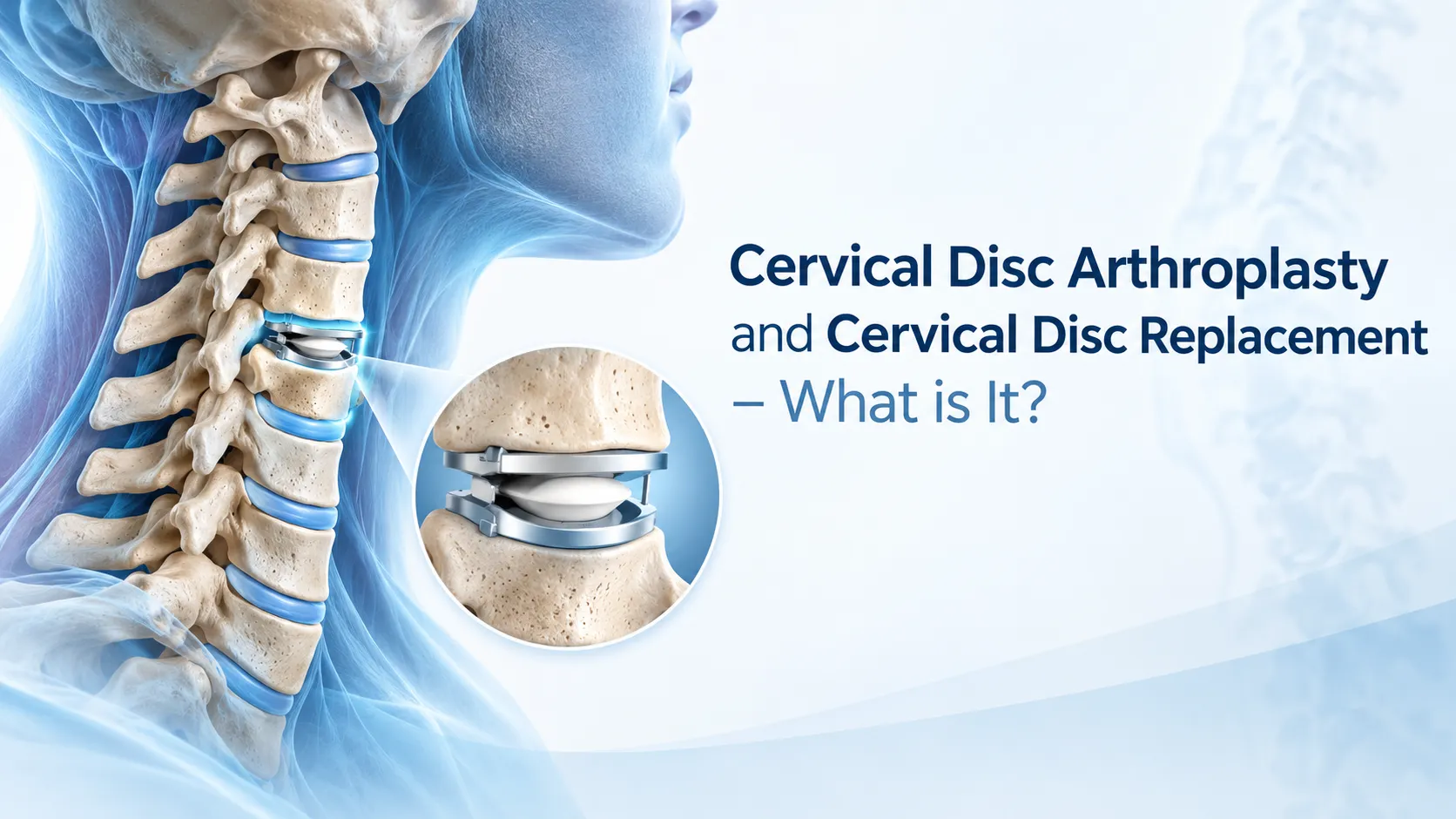
If your doctor talks about a need for undergoing a procedure of cervical disc arthroplasty, then it is natural that there will be many questions about it, and one of them may be whether this procedure differs from other neck surgeries you encounter. Cervical disc arthroplasty, also known as cervical disc replacement, is a surgical procedure that involves removal of the affected cervical discs and their replacement with the artificial ones that would allow for retaining of mobility of the spine in this area. This is one of the ways of treating the reasons for neck and arm pains, and knowing about this procedure in detail can help you to talk to your doctor.
Cervical Disc Arthroplasty
With the procedure of cervical disc arthroplasty, there is the removal of a failed or damaged disc from between two cervical vertebrae and replacing that disc with an artificial one. The discs that would need replacement in this case are soft tissues cushions located in between the vertebrae, which allow for the flexing of the neck.A degenerated or a herniated disc may cause compression on the spinal cord or nerves and lead to pain.
It allows not only relief from the pressure but also allows natural motion at that joint. Artificial disc mimics the natural disc in terms of its movement and flexibility and allows normal movement of the neck even after healing.
What Can Make a Person Require Cervical Disc Replacement?
A doctor usually looks at performing cervical disc replacement if the patient experiences symptoms due to a certain pathology in the disc. These pathologies can be represented by the herniation of the cervical disc, which means that the inner part of the disc starts bulging and provokes the irritation of a nerve, and the degenerative disc disease of the cervical area, during which the disc gets flattened and becomes less flexible. Nerve compression can result in cervical radiculopathy.
Just because you might have a protrusion or degenerative changes seen on MRI does not mean that you require surgery. Many individuals suffer from problems with their discs without requiring any surgery at all.Surgical intervention becomes part of the conversation once the symptoms persist and are related to the imaging findings.
What Symptoms Could Trigger Cervical Disc Replacement Surgery?
Those who end up opting for this procedure typically experience multiple symptoms rather than one symptom alone. The first one is neck pain; however, the one that would trigger surgery is arm pain, numbness, or tingling sensation extending into the hand/fingers, along with weakness of the arm/grip, which indicates compression of a nerve as it leaves the spine.
In cases where symptoms are minor and new, surgery is usually not the first course of action. However, if symptoms do not get better, worsen or become so severe as to interfere with performing daily activities such as driving and work, then an evaluation for further diagnosis may be considered.
Cervical Artificial Disc Replacement: How Does It Work?
As far as procedure goes, it is quite simple. Access to the front part of the cervical spine is created and the section of the disc which creates problems is removed; thus, relieving pressure from the nerve or the spinal cord which suffers from it. Then the artificial disc is implanted into the disc space left.
This way, movement of the two vertebrae on both sides of the disc continues; while without the surgery the two vertebrae would have become stuck together. There is no fixed method or type of disc; it all depends on the individual disc level and patient anatomy.
Cervical Disc Arthroplasty vs. ACDF - What’s the Difference?
One of the most frequently asked questions about cervical disc arthroplasty and ACDF is the following one, and thus it needs to be explained here. In turn, anterior cervical discectomy and fusion (ACDF) is another widely used procedure to treat similar problems.
The difference lies in the fact that when performing the procedure of cervical disc arthroplasty, an artificial disc will replace the diseased disc with the aim to preserve mobility at this particular vertebral segment. When carrying out ACDF, the diseased disc will be taken away, and instead of it, there will be a fusion of two vertebrae using bone grafts or spacers.
Neither procedure is universally better than the other. The right choice depends on individual factors — the patient's anatomy, how many disc levels are affected, bone quality, prior neck surgeries, and the specific pattern of nerve or spinal cord compression. Some patients are better candidates for motion preservation, others for fusion.It is decided collectively by the patient and surgeon after going through the imaging tests and medical history thoroughly.
When Can Cervical Disc Arthroplasty be Suggested for a Person?
There is no definite checklist available for identifying the persons who need this surgery as each spine is different in its own way.
The surgeon will typically take into consideration the location of the symptoms, the condition of the intervertebral disc, involvement of one or several discs, presence or absence of nerve and spinal cord compression, bone density, and patient’s reaction to conservative treatments.
Patients who have instability or certain bone problems, or arthritis in the cervical spine region will most probably be advised on a different surgery technique because not everyone is anatomically suited to receive an artificial disc. For this reason, it is important to use imaging, physical examination, and history taking to customize the procedure.
How Does the Process of Recovery Happen After Cervical Disc Arthroplasty?
The process takes place gradually. During the first few days following the procedure, it is normal to have some pain around the surgical site and in the neck area, as well as feeling tired, as you recover from the procedure. Patients are advised to stand up and move around soon after the procedure, though strenuous exercise is not allowed.
The significance of follow-ups comes into play here as it allows the surgeon to assess the status of the disc space and the progress made so far. Patients tend to slowly get back to their routine within a few weeks, but the rate of recovery depends on the patient and his/her general health condition as well as adherence to the post-operative care guidelines. It is hard to predict the exact period of time since each patient recovers at a different rate.
Alternatives to Cervical Disc Replacement Surgery
Surgery is usually not the first choice of treatment. The conservative approach is the treatment of choice, which may involve physiotherapy designed to strengthen the neck muscles and correct posture, anti-inflammatory A surgical operation is generally not the initial mode of treatment. The preferred method of treatment is the conservative one, which may consist of physical therapy that aims at improving the strength of neck muscles and correcting postures, the use of anti-inflammatory or analgesic medications, and injections that may help relieve the irritation of nerves.
When conservative treatment is not effective enough or when signs of nerve root/spinal cord compression become apparent, then surgery should be considered seriously.
When Should You See a Spinal Doctor?
In case you suffer from chronic neck pain or have numbness, tingling, or weakness in your shoulder and arm, this is something to consider. In addition, if your condition interferes with your sleeping, working, and normal activity or weakness progresses, seeing a doctor may be a good choice.
None of these conditions means that you are going to have an operation anyway. The thing is, a spinal doctor will be able to determine the causes of your troubles and help you choose the right way of treatment.
Frequently Asked Questions
What is cervical disc arthroplasty?
Cervical disc arthroplasty refers to surgery involving removal of the diseased cervical disc and insertion of a prosthesis in place of it in order to allow movement at that specific level of the cervical spine rather than causing fusion of the vertebral bodies.
Are "cervical disc replacement" and "cervical disc arthroplasty" the same thing?
Yes, they are. "Cervical disc replacement" and "cervical disc arthroplasty" refer to the same surgical operation but the latter is just a medical term used for joint replacement.
What is the difference between cervical disc replacement and ACDF?
The main difference is that in cervical disc replacement there is some movement at the level of the spine due to the implantation of an artificial disc while ACDF is the fusion of vertebrae because of the removal of the disc. Both of these procedures treat similar issues in a different way.
How do I know if I need cervical disc replacement?
Only a specialist treating your spine will be able to determine this based on your symptoms, test results, and previous treatment. Pain in the neck or arm, numbness, and weakness might force you to go to the doctor, but this doesn't always mean that surgery is necessary.
What is the period for the recovery of a patient after undergoing cervical disc arthroplasty?
he answer on this question depends upon the individual cases. Anyway, all patients are able to get back to their daily activities, although the detailed data on this matter will be given by your doctor.
In which circumstances should one have the procedure of cervical disc replacement as treatment?
Cervical disc replacement process is done due to nerve compression by certain disorders such as cervical disc herniation and degenerative disc disease.
Is there any possibility to get back to normal without surgery if there is herniated cervical disc?
Yes, there is. Many patients manage to improve their health by non-surgical treatment.























Sign in to leave a comment.