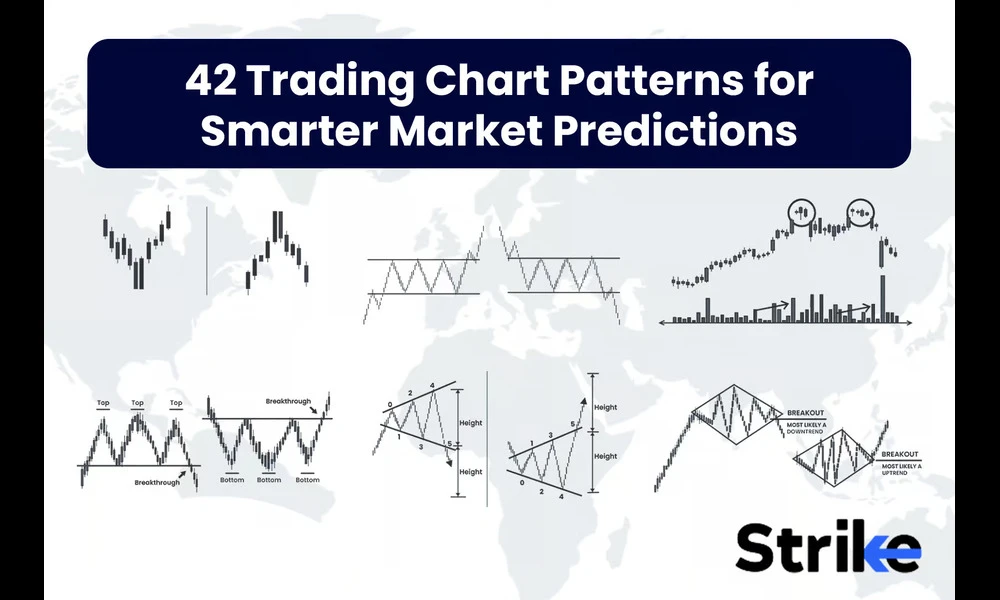

Swing trading is a popular trading strategy where traders capitalize on short- to medium-term market movements. Identifying chart patterns is a critical skill for swing traders as these patterns often signal potential reversals or continuations of trends. In this article, we’ll explore some of the most effective chart patterns for swing trading, explaining how to spot them and use them for profitable trades.
Why Use Chart Patterns in Swing Trading?
Chart patterns are visual representations of market psychology and investor behavior. By studying these patterns, swing traders can predict future price movements with reasonable accuracy. These patterns are typically categorized into two types:
- Reversal Patterns: Indicate a change in the current trend.
- Continuation Patterns: Suggest that the current trend will continue.
Top Chart Patterns for Swing Trading
1. Head and Shoulders (Reversal Pattern)
Description:
The head and shoulders pattern signals a potential reversal from a bullish to a bearish trend.
How to Identify:
- Left Shoulder: Price rises, then falls.
- Head: A higher peak forms, followed by another decline.
- Right Shoulder: A lower peak forms, followed by another drop.
- Neckline: The line connecting the two lows of the shoulders.
Trading Strategy:
- Entry: Short when price breaks below the neckline.
- Stop-Loss: Above the right shoulder.
- Target: Measure the distance from the head to the neckline and project it downward.
2. Cup and Handle (Continuation Pattern)
Description:
This bullish continuation pattern suggests that the price will break upward after a consolidation phase.
How to Identify:
- Cup: A rounded, U-shaped formation indicating a gradual decline and recovery.
- Handle: A small consolidation or pullback after the cup.
Trading Strategy:
- Entry: Long when price breaks above the handle's resistance.
- Stop-Loss: Below the handle.
- Target: Measure the depth of the cup and project it upward.
3. Double Top and Double Bottom (Reversal Patterns)
Double Top (Bearish Reversal):
- Identification: Two peaks at approximately the same price level.
- Entry: Short below the low between the two peaks.
- Stop-Loss: Above the second peak.
Double Bottom (Bullish Reversal):
- Identification: Two troughs at similar price levels.
- Entry: Long above the high between the two troughs.
- Stop-Loss: Below the second trough.
4. Triangles (Continuation or Reversal Patterns)
Types of Triangles:
- Ascending Triangle (Bullish): Higher lows with a flat resistance line.
- Descending Triangle (Bearish): Lower highs with a flat support line.
- Symmetrical Triangle (Neutral): Price converges with no clear direction.
Trading Strategy:
- Entry: Trade in the breakout direction.
- Stop-Loss: Below recent lows for ascending, above recent highs for descending.
- Target: Measure the height of the triangle and project it from the breakout point.
5. Flags and Pennants (Continuation Patterns)
Description:
These patterns occur after a strong price movement, indicating that the trend is likely to continue.
How to Identify:
- Flag: A rectangular consolidation pattern.
- Pennant: A converging triangular consolidation.
Trading Strategy:
- Entry: Long or short upon breakout in the direction of the initial trend.
- Stop-Loss: Below the consolidation zone.
- Target: Measure the previous price move and project it from the breakout point.
Tips for Successful Swing Trading Using Chart Patterns
- Combine Patterns with Indicators: Use momentum indicators like RSI, MACD, or moving averages to confirm patterns.
- Manage Risk: Always set stop-loss orders to protect against unexpected moves.
- Trade with the Trend: Focus on continuation patterns when trading with the trend.
- Backtest and Practice: Practice identifying patterns using historical charts before trading with real money.
Conclusion
Mastering chart patterns is essential for swing traders looking to make informed trading decisions. By recognizing key patterns such as head and shoulders, triangles, and flags, traders can enter and exit trades with higher confidence. Pair these patterns with sound risk management and technical analysis tools to maximize profitability in the swing trading market.







Sign in to leave a comment.