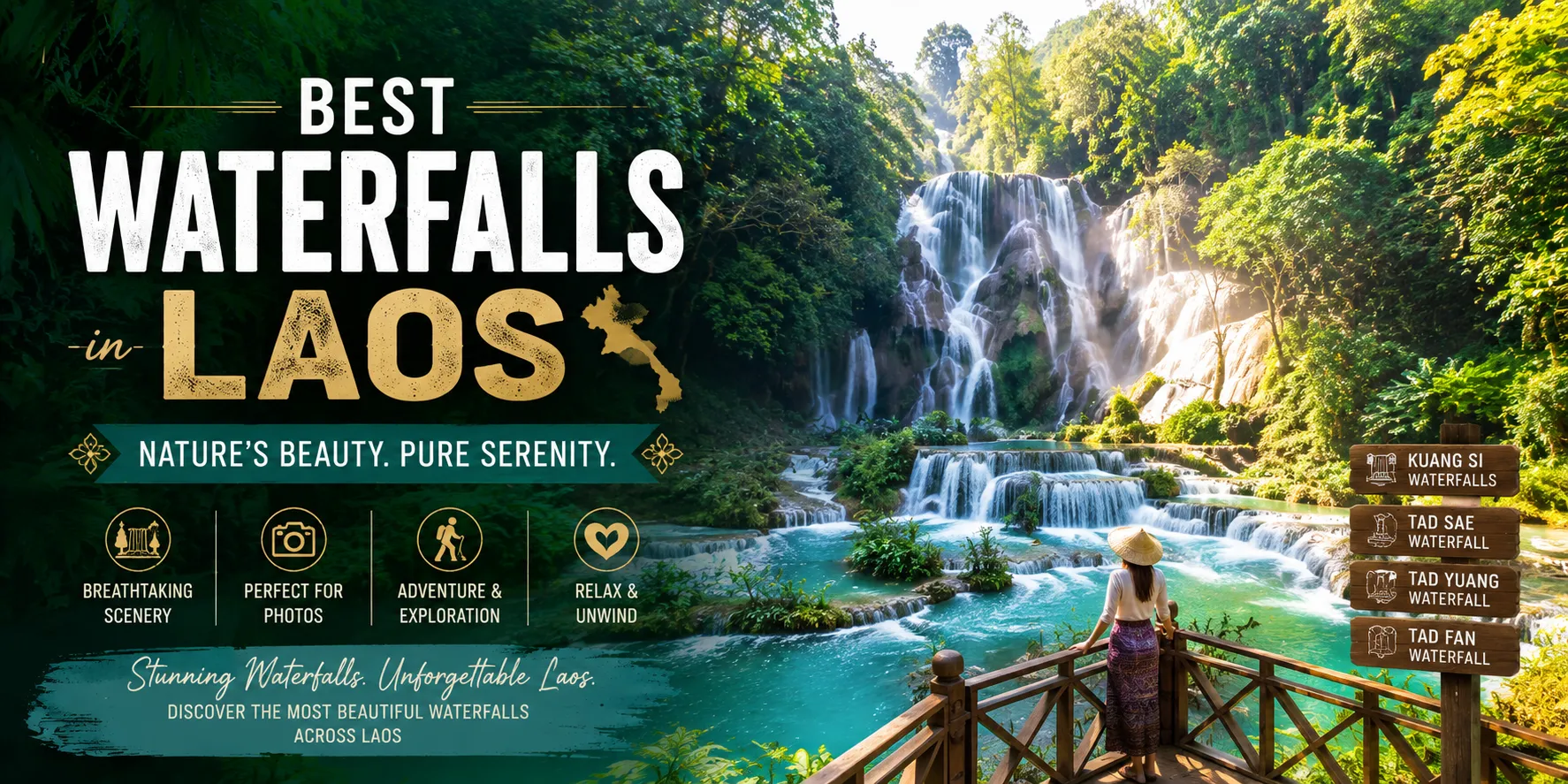

Laos is a country defined by water. From the mighty Mekong River winding through its heart to the dramatic, rain-forested mountains that slice across the landscape, water shapes every corner of this beautiful country. For travelers, this unique geography means one incredible thing: Laos is home to some of the most spectacular, pristine waterfalls in Southeast Asia.
Whether you want to swim in milky-turquoise pools, zipline high above a double-tier drop, or trek deep into the jungle to find a hidden cascade, the waterfalls here will take your breath away.
In this ultimate guide, we answer the most common questions travelers ask when planning their waterfall adventures in Laos, highlighting the must-visit spots and how to get to them.
1. Why does Laos have so many breathtaking waterfalls?
Laos is highly mountainous and receives a significant amount of rainfall during the monsoon season. This rainwater drains down from high-altitude plateaus (like the famous Bolaven Plateau in the south) and cuts through soft limestone landscapes.
As the water erodes the limestone, it deposits minerals like calcium carbonate into the water, creating terraced drop-offs, natural rock pools, and uniquely vibrant colors. Because many of these areas remain untouched by massive commercial developments, the waterfalls of Laos still feel wild, fresh, and deeply connected to nature.
2. What is the most famous waterfall in Laos?
If there is one waterfall you have likely seen on Instagram, it is Kuang Si Falls (Tat Kuang Si). Located about 29 kilometers south of the UNESCO World Heritage town of Luang Prabang, Kuang Si is widely considered one of the most beautiful waterfalls in the world.
It is famous for its stunning, multi-tiered pools filled with pastel-blue, milky-turquoise water. The water tumbles over smooth white limestone ledges, surrounded by a dense, emerald-green jungle canopy. The main drop plunges a massive 60 meters (200 feet) into a shallow gorge, creating a misty spray that cools down the entire area.
3. Can you swim in the Kuang Si Falls pools?
Yes, you can swim at Kuang Si Falls—but only in designated pools! The local authorities have put up clear signs indicating which pools are safe and open for swimming, and which ones are sacred or closed to protect the natural environment.
Tips for visiting Kuang Si:
- Go early: Aim to arrive by 8:00 AM to beat the tour buses and enjoy the tranquil pools all to yourself.
- Visit the Bear Sanctuary: Right inside the entrance of the park is the Tat Kuang Si Bear Rescue Centre, run by the "Free the Bears" charity. You can observe rescued Asiatic Black Bears (Moon Bears) playing and resting in large, natural enclosures.
- Cost: Entry is roughly 60,000 Kip (about $2.70 USD), which includes an eco-friendly electric shuttle ride from the parking lot to the trail entrance.
4. Is Tad Fane Waterfall the tallest waterfall in Laos?
Yes! If you head down to Southern Laos, you will encounter Tad Fane, the undisputed giant of the country. Located in the Dong Hua Sao National Protected Area on the Bolaven Plateau, Tad Fane features two dramatic, parallel streams of water that plunge over 120 meters (nearly 400 feet) down a sheer cliff into a misty, jungle-covered gorge.
Because the canyon is so deep, you cannot easily walk down to the bottom of Tad Fane. Instead, visitors view it from a spectacular viewing deck across the gorge.
If you are a thrill-seeker, Tad Fane is famous for its extreme zipline experience. You can strap into a harness and fly hundreds of feet in the air directly across the canyon, right in front of the thundering twin waterfalls. You can even enjoy "coffee in the sky" on a hammock suspended mid-air over the gorge!
5. Why is Tad Yuang Waterfall perfect for a day trip?
Just a short drive from Tad Fane on the Bolaven Plateau is Tad Yuang Waterfall. While Tad Fane is all about epic height and viewing from afar, Tad Yuang is highly accessible, interactive, and incredibly photogenic.
The Pak Koot River drops about 40 meters over a wide, lush cliffside. There are beautifully maintained wooden steps and viewpoints that let you walk right down to the base of the falls.
- The Vibe: At the bottom, the water forms a wide, refreshing pool where you can take a swim (be careful of the spray!).
- Picnic Spot: The top of the falls features flat, grassy areas. It is incredibly popular for local families and tourists alike to lay out a mat, share a picnic of sticky rice and grilled chicken, and enjoy the cool mountain air.
6. How do you visit the widest waterfall in the world, Khone Phapheng?
Deep in the far south of Laos, near the Cambodian border, the Mekong River breaks apart into a sprawling inland delta known as Si Phan Don (The 4,000 Islands). Here, the entire volume of the Mekong River crashes over a massive barrier of rocks and rapids, creating Khone Phapheng Falls.
Spanning over 10 kilometers wide, Khone Phapheng is officially recognized as the widest waterfall in the world and the largest waterfall by volume in Southeast Asia.
- The Experience: You don't swim here—the sheer force of the muddy, roaring water is terrifyingly powerful. Instead, you walk along beautifully constructed viewing platforms to witness the raw power of nature.
- Fun Fact: This massive barrier of rapids is the primary reason why the Mekong River is not fully navigable from Vietnam all the way into China.
7. Where can you find the hidden Tad Sae Waterfall?
If you are staying in Luang Prabang and want a slightly more rustic, less-crowded alternative to Kuang Si, Tad Sae Waterfall is the perfect choice.
Located about 18 kilometers southeast of the city, Tad Sae is unique because you cannot reach it by road. You must take a short, scenic ride on a traditional wooden longtail boat up the Nam Khan River to reach the entrance.
Tad Sae is a wide, multi-layered limestone waterfall that flows directly through a dense forest. There are wooden decks built right over the rushing water where you can relax, swim, or go ziplining through the jungle canopy.
- Crucial Tip: Unlike Kuang Si, which flows year-round, Tad Sae is highly seasonal. During the peak of the dry season (February to June), it can dry up completely into a trickle of rocks. It is best visited between August and January when the river is high.
8. What is the legendary "100 Waterfalls" trek in Nong Khiaw?
For true adventure lovers, the sleepy northern riverside town of Nong Khiaw offers a waterfall experience unlike any other. Instead of just looking at a waterfall, the 100 Waterfalls Trek requires you to hike directly up one.
Discovered by tour operators in 2008, this trek takes you through local rice paddies and deep into the jungle, where you meet a river that cascades down a steep mountain ridge in dozens of small, beautiful tiers.
Guided by a local expert, you will hike, splash, and climb your way up the running water, using ropes and bamboo ladders to scale the slippery limestone steps. It is a wet, challenging, and unforgettable way to experience the wild nature of northern Laos.
9. How do you explore the lesser-known Tad Tayicsua?
If you want to escape the crowds completely, rent a semi-automatic motorbike and ride deep into the Bolaven Plateau to find Tad Tayicsua.
This is not just one waterfall, but a massive, wild valley containing up to seven distinct waterfalls hidden in the dense jungle. The trails here are steep, dusty, and muddy, marked only by small, hand-painted wooden signs.
The highlight of the area is Jarou Halang, a monstrous, thunderous waterfall that plunges over a massive crescent-shaped cliff. As you approach the foot of the falls, the air turns cold and heavy with mist, and you are likely to be the only traveler there to witness its raw, untouched beauty.
10. When is the best time of year to visit waterfalls in Laos?
Timing is everything when exploring the waterways of Laos. The country has two distinct seasons:
- The Dry Season (November to May): This is the best time to visit if you want to see the famous, crystal-clear turquoise pools. Because there is less rain, the water flows gently and carries very little mud, making places like Kuang Si look like a fairy tale.
- The Wet Season (June to October): During the monsoon, the waterfalls transform into roaring, thunderous beasts. While they are incredibly dramatic and powerful to look at, the water turns a muddy brown color, and high currents can make swimming unsafe or close down trail access.
11. What should you pack for a Laos waterfall adventure?
To ensure a safe and comfortable trip, make sure to pack these essentials in your day bag:
- Waterproof Dry Bag: Essential for protecting your phone, camera, and cash from intense waterfall mist or splashes during boat rides.
- Sturdy Hiking Sandals: Limestone rocks are incredibly slippery. Ditch the cheap flip-flops and wear secure sandals with good grip.
- Insect Repellent: The humid jungle environment around waterfalls is a paradise for mosquitoes.
- Modest Swimwear & Cover-up: Laotian culture is quite conservative. While swimming is allowed, it is respectful to wear a t-shirt or a modest swimsuit rather than revealing bikinis, especially in rural areas.
- Cash (Lao Kip): Most waterfall parks require a small entry fee (ranging from 10,000 to 60,000 Kip), and card machines are virtually non-existent in the jungle.
12. Do you need a visa to visit Laos waterfalls?
Yes, most international travelers need a tourist visa to enter Laos and explore these incredible natural wonders. Fortunately, you no longer have to wait in long lines at the embassy or worry about complex paperwork upon arrival.
You can apply for your official Laos eVisa online before you even pack your bags, securing your entry smoothly and legally.
Why Choose Us for Your Laos Visa?
Planning your dream trip to the waterfalls of Luang Prabang and the Bolaven Plateau should be exciting, not stressful. Let us handle the boring paperwork so you can focus on the adventure!
- Reliable Travel Visa Services: Our proven, global approach has successfully assisted numerous travelers in obtaining their tourist visa for Laos without the hassle.
- Round-the-Clock Assistance: Have a question in the middle of the night? Reach out to us 24/7. Our visa experts are always ready to assist and will respond within 72 hours.
- Experienced Visa Consultants: We review your application details thoroughly, offering expert guidance to ensure maximum acceptance rates.
- Efficient Visa Application Process: Don’t waste hours on confusing governmental portals. You can apply for your Laos Visa in minutes using our highly simplified, user-friendly online form.
Ready to start chasing waterfalls? Apply for your Laos Visit Visa today and get ready for the trip of a lifetime!


























Sign in to leave a comment.