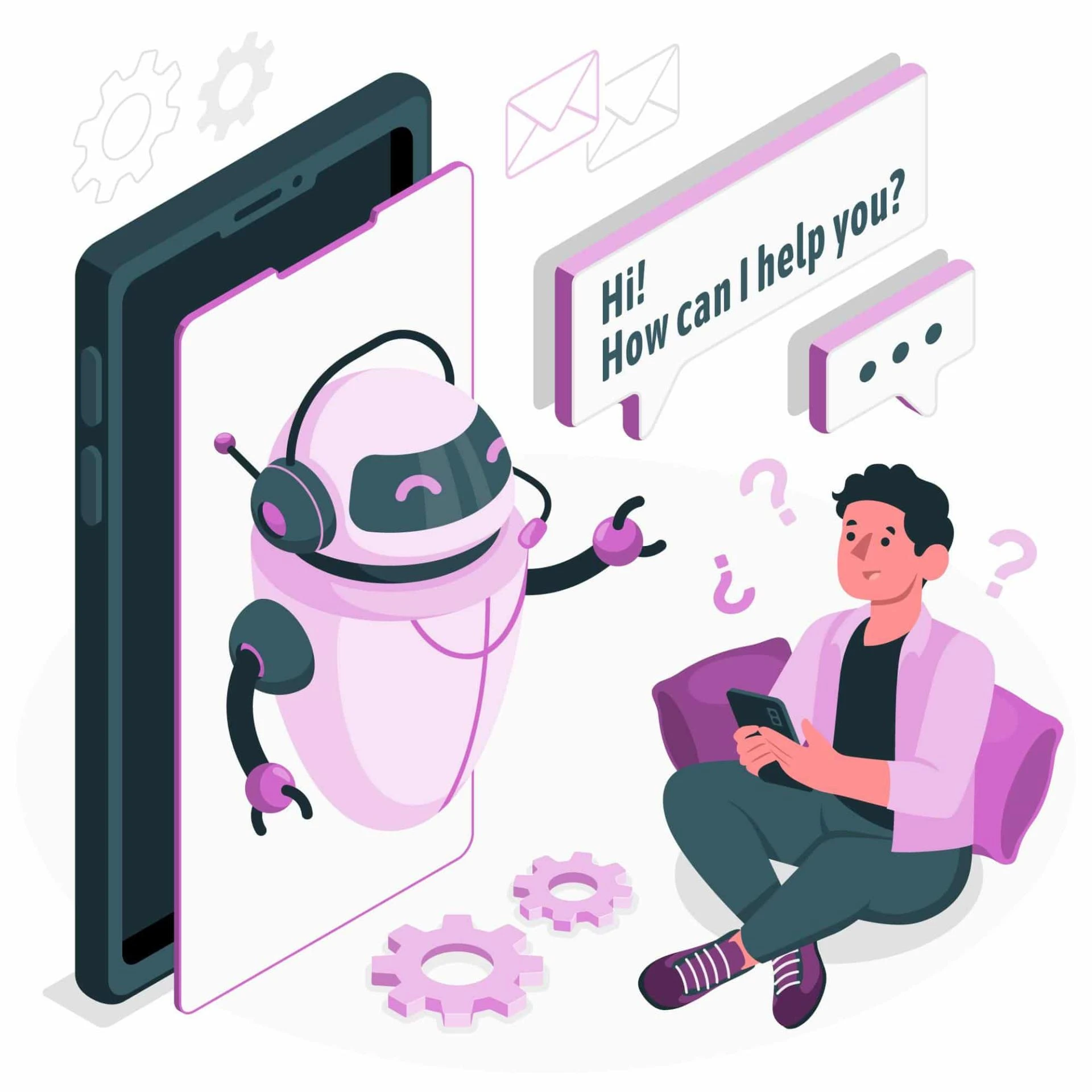

Experience a revolution in virtual interactions with ChatGPT, the cutting-edge AI that's taking the world by storm. Say goodbye to boring chats!
The world is experiencing a revolutionary change in the way we interact with technology. With the rapid advancements in artificial intelligence, virtual interactions have become more seamless and engaging than ever before. One notable development in this field is the rise of ChatGPT, an advanced language model that has taken the world by storm.
What is ChatGPT?
ChatGPT is a state-of-the-art language model developed by OpenAI. It is based on the GPT-3.5 architecture, which stands for "Generative Pre-trained Transformer 3.5". This model has been trained on a vast amount of text data, allowing it to generate human-like responses to text-based inputs. ChatGPT has been designed to carry out interactive conversations with users, making it a powerful tool for virtual interactions.
The Rise of Virtual Interactions
Virtual interactions have gained significant traction in recent years. With the widespread adoption of smartphones, social media, and other digital platforms, people are increasingly relying on virtual means to communicate, collaborate, and seek information. ChatGPT has emerged as a frontrunner in this trend, providing a more personalized and engaging experience for users.
How ChatGPT Works
ChatGPT works by utilizing deep learning techniques to process and generate text-based responses. It employs a transformer architecture that allows it to understand the context of a conversation and generate coherent and relevant replies. The model is trained using a large corpus of text data, enabling it to learn patterns, grammar, and semantics. ChatGPT leverages this knowledge to generate responses that mimic human conversation.
Applications of ChatGPT
ChatGPT has a wide range of applications across various industries. It can be used in customer support to handle basic queries and provide quick responses. In the field of e-commerce, ChatGPT can assist customers in finding products, making recommendations, and answering questions. It also has potential applications in healthcare, education, virtual assistants, and content creation. The versatility of ChatGPT makes it a valuable tool for enhancing virtual interactions in numerous domains.
Benefits and Limitations of ChatGPT
ChatGPT brings several benefits to the table. It can provide round-the-clock support, instant responses, and personalized interactions. With its ability to understand natural language, ChatGPT can comprehend and respond to complex queries. However, it also has limitations. ChatGPT may sometimes generate inaccurate or irrelevant responses, as it relies on statistical patterns in the training data. It can also struggle with context-switching and handling ambiguous queries, requiring human intervention in certain situations.
Ethical Considerations
The rise of ChatGPT raises important ethical considerations. As an AI language model, ChatGPT must be developed and used responsibly to avoid spreading misinformation, engaging in harmful behaviors, or violating privacy. Bias in the training data can also impact the responses generated by ChatGPT, making it crucial to address and mitigate bias to ensure fair and unbiased interactions. Transparency, accountability, and ongoing research are vital in addressing these ethical challenges.
The Future of Virtual Interactions
ChatGPT is just the beginning of a new era in virtual interactions. As technology continues to advance, we can expect more sophisticated language models with enhanced capabilities. Future iterations of ChatGPT may incorporate multimodal inputs, enabling interactions with text, images, and even voice. These advancements will result in more immersive and natural virtual interactions, blurring the line between human and machine communication.
Conclusion
ChatGPT has made a significant impact on the world of virtual interactions. Its ability to generate human-like responses and engage in interactive conversations has opened up new possibilities in various industries. However, it is important to approach this technology with caution, addressing ethical considerations and ensuring responsible development and use. As we look to the future, virtual interactions powered by advanced language models like ChatGPT are set to redefine the way we communicate and collaborate.
Frequently Asked Questions (FAQs)
Q: Can ChatGPT understand multiple languages?
A: ChatGPT is primarily trained on English text data, but it can also understand and generate responses in multiple languages to some extent. However, its proficiency may vary depending on the language.
Q: How does ChatGPT handle offensive or inappropriate content?
A: ChatGPT has been trained on a filtered dataset to reduce the generation of offensive or inappropriate responses. However, it may still occasionally produce content that is objectionable. Efforts are being made to improve the model's filtering mechanisms.
Q: Is ChatGPT capable of learning in real-time?
A: ChatGPT does not have real-time learning capabilities. Its responses are based on the patterns it has learned during training. To update its knowledge, the model needs to be retrained with new data.
Q: Can ChatGPT generate code or perform programming tasks?
A: While ChatGPT can provide general programming-related information, it may not be as proficient in generating complex code or executing specific programming tasks. It is primarily designed for natural language understanding and generation.









Sign in to leave a comment.