
When a homeowner notices a water stain near the fireplace or a damp smell after a storm, the instinct is almost always the same: assume the roof is leaking. In a lot of Lakeland cases, that assumption sends people chasing the wrong repair for months while the actual source keeps leaking undetected.
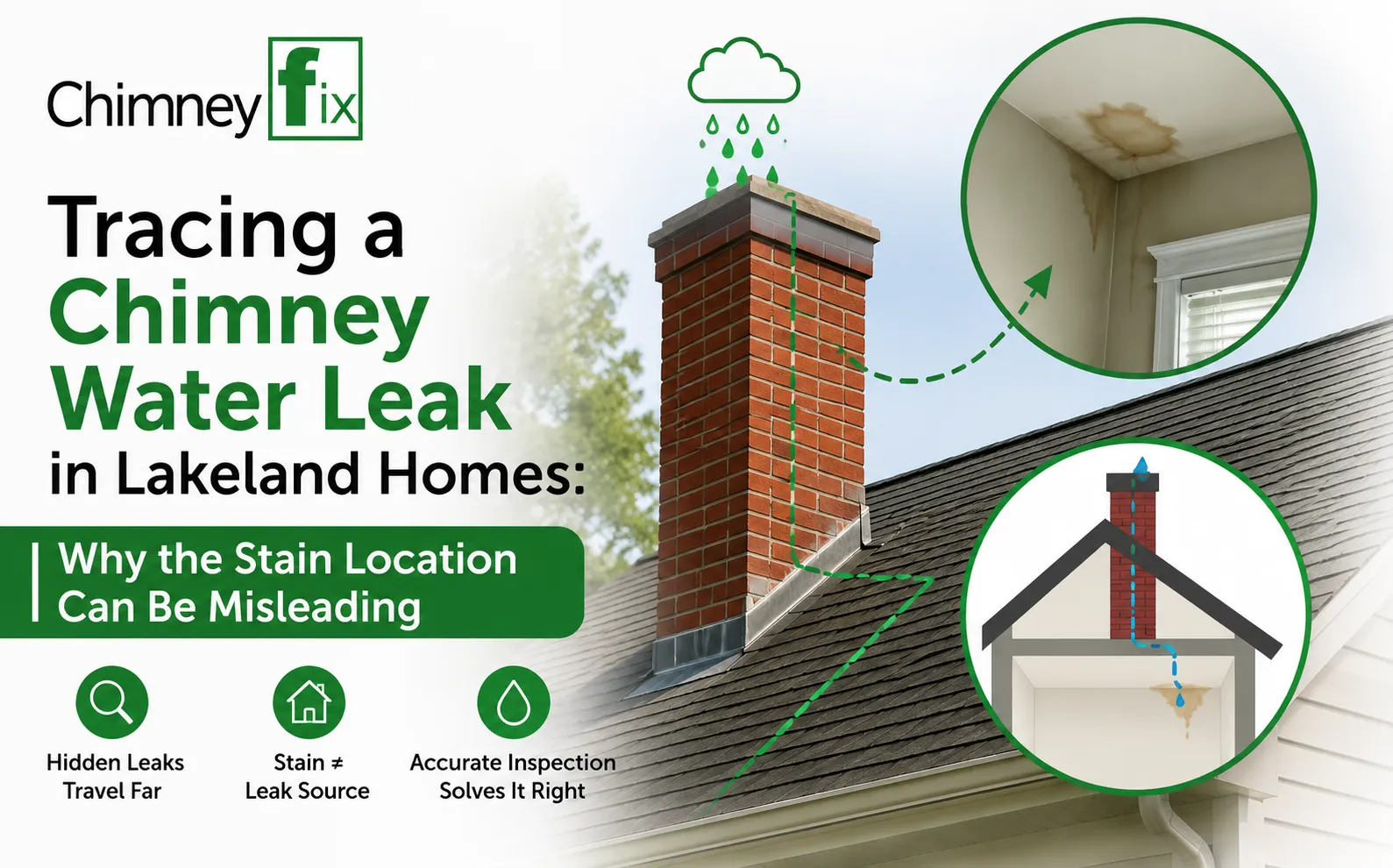
Chimney leaks are unusual in that the place water shows up is often far from where it actually enters. Water can travel several feet down a flue or across a wall cavity before it becomes visible, which is why so many leak investigations start in the wrong spot. This piece breaks down where chimney leaks actually originate, and why tracing them correctly matters more than most homeowners realize.
Why Chimney Leaks Are Hard to Diagnose
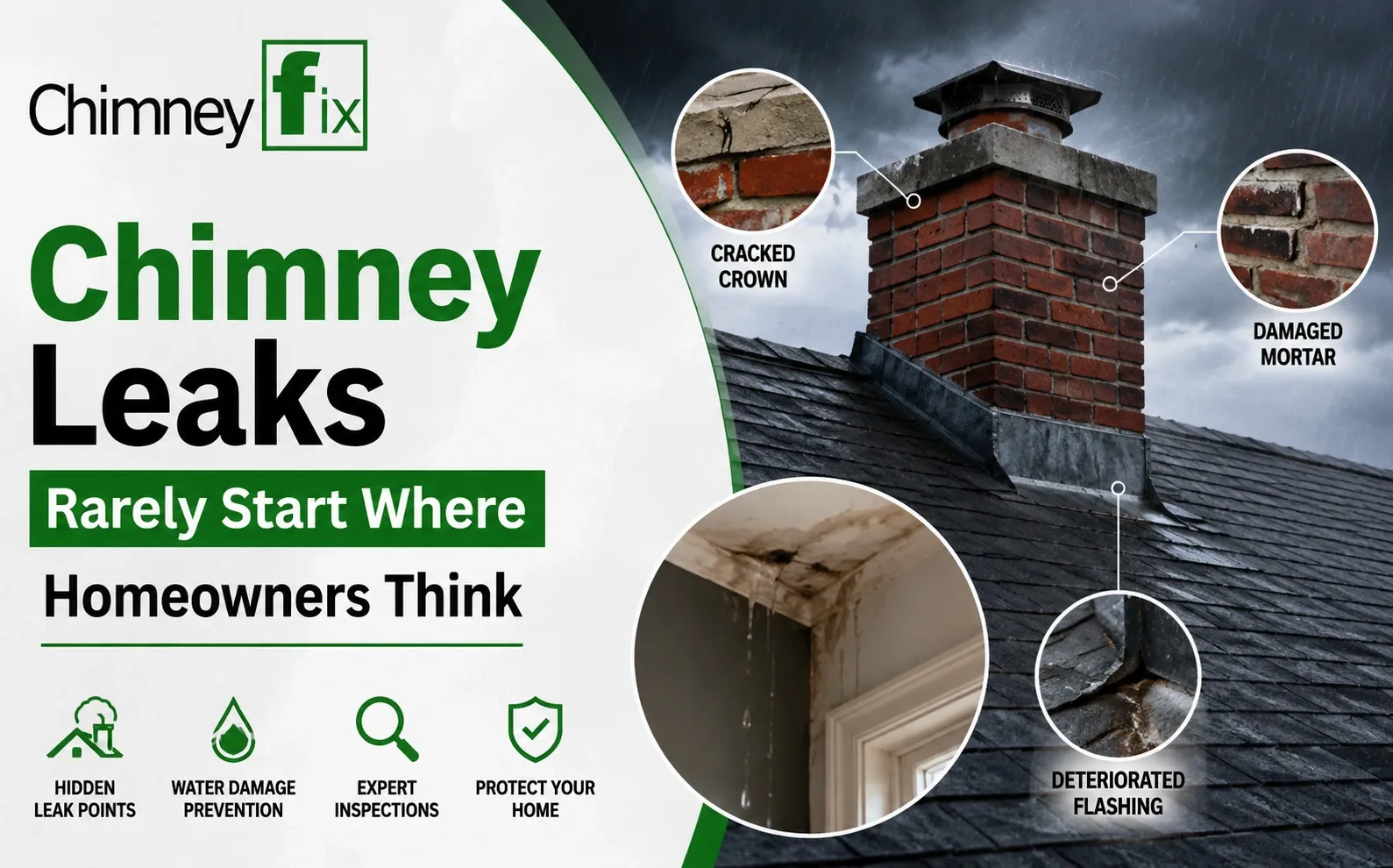
A chimney isn't a single sealed unit — it's a system of separate parts, each with its own failure points: the crown at the top, the flashing where the chimney meets the roofline, the brick or stone exterior, the mortar joints between them, and the flue liner running down the inside. Water entering at any one of these points can travel along a completely different path before it shows up as a stain, which is exactly what makes leaks so easy to misdiagnose.
A stain on a living room ceiling near the chimney, for example, is just as likely to come from failed flashing as from a cracked crown three feet away — but the repair for each is completely different, and treating the wrong one does nothing to stop the leak.
The Four Most Common Leak Sources
1. Flashing Failure
Flashing is the metal strip that seals the joint where the chimney meets the roof. It's one of the most common leak points because it's exposed to constant expansion and contraction as temperatures shift, and the sealant used around it degrades faster than the metal itself. In Central Florida, where roofs go through repeated wet-dry cycles for months at a stretch, flashing sealant tends to fail well before the flashing itself physically corrodes.
2. Cracked Crown
The crown is the concrete cap sealing the top of the masonry chimney around the flue. Hairline cracks form here from the same wet-dry expansion cycle, and once water gets into a crack, it doesn't just sit there — it works its way down through the masonry itself, sometimes appearing as a stain a full story below where the actual crack is.
3. Porous or Damaged Brick and Mortar
Older brick, especially in homes built before the 1990s, absorbs water more readily than modern masonry. Once mortar joints start breaking down, brick can act almost like a sponge during heavy rain, slowly wicking moisture into interior walls over days rather than leaking immediately during the storm itself — which is part of why the connection to a specific storm is often missed.
4. Missing or Damaged Cap
A chimney cap is designed to keep rain from entering the flue directly. Without one, or with one that's rusted through, water pours straight down the flue during every storm. This tends to produce the most obvious symptom — staining directly in the firebox — which ironically makes it the easiest of the four to correctly diagnose.
Why Guessing Costs More Than Diagnosing
It's common for homeowners to seal the most visible crack they can find and consider the problem solved, only to have the same stain reappear after the next storm. That's usually a sign the water is entering somewhere else and simply traveling to the same visible exit point. A proper diagnostic process — checking flashing, scoping the crown, testing mortar joints, and inspecting the cap as a system rather than treating each as isolated — is really the only reliable way to catch this. Homeowners dealing with a recurring stain are usually better served getting a proper chimney leak repair in Lakeland assessment before spending money resealing the wrong component a second or third time.
A Simple Way to Narrow Down the Source Yourself
Before calling anyone, a few observations can help narrow things down:
- Note when the stain appears — during the storm itself, or hours/days after? Immediate staining points toward the cap or flue; delayed staining suggests porous brick or a crown crack.
- Check the stain's exact location relative to the chimney — directly below the chimney chase suggests flashing; inside the firebox suggests the cap or flue; on an interior wall away from the chimney suggests brick absorption.
- Look at the crown from a safe distance with binoculars for visible cracking.
- Check flashing after a storm for any visible gap or lifted edge where it meets the roof shingles.
Why This Matters More After a Wet Season
Central Florida's storm season puts every one of these components through repeated stress cycles in a short window. A crown or flashing seal that held up fine for years can develop a failure point after one particularly wet season, which is why leak complaints tend to cluster in the months right after storm season ends rather than during it — the damage happens gradually and shows up once things start drying out.
The Bottom Line
A chimney leak is rarely as simple as "water is getting in somewhere near the top." It's a system with multiple independent failure points, and the visible stain is often a poor guide to the actual source. Technicians who deal with these leaks regularly note that most callbacks happen because an earlier repair addressed the wrong component — not because the repair itself was done poorly. Tracing the actual path water takes, rather than patching the most obvious crack, is what actually stops a recurring leak for good.
About the Author
This article was contributed by the ChimneyFix team, a CSIA-affiliated chimney sweep, fireplace repair, and masonry contracting service based in Lakeland, FL, serving Polk County homeowners with chimney leak repair, inspections, chimney caps, and dryer vent cleaning.



























Sign in to leave a comment.