
For many small businesses, the right printer isn’t just another office tool — it’s the engine behind branding, packaging, and everyday logistics. Whether you’re creating colorful product labels, shipping tags, or barcodes, choosing between inkjet and thermal printing can determine your output quality, running costs, and overall efficiency. This guide helps you decide which system fits your operation best and introduces some of the most reliable models available for high-quality color label printers in the market today.
The Role of Label Printing in Small Business Growth
Every product that leaves your store or warehouse tells your brand’s story. A clean, professional label is often the first impression customers get — it speaks to quality, care, and reliability. For small businesses, however, printing labels in-house often becomes a balance between cost and presentation.
Outsourcing labels can be expensive and inflexible, especially when product lines change frequently. Owning your own printer offers flexibility to design, modify, and print labels as needed. But the question remains: which type of printer should you invest in — inkjet or thermal?
Each has its advantages, and your choice depends on factors like label lifespan, color requirements, material type, and operating environment.
Understanding the Two Technologies
Before weighing the pros and cons, it’s worth understanding how each technology works and where it shines.
Inkjet Printers
Inkjet printers use liquid ink — either dye-based or pigment-based — to print directly onto label stock. The result is vivid, full-color graphics ideal for marketing and branding. Because of their ability to produce detailed, photo-quality imagery, inkjet label printers are favored by small businesses that sell retail goods such as food, cosmetics, and beverages.
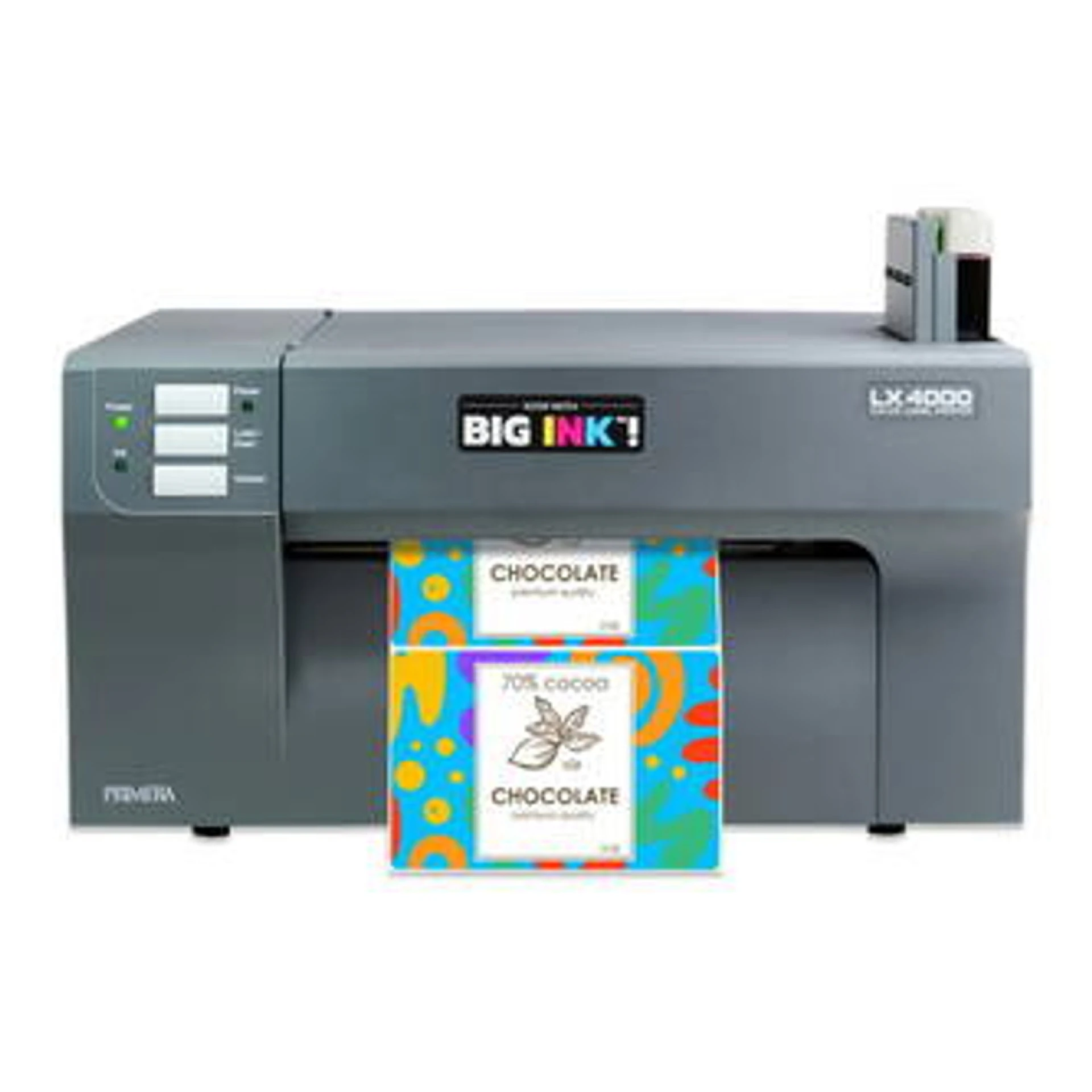
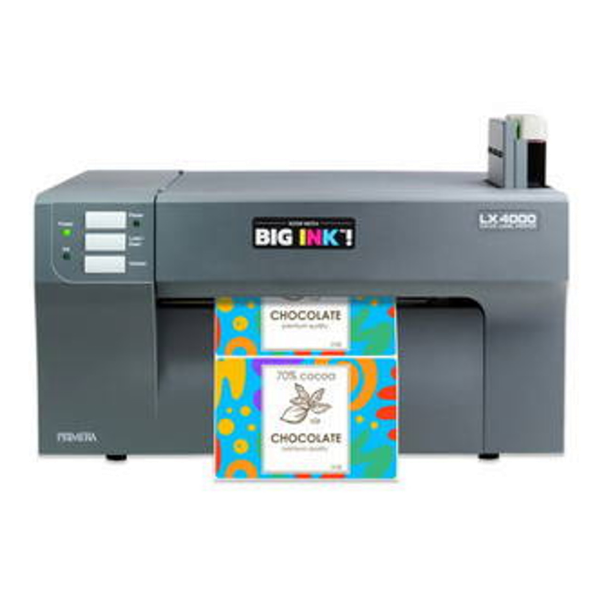
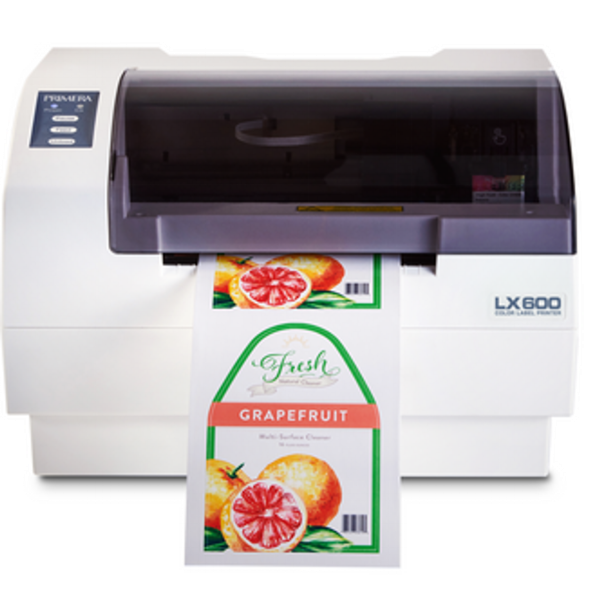
One excellent example is the Primera LX4000 Dye Inkjet Color Label Printer. This printer offers professional-grade color quality with large ink tanks that reduce running costs. Another strong option for businesses that need compact reliability is the Primera LX600 Color Label Printer — a smaller but equally capable model that balances vibrant color output with a modest footprint.
Thermal Printers
Thermal printing, on the other hand, uses heat to produce images. In direct thermal printing, heat-sensitive labels darken when exposed to heat. In thermal transfer printing, a ribbon transfers ink onto the label, producing more durable results. These printers are generally monochrome and best suited for logistics, barcodes, and labels that prioritize durability over color.
Notable examples include the Epson TM-L100 Liner-Free Thermal Label Printer and the SATO WS4 203 DPI Direct Thermal Label Printer. Both deliver consistent, fast, and smudge-free printing that’s ideal for shipping labels, receipts, or barcode-heavy workflows.
Comparing Cost, Quality, and Maintenance
When small business owners evaluate printers, three main considerations come to mind: cost, output quality, and maintenance. Here’s how each technology stacks up.
Cost Efficiency
Inkjet printers usually have a higher cost per label because of ink usage. However, their ability to print full-color labels in-house can eliminate the need for expensive outsourced runs. If your business produces a limited number of labels but values professional presentation, inkjet may deliver better long-term ROI.
Thermal printers, meanwhile, are extremely economical for black-and-white labels. They require no ink cartridges — only labels and, if using thermal transfer, a ribbon. This simplicity keeps operating costs low, especially for shipping-heavy or barcode-driven businesses.
If you often print logistics labels, thermal barcode printers online can significantly reduce consumable costs over time.
Print Quality and Color Capability
Inkjet clearly leads in color quality. Its ability to reproduce gradients, branding colors, and high-resolution images makes it ideal for product packaging. However, inkjet labels can smudge if exposed to water or oil unless printed on weatherproof media.
Thermal printers focus on durability and legibility rather than artistic detail. They’re unbeatable for high-speed, black-and-white printing with no drying time.
If your brand relies heavily on color presentation, color label printers for sale are worth exploring. But for barcode and logistics applications, thermal printing is the undisputed workhorse.
Maintenance & Reliability
Thermal printers have fewer moving parts and require less maintenance. There’s no ink to dry out, no printheads to clog, and fewer calibration issues. Inkjet printers, while reliable, demand periodic cleaning cycles and proper storage of inks, especially in variable-temperature environments.
In high-volume settings or where reliability is paramount, thermal printers tend to outperform.
Matching Printer Type to Business Needs
The right choice depends largely on your industry and what your labels are used for.
Retail and E-Commerce Businesses
If you sell direct-to-consumer products, presentation matters. Color printing helps you reinforce brand identity, attract customers, and compete on store shelves. Models like the Primera LX4000 or LX600 make it easy to print short-run, full-color labels without waiting on third-party suppliers. They’re perfect for boutique food brands, skincare lines, or subscription boxes.
Logistics, Warehousing, and Manufacturing
For companies that handle inventory, shipping, or logistics, label functionality outweighs aesthetics. Thermal printers such as the Epson TM-L100 and SATO WS4 can handle continuous operation, high-speed barcode printing, and durable labels that survive handling and temperature fluctuations.
Many warehouses use direct thermal labels for sale for quick and cost-effective one-time use — ideal for shipping and logistics.
Hybrid Scenarios
Some businesses need both: colorful branding labels and durable logistics labels. In such cases, owning one of each printer type offers flexibility. For instance, use the Primera LX600 for packaging and a SATO WS4 for shipping. This ensures every label is optimized for its purpose without compromise.
Environmental and Space Considerations
Inkjet printers are better suited to clean, office-like environments where color labels can be printed in controlled conditions. Thermal printers thrive in more rugged settings like warehouses, back rooms, or retail counters.
Space can also influence your decision. The compact footprint of the LX600 or SATO WS4 makes them suitable for small workspaces, while larger models like the LX4000 or TM-L100 may need a dedicated station.
For eco-conscious businesses, thermal printing offers a liner-free option, as seen in the Epson TM-L100, which reduces waste from label backings. This not only lowers costs but also aligns with sustainability initiatives.
Hidden Costs and Long-Term ROI
While inkjet printers can seem costly up front due to ink expenses, their flexibility and professional finish can yield indirect benefits — such as improved sales from better-looking packaging. For short runs or seasonal products, the ability to print instantly, without outsourcing, is invaluable.
Thermal printers, by contrast, shine in their predictability. With fewer consumables, minimal downtime, and near-zero maintenance, they deliver a reliable cost-per-label for years. When factored over time, thermal technology often delivers a faster payback for operational labels.
For many small businesses, the best solution is complementary — using both technologies strategically.
Making an Informed Decision

When deciding which label printer suits your small business, consider these questions:
- Do you need full-color labels that enhance branding, or simple black-and-white functional labels?
- How many labels do you print per day or week?
- Are your labels exposed to moisture, sunlight, or handling?
- Do you prioritize aesthetics or longevity?
- What’s your realistic monthly consumables budget?
If your answer leans toward presentation, flexibility, and design — inkjet is the right fit. If your needs emphasize efficiency, durability, and speed — thermal wins.
For hybrid needs, a combination of pigment inkjet label printers in Canada and thermal models ensures you’re covered from branding to fulfillment.
Balancing Creativity and Efficiency
Choosing the right label printer is about aligning technology with purpose. Inkjet printers empower creativity — enabling vivid, professional-grade labels that enhance shelf appeal and brand identity. Thermal printers, meanwhile, deliver reliability and consistency where uptime and precision matter most.
Printers like the Primera LX4000 and LX600 exemplify what’s possible for small businesses seeking color and customization. Meanwhile, durable thermal printers such as the Epson TM-L100 and SATO WS4 demonstrate efficiency and resilience in demanding workflows.
DuraFast Label Company offers a wide range of thermal transfer printers and color label printers in Canada for every scale of operation. To find out which printer best suits your label production needs, explore their solutions or contact them to speak with an expert who can guide you toward the perfect setup.
About the Author
Hannah Reid is a business technology writer specializing in small business tools, automation, and packaging innovation. She helps entrepreneurs understand how the right printing technology enhances productivity, sustainability, and brand presentation across industries.




























Sign in to leave a comment.